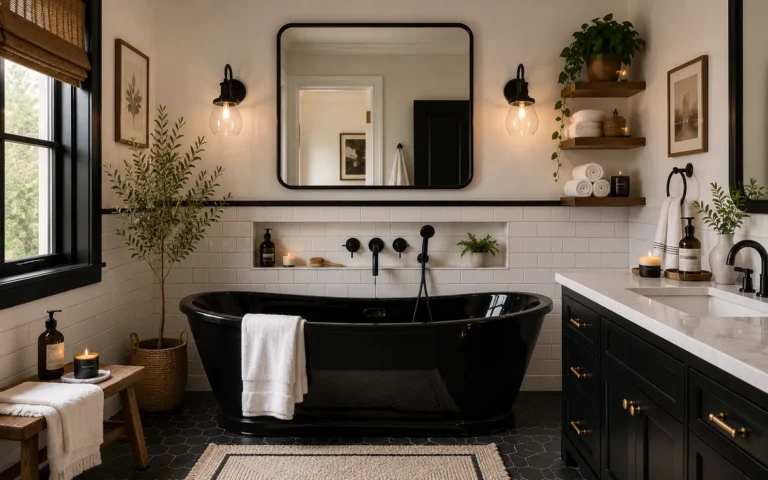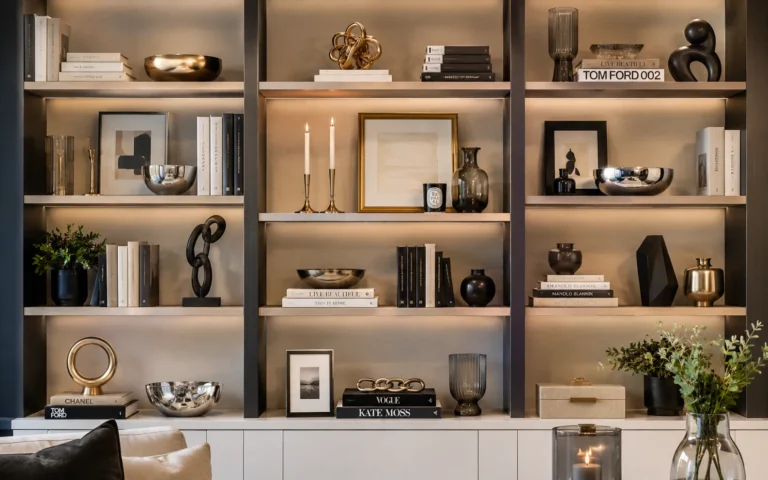
24 Eclectic Living Room Ideas Full of Personality
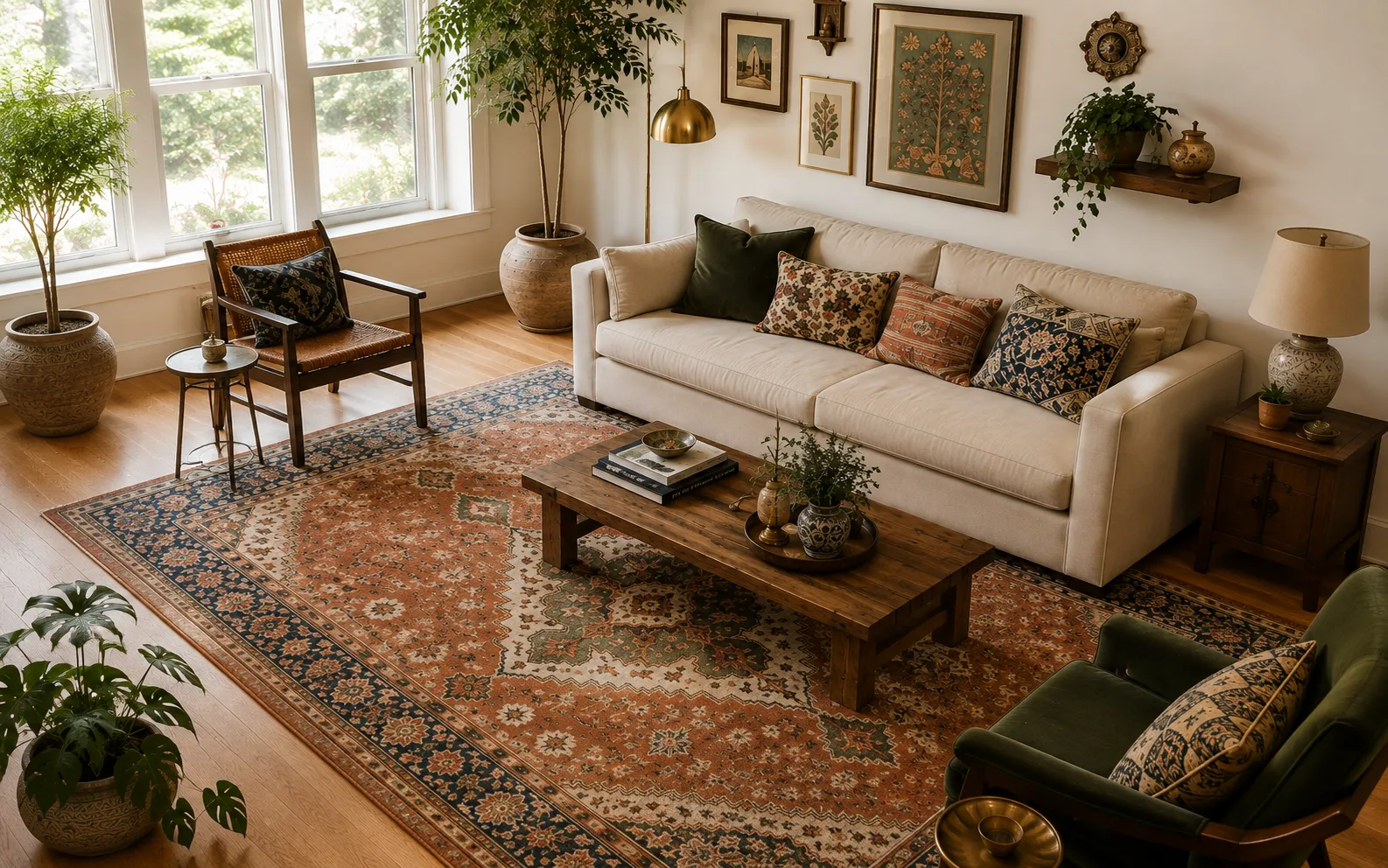
Your living room should feel like you, not like a showroom. Think rich colors, collected treasures, layered textures, and furniture that tells a story.
These eclectic living room ideas make it easier to create a space that feels stylish, comfortable, and genuinely personal.
Whether your room feels plain, mismatched, or unfinished, the right combination of colors, patterns, vintage finds, artwork, lighting, and natural textures can completely change its atmosphere. You’ll find practical ways to mix different styles without creating visual chaos, plus simple details that make a room feel more intentional. In my experience, the most memorable spaces rarely come from buying everything at once. They grow through thoughtful layers, meaningful pieces, and small changes that reflect everyday life.
Jump to Related Articles
1:Gallery Wall Layers
- Mix artwork, photographs, sketches, and objects for personality.
- Combine several frame finishes while keeping colors connected.
- Vary frame sizes to create natural visual movement.
- Leave enough breathing room so the display feels curated.
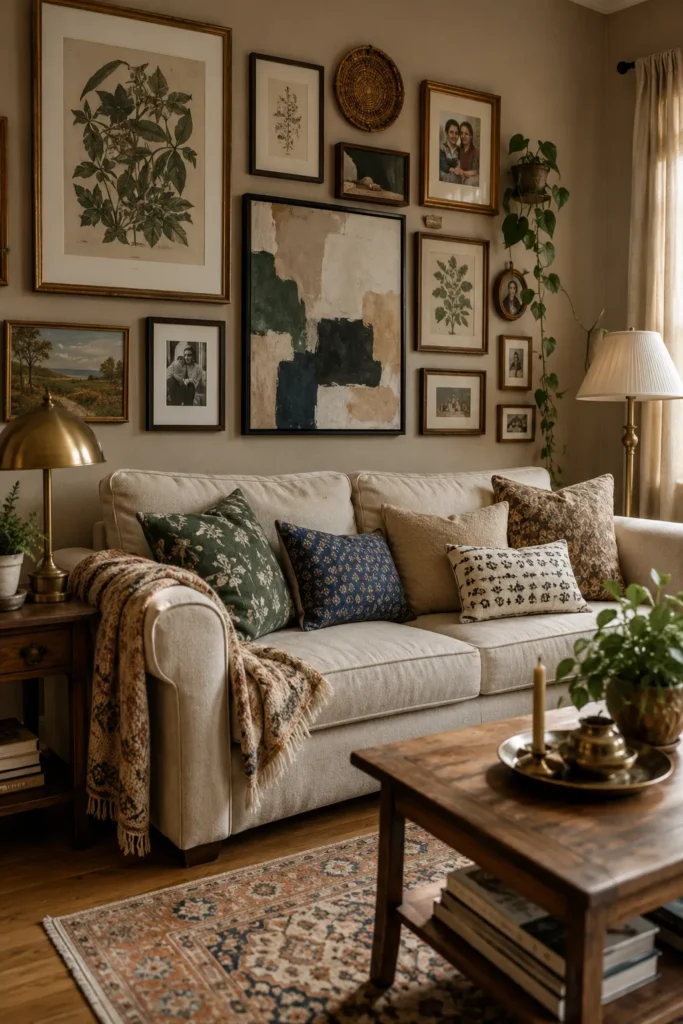
A gallery wall becomes a natural focal point when it mixes artwork, photographs, sketches, and unexpected objects. Choose frames in several finishes, such as aged brass, natural wood, matte black, and painted white, then arrange them around one larger piece. The varied shapes add personality without requiring expensive furniture changes. This setup works especially well above a sofa or console where a blank wall feels unfinished. Keep a loose color connection among the pieces so the collection feels intentional. I’ve noticed that mixing frame sizes creates more visual interest than lining everything up in one predictable grid.
Before hanging anything, place your frames on the floor and experiment with spacing until the composition feels balanced. Keep the overall arrangement centered on the furniture below, while allowing a few pieces to sit slightly higher or lower for a relaxed look. Include one or two dimensional objects, such as a woven basket, ceramic plate, or small mirror, to break up flat artwork. Warm lighting from a nearby floor lamp can make the display feel even richer at night. Leave enough breathing room between pieces so the wall feels curated rather than crowded, especially in smaller rooms.
2;Patterned Area Rug
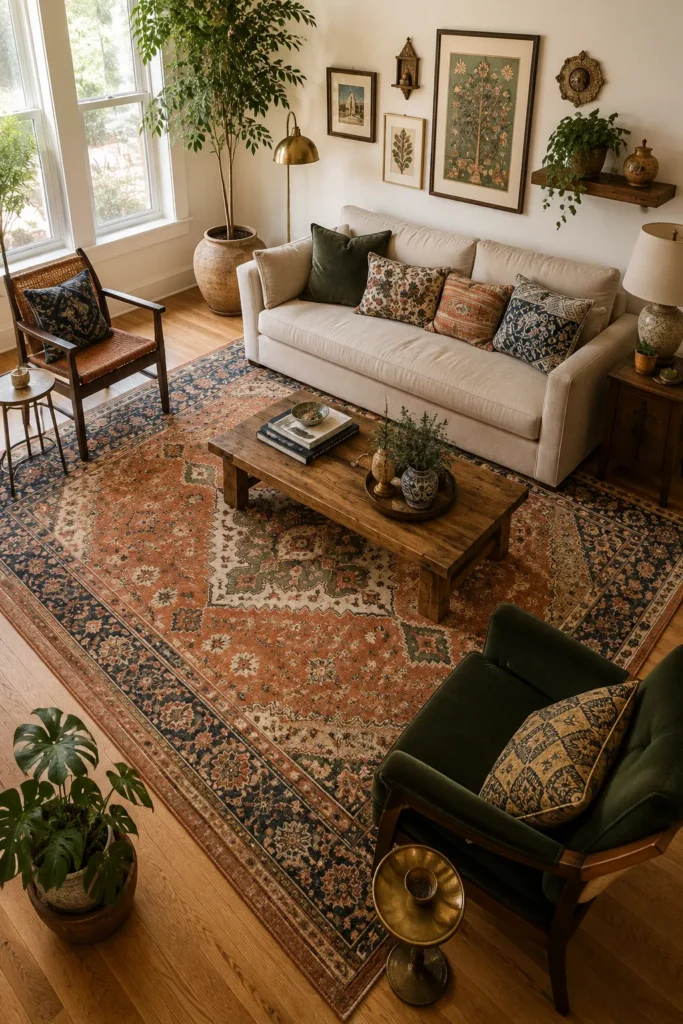
- Choose a rug that repeats colors already present in the room.
- Use patterns to connect furniture that comes from different styles.
- Keep upholstery quieter when the floor covering is detailed.
- Select a practical texture for your household and daily routines.
A patterned rug can instantly bring separate furniture pieces into one visual conversation. Look for designs that combine several colors already present in your sofa, artwork, or cushions, then let those shades repeat throughout the room. A vintage-inspired rug with faded terracotta, cream, olive, and navy can soften modern furniture while adding depth underfoot. This idea works particularly well in open layouts because the rug clearly defines the seating zone. Choose a size large enough for at least the front legs of major seating pieces to rest on it, creating a grounded and connected arrangement.
Pattern does not have to mean overwhelming. If your rug has an intricate design, balance it with quieter upholstery and mostly solid cushions. You can still introduce smaller patterns through stripes, checks, or botanical prints, but vary their scale so they do not compete. In my experience, repeating one rug color in a nearby throw or artwork makes the whole arrangement look surprisingly polished. Consider the rug’s texture, too; a low-pile vintage style is practical for busy spaces, while a thicker woven option can add softness and warmth to a relaxed seating area.
Jump to Related Articles
3:Vintage Storage Pieces
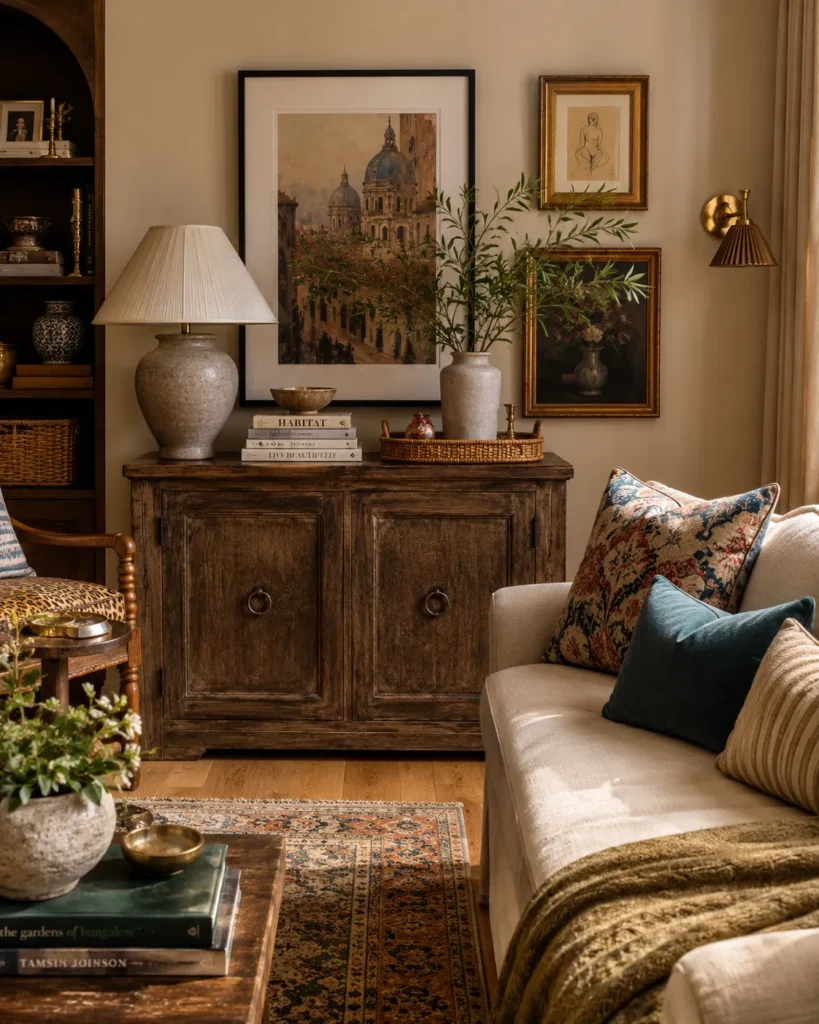
- Use vintage cabinets to combine character with practical storage.
- Let aged wood or painted finishes become a room accent.
- Style the top with only a few meaningful decorative pieces.
- Hide everyday clutter behind closed doors for a calmer look.
A vintage cabinet can give a modern seating area the character it is missing. Choose a worn wood sideboard, painted cupboard, or antique console with visible grain, aged hardware, or subtle imperfections. Place it against a quiet wall and style the top with a ceramic lamp, stacked books, framed artwork, and one leafy branch. The contrast between older furniture and cleaner contemporary pieces creates an easy layered effect. This approach is especially helpful when decorating on a budget because one distinctive secondhand find can make an otherwise simple room feel much more personal and established.
Keep the cabinet useful rather than treating it as decoration alone. Closed storage can hide games, blankets, electronics, or everyday clutter while keeping the room visually calm. If the furniture has a strong finish, repeat a small amount of that color or material elsewhere through a frame, tray, or lamp base. Avoid filling every surface; leaving a little empty space makes collected objects look more considered. I’ve seen this work beautifully in rental homes because a single vintage storage piece can add architectural character without permanent changes to walls, floors, or built-in cabinetry.
4:Statement Ceiling Fixture
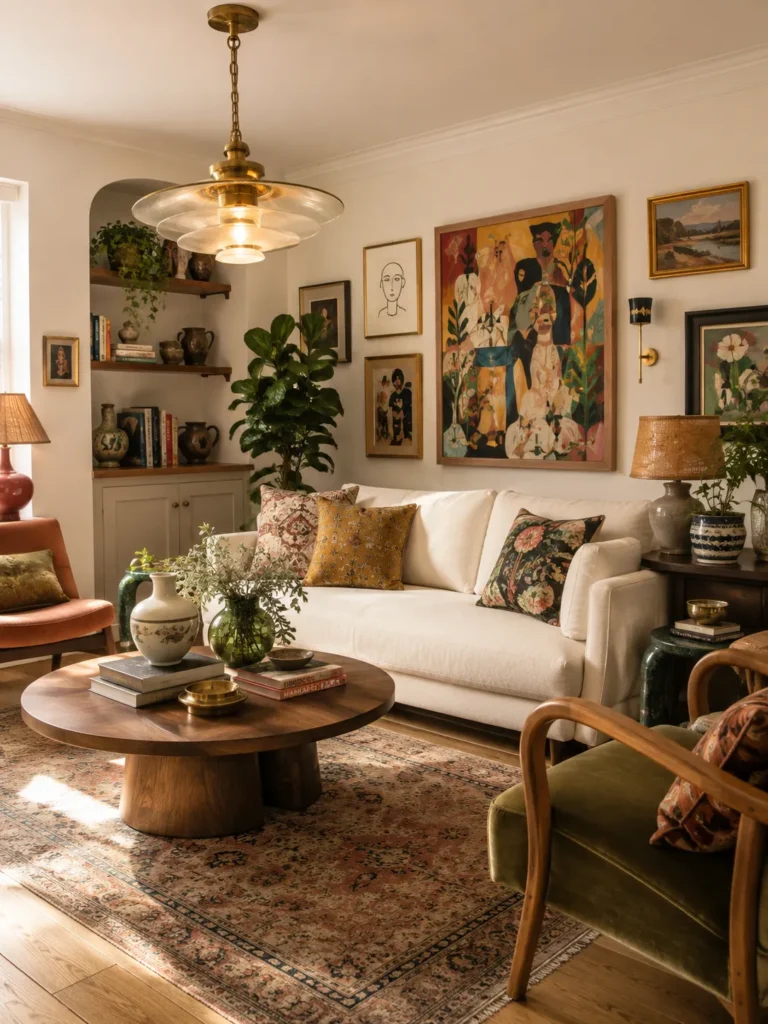
- Use an oversized fixture to create an instant focal point.
- Choose an unusual shape that complements the room’s collected character.
- Repeat the fixture’s finish through smaller metal accents.
- Keep surrounding decor slightly quieter so the light stands out.
Look upward when the room feels like it needs one more layer of personality. A sculptural ceiling fixture can transform an ordinary seating area without taking up valuable floor space. Try an oversized brass pendant, woven chandelier, or clustered glass design above the main seating zone. Its shape becomes part of the decor, while its light adds atmosphere after sunset. This works particularly well when furniture and accessories come from different styles because a strong overhead feature can visually anchor them. Choose a fixture large enough to feel intentional, but keep its proportions comfortable for the room.
Lighting should support the room rather than compete with every other statement piece. If the ceiling fixture has a bold silhouette, use simpler lamps and accessories nearby. Repeat its material through a brass picture frame, cabinet handle, or small decorative object to create subtle continuity. Warm bulbs usually make colorful textiles and natural wood feel richer during evening hours. I’ve noticed that dimmable lighting is especially useful in layered interiors because the same room can shift from bright and functional during the day to relaxed and intimate at night without changing the decor.
Jump to Related Articles
5:Curved Seating Shapes
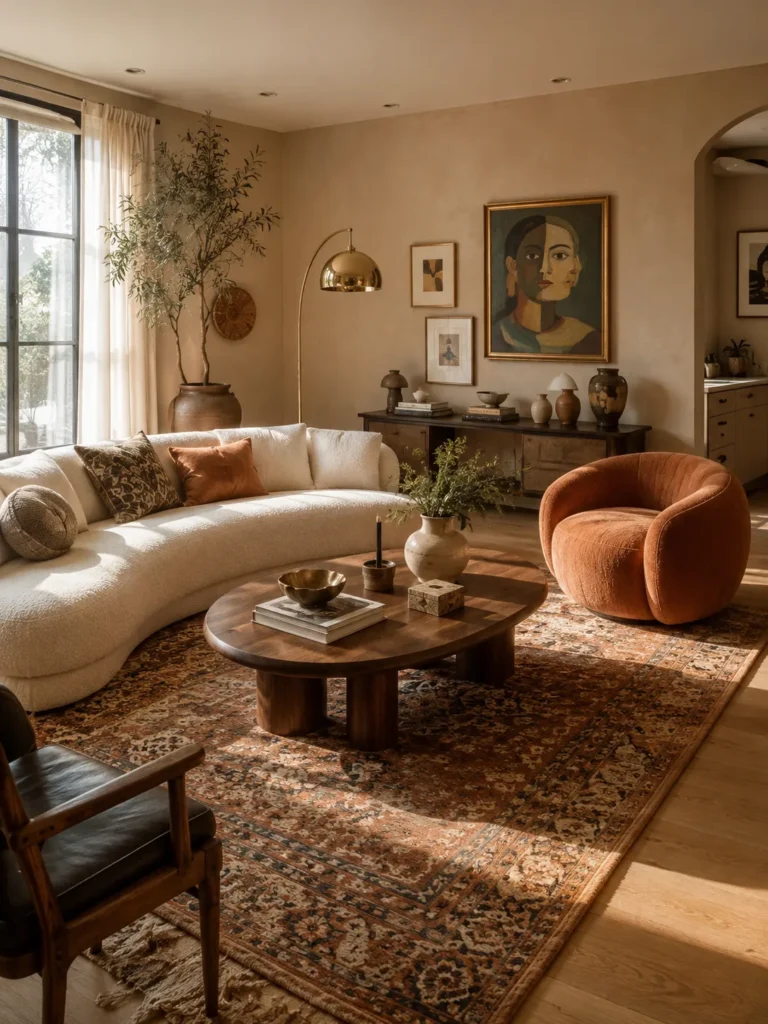
- Introduce rounded furniture to soften rooms with many straight lines.
- Pair curved seating with an oval or round coffee table.
- Use textured upholstery to emphasize soft silhouettes.
- Keep pathways clear around larger rounded pieces.
Curved furniture brings an immediate sense of softness to a room filled with hard edges. A rounded sofa, barrel chair, or curved ottoman can soften the visual impact of rectangular cabinets, shelving, and artwork. Pairing these silhouettes with an oval coffee table creates a natural flow around the seating area and makes conversation feel more inviting. This approach works beautifully in both spacious and compact homes because rounded shapes can reduce the boxy feeling common in standard layouts. Choose one major curved piece first, then add smaller rounded accessories rather than filling the entire room with identical shapes.
The strongest result comes from mixing curves with structure. Place a curved cream sofa beside a straight wooden cabinet, then balance the contrast with a round mirror or softly shaped lamp. Natural fabrics such as linen, boucle, cotton, or textured wool make the furniture feel even more approachable. Keep enough clearance around each piece so movement remains easy, particularly in smaller spaces. That practical detail matters because an attractive layout should never make everyday walking awkward. In my experience, one well-chosen curved chair can completely change the rhythm of a room without requiring a full furniture makeover.
Jump to Related Articles
6:Collected Travel Decor
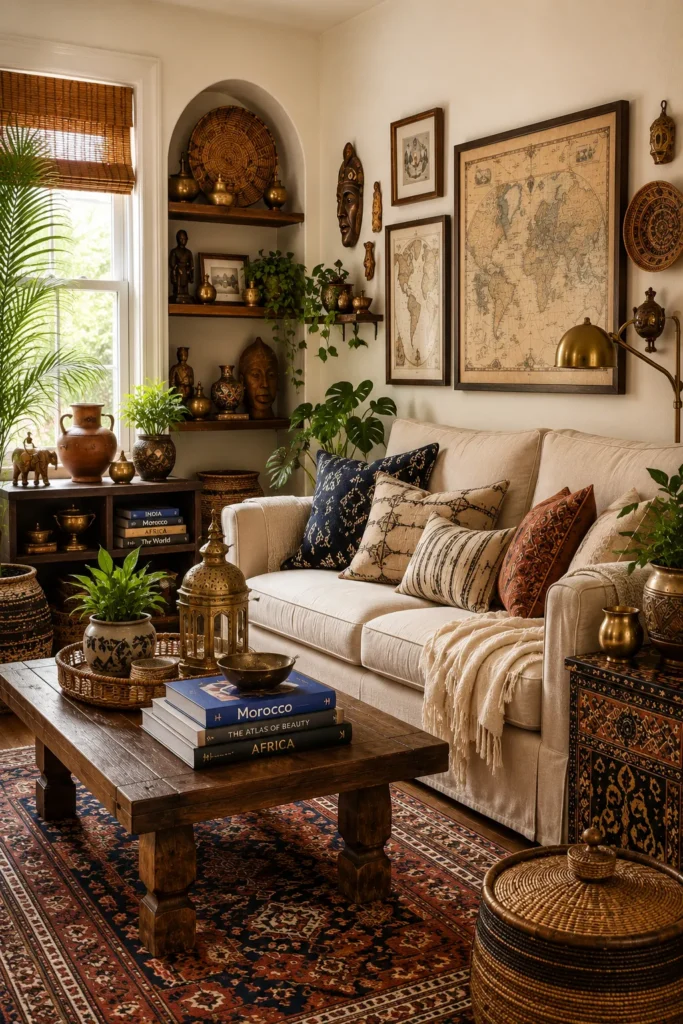
- Display meaningful objects instead of filling shelves with random souvenirs.
- Group small collections on trays or shelves for visual order.
- Mix global-inspired pieces with simple modern furniture.
- Use natural materials to create warmth and texture.
A room feels more personal when its decor reflects places, memories, and objects that actually matter to you. Display woven baskets, handmade ceramics, carved wooden pieces, framed maps, or small travel finds alongside everyday furniture for a collected global-inspired look. The key is restraint: choose objects with different shapes and textures, then group them into small arrangements instead of scattering them everywhere. This makes the room feel lived-in while preserving visual order. A neutral sofa and simple wooden table provide a calm foundation, allowing meaningful pieces to become accents without making the space feel themed.
Think of your shelves and surfaces as small galleries rather than storage areas. Place taller objects beside shorter pieces, layer artwork behind ceramics, and use trays to contain smaller souvenirs. Natural materials such as rattan, wood, clay, and woven fibers work particularly well because they add texture without demanding bright color. If an object has a strong pattern, repeat one subtle color nearby through a cushion or artwork. I’ve seen this approach make even newer homes feel established because personal collections introduce irregularity, craftsmanship, and visual stories that mass-produced accessories often cannot provide.
Jump to Related Articles
7:Eclectic Book Nook
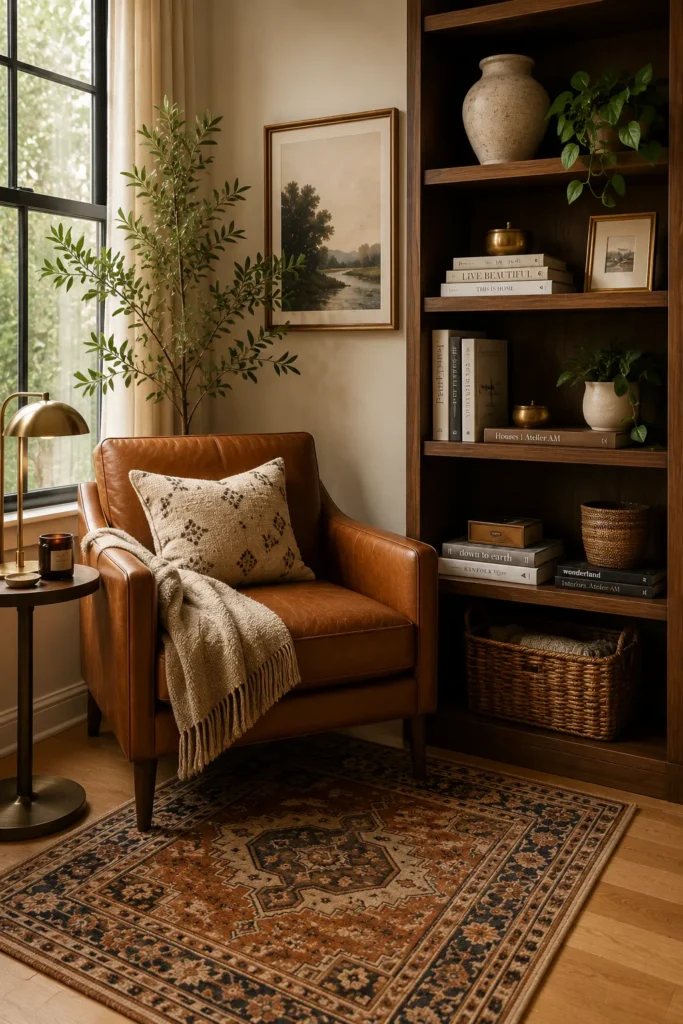
- Create a dedicated reading zone without needing a separate room.
- Mix books with ceramics, framed art, and small natural accents.
- Add a floor or table lamp for comfortable evening reading.
- Use a small rug to visually separate the corner.
A small reading corner can add purpose and personality to an unused part of the living room. Place a comfortable leather or upholstered chair beside a compact bookcase, then add a small side table for coffee, glasses, or a favorite book. Layer a patterned rug underneath to visually define the area without building walls. This setup works especially well beside a window, where daylight makes the corner naturally inviting. Choose books you genuinely enjoy and display a few decorative objects between them. The result feels personal, useful, and naturally connected to the rest of the room.
Make the nook comfortable enough that you will actually use it. A warm floor lamp or adjustable table lamp provides focused evening light, while a soft throw adds texture without cluttering the chair. Arrange books both vertically and horizontally to create rhythm on the shelves, then add one plant or ceramic piece for contrast. Keep the surrounding area relatively simple so the nook remains visually distinct. In my experience, even a narrow corner can become one of the most loved spots in a home when comfort, lighting, and personal interests are considered together.
Jump to Related Articles
8:Layered Wall Art
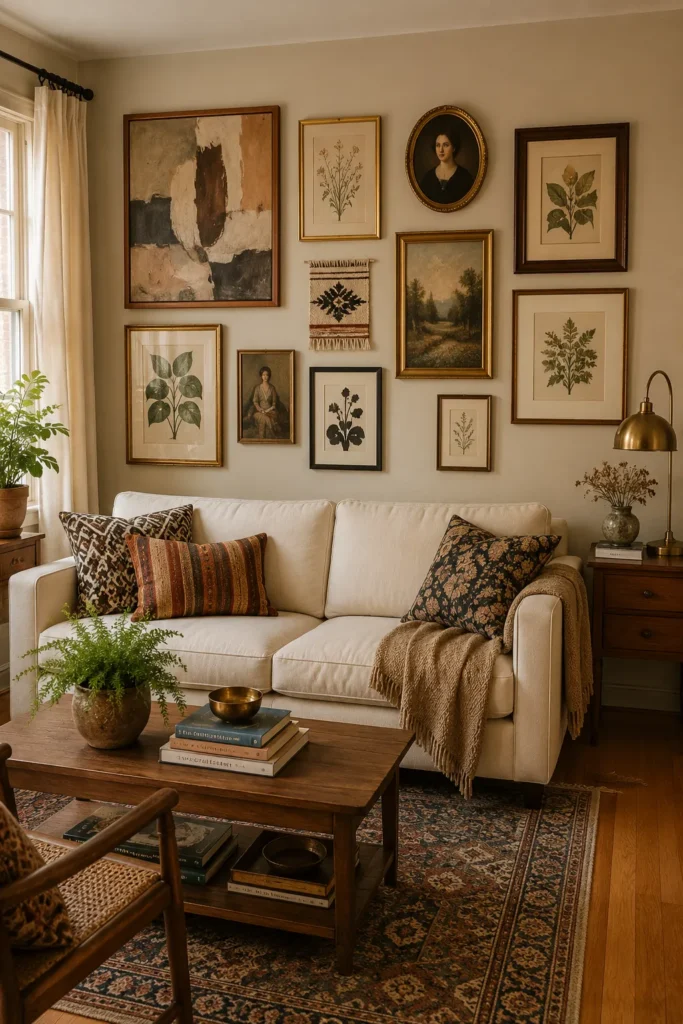
- Layer artwork in different sizes for a relaxed collected effect.
- Mix paintings, prints, photographs, and tactile wall pieces.
- Keep a shared color thread across otherwise varied artwork.
- Use the sofa width to guide the overall arrangement.
Layered artwork creates depth when a single large picture feels too formal or predictable. Combine abstract paintings, botanical prints, vintage portraits, photographs, and small textile pieces to build a display that feels collected over time. Instead of matching every frame, choose a loose palette such as cream, walnut, brass, and black. This gives each piece individuality while keeping the arrangement visually connected. Position the largest artwork first, then build outward with smaller pieces. The result adds character above a sofa, console, or fireplace without requiring expensive furniture or major structural changes.
Spacing is what keeps a layered display from becoming messy. Leave enough room for each piece to be appreciated while allowing slight variations in height and alignment. You can also lean a smaller frame against a larger one on a console for extra depth. If the artwork contains several strong colors, repeat just one or two shades through cushions or nearby ceramics. That connection helps the room feel cohesive. I’ve noticed that asymmetrical arrangements often suit eclectic interiors especially well because they feel relaxed and personal while still having an intentional visual structure.
9:Sculptural Accent Chair
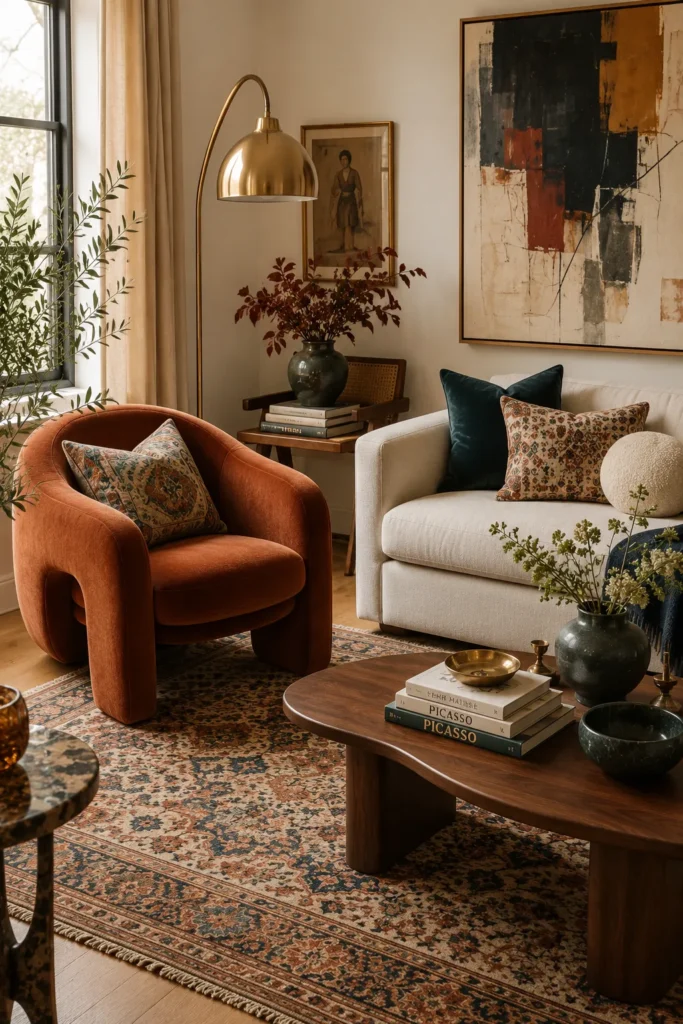
- Choose one unusual chair to become a visual focal point.
- Let its silhouette stand apart from the main sofa.
- Repeat one chair color through artwork or smaller accessories.
- Prioritize comfortable proportions so style does not sacrifice function.
One sculptural chair can give an ordinary seating arrangement a surprisingly strong design identity. Look for a rounded barrel chair, vintage-inspired lounge seat, or boldly shaped armchair in a color that complements the existing room. Place it slightly angled toward the sofa rather than pushing every piece against the walls. This creates a more conversational layout and gives the chair enough space to be noticed. A rust, olive, mustard, or deep blue upholstery can work beautifully against neutral walls. The chair becomes a statement without requiring the entire room to follow one strict decorating style.
Balance the unusual silhouette with familiar shapes elsewhere. A simple sofa, rectangular cabinet, and understated coffee table can make the sculptural chair feel intentional rather than excessive. Repeat a hint of its upholstery color in a cushion, artwork detail, or ceramic accessory to connect the palette. Also check the chair’s scale before buying; oversized forms can quickly crowd smaller rooms. In my experience, the most successful statement seating is both beautiful and genuinely comfortable, because pieces that look impressive but feel awkward rarely become favorites in everyday living spaces.
10:Colorful Accent Pillows
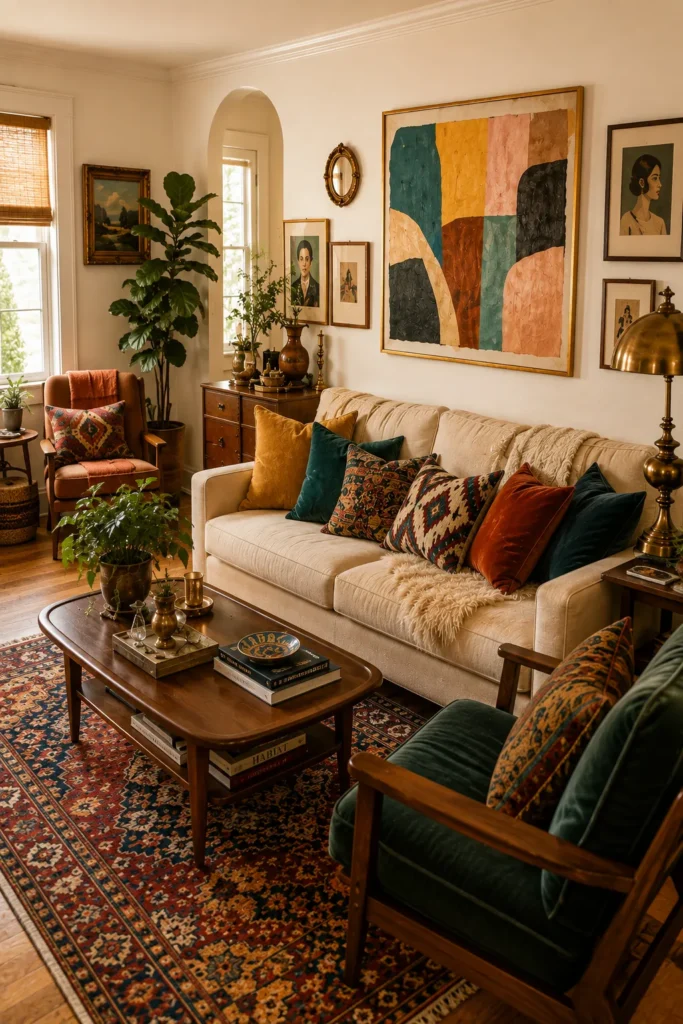
- Use pillows to introduce color without changing major furniture.
- Mix solids, stripes, florals, and geometric patterns thoughtfully.
- Repeat pillow colors in nearby artwork or decorative objects.
- Vary sizes and textures to make the sofa feel layered.
A handful of colorful pillows can completely refresh a neutral sofa without requiring a major decorating project. Start with one strong shade, such as teal or rust, then add complementary colors through smaller cushions. Mix solids with stripes, botanical patterns, geometrics, or subtle vintage motifs to create depth. Different pillow sizes also make the arrangement look more relaxed and comfortable. This is one of the easiest ways to experiment with an eclectic style because covers can be changed seasonally or whenever your preferences shift. The right combination can make a simple sofa feel thoughtfully styled and welcoming.
Avoid choosing every pillow from the same pattern family because too much coordination can make the arrangement feel staged. Instead, connect the collection through color while varying texture and scale. Try linen beside velvet, woven fabric beside cotton, or a small geometric print beside a larger botanical design. Place the strongest pattern toward the center or at one end, depending on the sofa shape. I’ve noticed that repeating one pillow color in a nearby artwork or rug creates a surprisingly polished effect. It makes the whole seating area feel connected without losing its playful, collected character.
11:Antique Mirror Display
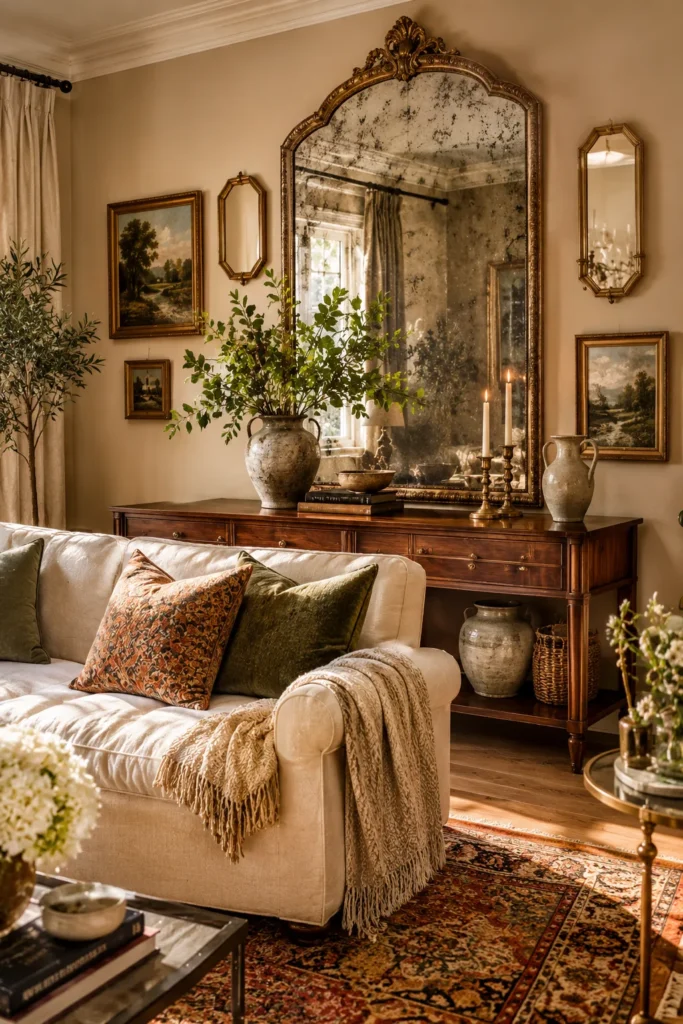
- Use aged mirrors to reflect light and add vintage character.
- Combine different frame shapes for a relaxed collected display.
- Position mirrors where they reflect windows or attractive decor.
- Keep surrounding accessories restrained so reflections do not feel busy.
An antique mirror can add depth, light, and character to a living room at the same time. Look for a piece with a softly aged surface, patinated frame, or irregular shape, then place it where it can reflect a window or attractive section of the room. This helps brighten darker corners while making the space appear more layered. Pairing one large vintage mirror with smaller framed pieces creates an interesting focal display above a console or sofa. The imperfect finish also works beautifully with modern furniture because it introduces history and texture without overwhelming the overall design.
Reflection deserves careful attention when positioning mirrors. Avoid placing them opposite cluttered shelves, televisions, or areas you would rather not emphasize. Instead, angle them toward greenery, artwork, windows, or architectural details so the reflection becomes part of the decor. Brass, wood, and black frames can be mixed when their shapes vary naturally. Keep accessories underneath the display simple, perhaps using a ceramic vase, books, and one sculptural object. In my experience, a well-positioned vintage mirror can make a compact living room feel noticeably brighter and more spacious while adding a distinctive collected touch.
12:Natural Woven Accents
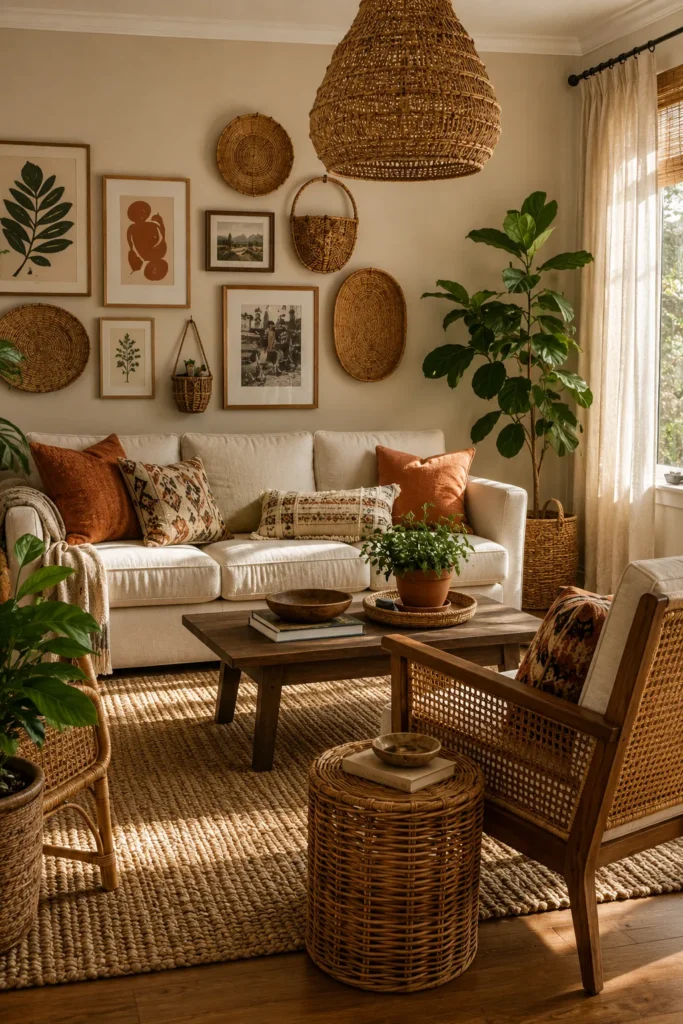
- Add woven materials to soften polished furniture and hard surfaces.
- Mix rattan, cane, jute, and wicker without making them identical.
- Use natural fibers to introduce warmth and tactile depth.
- Balance earthy textures with colorful artwork or patterned textiles.
Natural woven pieces bring warmth and texture to a room filled with polished surfaces or contemporary furniture. Try a rattan chair, jute rug, cane cabinet, wicker basket, or woven pendant to introduce tactile contrast. These materials pair especially well with colorful textiles because their natural tones provide a visual pause between stronger patterns. A woven basket can also serve a practical purpose by storing blankets, magazines, or toys. This combination creates a relaxed atmosphere without making the room feel overly rustic. The goal is to use several textures while keeping the overall arrangement light and breathable.
Mixing woven materials works best when their tones are related but their textures differ. Pair pale cane with natural jute, then add darker walnut or aged brass for contrast. If the room already contains several earthy materials, bring in color through artwork, pillows, or ceramics to prevent the palette from becoming flat. Keep plants nearby because greenery naturally complements organic textures and adds freshness. I’ve noticed that woven accents are especially useful in rental spaces because baskets, chairs, and textiles can introduce significant visual warmth without permanent alterations or expensive renovations.
13:Layered Floor Lighting
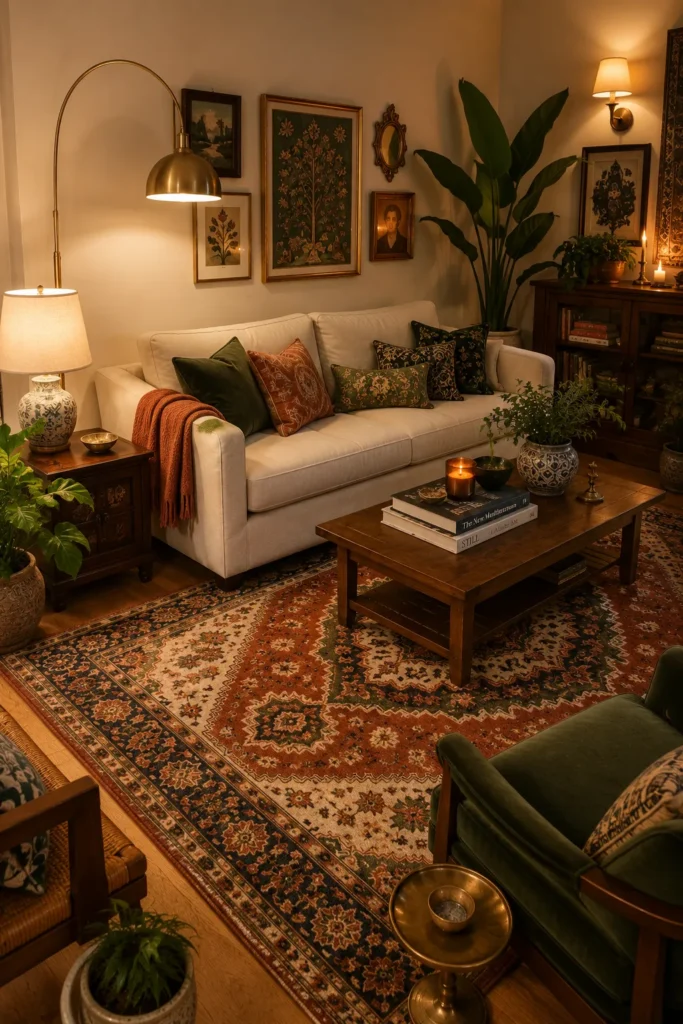
- Combine floor, table, and ambient lighting for greater flexibility.
- Place reading lights beside seating that gets regular use.
- Choose warm bulbs to enhance wood, textiles, and artwork.
- Use varied lamp heights to create visual depth.
Good lighting can change the entire personality of a living room after sunset. Instead of relying on one ceiling fixture, layer a tall floor lamp beside the sofa with a smaller table lamp and subtle ambient lighting. Different heights create depth while allowing each area to serve a purpose. A floor lamp can provide focused reading light, while a table lamp creates a softer glow near artwork or accessories. This approach is especially useful in rooms with several seating zones because each corner can have its own atmosphere without making the space feel disconnected.
Choose warm-toned bulbs when you want textiles, wood, and aged finishes to look richer in the evening. Position lamps where cords can be managed safely and where switches remain easy to reach. If the room has bold artwork, aim a directional light toward it to create another visual focal point. Keep lamp shapes varied but related through one material, such as brass or ceramic. That’s why many designers recommend layered lighting for rooms that need to work throughout the day; it provides both practical visibility and a more inviting nighttime mood.
14:Patterned Accent Chair
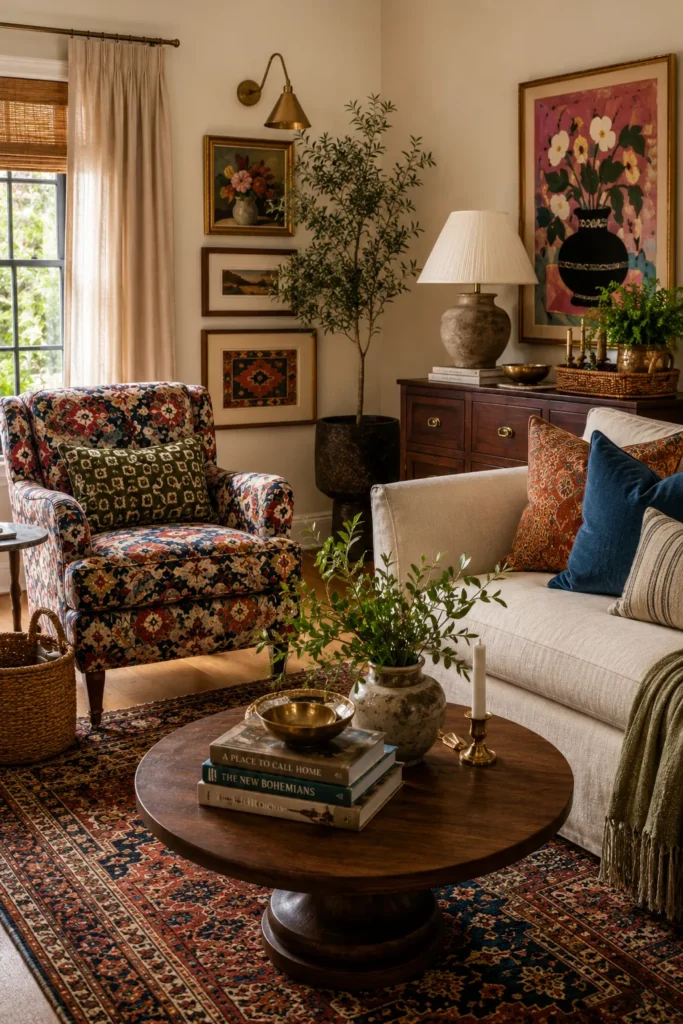
- Let one patterned chair become the room’s strongest textile statement.
- Keep nearby upholstery quieter to prevent competing patterns.
- Repeat one chair color in artwork or decorative accents.
- Choose durable fabric if the chair gets daily use.
A patterned accent chair can add personality without forcing you to redesign the entire seating arrangement. Choose a floral, geometric, striped, or vintage-inspired fabric that contains at least one color already present in the room. Place it beside a neutral sofa so the pattern has space to stand out. The chair can become a small focal point while still serving a practical purpose for reading, conversation, or extra guest seating. This idea is particularly useful when the main furniture is simple because one distinctive textile can instantly introduce movement and character.
Keep the surrounding patterns quieter by changing their scale and visual intensity. If the chair has a detailed floral print, choose a mostly solid cushion for the sofa or a rug with a softer pattern. Repeat one shade from the chair in a nearby vase, artwork detail, or throw to create continuity. Check the fabric before buying, especially if the chair will be used frequently. In my experience, performance fabrics and tightly woven textiles are worth considering for busy homes because they allow you to enjoy expressive furniture without constantly worrying about everyday wear.
15:Unexpected Art Pairings
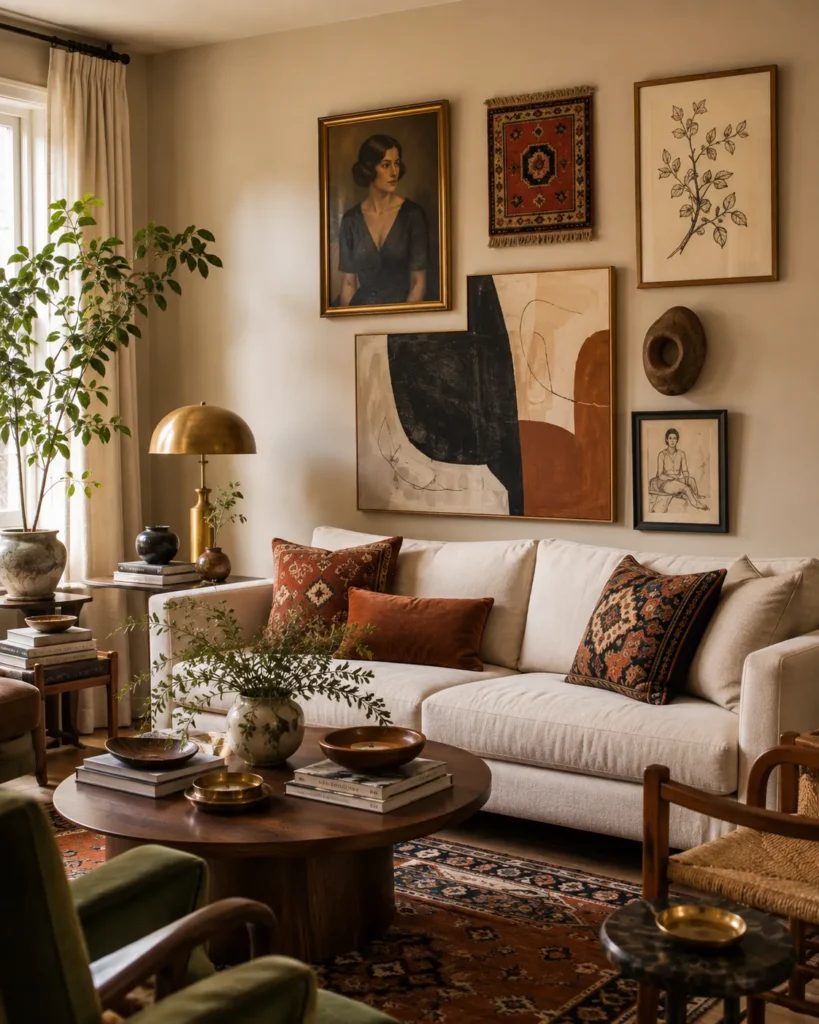
- Combine artwork from different periods to create visual tension.
- Pair detailed pieces with simpler shapes for balance.
- Use one shared color to connect otherwise unrelated artwork.
- Include dimensional pieces to make the wall display more tactile.
Unexpected artwork combinations can make a living room feel genuinely personal because they avoid the perfectly matched look of a showroom. Pair a vintage portrait with a modern abstract canvas, botanical sketch, or small textile panel to create contrast. Different artistic styles become more cohesive when they share one or two colors. For example, rust appearing in a painting can echo a nearby cushion or rug. This approach allows you to display pieces you genuinely like rather than shopping for artwork that belongs to one predefined style. The result feels expressive, layered, and naturally collected.
Scale and placement are important when mixing unrelated artwork. Give a large canvas enough surrounding space, then use smaller pieces to create movement around it. A dimensional textile, ceramic wall piece, or woven element can interrupt a wall of flat frames and add tactile interest. Keep the furniture below relatively calm so the artwork remains the main visual story. If several pieces are colorful, repeat just one shade in nearby accessories. I’ve noticed that this simple connection makes even very different artwork feel surprisingly harmonious while preserving the individuality that gives eclectic interiors their charm.
16:Statement Coffee Table
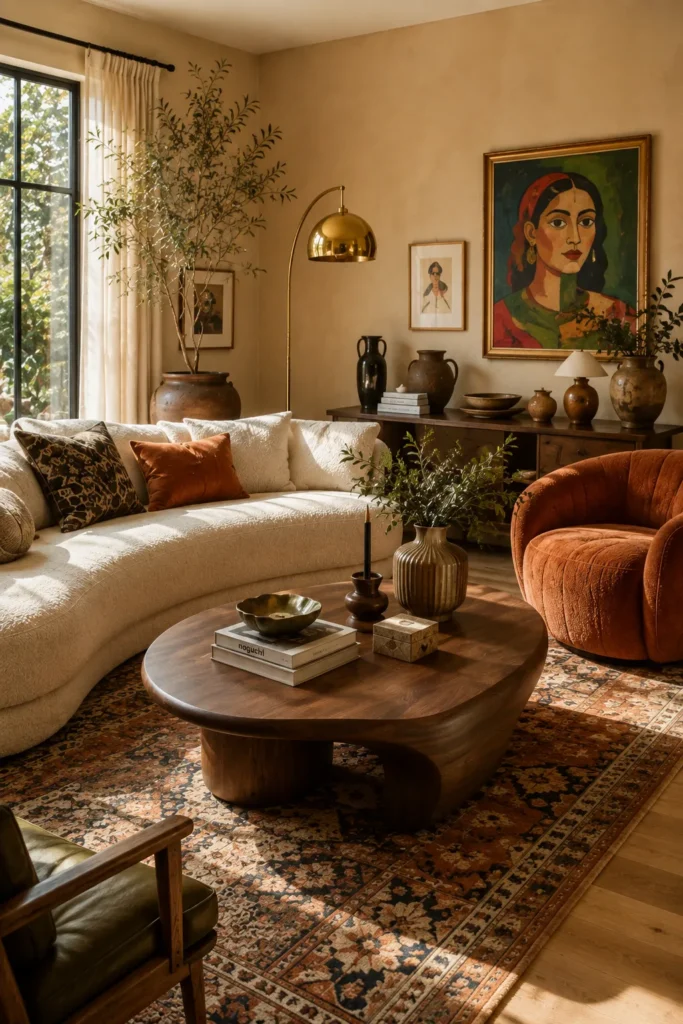
- Choose an unusual table shape to create a memorable focal point.
- Use natural wood or stone to add grounding texture.
- Keep tabletop styling simple enough for everyday use.
- Repeat the table’s material elsewhere for visual continuity.
A distinctive coffee table can become the anchor that brings an eclectic seating arrangement together. Choose an organic oval, carved wood, vintage trunk, or stone-topped design that contrasts with the surrounding furniture. The unusual shape adds visual interest without requiring bold color everywhere. Keep the table proportional to the sofa and leave enough space around it for comfortable movement. This is especially important in smaller living rooms, where an oversized centerpiece can quickly make the layout feel crowded. A well-scaled table should provide a practical surface while also giving the seating area a clear visual center.
Style the tabletop with only a few useful pieces, such as a shallow tray, coffee-table book, ceramic bowl, or small vase. Leaving some open surface makes the table feel intentional rather than cluttered. If the table has a strong wood grain, repeat natural wood through a side table or picture frame nearby. Stone tables can be balanced with softer textiles and woven accessories. In my experience, sculptural tables work best when the rest of the furniture has simpler silhouettes because the contrast allows the centerpiece to stand out without creating too many competing focal points.
17:Layered Textile Mix
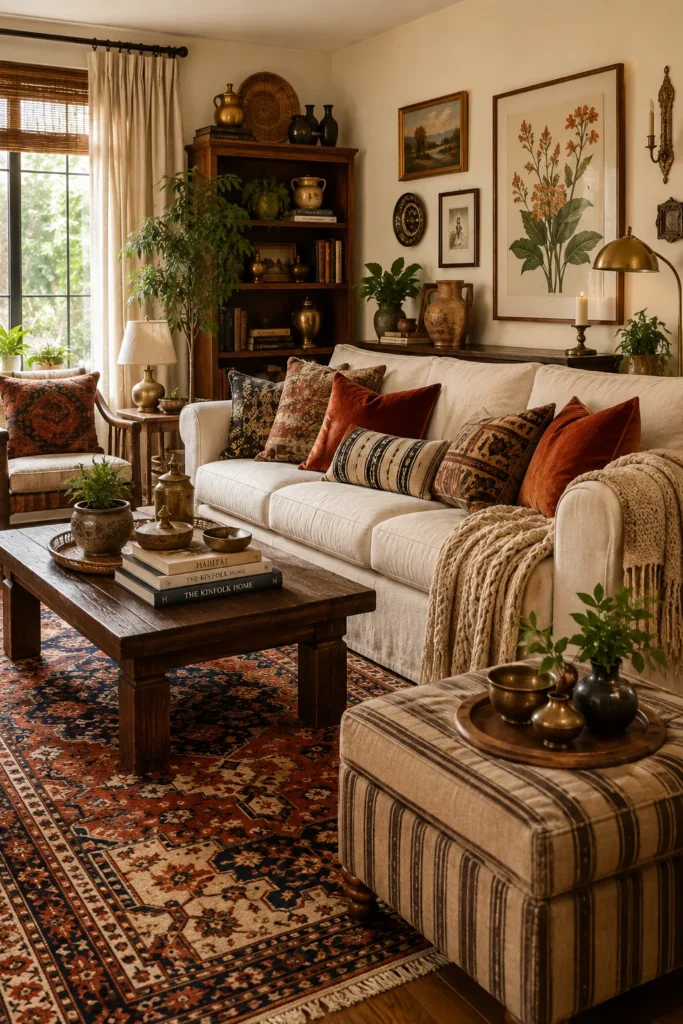
- Combine linen, wool, velvet, cotton, and woven fabrics.
- Vary patterns by scale instead of matching every textile.
- Use repeated colors to connect different textures.
- Layer softer fabrics where people naturally sit and relax.
Texture can make a room feel finished even when the color palette stays relatively simple. Combine linen upholstery with velvet cushions, a woven throw, a patterned wool rug, and textured curtains to create layers the eye can easily notice. Different fabrics reflect light differently, giving the room subtle depth throughout the day. This works especially well with neutral furniture because texture prevents pale colors from feeling flat. Start with larger textile surfaces such as the rug and curtains, then add smaller tactile details through cushions and throws. The result feels comfortable, collected, and visually rich without relying on excessive decoration.
When mixing textiles, vary both texture and pattern scale so everything does not compete equally. A large geometric rug can sit comfortably beneath smaller floral or striped cushions, while a solid velvet pillow provides a visual pause. Repeat two or three colors throughout the fabric choices to keep the arrangement connected. Consider how each material performs in everyday life, especially if you have children, pets, or frequent guests. I’ve noticed that washable throws and durable woven fabrics are practical additions because they allow you to maintain a layered look while still using the room freely and comfortably.
18:Eclectic Plant Clusters
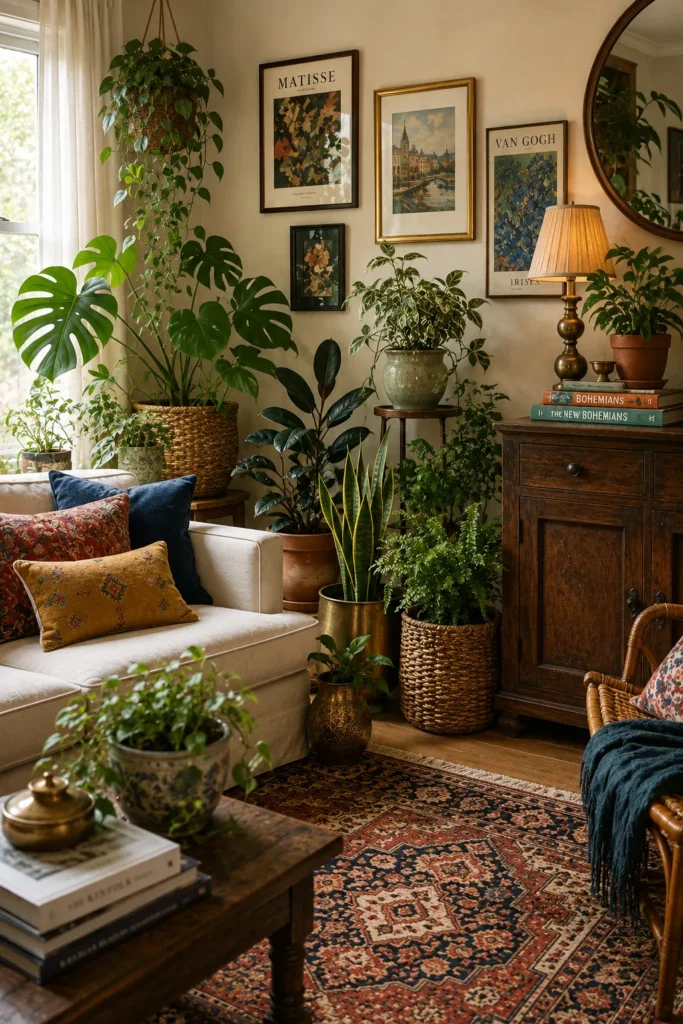
- Group plants at different heights to create a natural composition.
- Mix ceramic, terracotta, woven, and metal planters.
- Use greenery to soften furniture corners and empty spaces.
- Choose plant sizes that suit available light and room scale.
A thoughtful cluster of plants can soften strong furniture shapes while bringing natural color into an eclectic living room. Place a tall leafy plant beside a cabinet, a medium plant near the seating area, and smaller varieties on a shelf or side table. Different heights create movement and prevent greenery from looking like a repetitive row. Mix planter materials such as terracotta, ceramic, woven fibers, and aged metal for added texture. This approach works especially well when your room contains many patterns because green foliage acts as a calming visual element between stronger colors and prints.
Pay attention to light before choosing plants, since attractive styling will not matter if the greenery struggles in the wrong location. Place sun-loving varieties near bright windows and choose lower-light options for darker corners. Keep larger pots away from narrow walkways and use sturdy containers where pets or children could knock them over. In my experience, grouping plants is more effective than scattering single pots throughout every corner because the clusters create intentional focal points. A few healthy plants can make the room feel fresher and more lived-in without adding unnecessary decorative clutter.
19:Vintage Leather Sofa
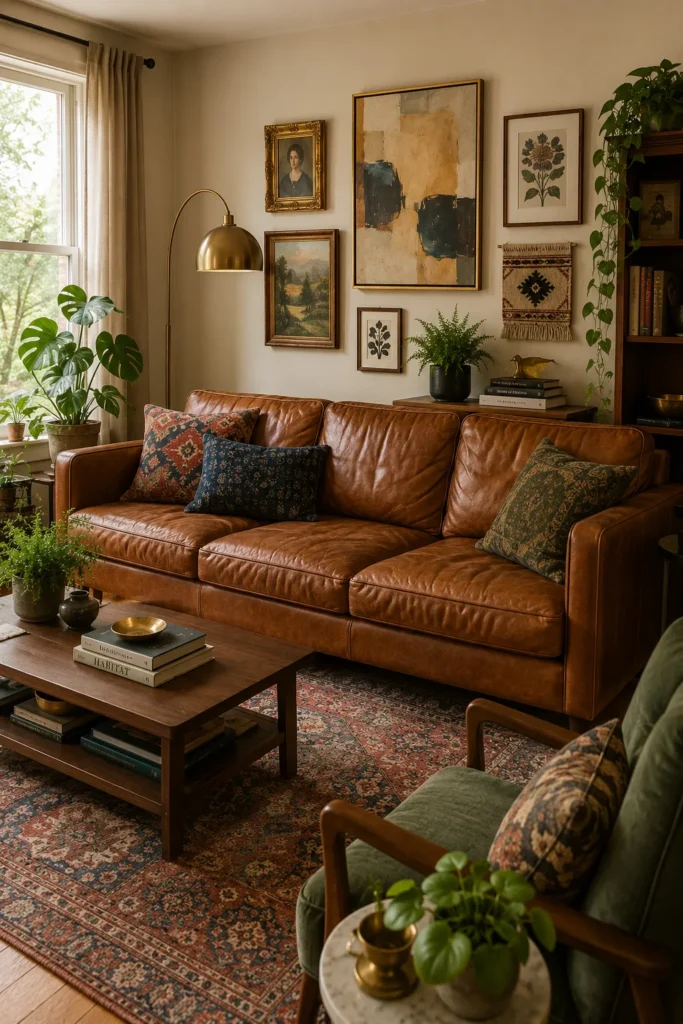
- Use aged leather to introduce warmth and timeless character.
- Balance the sofa with lighter textiles and colorful artwork.
- Choose cushions with varied patterns for a collected finish.
- Let natural wear become part of the room’s personality.
A vintage leather sofa gives a living room instant character through its warm color, tactile surface, and naturally aged appearance. Cognac, caramel, or deep brown leather works beautifully with colorful textiles because the earthy base helps balance stronger patterns. Pair the sofa with a faded rug, walnut table, and brass lighting for a relaxed collected look. Leather also works well for everyday living because it can develop a richer patina over time. If you prefer furniture that looks better with gentle signs of use, this is a strong foundation for a personality-filled seating area.
Balance the visual weight of leather with lighter fabrics and varied textures. Cream linen cushions, woven throws, patterned pillows, and soft curtains can prevent a darker sofa from making the room feel heavy. Add greenery or colorful artwork nearby to bring freshness and movement. Keep the surrounding furniture slightly simpler so the sofa remains the anchor. I’ve noticed that older-looking leather pieces pair especially well with both contemporary and vintage accessories because their neutral character bridges different eras. The result feels relaxed rather than overly coordinated, which is exactly what makes collected interiors so appealing.
20:Colorful Painted Walls
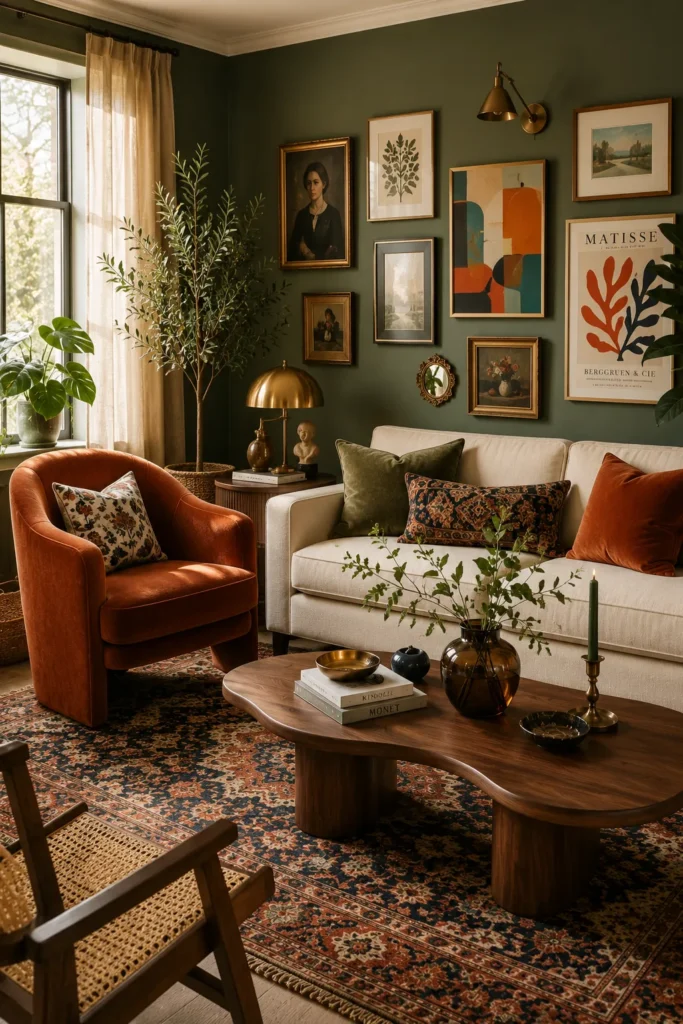
- Use one saturated wall color to create a strong backdrop.
- Choose furniture shades that complement rather than compete.
- Repeat wall color subtly through artwork or textiles.
- Test paint samples under both daylight and evening lighting.
A colorful wall can change the mood of a living room more dramatically than adding another accessory. Deep sage, muted terracotta, dusty blue, warm ochre, or rich olive can create a memorable backdrop for furniture and artwork. Choose one dominant wall color, then keep larger furniture relatively balanced so the room does not feel visually crowded. Painted walls are especially effective when your existing pieces feel disconnected because the new background can unify different finishes and patterns. Before committing, test several samples because natural daylight and evening lamps can make the same shade appear surprisingly different.
Once the wall color is selected, repeat a small amount of it through artwork, cushions, or ceramics. This creates a subtle connection without turning the room into a matching set. If the paint is dark, use lighter upholstery, reflective brass, or pale wood to maintain visual balance. For stronger colors, natural textures such as linen, rattan, and wool can soften the overall effect. In my experience, a rich painted wall often makes inexpensive artwork and secondhand furniture look more intentional because the backdrop gives every object a stronger sense of place.
21:Playful Ceramic Collection
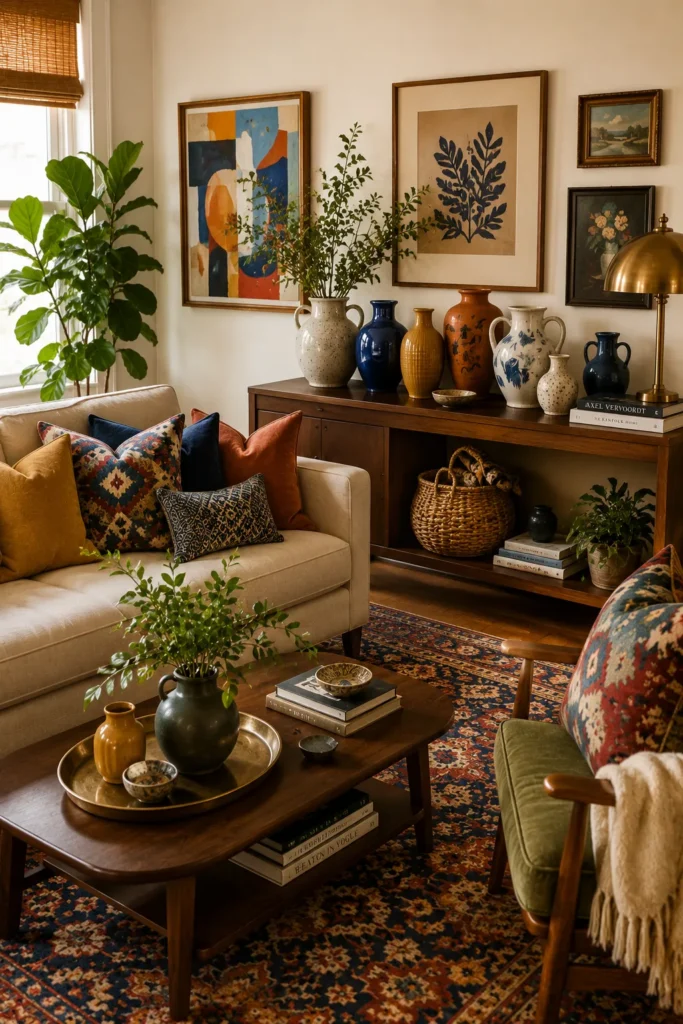
- Display ceramics in different heights, shapes, and finishes.
- Group related colors without making every piece identical.
- Use handmade imperfections to add authentic character.
- Leave open space between objects for a lighter arrangement.
A small ceramic collection can add personality to shelves, consoles, and coffee tables without overwhelming the room. Mix handmade vases, sculptural bowls, small vessels, and irregular pottery in complementary shades such as cream, cobalt, mustard, and terracotta. Different shapes make the display feel collected rather than repetitive. You do not need a large collection; three to five pieces can create enough visual interest when their heights and silhouettes vary. This is also an easy way to bring artisan character into a room without changing larger furniture, flooring, or wall finishes.
Arrange ceramics in small groups instead of spreading them evenly across every surface. Place a taller vase beside a lower bowl, then leave a little open space before adding another object. This variation gives the eye somewhere to rest and makes each piece easier to appreciate. Natural branches or dried stems can add height without introducing another strong color. I’ve noticed that slightly imperfect handmade ceramics often work better than perfectly matching sets because their irregular forms reinforce the relaxed character of eclectic decorating. Choose pieces you genuinely enjoy, and the arrangement will naturally feel more personal.
22:Eclectic Fireplace Styling
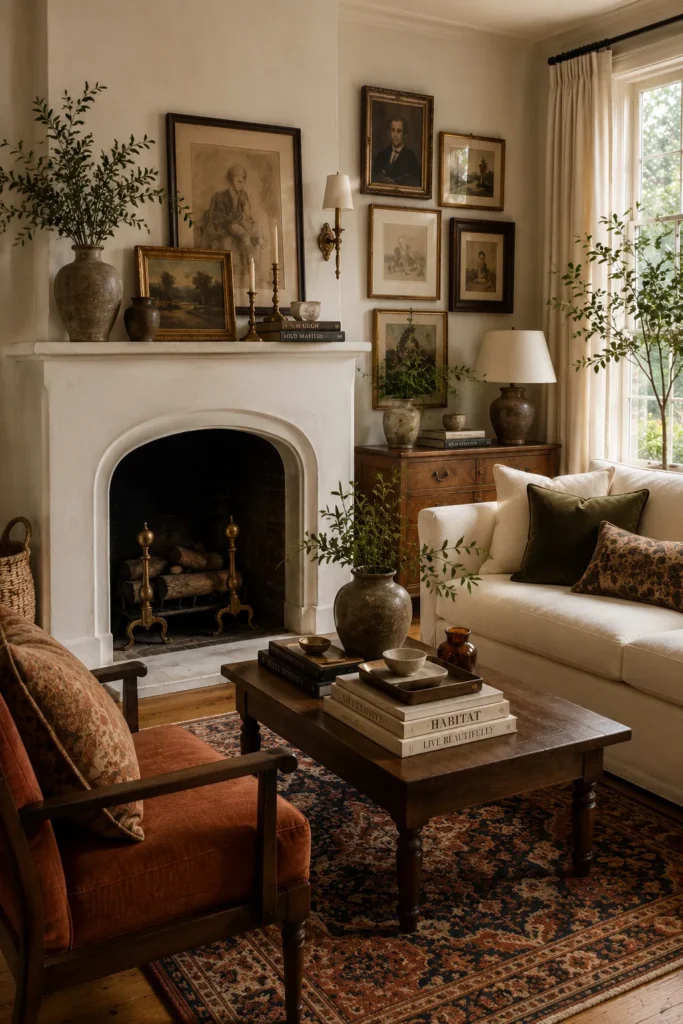
- Treat the fireplace as a focal point rather than filling every surface.
- Mix vintage objects with simple contemporary accessories.
- Repeat colors from the seating area around the mantel.
- Keep heat-sensitive materials safely away from active flames.
A fireplace naturally attracts attention, making it an ideal place to layer different decorative styles. Place a vintage mirror or artwork above the mantel, then add a few ceramic vessels, candlesticks, books, or natural branches below it. The combination of old and new creates visual interest without requiring everything to match. If the fireplace is working, keep flammable textiles and decorative materials safely away from heat. In homes without a traditional fireplace, a simple mantel-style feature or decorative surround can create a similar focal point while providing a useful surface for displaying collected pieces.
Balance is more important than the number of objects you display. Start with one taller piece, add a lower object beside it, and leave some open space between groups. Repeat a color from the sofa, rug, or artwork so the fireplace feels connected to the rest of the room. A large mirror can also reflect daylight and make the area feel brighter. I’ve noticed that fireplaces look more sophisticated when their styling changes slightly through the seasons rather than staying permanently crowded. A few thoughtful adjustments can keep the focal point fresh without buying new decor.
23:Eclectic Window Seating
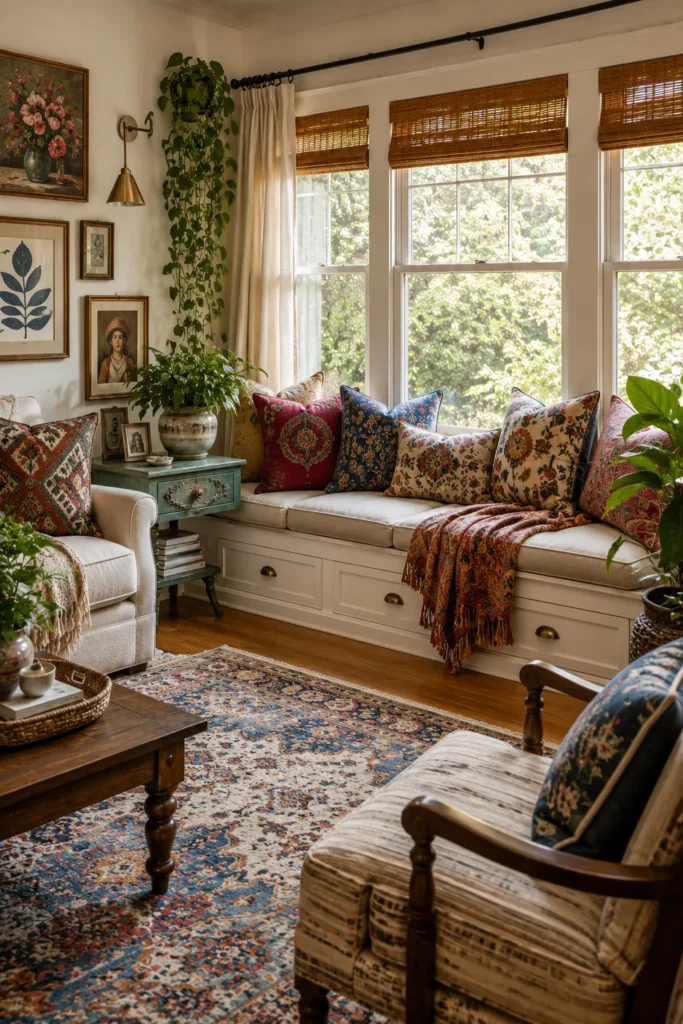
- Turn an unused window area into a comfortable seating zone.
- Layer cushions and throws for softness and visual interest.
- Keep the bench depth practical for sitting and relaxing.
- Use nearby storage baskets to keep blankets organized.
A window can become one of the most inviting features in a living room when the space beneath it is used intentionally. A simple cushioned bench creates a comfortable spot for reading, relaxing, or enjoying natural daylight. Layer it with patterned pillows, a woven throw, and one small side table for drinks or books. This arrangement works particularly well in rooms where the main sofa does not provide enough seating. Keep the colors connected to nearby furniture so the nook feels like part of the overall design rather than an isolated decorative corner.
Comfort should guide the styling as much as appearance. Choose a cushion with enough support for longer sitting, and avoid placing oversized accessories where they reduce usable space. A basket beneath the bench can store throws while keeping the area tidy. If the window receives strong direct sunlight, consider linen curtains or adjustable shades to control glare and protect fabrics. In my experience, window seating feels especially personal when it combines practical comfort with a few favorite textiles or books. The result is a useful little retreat that adds character without requiring much floor space.
24:Eclectic Layered Shelving
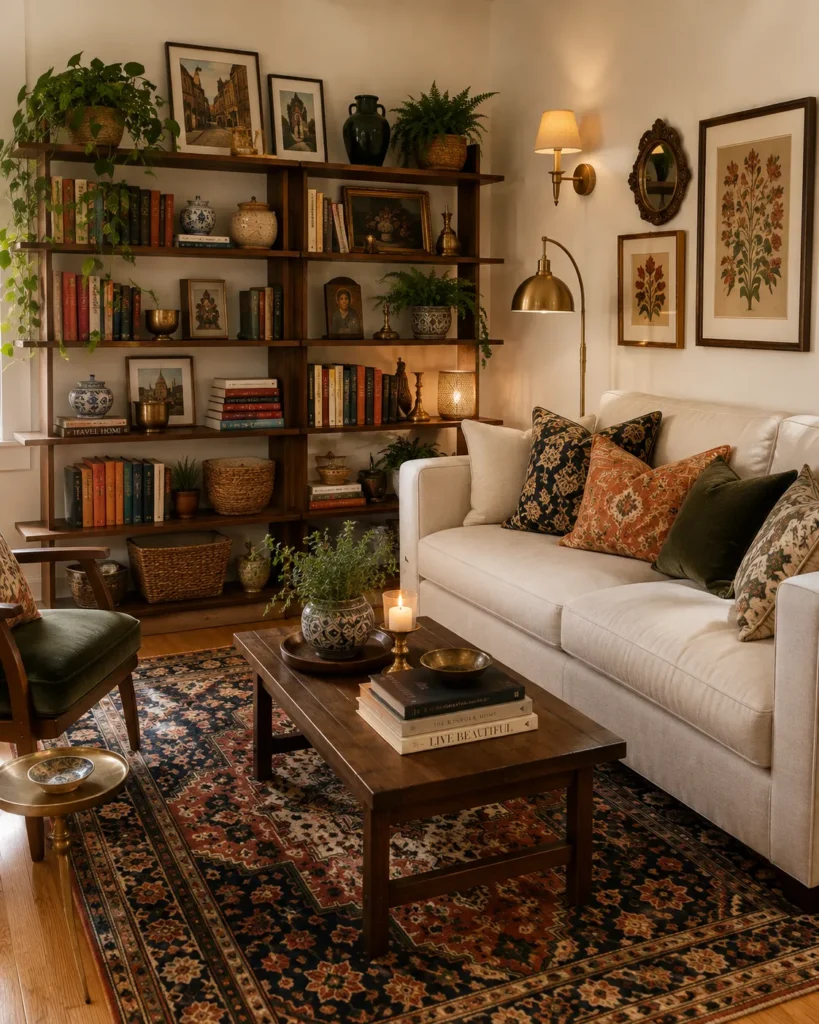
- Mix books, artwork, ceramics, plants, and meaningful objects.
- Vary object heights to create movement across each shelf.
- Leave empty spaces so the display does not feel crowded.
- Repeat colors subtly to connect different decorative pieces.
Open shelving gives you plenty of room to show personality, but the strongest displays balance decoration with empty space. Begin with larger objects such as framed artwork, baskets, or sculptural pieces, then fill smaller gaps with books, ceramics, and plants. Vary the height of each arrangement so the eye moves naturally from one shelf to another. This approach works especially well for eclectic interiors because different objects can coexist without looking like a perfectly matched collection. Use items you already own when possible; personal pieces usually make shelves feel more authentic than buying everything at once.
Think of each shelf as a small composition rather than a storage row. Stack some books horizontally, stand others vertically, and place a ceramic vessel beside them for contrast. Repeat one or two colors across different levels to create visual continuity. Leave a few gaps completely empty so individual pieces have room to breathe. If the shelves are near a seating area, keep frequently used items within easy reach. I’ve noticed that rotating smaller accessories every few months keeps open shelving interesting while preventing the room from feeling overloaded with permanent decoration.
Conclusion
Creating a personality-filled living room does not mean following strict decorating rules. The best spaces combine colors, textures, vintage finds, artwork, and comfortable furniture in ways that feel natural to the people who live there. These eclectic living room ideas can help you start small, experiment confidently, and build a room that feels collected rather than overly coordinated. I’ve seen how simple changes, such as adding a patterned rug or distinctive chair, can completely shift a space. Save this post on Pinterest, try your favorite idea, and share it with someone looking for fresh inspiration. Your most beautiful room can begin with one small change.