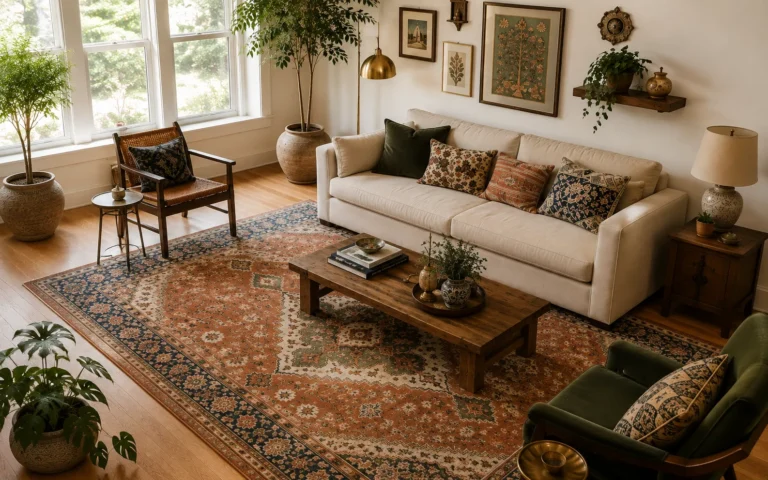
21 Gray Couch Living Room Ideas You’ll Want to Copy
Your gray couch doesn’t have to feel plain, cold, or difficult to style. The right layers can turn it into the most inviting spot in your home. These gray couch living room ideas show how color, texture, lighting, furniture, and simple accents can completely change the mood of a space. Whether your style is modern, cozy, coastal, minimalist, or warm and earthy, you’ll find practical inspiration you can actually use. I’ve noticed that small updates, such as changing cushions, adding a textured rug, or improving lighting, often make a bigger visual difference than buying new furniture. Explore these ideas to create a living room that feels polished, comfortable, and truly yours.
Read Next:25 Modern Farmhouse Bedroom Ideas You’ll Love
1: Neutral Layering
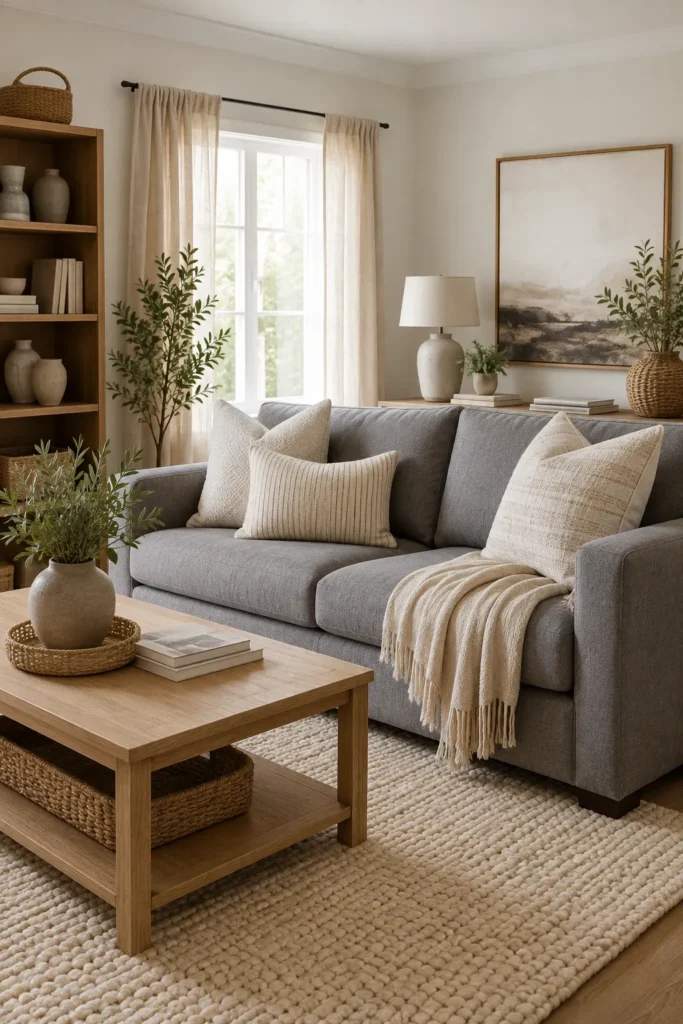
- Cream and beige accents soften the cooler appearance of gray upholstery.
- A textured rug adds warmth while visually defining the seating area.
- Light wood pieces prevent the neutral palette from feeling flat.
- One charcoal or black accent creates subtle contrast without overpowering the room.
A gray sofa becomes instantly warmer when layered with creamy neutrals and natural textures. Pair a medium-gray couch with an ivory rug, linen curtains, and soft beige throw pillows to create a balanced foundation that feels bright without looking stark. Light oak furniture adds warmth while woven baskets bring casual texture. This combination works especially well in smaller living rooms because the pale accents reflect available light and keep the space visually open. In my experience, adding just one deeper accent, such as a charcoal cushion or black lamp, gives the neutral palette enough contrast to feel polished.
For a relaxed, timeless room, build around the sofa instead of filling every corner with accessories. Place the gray couch on a large ivory rug, then add a rounded coffee table and one slim side table to maintain comfortable circulation. Keep wall decor simple with oversized neutral artwork or a soft abstract print. The result is one of the most versatile gray couch living room ideas because it can shift between modern, transitional, and cozy styles with small accessory changes. Choose washable fabrics when the room gets heavy daily use, especially in homes with children or pets.
2: Warm Wood Accents
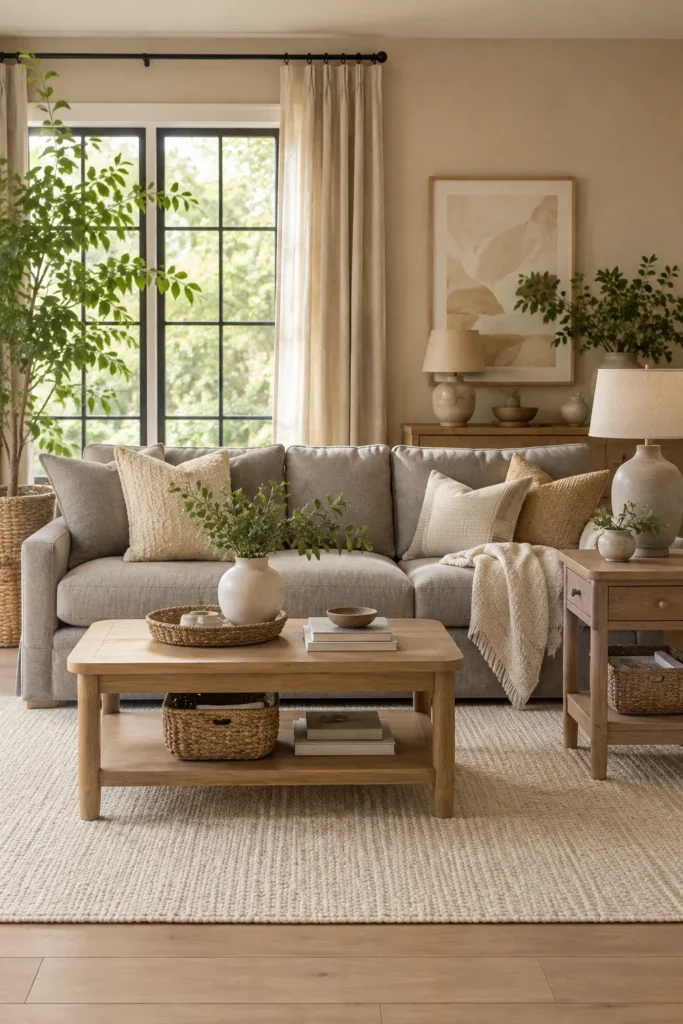
- Light oak furniture adds warmth to cool gray upholstery.
- Woven baskets introduce texture without making the room feel cluttered.
- Repeating wood tones across small accessories creates visual consistency.
- Lighter wood works especially well against darker flooring.
Warm wood can make a cool gray sofa feel instantly more inviting. Choose a light or medium oak coffee table, matching side table, and a few woven accessories to introduce natural variation without overwhelming the room. The combination works because wood tones soften gray upholstery while keeping the overall look clean and contemporary. Add a cream rug and simple ceramic decor for balance. I’ve noticed this pairing is especially useful in apartments where the sofa can otherwise feel visually heavy. Natural materials also add subtle texture, making the room feel finished without relying on lots of decorative pieces.
Keep the layout airy by positioning the gray couch opposite the main focal point, such as a media console, fireplace, or large window. A rectangular wood coffee table can anchor the seating area while leaving enough space for easy movement around it. Repeat the wood tone in picture frames, lamp bases, or shelving for a cohesive finish. If your room has dark flooring, lighter wood creates useful contrast and prevents the furniture from blending together. Finish with one leafy plant and a few neutral textiles, creating a comfortable space that feels practical for everyday lounging and entertaining.
3: Moody Contrast
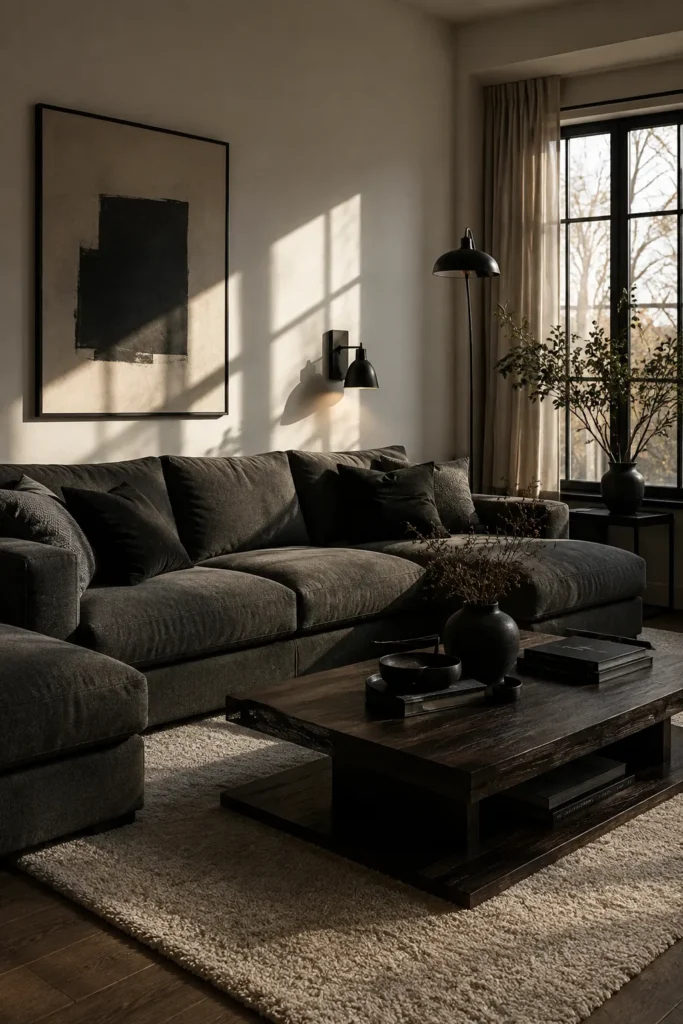
- Charcoal accents give a gray sofa stronger visual definition.
- Black lighting or hardware adds a crisp modern edge.
- Cream textiles keep darker elements from making the room feel heavy.
- Layered lighting helps maintain warmth after natural daylight fades.
Dark accents can give a gray sofa a surprisingly sophisticated edge without making the room feel gloomy. Start with charcoal cushions, a black floor lamp, or a dark wood coffee table, then balance those stronger pieces with cream textiles and warm white walls. The contrast helps gray upholstery look intentional rather than plain. This approach works particularly well in larger living rooms where pale furniture can sometimes feel disconnected from the surrounding space. Keep metallic finishes restrained, choosing one repeated tone such as matte black or aged brass so the room stays cohesive and visually calm.
For a polished everyday setup, use contrast strategically rather than covering the entire room in dark colors. Position the sofa against a lighter wall and place a cream or oatmeal rug underneath to separate the seating area from the floor. Add black picture frames, a sculptural lamp, and one dark decorative object for repetition. These small touches create rhythm while keeping the furniture comfortable and approachable. If the room receives limited daylight, choose warm bulbs and reflective surfaces sparingly to prevent the darker palette from feeling closed in, especially during evenings when layered lighting becomes the main source of atmosphere.
4:Soft Blue Accents
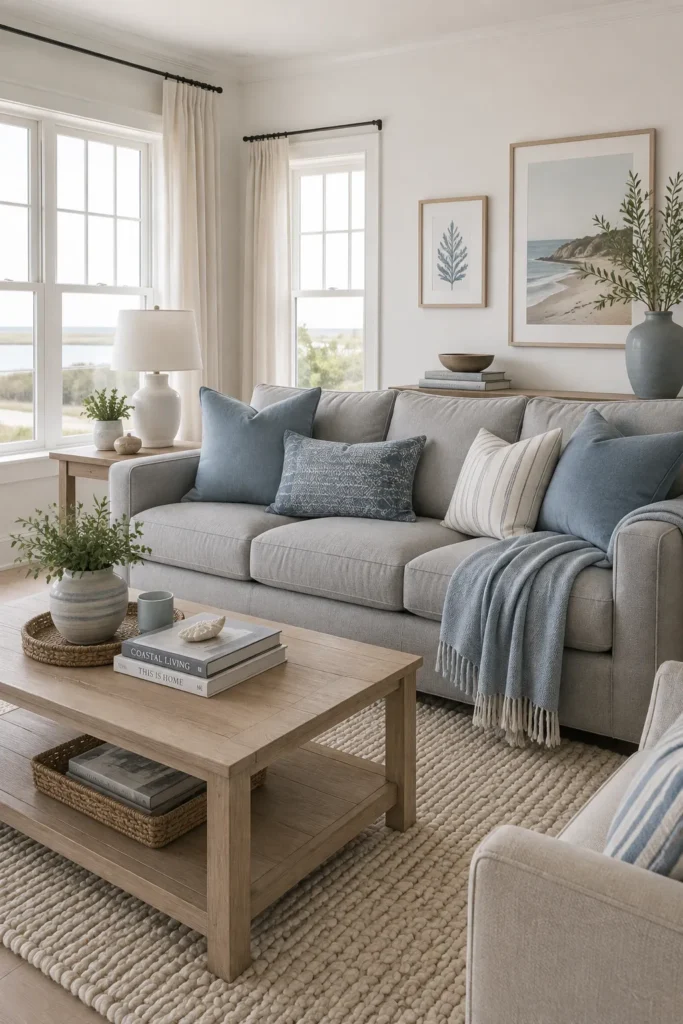
- Dusty blue brings a fresh, calming contrast to gray upholstery.
- Cream textiles keep the cool palette from feeling too stark.
- Pale wood adds warmth and natural character.
- Blue artwork can repeat the accent color without overwhelming the room.
Soft blue accents can completely refresh the look of a gray sofa without requiring major furniture changes. Dusty blue cushions, a lightweight throw, or a muted blue rug introduce color while keeping the room calm and sophisticated. The cool tones naturally complement gray upholstery, especially when paired with white walls and light wood furniture. This palette works beautifully in rooms that receive plenty of daylight because the colors feel airy rather than cold. I’ve noticed that using several small blue accents usually looks more polished than relying on one oversized statement piece.
For a cohesive arrangement, repeat the blue shade in at least two or three places around the room. Try a pair of cushions on the sofa, a small ceramic vase on the coffee table, and artwork featuring subtle blue details. Keep surrounding colors quiet with cream, beige, or pale wood finishes so the accent remains noticeable. This approach makes the seating area feel coordinated while preserving flexibility for seasonal updates. If you prefer a warmer atmosphere, choose dusty or muted blue rather than icy shades, then add warm lighting and natural woven textures to soften the overall effect.
5:Creamy Textures
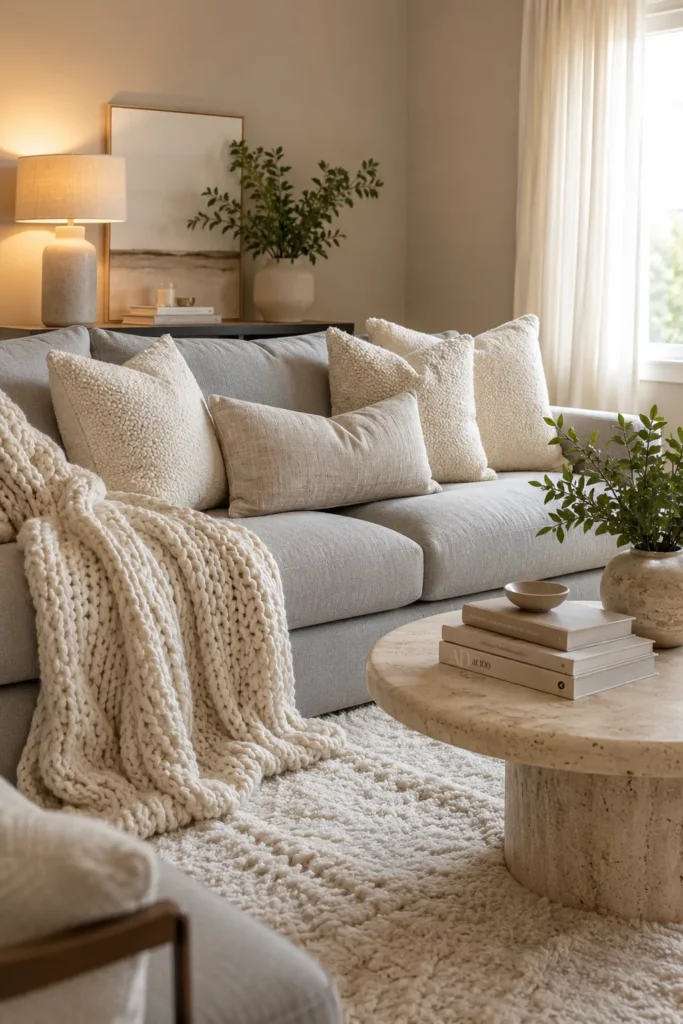
- Boucle and knitted fabrics make smooth upholstery feel more inviting.
- An ivory rug adds softness while defining the seating zone.
- Rounded furniture creates a gentle contrast with the sofa’s straight lines.
- Layering different textures adds depth without requiring bold colors.
Texture is the secret to making a simple gray sofa feel warm, comfortable, and visually rich. Layer boucle cushions, knitted throws, linen pillows, and a plush ivory rug to create contrast against the couch’s smooth upholstery. Because the color palette stays neutral, you can mix several fabrics without making the room look busy. A rounded coffee table or curved lamp also softens the structured lines of the sofa. This is one of those gray couch living room ideas that works especially well when you want a cozy atmosphere but prefer a refined, uncluttered appearance.
Start with one substantial textured piece, such as a thick area rug, then build smaller layers around it. Place two larger cushions at the back of the sofa, add smaller textured pillows in front, and drape a soft throw casually over one arm. Keep the coffee table relatively simple so the fabrics remain the visual focus. In my experience, varying texture is often more effective than adding extra decoration when a neutral room feels flat. Choose washable or durable fabrics for frequently used seating, especially if the sofa is part of a busy family living area.
6:Black And White Styling
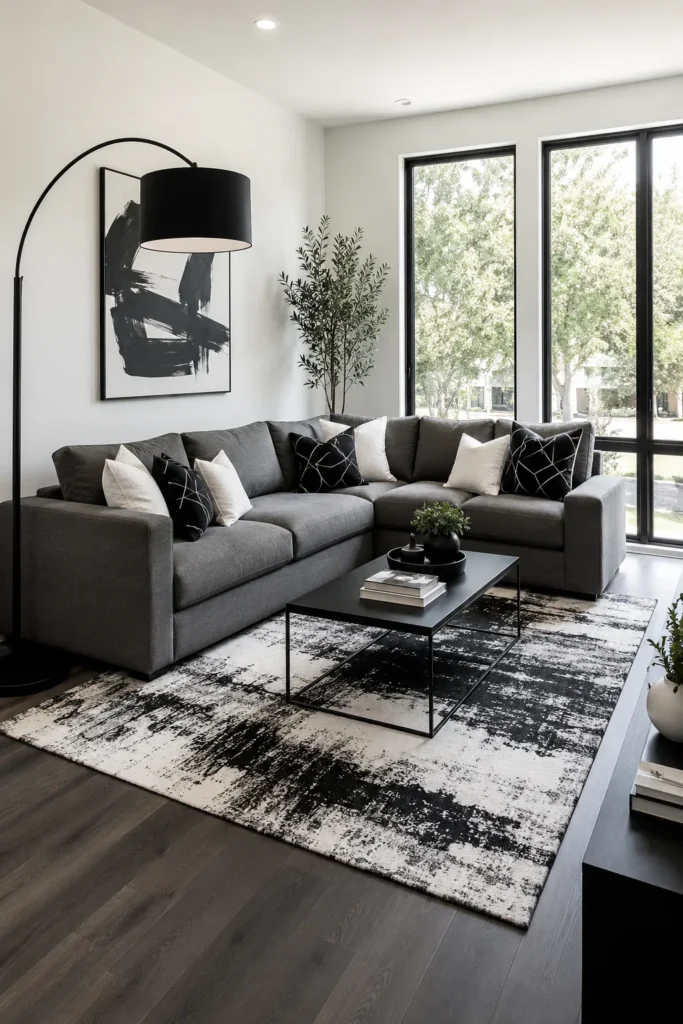
- Black accents sharpen the softer appearance of gray upholstery.
- White accessories keep the contrast crisp and visually balanced.
- Graphic artwork adds personality without introducing extra colors.
- Repeating black details throughout the room creates a connected look.
Black and white accents give a gray sofa a clean, graphic appearance that feels modern without becoming overly stark. Add crisp white cushions, a black-and-white patterned rug, and a few matte-black accessories to create clear visual contrast. The gray upholstery acts as a bridge between the two stronger shades, helping the palette feel balanced. This combination is particularly effective in contemporary homes with simple architectural details because the furniture and accessories become the main design features. Keep patterns selective, using one larger graphic element and smaller repeating details for a polished finish.
To make the arrangement feel intentional, repeat black in several small areas instead of concentrating it in one place. A slim black coffee table, floor lamp, picture frames, or decorative bowl can connect the different parts of the room. Use white walls or light curtains to preserve brightness, especially if the flooring is dark. For extra warmth, introduce a natural wood accent or a small green plant without changing the main color scheme. That small addition prevents the room from feeling too rigid while allowing the gray, black, and white combination to remain the dominant visual story.
7:Greenery And Gray
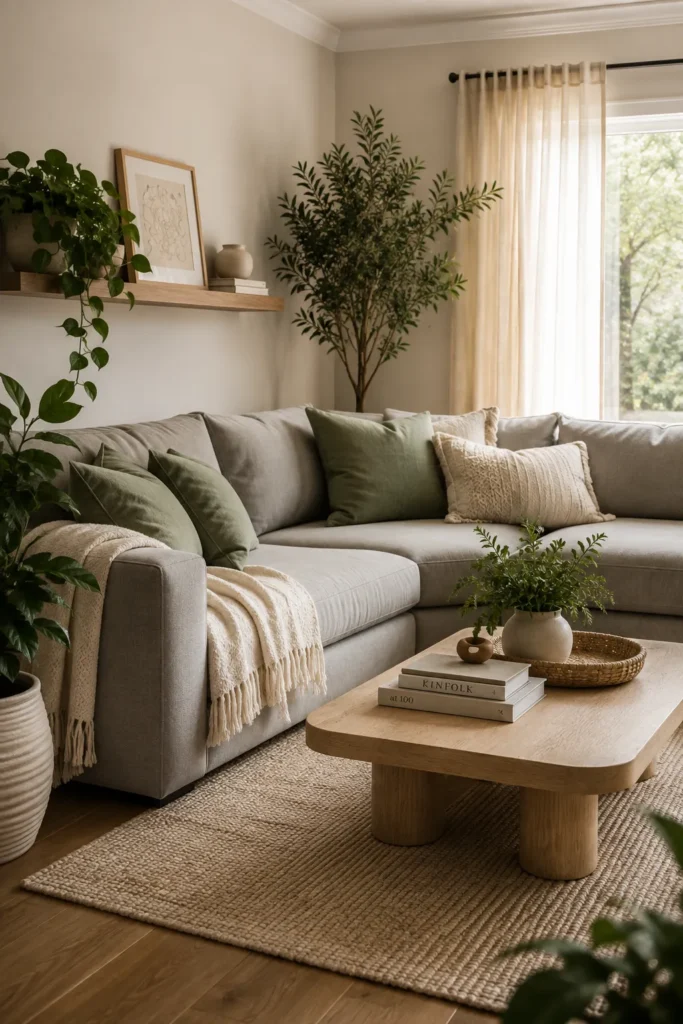
- Sage and olive tones bring a natural softness to gray upholstery.
- Large plants add height and organic movement.
- Woven planters introduce warmth and texture.
- Green accents can refresh a neutral room without overpowering it.
Bring a fresh, natural feeling into the room by pairing gray upholstery with leafy greenery and muted green accents. Sage, olive, and eucalyptus shades work especially well because they soften the cooler undertones of gray without making the palette feel overly colorful. Place one taller plant beside the sofa and smaller greenery on a coffee table or shelf to create different heights. Natural wood and woven planters reinforce the organic look. I’ve seen this combination work beautifully in homes where the furniture feels neutral but the owner wants more personality without committing to bold wall colors.
Keep the greenery intentional rather than turning the living room into an indoor jungle. One large plant can fill an empty corner, while two or three smaller plants can add life to shelves and tables. Choose pots in cream, terracotta, stone, or woven materials to complement the existing palette. If natural light is limited, select plants suited to lower-light conditions and position them where they can thrive. Repeat the green shade subtly through cushions or artwork for cohesion. The result is a comfortable seating area that feels connected to nature while remaining polished and easy to maintain.
8:Layered Neutral Rugs
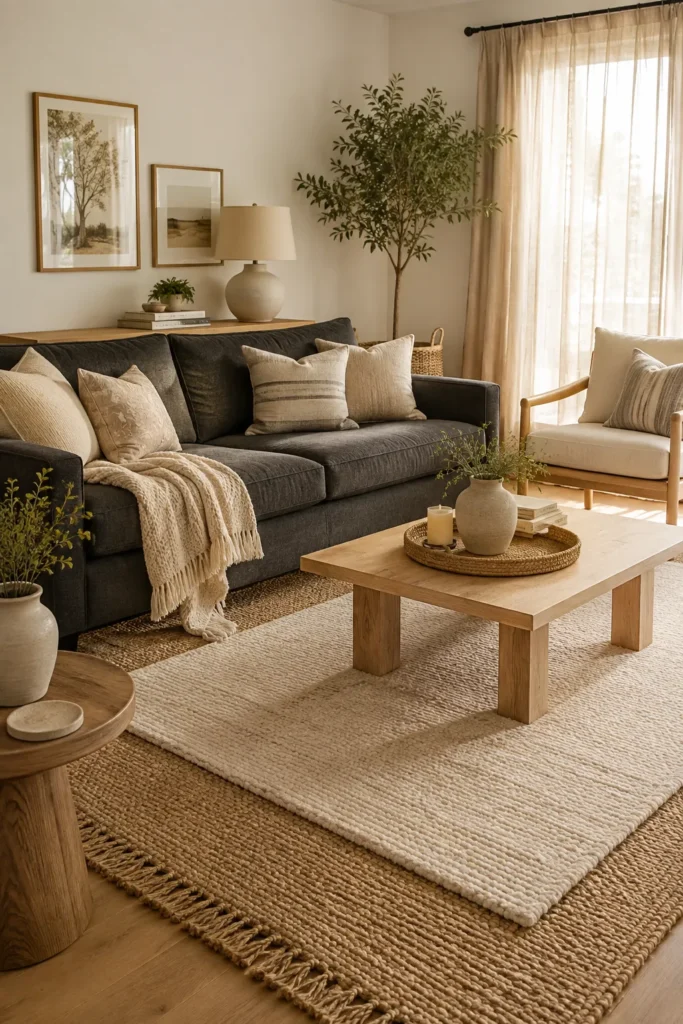
- Layered rugs define the seating area and add visual depth.
- Jute brings natural texture beneath softer woven materials.
- Cream rugs brighten darker gray upholstery.
- Slightly overlapping rugs create a relaxed, collected appearance.
Layering rugs is a simple way to give a gray sofa more visual depth while making the seating area feel warmer underfoot. Start with a larger natural-fiber rug, such as jute or sisal, then place a smaller cream or wool rug over the center. The contrast between rough and soft textures creates interest without introducing complicated patterns. This setup works particularly well in open-plan homes because the layered rugs visually anchor the furniture and help separate the living area from nearby dining or kitchen zones.
Choose rugs with complementary undertones so the combination feels deliberate rather than mismatched. A beige jute base paired with an ivory wool layer creates gentle contrast, while a subtle geometric pattern can add definition without competing with the sofa. Make sure the larger rug extends beneath the main seating pieces to keep the arrangement grounded. If the couch is darker gray, lighter upper layers can brighten the entire zone. For busy households, consider washable or easy-clean options for the smaller top rug, especially where coffee, snacks, or everyday foot traffic are common.
9:Brass Lighting Details
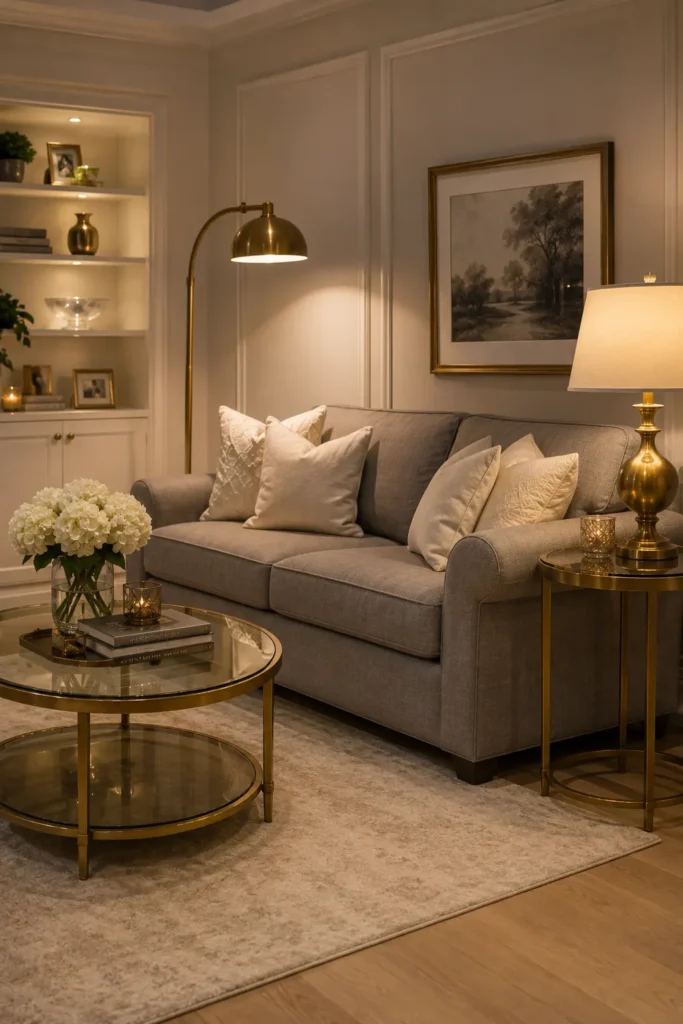
- Brass introduces warmth against cool gray furniture.
- A floor lamp adds both illumination and vertical interest.
- Repeated metallic details make the room feel coordinated.
- Warm bulbs create a softer evening atmosphere.
Warm brass lighting can transform a gray sofa from simple to sophisticated with surprisingly little effort. Choose a brass floor lamp beside the sofa and repeat the finish through a table lamp, picture frame, or small decorative object. The warm metallic tone contrasts beautifully with gray upholstery, creating a refined look without needing bright colors. Pair the lighting with cream textiles and light wood to keep the room inviting. That combination is especially useful in spaces where gray furniture feels slightly cool during the evening, when artificial lighting becomes more important.
Think about lighting in layers rather than depending on a single ceiling fixture. Place a tall lamp beside the sofa for ambient illumination, then add a smaller table lamp across the room to balance the visual weight. Choose warm-white bulbs to make gray upholstery and neutral fabrics appear softer at night. Keep metallic finishes consistent for a more intentional appearance, but avoid matching every accessory. A few repeated brass details are enough to create cohesion. I’ve noticed that changing lighting can make a bigger difference than adding more decor when a living room already has strong furniture pieces.
10:Cozy Fireplace Focus
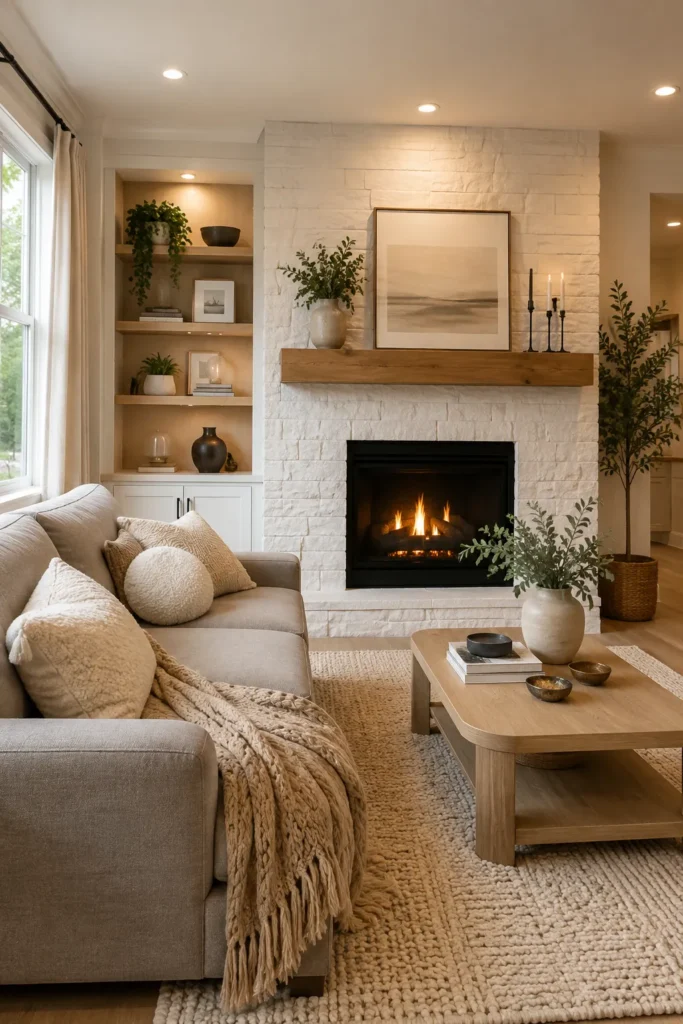
- A fireplace creates a natural focal point for the seating arrangement.
- Cream textiles soften the coolness of gray upholstery.
- Natural wood accents make the fireplace area feel warmer.
- Keep mantel decor simple so the architectural feature remains dominant.
A fireplace can give a gray sofa a strong visual anchor while making the entire room feel naturally inviting. Position the seating so the fireplace remains visible from the main lounging area, then soften the arrangement with cream cushions, textured throws, and a neutral rug. Light wood furniture works beautifully beside stone, brick, or painted fireplace surrounds. This setup is especially useful in larger living rooms where furniture can otherwise feel scattered. The fireplace provides a clear destination for the eye, while the gray sofa keeps the surrounding palette calm and versatile.
Avoid overcrowding the mantel or surrounding walls because the fireplace already provides plenty of visual interest. Instead, choose one large artwork piece, a simple mirror, or a few understated objects that complement the room’s colors. Keep enough space around the sofa for comfortable movement, especially if the fireplace is used regularly. For evening ambiance, combine the firelight with warm floor or table lamps rather than bright overhead lighting. The result feels layered and comfortable without looking overly decorated. This arrangement can also make an open living space feel more defined and purposeful.
11: Natural Linen Layers
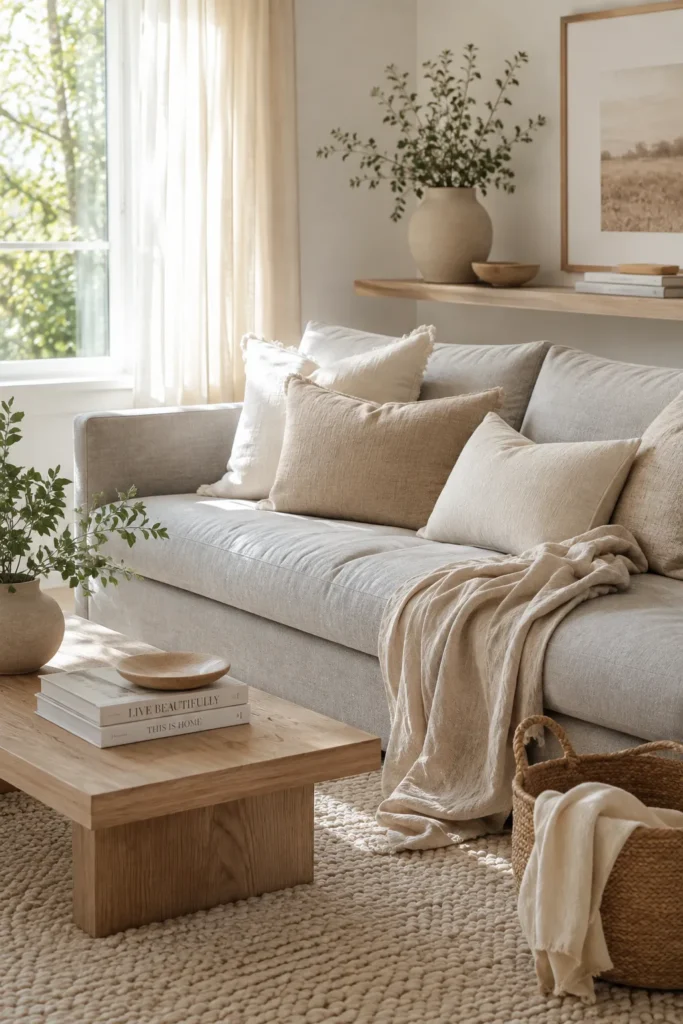
- Linen cushions add relaxed texture to smooth gray upholstery.
- Oatmeal and ivory shades warm the overall palette.
- Sheer curtains maximize natural light without feeling heavy.
- Woven accessories reinforce the casual organic aesthetic.
Natural linen is an easy way to make gray seating feel relaxed, breathable, and effortlessly styled. Choose cushions in oatmeal, ivory, sand, or warm beige, then add a loosely draped linen throw for another layer of texture. The slightly rumpled appearance gives the room character without looking messy. Pair these fabrics with pale wood, woven baskets, and a cream rug to create an organic atmosphere. This approach works particularly well for everyday living rooms because the materials feel comfortable and approachable while still looking thoughtfully designed.
Keep the color differences subtle so the room feels layered rather than disconnected. A combination of warm beige, soft white, and light gray can create enough contrast through texture instead of strong color. Place larger cushions toward the back of the sofa and smaller pillows in front to create depth without making the seating uncomfortable. If the room receives strong sunlight, sheer linen curtains can soften the brightness while preserving an airy appearance. I’ve noticed that natural fabrics are particularly effective when a neutral room feels too polished or flat because they introduce an imperfect, lived-in quality.
12:Gallery Wall Balance
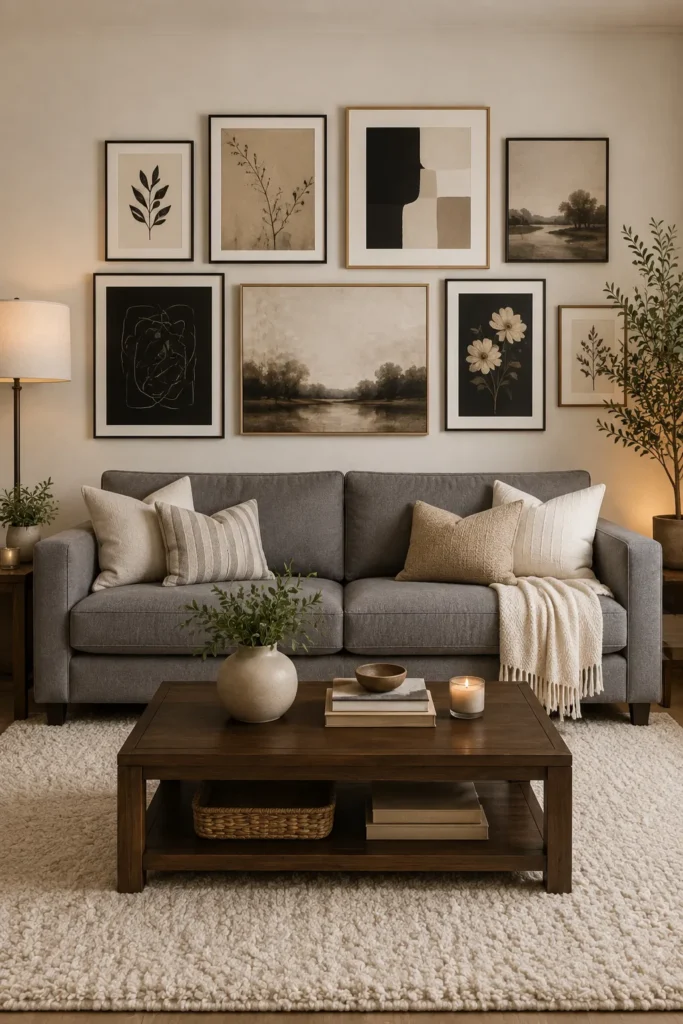
- A gallery wall gives blank space above the sofa more personality.
- Repeating neutral tones keeps multiple artworks visually connected.
- Mixed frame sizes create movement without overwhelming the seating area.
- Consistent spacing makes the arrangement feel intentional and polished.
A gallery wall can turn the blank space above a gray sofa into an eye-catching focal point. Choose artwork that repeats the room’s existing shades, such as black, cream, beige, gray, or muted earth tones. Mixing photography, abstract prints, and simple line drawings adds variety while keeping the overall display cohesive. Use several frame sizes to create movement, but maintain consistent spacing so the arrangement feels organized. The neutral sofa provides a quiet foundation, allowing the artwork to become the main personality feature without competing with the rest of the furniture.
Before hanging anything, arrange the frames on the floor to test different compositions and proportions. Keep the center of the arrangement aligned with the sofa rather than placing every piece at the same height. A larger central artwork can provide an anchor, while smaller pieces gradually balance the surrounding space. If your sofa is wide, extend the gallery slightly beyond its center area without making it dramatically wider than the furniture. In my experience, repeating one frame finish throughout the display creates a cleaner look, while adding one contrasting frame can give the arrangement a more collected appearance.
13:Earthy Terracotta Accents
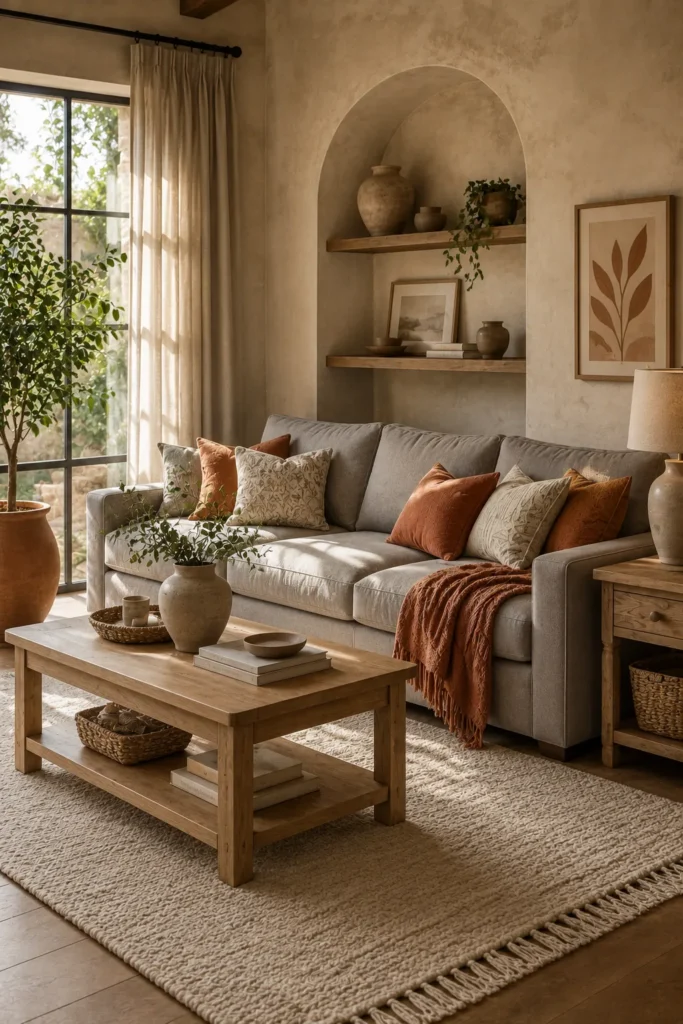
- Terracotta adds warmth and personality to cool gray upholstery.
- Ceramic pieces repeat the earthy color without overwhelming the room.
- Natural wood helps connect the warm and cool tones.
- Cream textiles keep the palette balanced and bright.
Terracotta accents can bring a rich, earthy warmth to a gray sofa while keeping the room sophisticated. Add rust, clay, or burnt-orange cushions alongside a warm neutral throw to create contrast without overwhelming the space. These tones work especially well with medium and charcoal gray because their warmth balances the sofa’s cooler appearance. Natural oak, beige textiles, and handmade-looking ceramics strengthen the organic feeling. This is one of the most effective gray couch living room ideas when you want a neutral foundation but still crave color, character, and a cozy atmosphere.
Use terracotta in small doses so it feels like an intentional accent rather than the dominant color. Two cushions, one ceramic vase, and a small decorative bowl can be enough to establish the palette. If the room already has warm wood flooring, repeat similar earthy undertones in the accessories for a cohesive appearance. Keep larger surfaces such as curtains and rugs lighter to prevent the space from becoming visually heavy. For an updated look, combine terracotta with soft cream and muted olive instead of bright orange, creating a more sophisticated and naturally layered finish.
14:Modern Minimalist Setup
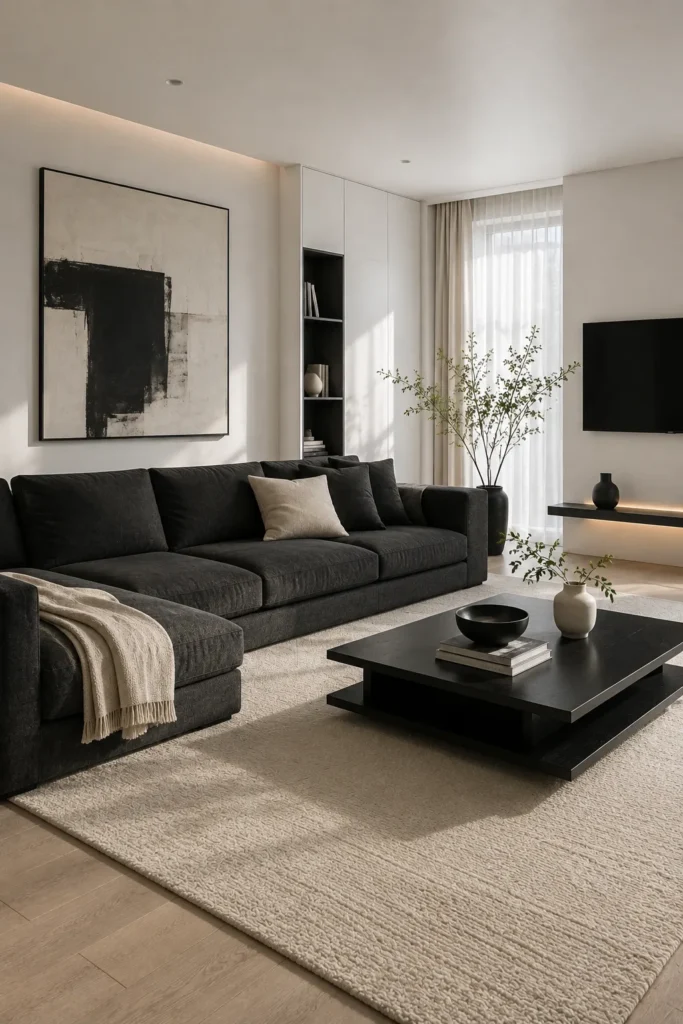
- Fewer accessories allow the sofa’s shape and texture to stand out.
- A large rug keeps minimalist furniture from feeling disconnected.
- Low-profile tables emphasize clean architectural lines.
- One or two warm accents prevent the room from feeling sterile.
Minimalism works beautifully with a gray sofa because the neutral upholstery already provides a calm visual foundation. Keep the seating area simple with a large rug, streamlined coffee table, and only a few carefully selected accessories. Choose clean shapes and avoid filling every surface with decor. A cream cushion, soft throw, and one sculptural object can provide enough contrast without disrupting the uncluttered appearance. This approach is especially practical for smaller homes because fewer visual elements make the room feel more spacious and easier to maintain.
Focus on quality, proportion, and negative space rather than adding more furniture. A low-profile coffee table can emphasize the sofa’s clean lines, while a large rug visually connects the seating pieces. Keep artwork simple, choosing one oversized abstract print instead of several small decorations. Hidden storage can handle everyday items such as remotes, blankets, and magazines while keeping surfaces clear. If the palette starts feeling too cool, introduce one warm element such as light oak or beige linen. The finished room should feel comfortable and functional, not empty, with every visible piece serving a clear purpose.
15:Coastal Gray Palette
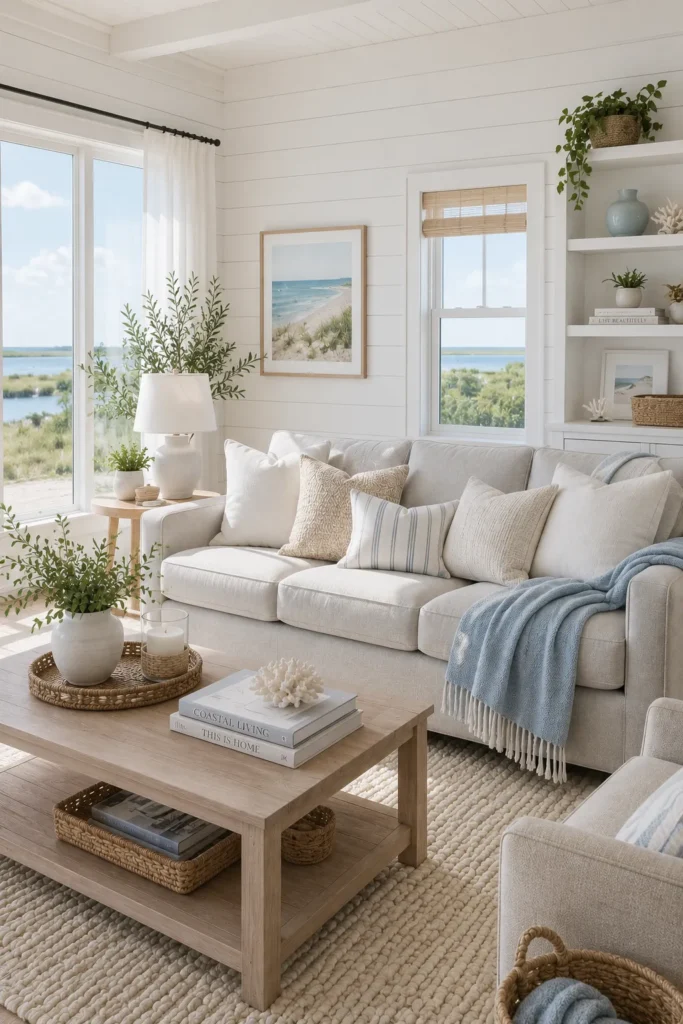
- Soft blue adds a subtle coastal touch without becoming overly themed.
- Sandy beige warms the pale gray upholstery.
- Woven textures create relaxed seaside character.
- White walls and sheer curtains maximize the airy feeling.
A coastal palette can make a gray sofa feel light, fresh, and effortlessly relaxed. Combine pale gray upholstery with white, sandy beige, soft blue, and natural wood for a calm seaside-inspired look. Instead of relying on obvious nautical decorations, focus on texture through woven baskets, linen cushions, jute rugs, and lightweight curtains. This creates a coastal atmosphere that feels sophisticated enough for everyday living. Natural daylight is especially helpful because it highlights the soft variations between gray, cream, and blue while making the room feel open and breezy.
Keep the coastal influence subtle by avoiding too many shells, anchors, or strongly themed accessories. A single blue throw, striped cushion, or ocean-inspired artwork can suggest the style without making the room feel like a vacation rental. Choose pale oak or weathered wood for furniture to reinforce the relaxed character. If your living room has darker gray seating, use more white and cream around it to maintain brightness. Finish with greenery, such as an airy palm or leafy plant, for a fresh touch. The result is comfortable, understated, and easy to update as seasons change.
16:Jewel Tone Accents
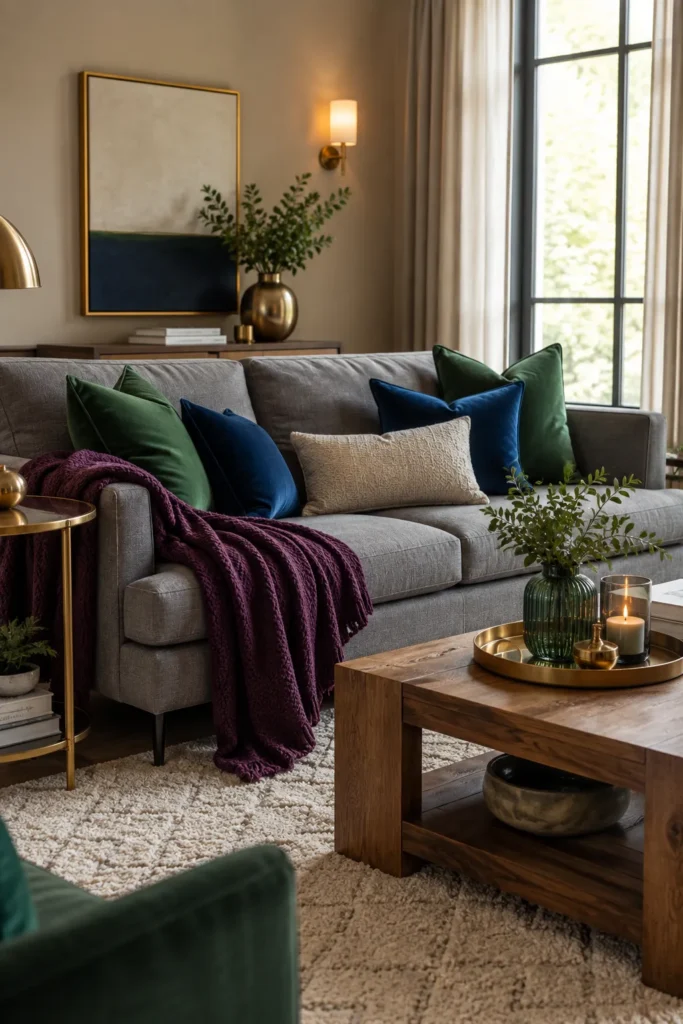
- Jewel tones create striking contrast against neutral gray upholstery.
- Emerald and sapphire add richness without changing the main furniture.
- Cream surfaces balance deeper accent colors.
- Small brass details bring warmth and sophistication.
Make a gray sofa feel instantly elevated with rich jewel tones and carefully chosen metallic accents. Emerald green, sapphire blue, or deep plum cushions create striking contrast against neutral upholstery without requiring a full room makeover. Balance the saturated colors with cream curtains, a soft beige rug, and warm wood furniture so the palette stays sophisticated. This approach works especially well in larger living rooms where stronger accents can create a memorable focal point. I’ve noticed that using one dominant jewel tone and one supporting shade usually feels more polished than mixing several bold colors together.
Choose jewel tones according to the amount of natural light your room receives. Emerald and sapphire can feel dramatic in bright spaces, while plum and burgundy add warmth to rooms with softer daylight. Repeat your chosen color through two or three accessories, such as cushions, artwork, and a ceramic vase, rather than spreading it everywhere. Keep larger surfaces neutral so the gray sofa remains visually grounded. Warm brass or antique gold can complement the richer palette, but use metallic finishes sparingly. The finished space feels luxurious and expressive while remaining comfortable enough for everyday lounging and entertaining.
More ideas :Gray Couch Living Room Ideas
17:Low Profile Sectional
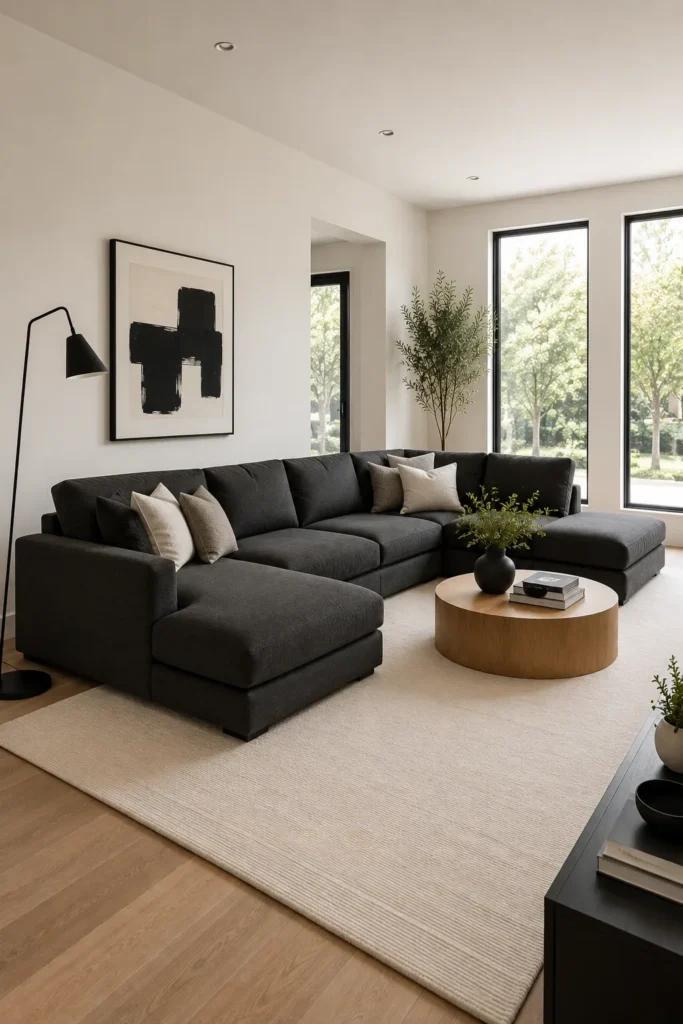
- Low furniture makes the room feel visually taller and more open.
- A large rug connects the sectional with surrounding furniture.
- Slim-legged pieces preserve an airy appearance.
- Round tables soften the sectional’s structured silhouette.
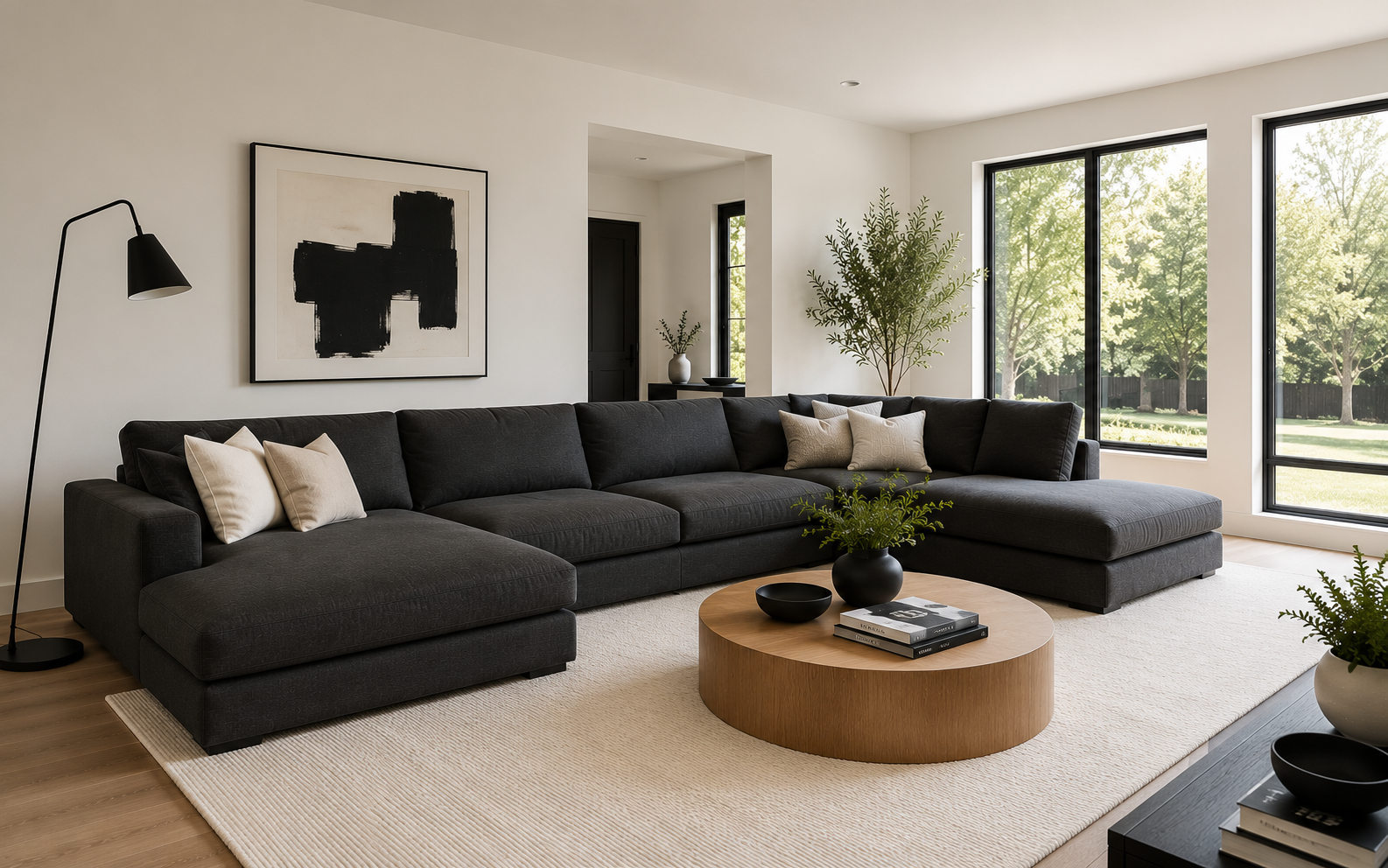
A low-profile sectional can make a gray seating area feel spacious, structured, and wonderfully modern. Choose a streamlined design with clean arms and a simple silhouette, then position it to define the main conversation zone. A large neutral rug underneath helps connect the sectional to a coffee table and nearby accent chair. This arrangement works particularly well in open-plan homes because the sofa can create a natural boundary without blocking sightlines. Keep surrounding furniture visually light, using slim legs and simple shapes to preserve the sense of openness while still providing plenty of comfortable seating.
When arranging a sectional, measure the room before choosing its orientation, especially around doors, windows, and walkways. Leave enough clearance for everyday movement and avoid pushing every piece tightly against the walls. Add one round coffee table to soften the sectional’s straight lines and make movement around the seating area easier. A floor lamp placed near the corner can provide useful reading light without adding another bulky table. If your room is compact, select a reversible chaise or modular design when possible. That flexibility makes future rearranging easier as your needs change.
18:Boucle And Curves
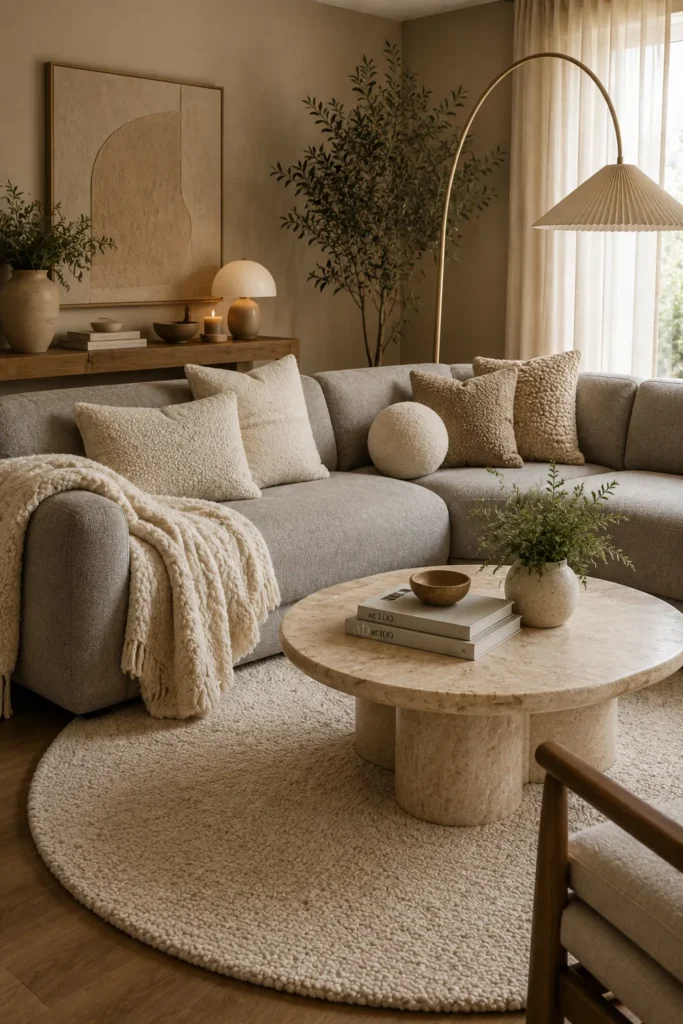
- Boucle adds tactile softness to smooth gray upholstery.
- Curved furniture creates a gentler visual flow.
- Cream textures prevent the neutral palette from feeling flat.
- Rounded accessories balance the sofa’s straight lines.
Gray upholstery looks especially inviting when paired with creamy boucle, warm beige, and softly rounded furniture. Start with a plush cream rug beneath the sofa, then add boucle cushions, a chunky throw, and a rounded coffee table to create a cocoon-like seating zone. The different textures catch light in subtle ways, giving the neutral palette depth without introducing strong color. This combination is ideal for living rooms designed around relaxation because every element feels soft and approachable. Natural wood or woven accents can add just enough contrast to keep the room from looking overly monochromatic.
For the best result, vary texture more than color. Pair smooth gray upholstery with nubby boucle, woven baskets, linen curtains, and a subtly patterned rug so each surface feels distinct. Keep the shapes comfortable and practical, especially if the sofa is used every day. A round ottoman can double as extra seating or a footrest, while a low tray keeps everyday items organized. Warm lamps are useful after sunset because they make cream fabrics appear even softer. I’ve noticed that this layered approach can make a newly furnished room feel lived-in without adding unnecessary clutter.
19:Warm Beige Contrast
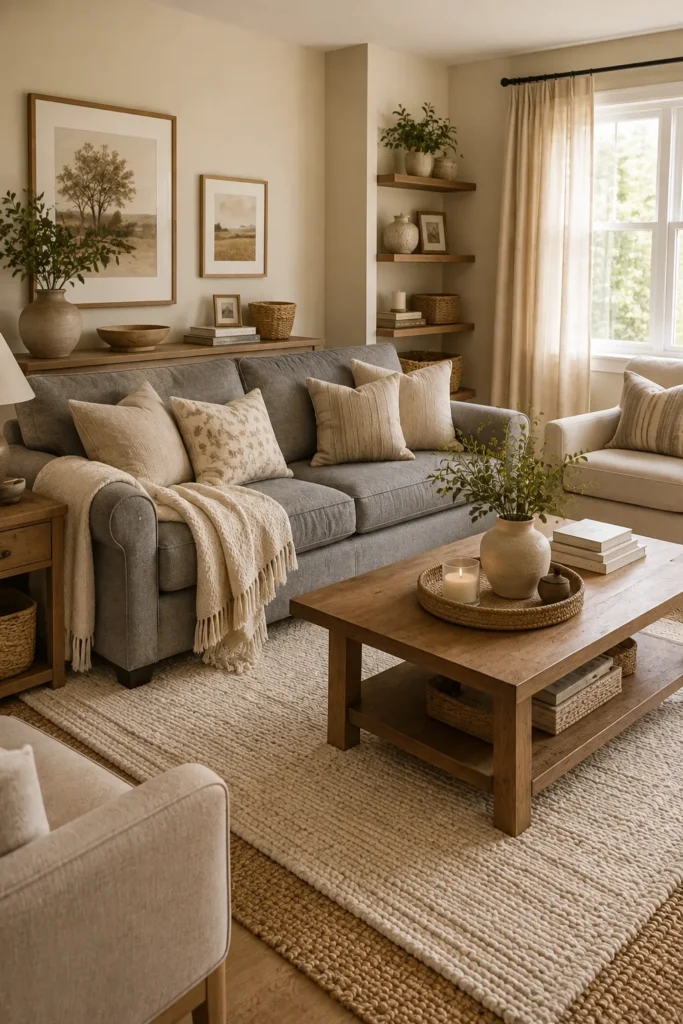
- Beige accents warm up cool gray upholstery.
- Oatmeal textiles create soft tonal layering.
- Walnut furniture adds depth without harsh contrast.
- Warm neutrals work well across changing seasons.
Warm beige is one of the easiest ways to soften a gray sofa while keeping the room timeless. Layer oatmeal cushions, cream textiles, and a beige throw across the seating area, then introduce walnut or light oak furniture for natural warmth. These subtle differences in tone create depth without making the room feel busy. The combination works particularly well in transitional interiors where modern furniture needs a softer, more welcoming atmosphere. Instead of relying on strong colors, let fabric textures and small variations in neutral shades create the visual interest.
For a balanced arrangement, keep the largest surfaces relatively light and use darker wood in smaller amounts. A warm beige rug can connect the sofa to surrounding furniture, while linen curtains help maintain an airy appearance. Add one or two ceramic pieces in sand or ivory to continue the palette across the coffee table. If your sofa is charcoal, increase the amount of cream and beige around it to maintain brightness. For lighter gray upholstery, medium walnut can provide useful contrast. This flexible palette also makes seasonal decorating easy because almost any accent color can be introduced later.
20:Statement Floor Lamp
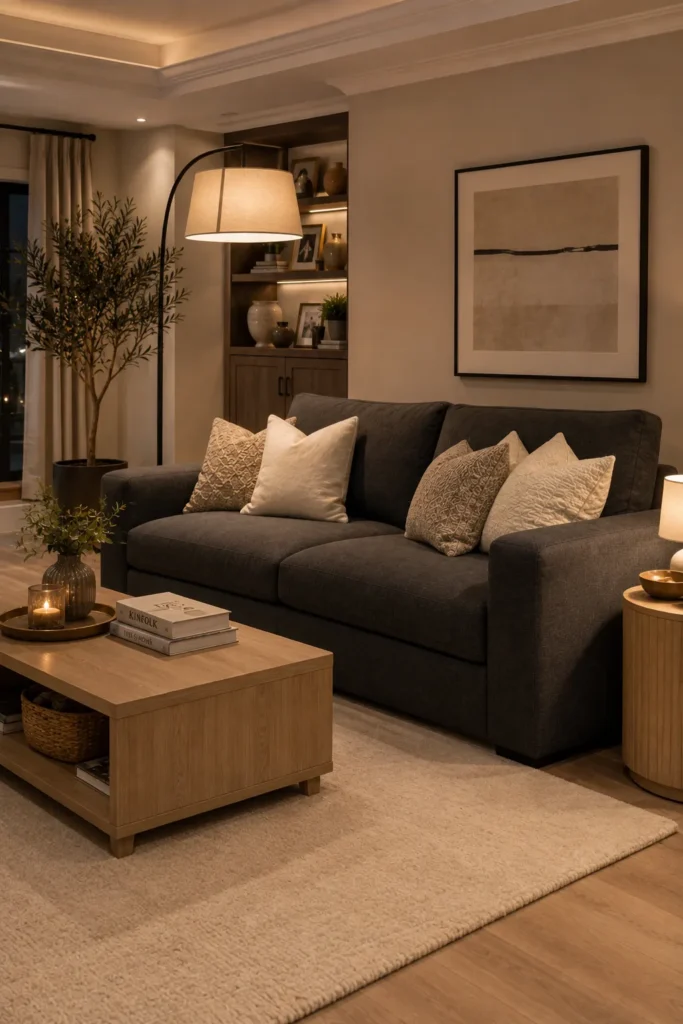
- A sculptural lamp adds height beside a low sofa.
- Warm illumination makes gray upholstery feel softer at night.
- Curved lamp shapes create contrast with straight furniture lines.
- One statement light can replace several smaller decorative pieces.
A statement floor lamp can completely change the balance of a gray sofa arrangement while adding useful lighting at the same time. Choose a tall sculptural design with a curved arm, oversized shade, or interesting silhouette and place it beside one end of the couch. The vertical height draws the eye upward, making the seating area feel more intentional. Black metal creates crisp contrast, while brass or warm finishes produce a softer effect. This is especially helpful when a neutral room looks visually flat but does not need additional furniture or accessories.
Think about the lamp’s function before choosing its shape. If the sofa is used for reading, select a design that directs comfortable light toward the seating area. For general ambiance, a diffused shade can create a gentle glow across the room. Keep the surrounding side table relatively simple so the lamp remains the focal point. Warm-white bulbs generally complement gray upholstery better than very cool lighting, particularly in the evening. In my experience, a well-placed floor lamp often adds more atmosphere than several small decorative objects because it changes both the room’s appearance and how the space feels after dark.
21:Textured Accent Chair
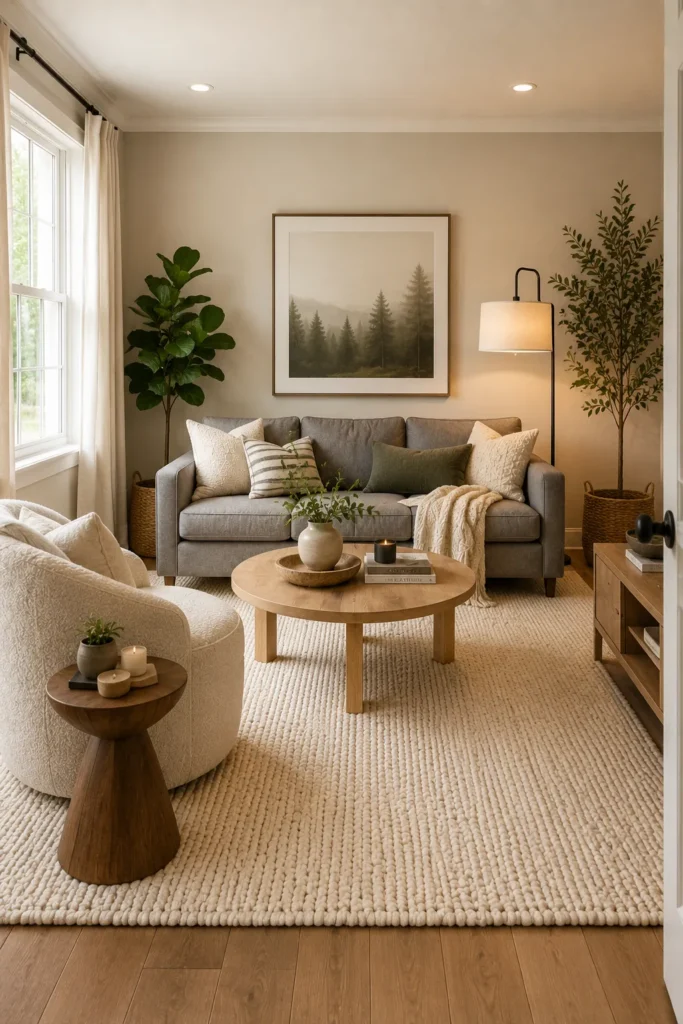
- A textured chair adds variety without changing the sofa.
- Boucle creates softness against smooth gray upholstery.
- Angled seating encourages conversation and improves flow.
- A small side table adds useful everyday functionality.
An accent chair can make a gray sofa arrangement feel more complete while adding another texture, color, or silhouette. Choose a boucle, linen, or woven chair in cream, beige, or muted earth tones to create contrast without introducing visual chaos. Position it at an angle toward the sofa rather than directly beside it, creating a natural conversation area. A small side table between the chair and couch provides a practical place for drinks or books. This setup works especially well in larger rooms where a sofa alone can leave awkward empty areas around the seating zone.
Consider the chair’s scale carefully so it complements rather than competes with the sofa. A compact curved chair can soften a boxy sectional, while a structured armchair works well with a relaxed sofa. Keep the upholstery neutral if your room already contains patterned rugs or colorful artwork. If the surrounding palette is very simple, a muted green, rust, or blue chair can introduce personality. Make sure the chair does not obstruct the main walkway, especially in open-plan layouts. A thoughtful placement can improve both the room’s visual balance and its everyday functionality.
Conclusion
A gray sofa gives you a versatile foundation, and the right details can make it feel completely different. From warm wood and layered neutrals to greenery, bold accents, cozy textures, and thoughtful lighting, these ideas offer simple ways to refresh your space without starting over. Choose one look that fits your home, then adapt the colors and materials to suit your lifestyle. I’ve seen how small changes like these can completely transform a room. Save this post on Pinterest for your next decorating project, try an idea that inspires you, and share it with someone who needs fresh living room inspiration.