24 Serene Japandi Bathroom Ideas for a Calm Retreat
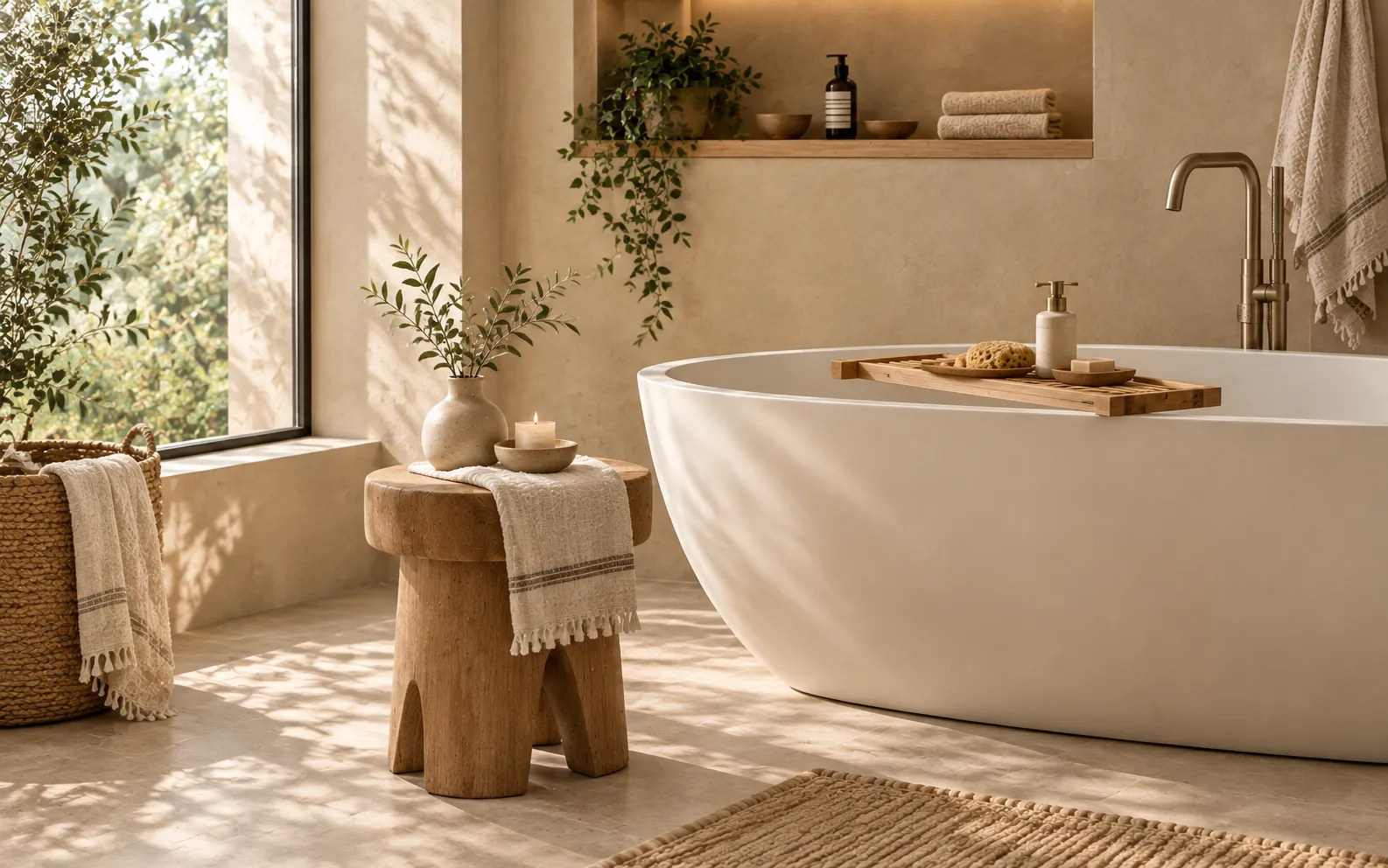
Japandi bathrooms blend the simplicity of Japanese interiors with the warmth and practicality of Scandinavian design. The result is a peaceful space filled with natural textures, soft colors, clean lines, and thoughtful details. These serene Japandi bathroom ideas can help transform an ordinary bathroom into a calming retreat that feels organized, welcoming, and timeless. From warm wood vanities to stone surfaces, soft lighting, minimalist accessories, and nature-inspired accents, each idea brings a relaxed atmosphere without making the room feel cold or overly minimal.
1. Warm Wood Vanity
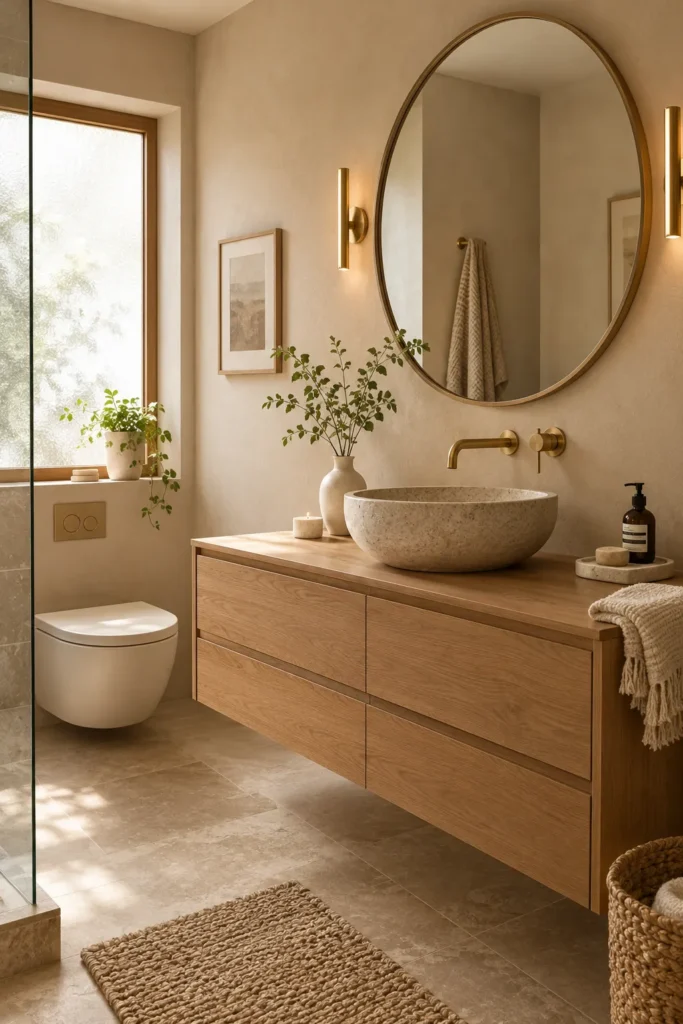
The warm wood vanity is one of the easiest ways to bring Japandi character into a bathroom. Choose natural oak, walnut, or another wood with visible grain and a simple finish. Avoid ornate cabinet details and instead look for clean fronts, recessed handles, or subtle hardware. The natural material instantly adds warmth to neutral surroundings while keeping the room visually uncluttered.
Pair the vanity with a stone countertop and a simple round or rectangular basin for a balanced look. A small ceramic container, folded linen towels, or a single branch can complete the styling without making the countertop crowded. The combination of organic wood and smooth surfaces creates the quiet, grounded feeling that makes this style so appealing.
2. Soft Neutral Palette
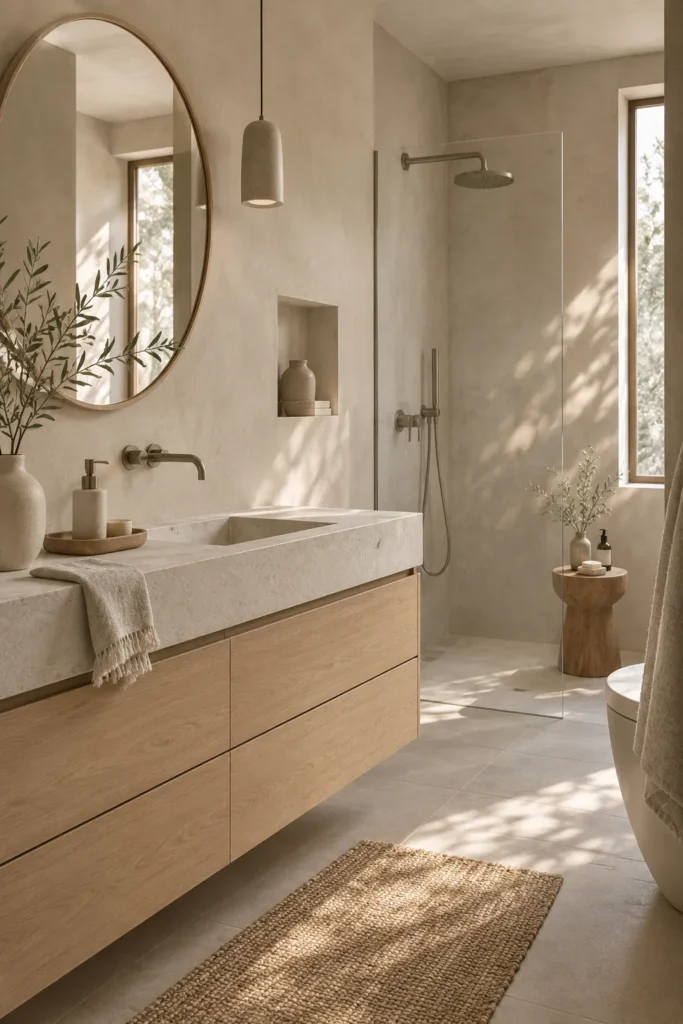
A soft neutral palette can make a bathroom feel instantly calmer. Instead of stark white, consider creamy ivory, warm beige, mushroom, taupe, or pale greige. These shades create a softer backdrop while allowing natural materials to become the visual focus. Keep the color transitions subtle so the entire room feels connected rather than divided into separate sections.
For a more authentic Japandi atmosphere, introduce several shades from the same neutral family. A beige wall can work beautifully with pale oak cabinetry, warm gray flooring, and cream-colored towels. This layered approach adds depth without relying on bold colors. The result is a bathroom that feels peaceful and sophisticated while remaining easy to decorate and maintain.
3. Natural Stone Surfaces
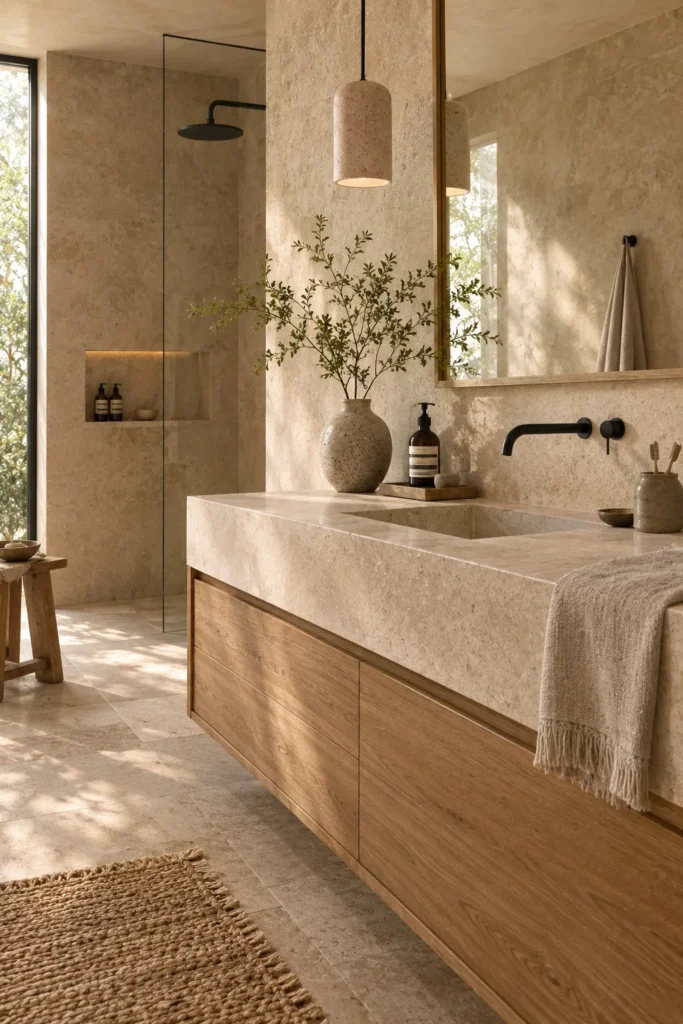
Natural stone brings an earthy quality that works perfectly with Japandi interiors. Limestone, travertine, marble, and other softly textured stones can introduce visual interest without overwhelming the room. Choose finishes with gentle patterns and muted colors rather than highly dramatic veining. The goal is to create a connection with nature while maintaining a calm and cohesive appearance.
Stone can be used on floors, countertops, shower walls, or even a small accent section. If covering the entire bathroom in natural stone is outside your budget, use it selectively around the vanity or shower. Combine it with warm wood and simple fixtures to soften the harder material. This balance is an important part of creating serene Japandi bathroom ideas that feel comfortable rather than stark.
4. Floating Oak Cabinet
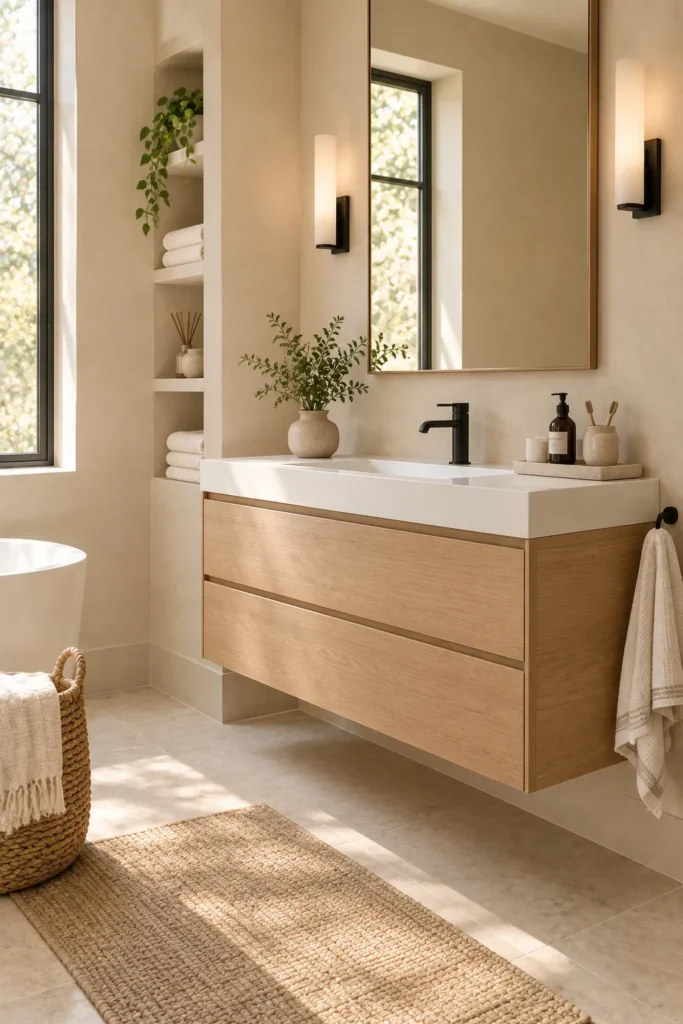
A floating oak cabinet gives a Japandi bathroom a light and spacious appearance. Because the cabinet is raised from the floor, more flooring remains visible, which can make a smaller bathroom appear less crowded. Look for simple rectangular cabinetry with natural wood grain and minimal hardware for an authentic understated look.
The open area beneath the vanity can also make cleaning easier and create an opportunity for subtle styling. A woven basket or carefully folded towels can be placed underneath, although leaving the space empty often looks even more minimalist. Pair the cabinet with a stone or ceramic sink and a simple wall-mounted faucet for a beautifully balanced composition.
5. Minimalist Walk-In Shower
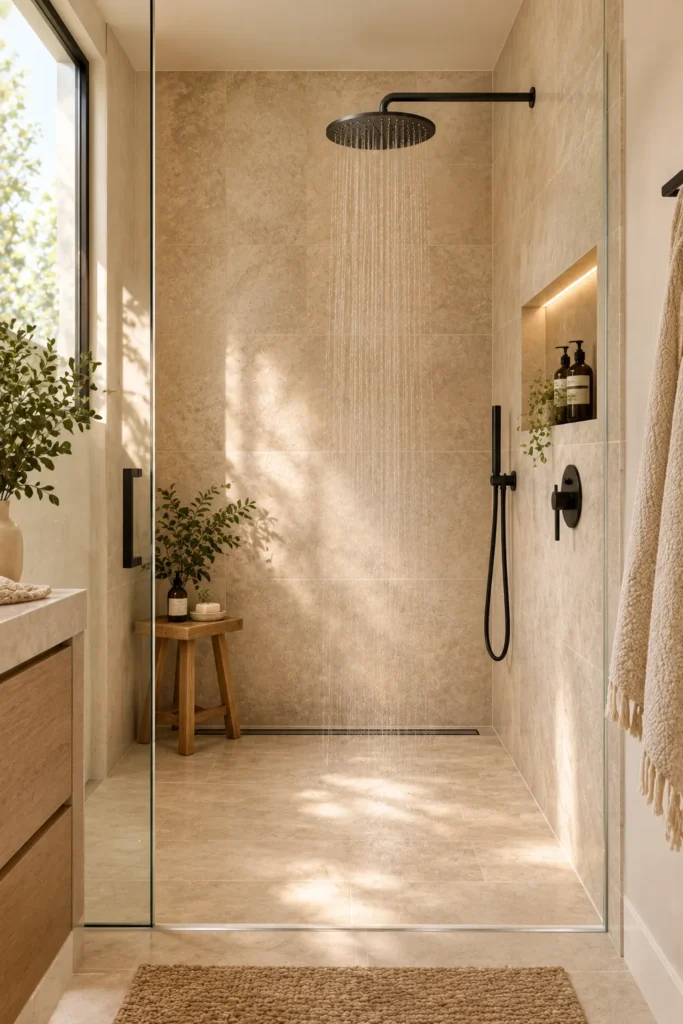
A minimalist walk-in shower can become the calm centerpiece of a Japandi bathroom. Frameless glass helps preserve visual openness while allowing beautiful tilework or stone surfaces to remain visible. Keep the shower fittings simple, choosing one streamlined showerhead and minimal controls rather than filling the wall with unnecessary fixtures.
A built-in niche is another practical feature that suits this aesthetic. Use it to store shampoo, soap, and other necessities so they remain organized and visually discreet. A small wooden shower stool can add warmth and function at the same time. Keep accessories limited to a few useful pieces so the shower continues to feel open and relaxing.
6. Organic Ceramic Details
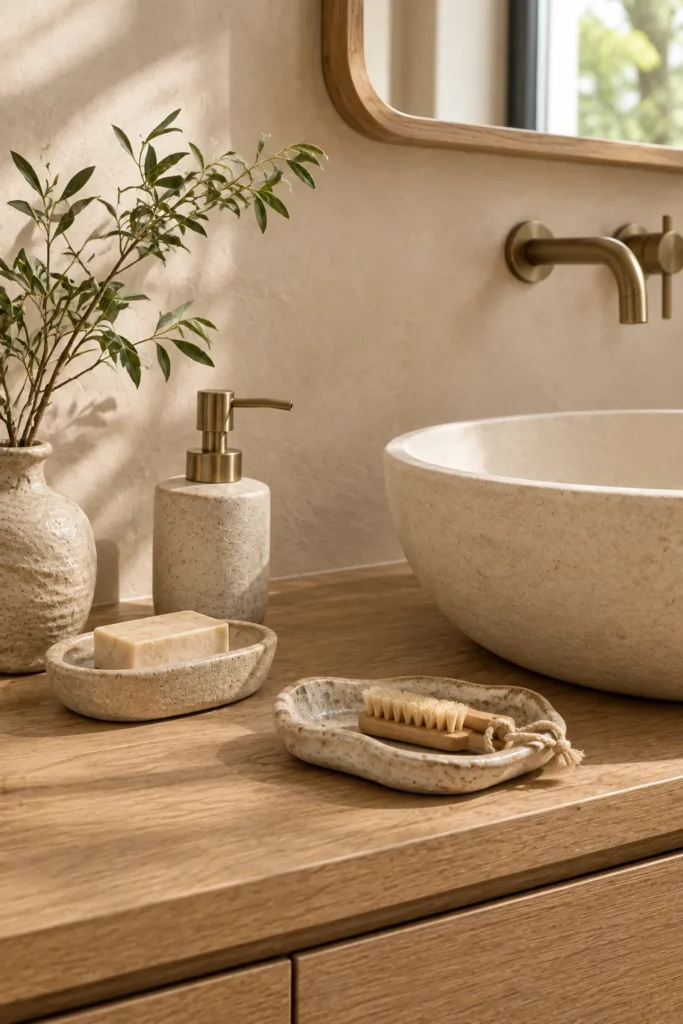
Handmade ceramics are an excellent way to introduce personality without breaking the minimalist character of Japandi design. Look for soap dishes, cups, vases, trays, and containers with irregular edges or natural textures. Cream, sand, clay, and soft gray ceramics work especially well with warm wood and neutral stone.
The beauty of these details comes from their simplicity. Instead of decorating every surface, choose one or two meaningful ceramic pieces and allow them plenty of space. A handmade vase holding a single branch can be enough to make a vanity feel finished. These small touches add warmth and craftsmanship while keeping the overall bathroom visually peaceful.
7. S Amoftbient Lighting
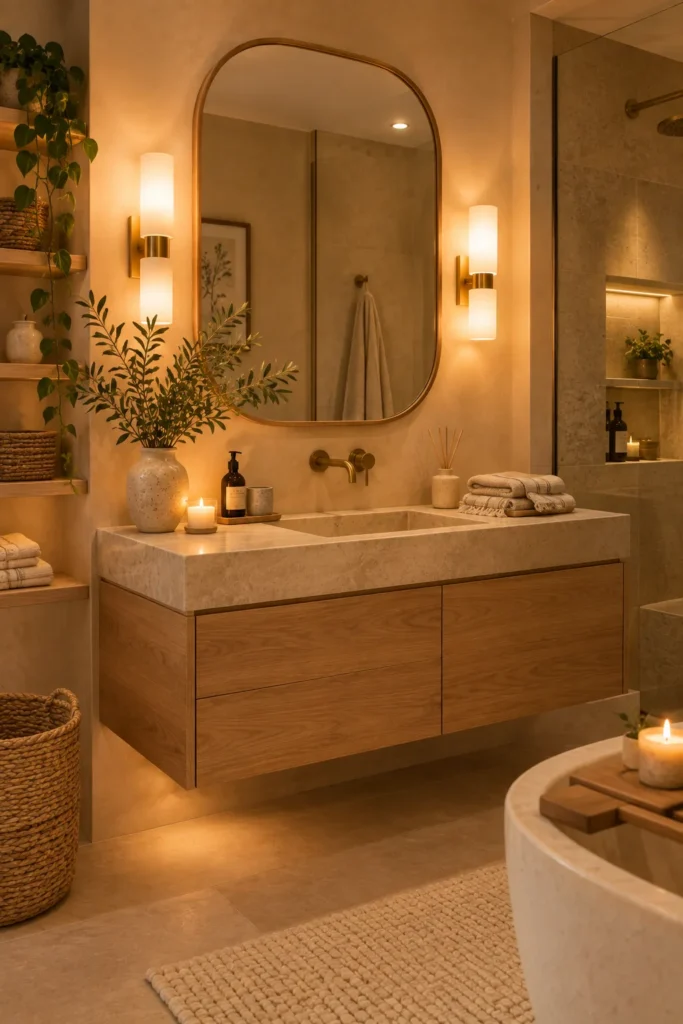
Lighting has a major effect on the atmosphere of a bathroom. For a Japandi-inspired space, avoid relying entirely on bright overhead lighting. Instead, combine soft ambient fixtures with practical task lighting around the mirror. Warm-toned bulbs can make wood, stone, and neutral colors appear richer and more inviting.
Simple wall sconces are particularly effective because they add illumination without creating visual clutter. Choose fixtures with natural materials, frosted glass, or uncomplicated shapes. If possible, include dimmable lighting so the bathroom can shift from bright and functional in the morning to soft and relaxing in the evening.
8. Rounded Mirror
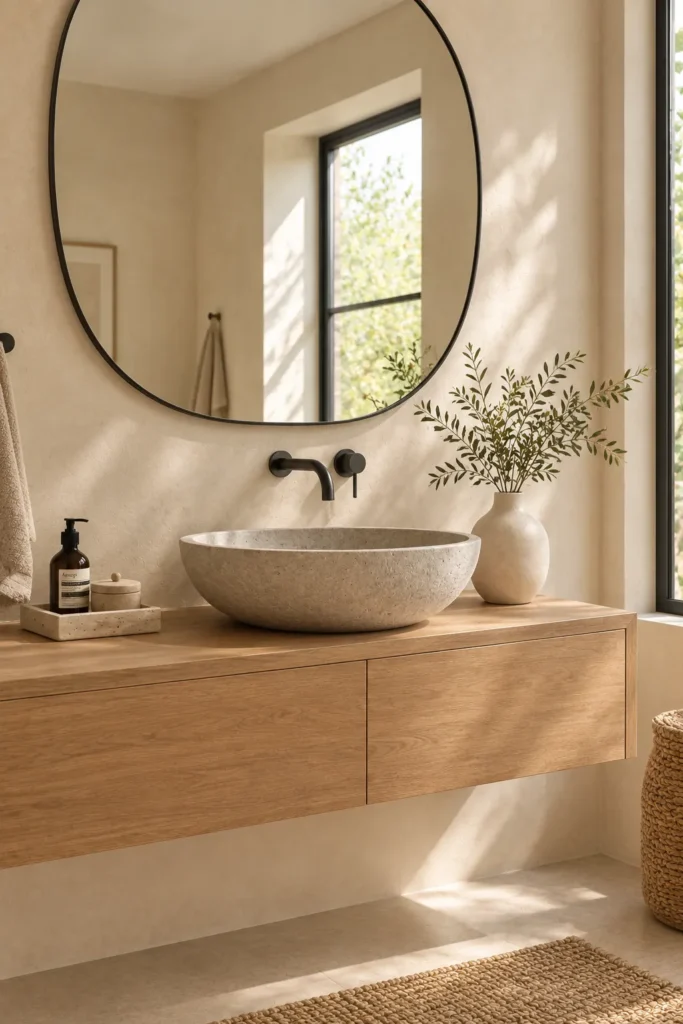
A rounded mirror can soften the straight lines commonly found in minimalist bathrooms. Circular and softly curved shapes bring an organic quality that complements Japanese-inspired interiors beautifully. A simple frameless mirror can create an almost seamless appearance, while a thin wood or black frame can provide a subtle decorative edge.
Place the mirror above a natural wood vanity to create an attractive contrast between curved and straight forms. If the bathroom is compact, a large round mirror can also help reflect light and make the space feel more open. Keep the surrounding wall relatively bare so the mirror remains an intentional focal point rather than competing with other decorations.
9. Textured Plaster Walls
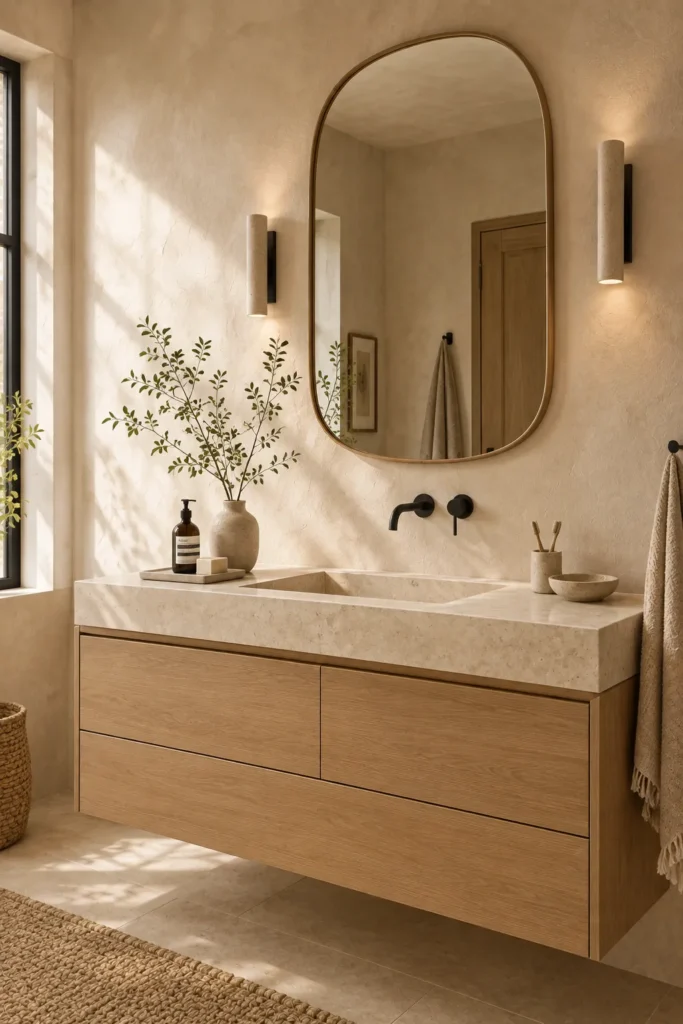
Textured plaster walls can add depth without introducing busy patterns. Their gentle imperfections create a handmade, organic feeling that pairs naturally with Japanese wabi-sabi influences. Warm beige, ivory, sand, and light taupe are excellent choices because they maintain the quiet color palette associated with Japandi interiors.
Use textured plaster throughout the bathroom or reserve it for a feature wall behind the vanity. The finish works especially well when combined with smooth stone, natural wood, and simple ceramic pieces. Keep the remaining surfaces restrained so the wall texture can provide enough visual interest on its own.
10. Bamboo Bath Accessories
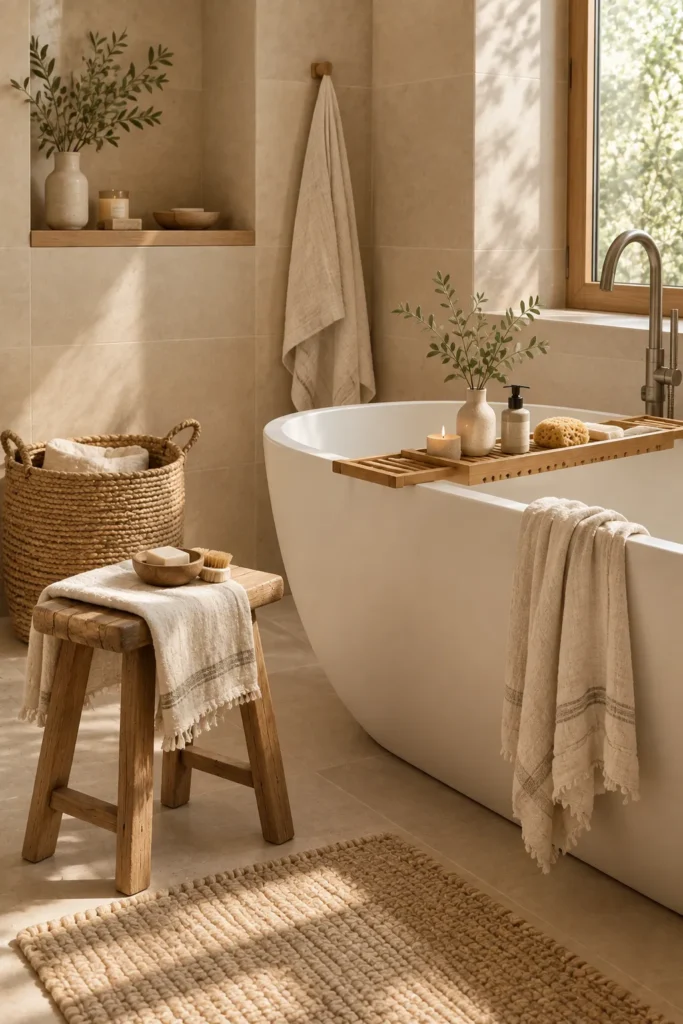
Bamboo accessories are a natural fit for this design because they add warmth while maintaining a lightweight appearance. A bamboo bath tray, stool, storage basket, or small container can introduce texture without taking over the room. Choose pieces with simple construction and natural finishes rather than heavily decorated designs.
Bamboo also works beautifully beside a freestanding tub. Place a small stool near the bathtub for towels or a ceramic cup, while keeping the rest of the area uncluttered. Natural materials become much more noticeable when they are surrounded by calm neutral surfaces, so there is no need to add many accessories.
11. Freestanding Soaking Tub
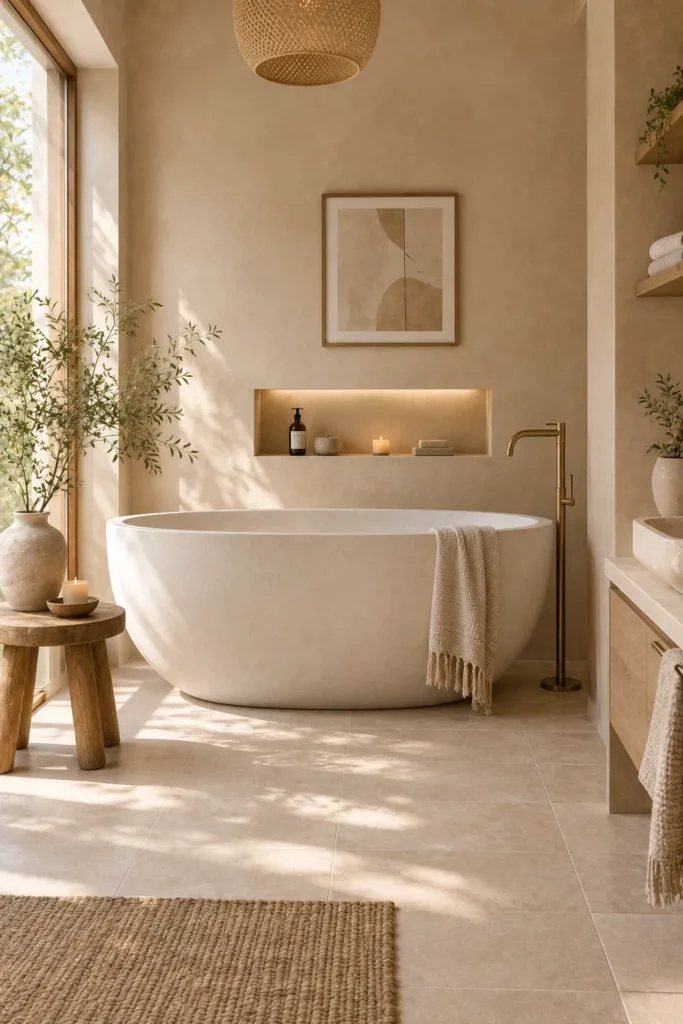
A simple soaking tub can turn an ordinary bathroom into a private retreat. Look for a freestanding design with smooth curves and minimal detailing. Deep soaking tubs inspired by Japanese ofuro forms can create an especially relaxing atmosphere, while a modern oval tub offers a Scandinavian interpretation of the same peaceful concept.
Position the tub where it has enough visual breathing room. Avoid surrounding it with excessive decorations or furniture. A small wooden stool, a folded linen towel, and one ceramic accessory are usually enough. The uncluttered arrangement allows the tub itself to become a calming architectural feature.
12. Warm Terracotta Accents
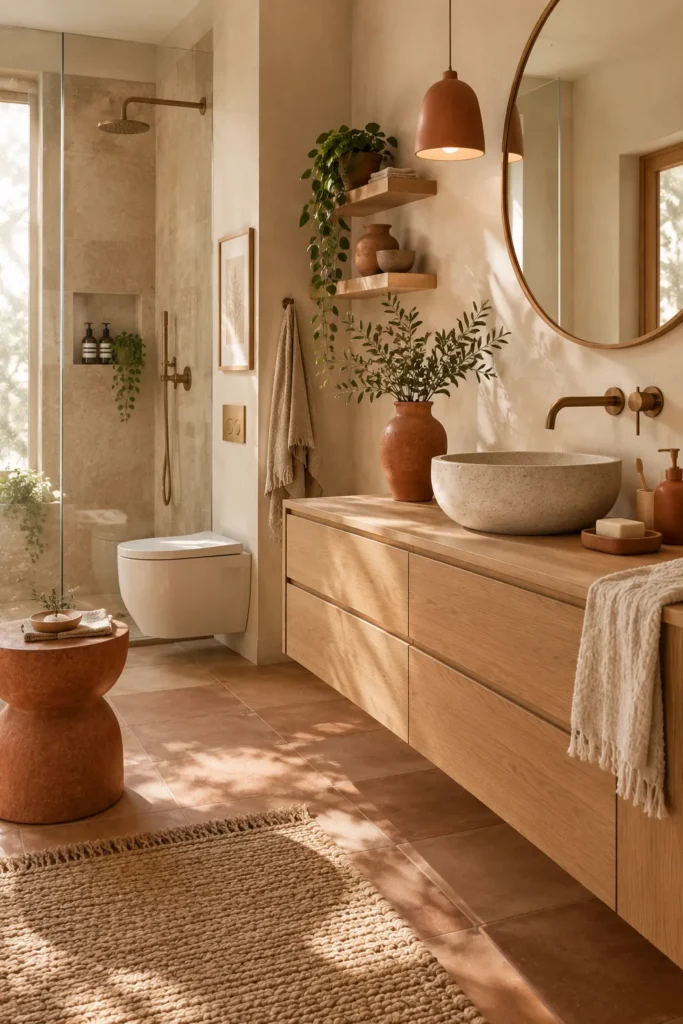
Although Japandi bathrooms often rely on neutrals, muted earthy colors can add warmth. Terracotta, clay, cinnamon, and dusty brown shades work particularly well because they resemble natural materials rather than bright decorative colors. Introduce these tones through pottery, towels, floor tiles, or a small accent wall.
Keep the color muted so it complements rather than dominates the space. A terracotta ceramic vase on an oak vanity can be enough to introduce the hue. You can also combine several earthy shades, such as warm beige, clay, and walnut, to create a layered palette that feels connected to nature.
13. Minimal Black Fixtures
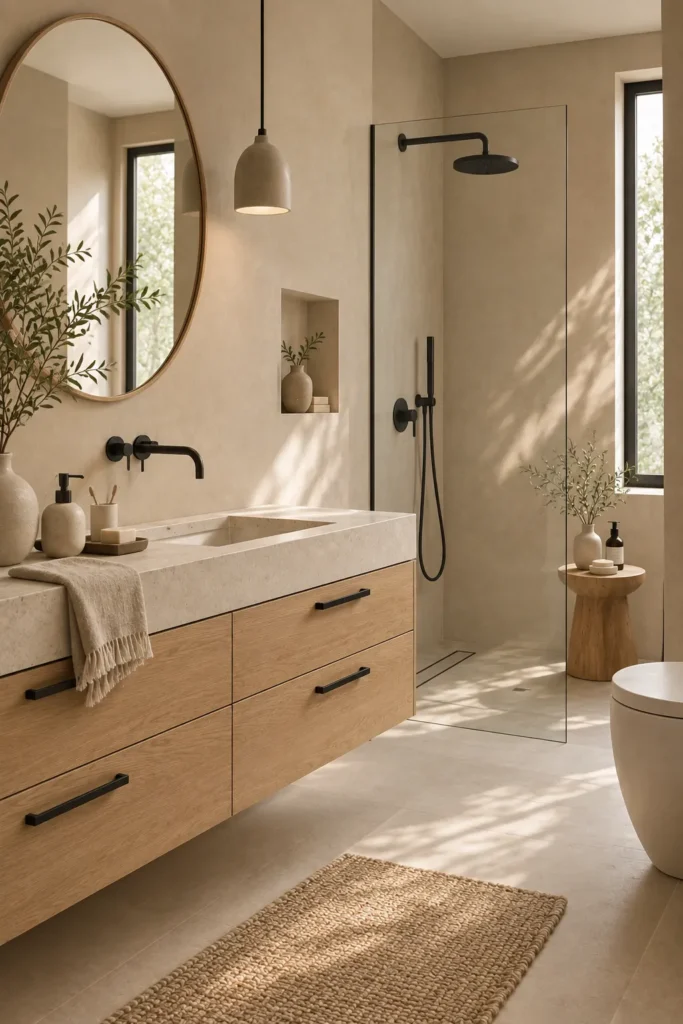
Matte black fixtures can provide just enough contrast to keep a neutral bathroom visually interesting. Choose simple faucets, shower fittings, handles, and towel hooks with clean silhouettes. Avoid overly industrial shapes if you want the room to maintain its soft, relaxing quality.
Black hardware looks especially striking against pale oak and warm beige surfaces. The contrast gives the bathroom definition without requiring bold colors or elaborate decoration. To keep everything cohesive, repeat black subtly in two or three locations rather than using it throughout the room.
14. Large Natural Windows
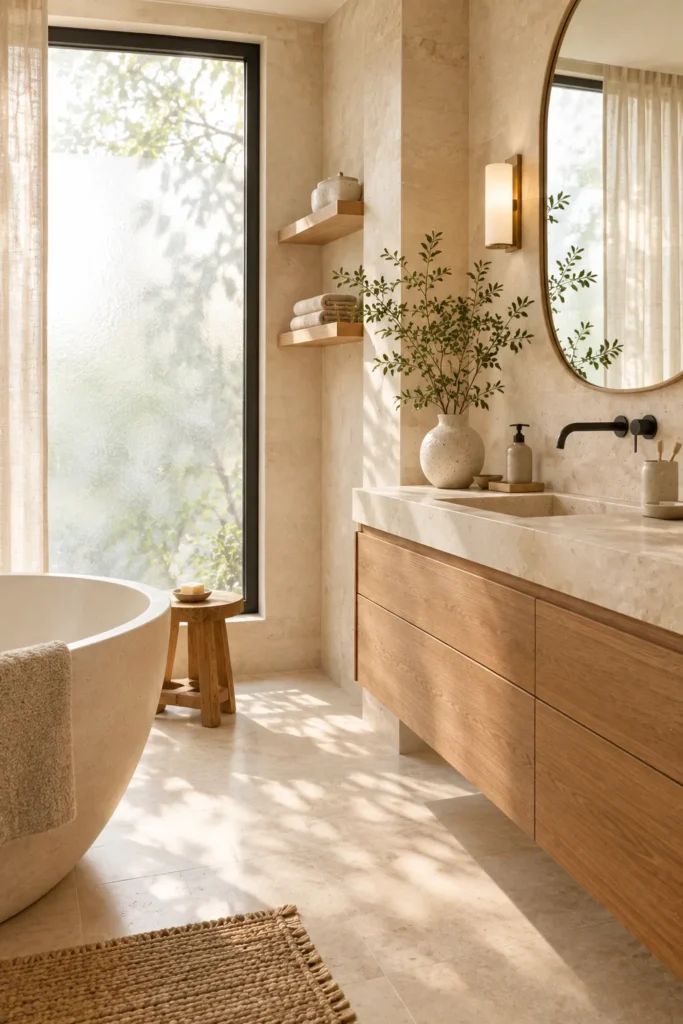
Natural light is one of the simplest ways to make a bathroom feel serene. Large windows can fill the room with daylight and highlight the textures of wood, stone, plaster, and ceramics. If privacy is important, frosted glass or simple sheer window treatments can provide coverage while preserving brightness.
Arrange the main furniture so it benefits from the natural light. A wooden vanity or freestanding tub can look especially beautiful when daylight reveals the natural variation in its materials. During the evening, use warm artificial lighting to recreate the same gentle atmosphere.
15. Greenery and Branches
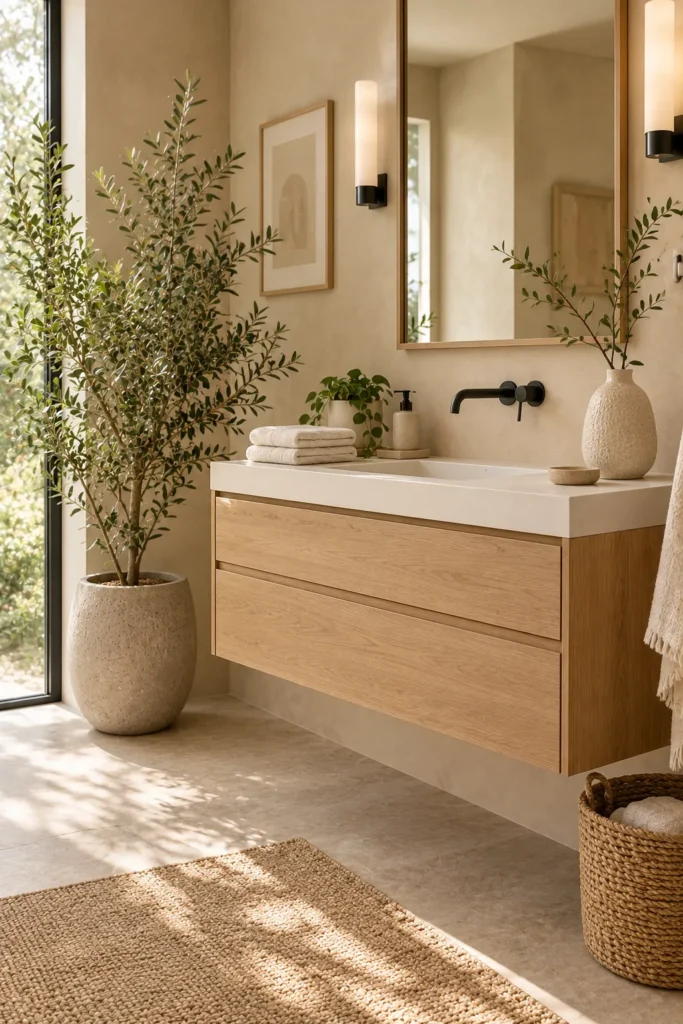
Plants can bring life and movement into an otherwise minimalist bathroom. Choose varieties that tolerate the humidity and available light in your space. A simple potted plant, eucalyptus branch, or sculptural leafy stem can create a connection with nature without adding visual clutter.
The key is restraint. Instead of filling every corner with greenery, choose one statement plant or a few carefully placed stems. Natural wood containers and handmade ceramic pots can reinforce the overall aesthetic. Green foliage also creates a gentle contrast against beige, cream, and light gray surfaces.
16. Wabi-Sabi Inspired Styling
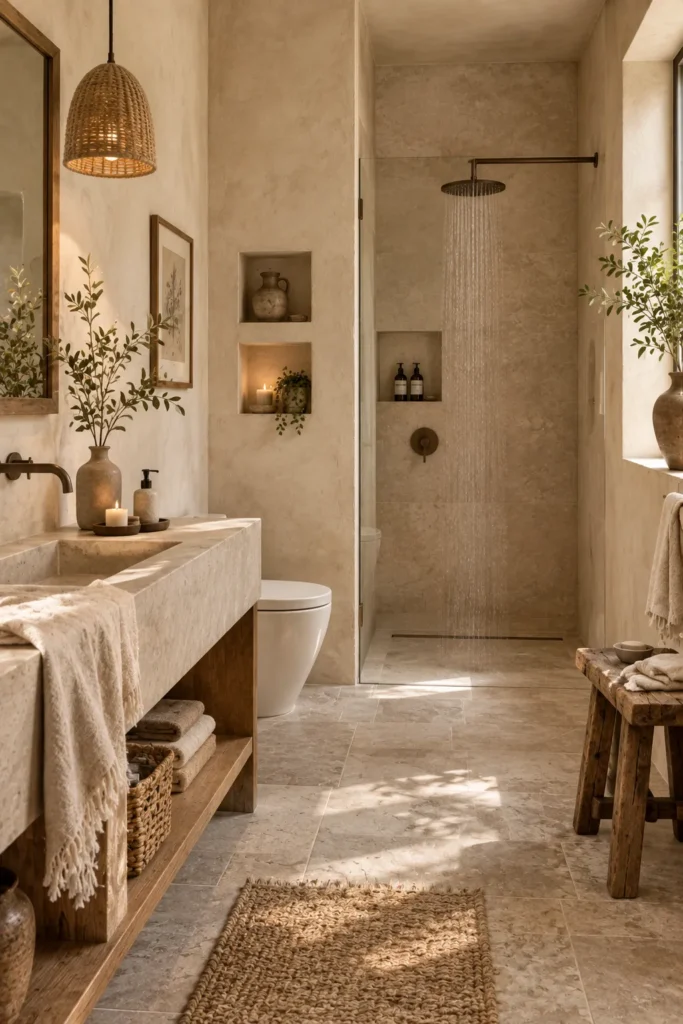
Wabi-sabi-inspired styling embraces natural imperfections and simplicity. In a bathroom, this can mean choosing handmade ceramics, lightly textured surfaces, natural wood, and stone with subtle variations. Rather than searching for perfectly uniform pieces, allow some individuality to show through the materials.
This approach makes a minimalist bathroom feel more personal and welcoming. A handmade cup, irregular ceramic vase, or naturally weathered stool can become a quiet focal point. Keep the overall arrangement simple and purposeful so the beauty of each imperfect object remains visible.
17. Light Wood Flooring
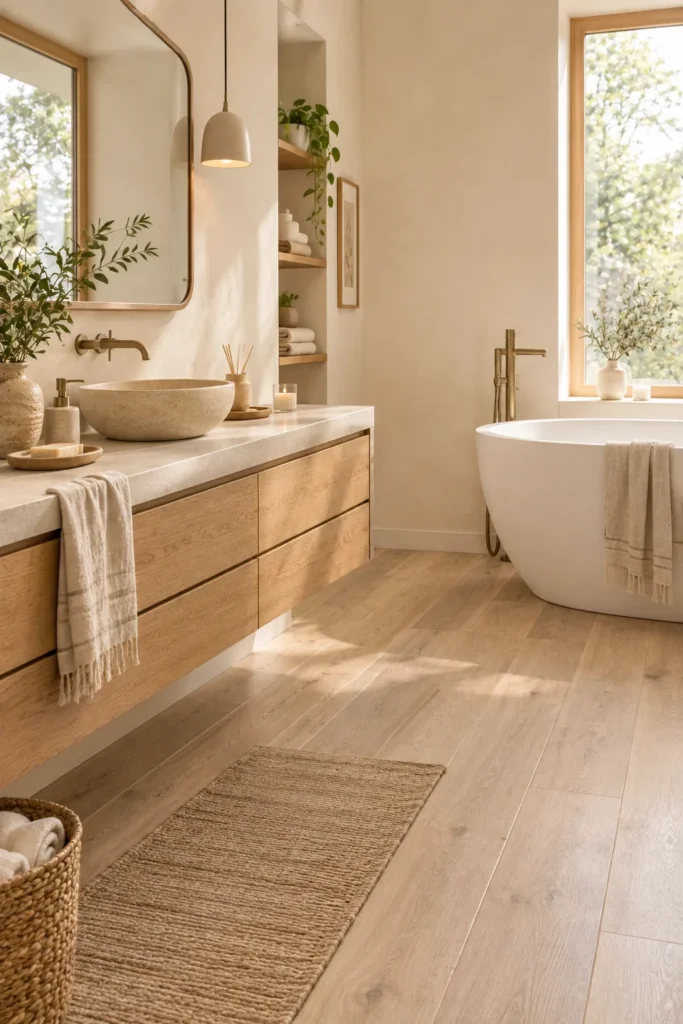
Light wood flooring adds warmth beneath the cooler surfaces often found in bathrooms. If natural wood is unsuitable because of moisture, high-quality wood-look porcelain or waterproof flooring can provide a similar visual effect. Choose pale oak, ash, or another subtle grain that complements the vanity.
Keep the flooring pattern uncomplicated. Wide planks or large-format wood-look tiles can create a cleaner appearance than busy patterns. Pair the floor with warm neutral walls and simple stone surfaces so the wood becomes part of a balanced material palette rather than a separate decorative feature.
18. Built-In Shower Niche
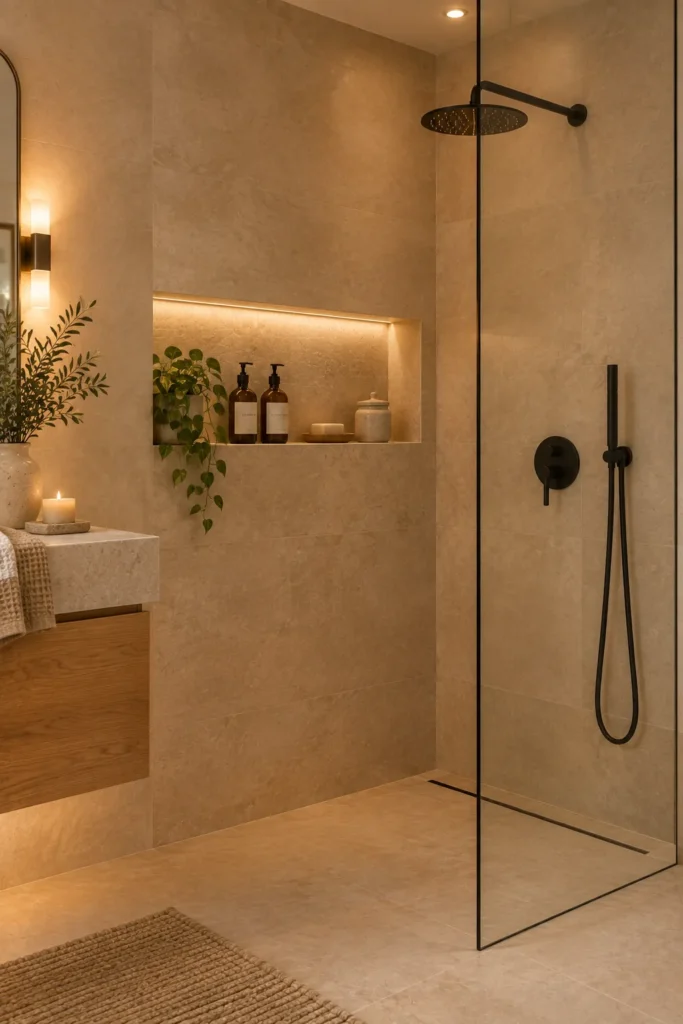
A built-in shower niche is both practical and attractive. It keeps everyday products organized while eliminating the need for bulky shelves or storage racks. Line the niche with the same stone or tile used elsewhere in the shower for a seamless appearance.
For a more decorative touch, use the niche to display one beautiful ceramic bottle or small waterproof plant alongside necessary products. Keep containers coordinated in neutral colors to prevent the area from looking busy. The goal is to make storage feel intentional rather than something added after the design is complete.
19. Linen Towels
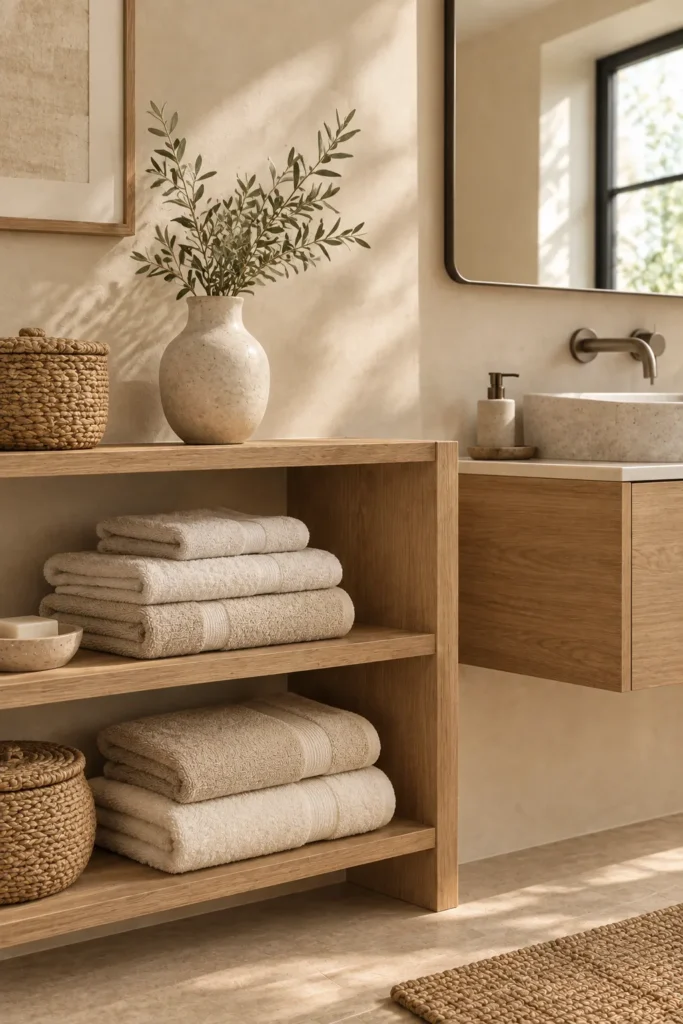
Textiles can make a minimalist bathroom feel much more comfortable. Linen towels are particularly effective because their natural texture complements wood, stone, and ceramics. Choose neutral shades such as cream, oatmeal, beige, or soft gray to maintain a cohesive palette.
Instead of displaying many towels, fold a few neatly on an open shelf or place one over a wooden stool. The slightly relaxed texture of linen keeps the bathroom from feeling too perfect. Combine it with woven baskets or a simple cotton bath mat for additional softness.
20. Earthy Tile Combination
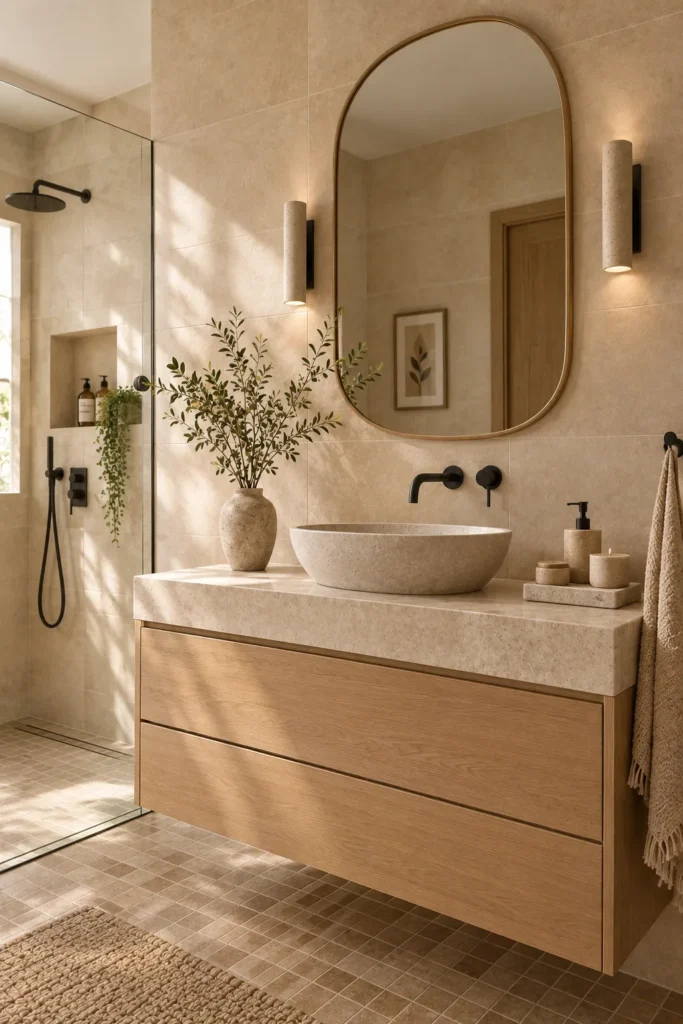
Tile is an excellent opportunity to create depth while maintaining a restrained aesthetic. Instead of choosing multiple bold patterns, combine tiles that vary gently in size or texture while sharing similar colors. Warm beige walls with slightly darker earthy flooring can create a subtle visual foundation.
Large-format tiles can make the room feel more spacious because fewer grout lines interrupt the surfaces. If you prefer smaller tiles, choose a simple shape and neutral grout. The combination of texture, proportion, and color should feel natural rather than overly coordinated.
21. Cozy Wooden Stool
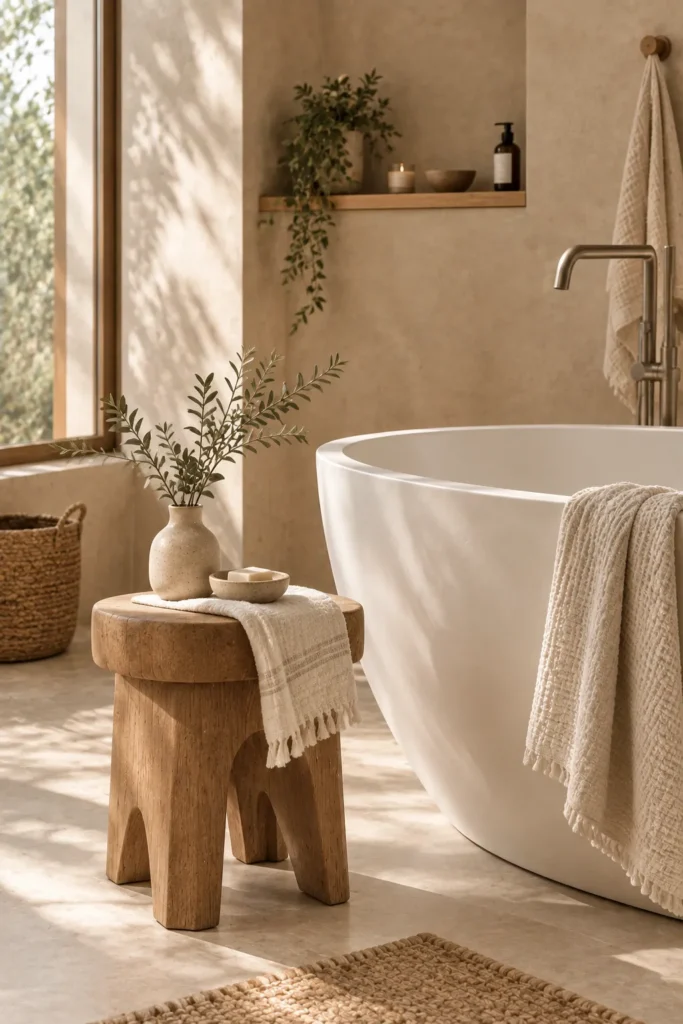
A small wooden stool is a simple detail that can add both function and style. Place one beside the bathtub, shower, or vanity to hold towels, toiletries, or a ceramic accessory. Choose a stool with a simple silhouette and natural wood finish.
Because the piece is small, it does not require a large bathroom. Even compact spaces can accommodate a narrow stool tucked beside a wall or vanity. Avoid using too many decorative furniture pieces. One carefully chosen wooden stool can provide enough warmth and visual interest.
22. Minimal Open Shelving
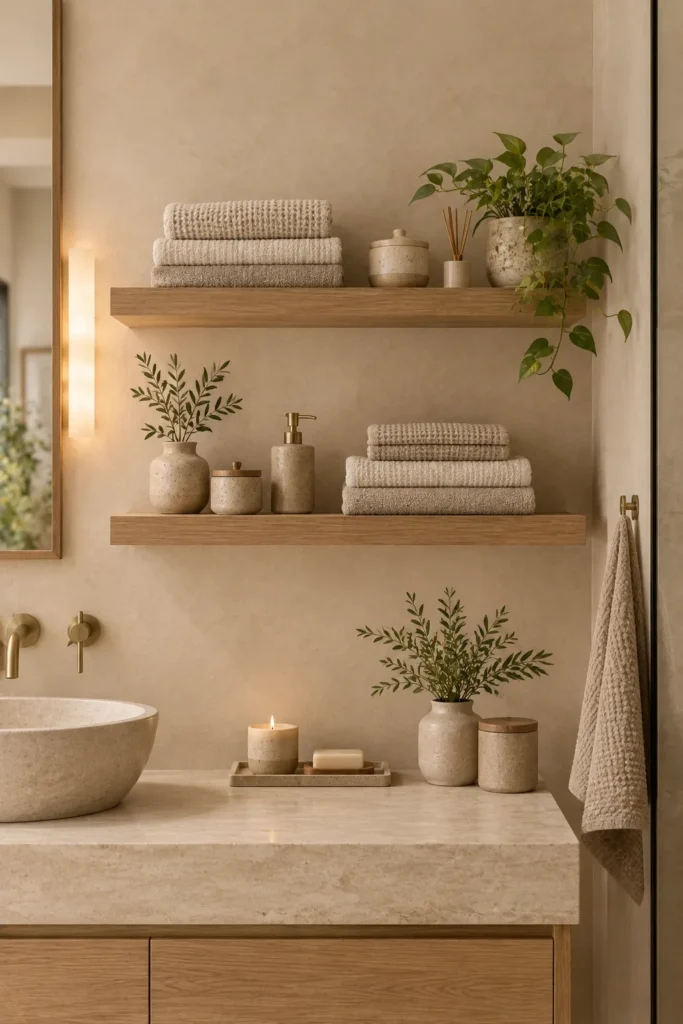
Open shelving can provide practical storage while adding warmth to the bathroom. Natural wood shelves work especially well against plaster, tile, or painted walls. Use them to display only items that are attractive enough to remain visible, such as folded towels, ceramics, baskets, and simple plants.
Avoid overcrowding the shelves. Leave empty space between objects so the arrangement feels intentional. A useful rule is to combine different textures while keeping colors similar. For example, pair cream towels with a wooden basket, ceramic vase, and one green plant for a balanced Japandi-inspired display.
23. Calm Spa Corner
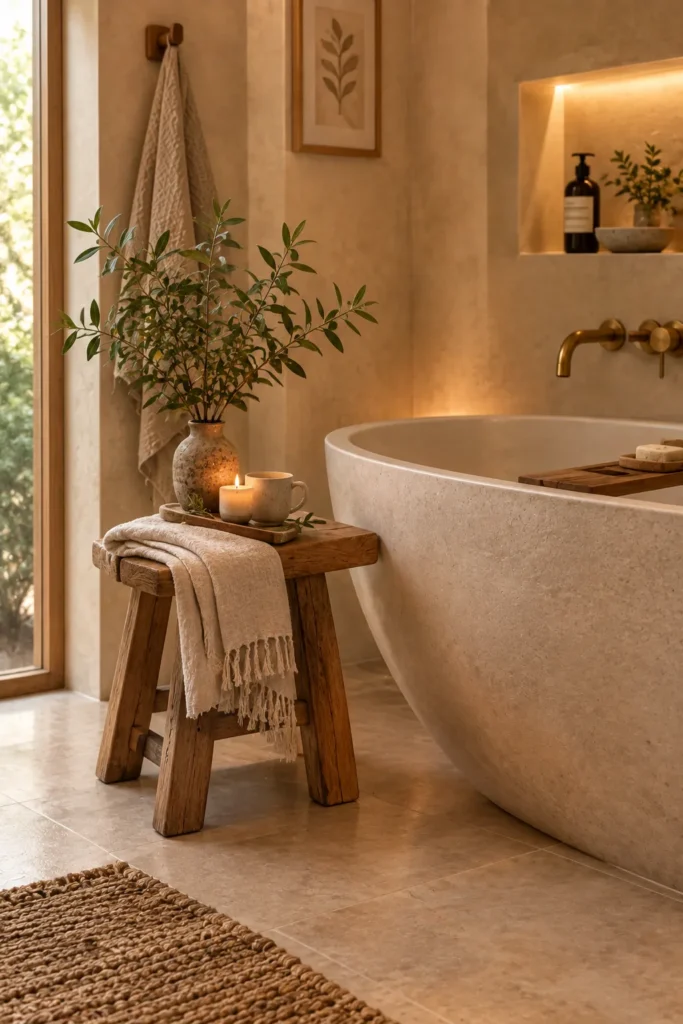
A dedicated spa corner can make everyday routines feel more relaxing. It does not need to be large or elaborate. A small stool, towel, candle, plant, and ceramic container can create a simple moment of calm beside a bathtub or vanity.
Keep the arrangement visually quiet by choosing objects in a limited palette. Natural wood, cream ceramics, linen, and greenery work beautifully together. The goal is not to fill the corner with spa products but to create a small, thoughtfully styled area that encourages relaxation.
24. Seamless Minimalist Design
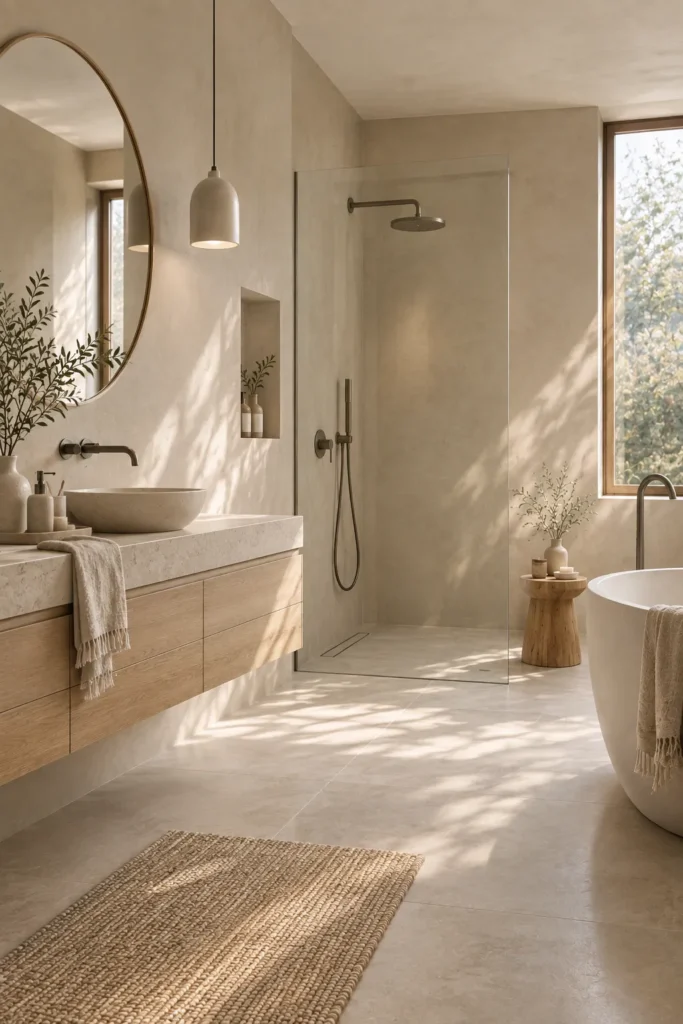
A seamless minimalist design brings all the elements of Japandi style together. Use a limited color palette, simple cabinetry, natural materials, and uncluttered surfaces to create visual continuity throughout the room. Large-format tiles, concealed storage, and frameless glass can help reduce interruptions and make the bathroom feel more spacious.
The most important part is choosing quality over quantity. Rather than adding many decorative features, invest in a few beautiful materials and useful pieces. Warm wood, natural stone, soft textiles, and gentle lighting can create enough character on their own. This approach makes the bathroom feel timeless, peaceful, and easy to live with.
Conclusion
These serene Japandi bathroom ideas show how simple materials and thoughtful styling can transform a bathroom into a calming retreat. Warm wood, natural stone, soft neutrals, organic ceramics, greenery, and gentle lighting all contribute to the relaxed atmosphere of this design style. Whether you are planning a complete renovation or making a few small updates, focus on natural textures, useful details, and uncluttered spaces. The result can be a bathroom that feels warm, peaceful, functional, and beautifully connected to nature.