23 Vintage Kitchen Ideas With Timeless Charm
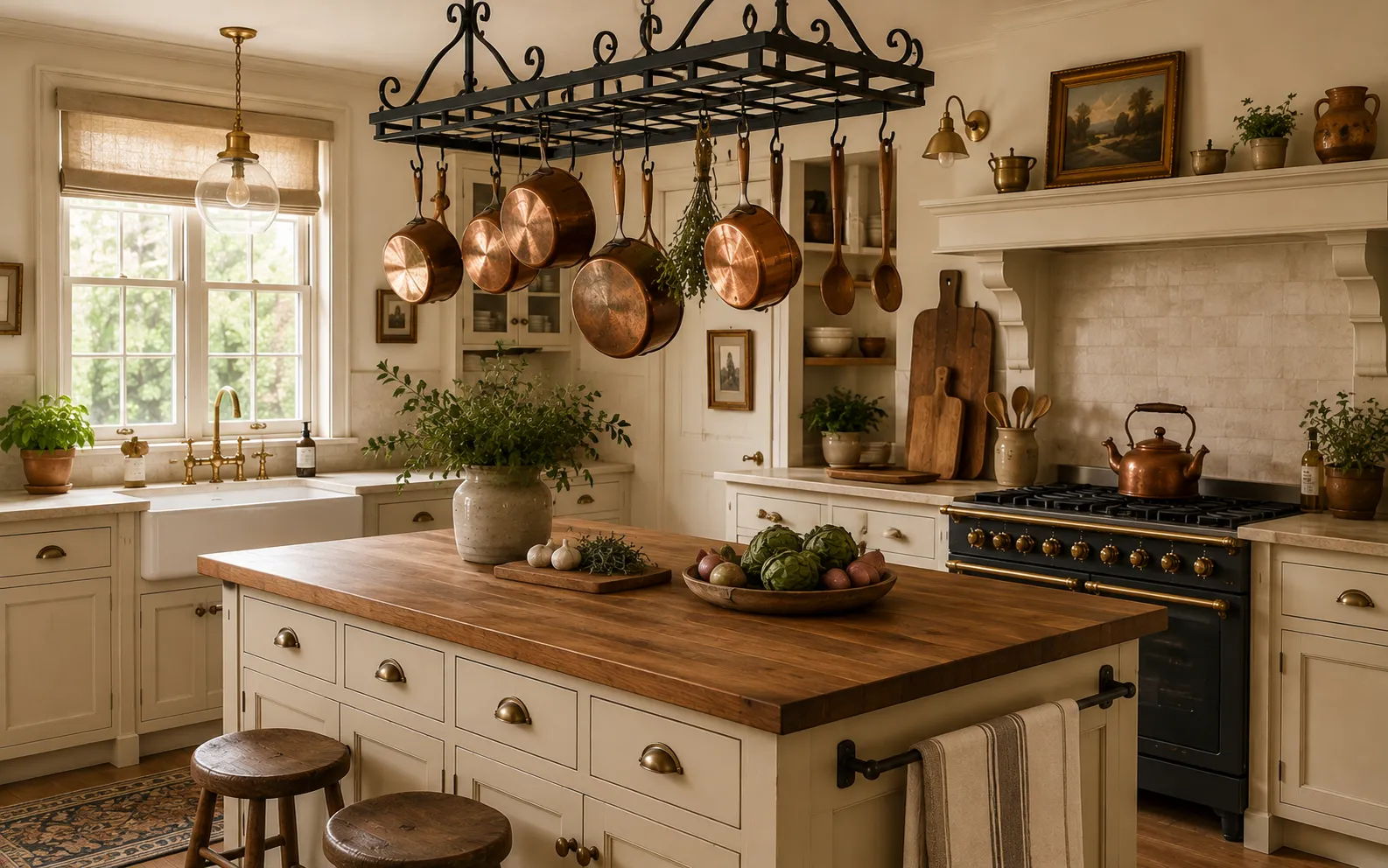
A beautiful kitchen doesn’t need to look brand new to feel fresh, inviting, and full of personality. Vintage kitchen ideas can bring warmth, character, and timeless style to even the simplest space.
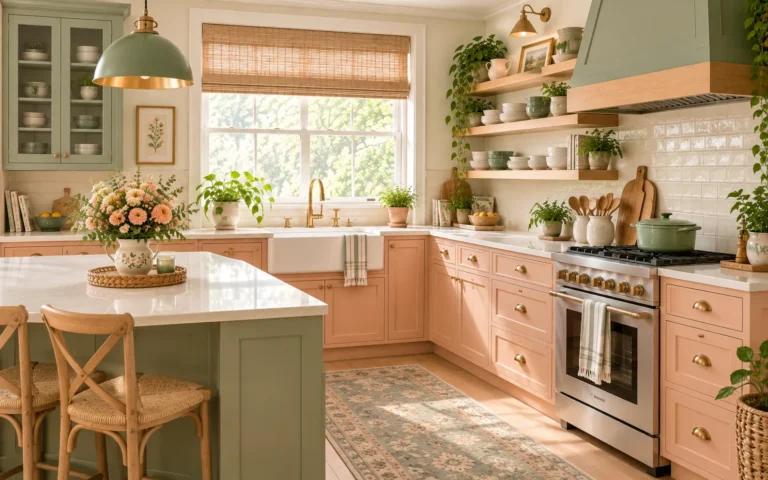
From checkerboard floors and creamy cabinetry to brass hardware, floral curtains, farmhouse sinks, and open wooden shelves, these ideas show how small details can create a kitchen that feels collected and welcoming. Whether you are refreshing a dated kitchen, decorating a rental, or planning a larger renovation, there are plenty of approachable ways to introduce nostalgic charm without making the room feel old-fashioned. In my experience, combining just a few traditional details with practical modern features often creates the most comfortable result. Explore these inspiring ideas, choose the details that suit your home, and create a kitchen you’ll genuinely enjoy using every day.
1:Floral Wallpaper
- Introduces pattern without requiring major structural changes.
- Soft botanical colors make neutral kitchens feel warmer.
- Works beautifully behind open shelving or a breakfast nook.
- Use washable wallpaper designed for kitchen environments.
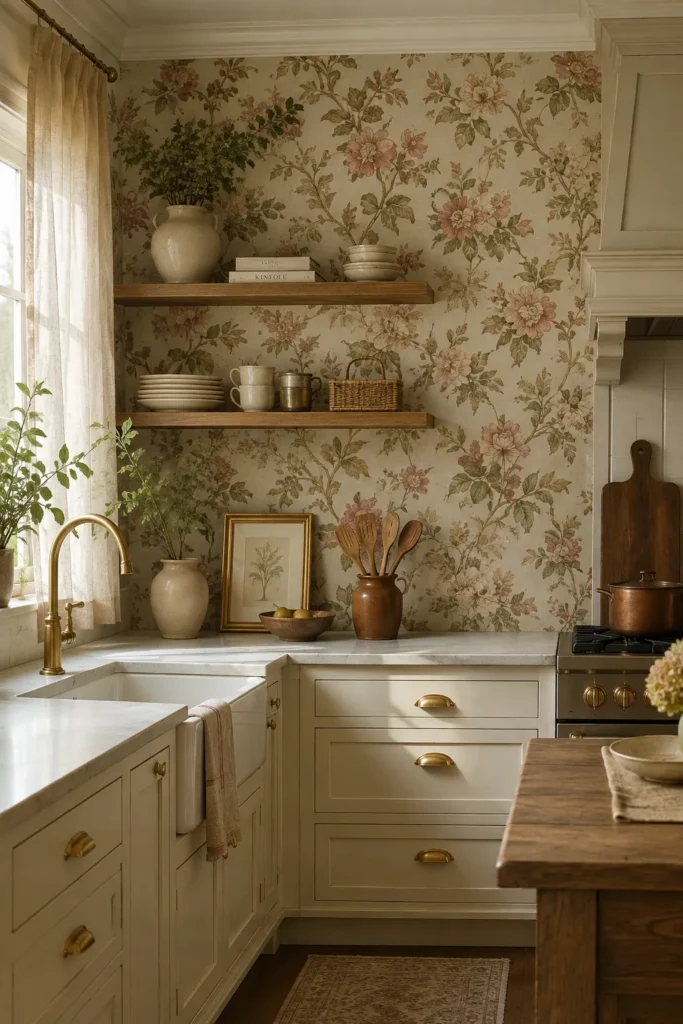
Bring a gentle layer of pattern into the room with floral wallpaper in faded botanical colors. Small-scale roses, vines, or delicate leaves can instantly create the feeling of a well-loved traditional kitchen without making the space appear dated. Choose muted sage, dusty rose, buttercream, or soft blue against a warm ivory background. Keep surrounding cabinetry simple so the wallpaper remains the visual accent. I’ve noticed that placing botanical paper behind open shelves can make everyday ceramics feel more intentional, especially when the colors subtly repeat through linens, artwork, or small countertop accessories.
Wallpaper works best when its pattern supports the architecture instead of competing with it. Use it on one accent wall, inside a breakfast nook, or above a low backsplash where it can provide personality without overwhelming the room. For practical kitchens, select a washable, moisture-resistant product and keep it away from areas exposed directly to cooking splashes. Pairing floral wallpaper with natural wood and aged brass creates warmth, while white cabinetry keeps the overall effect light. The finished space feels collected and welcoming, giving a simple kitchen the decorative richness often associated with older homes.
2:Glass Cabinet Doors
- Makes upper cabinetry feel lighter and more visually open.
- Turns everyday dishware into attractive decorative elements.
- Helps break up long stretches of solid cabinet fronts.
- Repeating glass and brass details can create subtle cohesion.
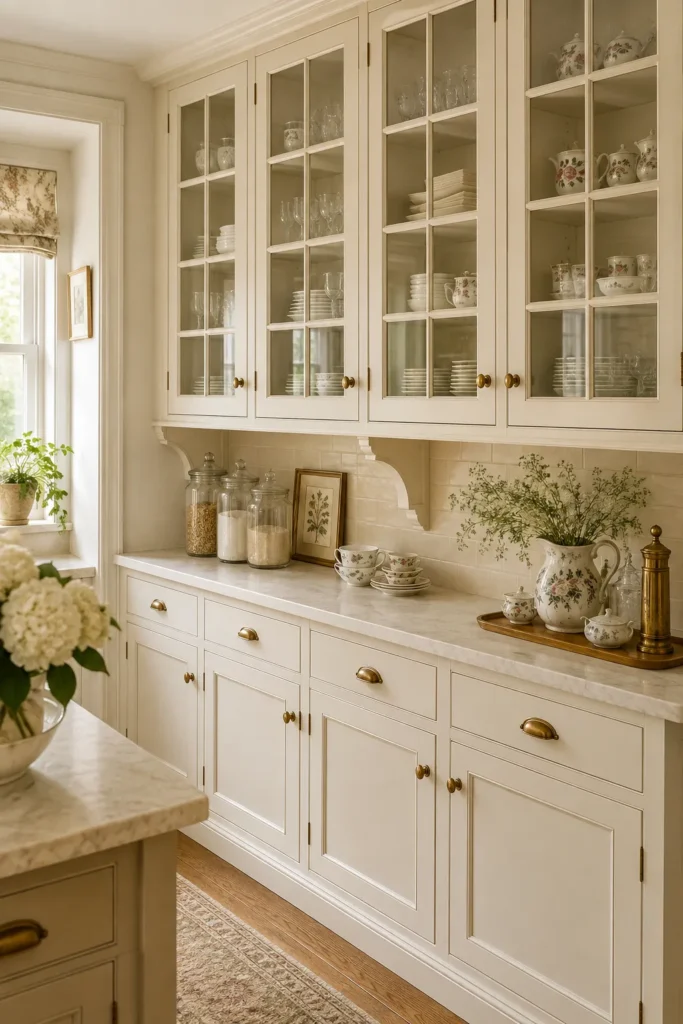
Glass-front cabinets add a delicate, collected quality while keeping useful kitchenware visible. Choose traditional framed doors with clear or lightly textured glass, then arrange simple ceramics, glassware, and serving pieces inside. Cream or warm white cabinetry makes the display feel especially timeless, while aged brass knobs add a subtle period detail. This approach can also prevent a long wall of solid cabinets from feeling visually heavy. For a practical styling trick, group similar pieces together and leave some empty space around them. The result looks curated but still believable for everyday family life.
If you have attractive dishes tucked away in crowded cupboards, glass doors provide an easy opportunity to make them part of the room. Use them selectively rather than replacing every cabinet door, especially if you prefer a calmer appearance. Clear glass offers an open look, while seeded or reeded glass hides minor clutter and adds texture. Keep the most frequently used pieces on lower shelves for convenient access, and reserve higher shelves for serving bowls or decorative ceramics. Combined with warm lighting, natural wood, and classic hardware, glass-front storage gives the kitchen a refined yet comfortably lived-in character.
3:Butcher Block Counters
- Adds natural warmth to painted cabinetry.
- Creates a practical surface for chopping and food preparation.
- Softens kitchens filled with hard tile, stone, or metal.
- Regular maintenance helps preserve the wood’s attractive finish.
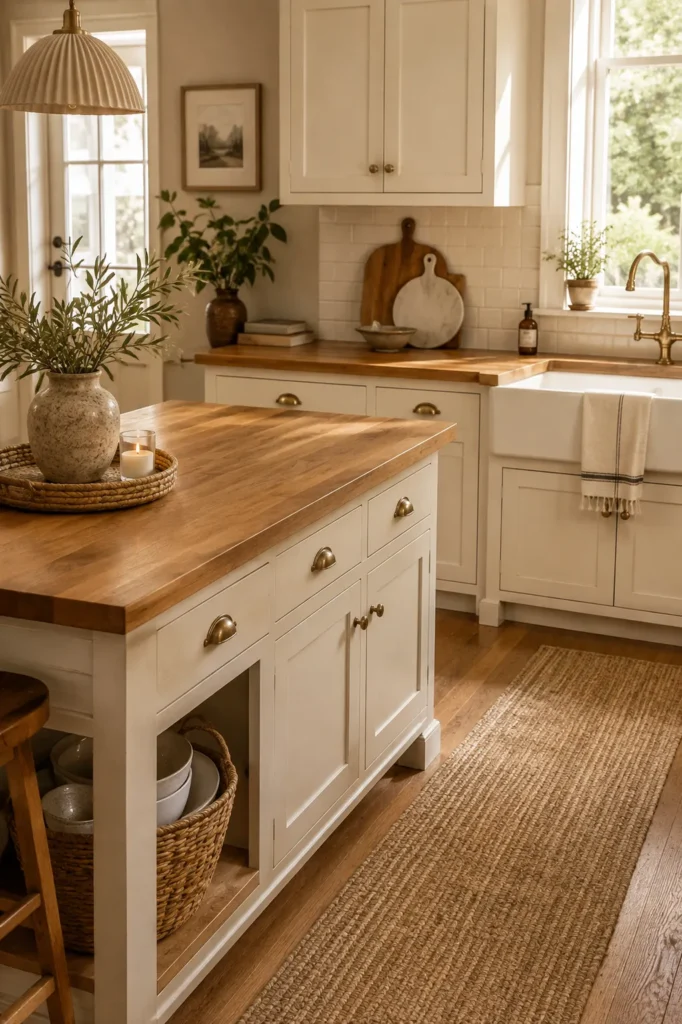
Warm butcher block countertops can transform a cool kitchen into a space that feels instantly more welcoming. The natural wood grain adds depth beside cream, sage, or white cabinetry while creating a useful preparation surface for chopping and baking. Choose a medium honey or walnut tone to emphasize traditional character without making the room feel visually heavy. Pair the counters with simple hardware, ceramic sinks, and understated backsplash materials. In my experience, wood works particularly well when a kitchen needs softness because its texture balances the harder surfaces of tile, metal, and stone.
Beyond appearance, butcher block offers a practical surface that can suit busy cooking routines when properly maintained. Use cutting boards for tasks that may stain or damage the finish, wipe spills promptly, and follow the manufacturer’s recommendations for oiling and cleaning. A wooden countertop can also make an island feel more furniture-like, especially when paired with paneled sides and classic stools. Keep the surrounding finishes uncomplicated so the grain remains visible. This combination creates a warm foundation that connects cabinetry, flooring, and accessories while giving the room a comfortable, handcrafted quality.
4:Vintage Tile Backsplash
- Adds pattern and craftsmanship behind the main work area.
- Protects walls while creating a strong decorative focal point.
- Muted colors keep patterned tile from feeling overwhelming.
- Simple cabinetry lets the backsplash remain visually prominent.
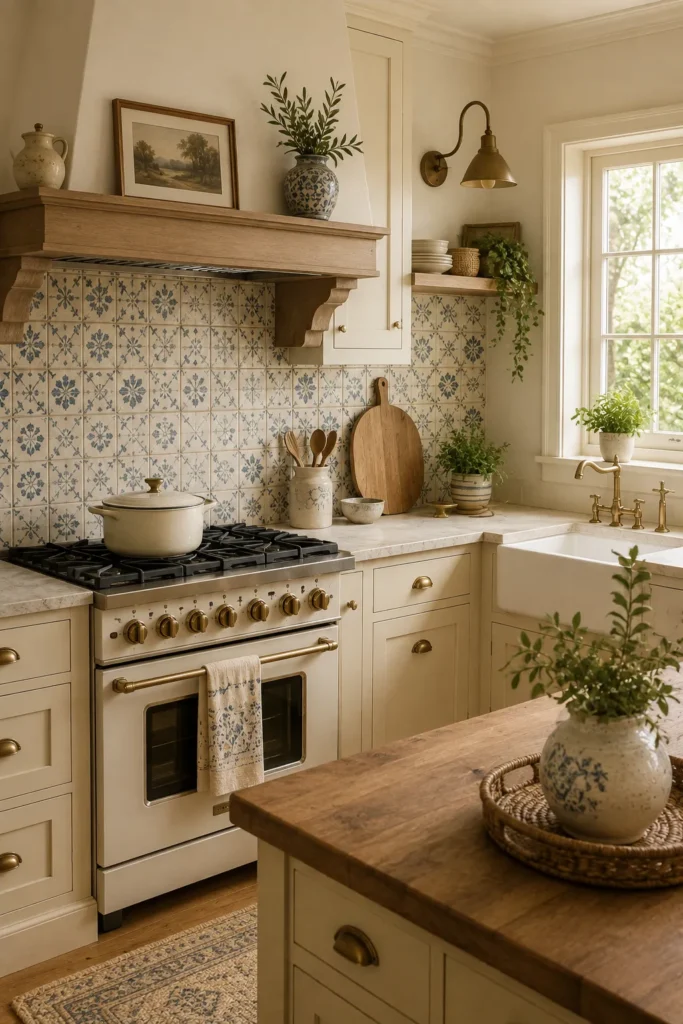
Give the cooking area a beautiful focal point with a ceramic tile backsplash inspired by traditional kitchens. Small subway tiles, softly patterned squares, or hand-finished zellige-style pieces can introduce texture while protecting the wall behind the range and sink. Cream, muted blue, sage, and warm white are especially versatile choices. Keep cabinet fronts relatively simple so the tile has room to shine. A slightly irregular handmade appearance can add character, while consistent spacing keeps the installation polished. The result brings craftsmanship into the room without making the kitchen feel overly themed or decorative.
A backsplash also offers an opportunity to connect several finishes throughout the space. Repeat a subtle tile color in curtains, pottery, or a small rug, then use brass or bronze hardware to add warmth. For busy cooking zones, choose a surface that is easy to wipe and maintain, particularly behind the stove. Larger tiles can make a small kitchen feel less fragmented, while smaller patterns create stronger visual interest. In my experience, choosing one distinctive backsplash and keeping the surrounding finishes quiet creates a more timeless result than layering several competing patterns across the room.
5:Copper Cookware
- Adds warm metallic color and authentic cooking-kitchen character.
- Makes practical cookware part of the visual design.
- Works beautifully against cream, white, sage, and natural wood.
- Display only frequently used pieces to keep the arrangement functional.
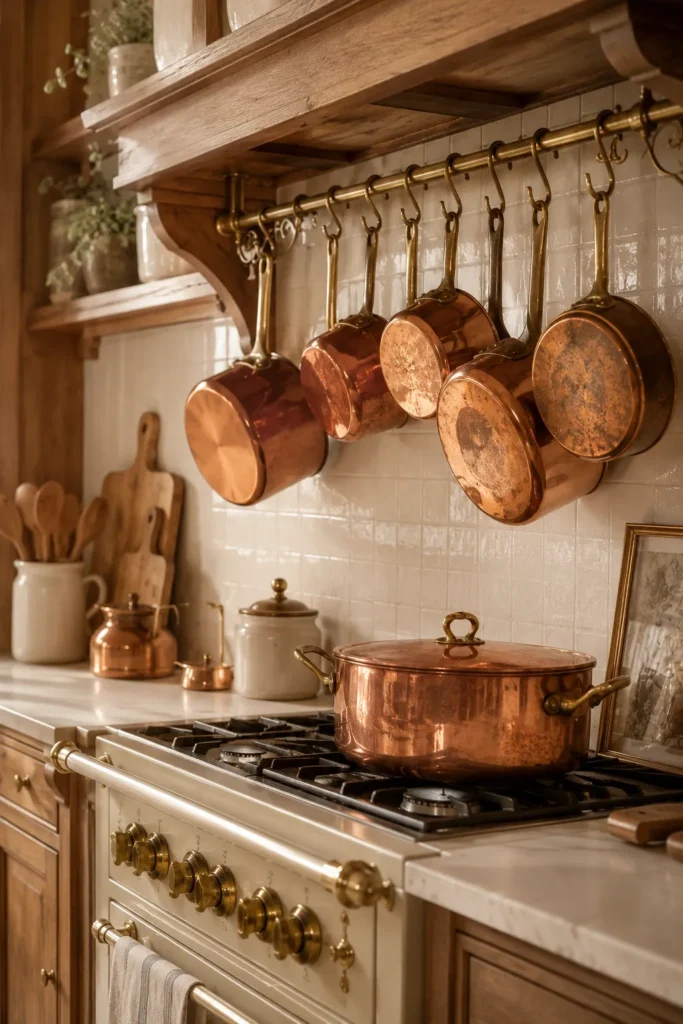
Few details create instant warmth like copper cookware displayed where it can actually be used. Hang a collection of copper pots and pans from a simple rail above the range or along an open wall, allowing their warm metallic surfaces to become part of the kitchen design. Mix polished and gently aged pieces for a natural collected effect rather than arranging everything identically. Copper looks especially rich against cream cabinetry, white tile, and warm wood. Beyond decoration, keeping everyday cookware within reach can make meal preparation easier while giving the room genuine working-kitchen character.
When styling copper, restraint makes the collection feel authentic rather than theatrical. Choose several useful pieces in different sizes, then leave enough wall space around them so each shape remains visible. If you prefer less shine, naturally aged copper develops a deeper patina that can complement antique-inspired interiors beautifully. Keep the cookware clean and follow care instructions to preserve the finish you prefer. A wooden cutting board, ceramic utensil holder, or linen towel nearby can reinforce the warm material palette. Together, these practical objects create a kitchen that feels functional, welcoming, and naturally lived in.
6:Apothecary Storage Jars
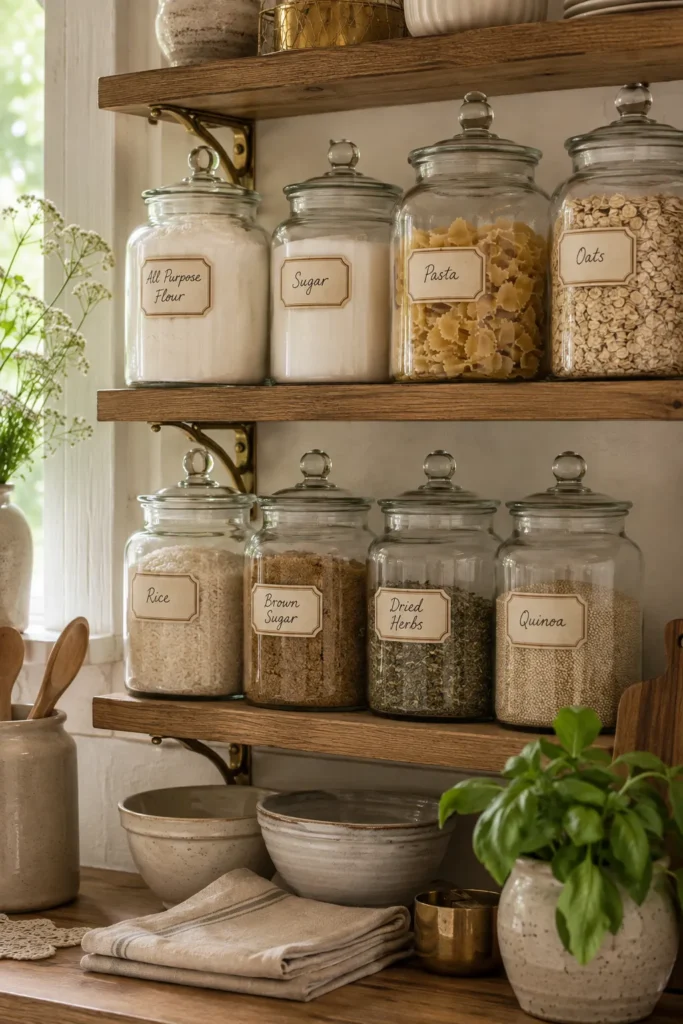
- Turns everyday pantry ingredients into attractive countertop decor.
- Keeps frequently used dry goods easy to identify.
- Glass containers create visual consistency across open shelving.
- Uniform labels make the display feel organized and intentional.
Transform ordinary pantry storage into an attractive display with clear glass jars arranged on open shelves or a countertop. Fill them with flour, sugar, grains, pasta, dried herbs, or baking ingredients, then add simple handwritten or printed labels for an organized finish. Glass reflects light beautifully and keeps the color palette visually consistent, especially when paired with warm wood and cream cabinetry. Choose jars in two or three complementary shapes rather than collecting too many styles. This small detail can make a kitchen feel thoughtfully maintained while keeping frequently used ingredients easy to see and reach.
Storage jars are most useful when they support your everyday routine rather than simply looking decorative. Choose airtight containers for ingredients that need protection from moisture, and use wide openings for foods you scoop frequently. Keep heavier jars on lower shelves to make them safer and easier to handle. A consistent label style can unify different ingredients and make the display look more intentional. In my experience, grouping jars by function, such as baking supplies or breakfast foods, makes open shelving much easier to maintain. The result combines practical organization with the warm, collected appearance of an old-fashioned pantry.
7:Checkerboard Linoleum
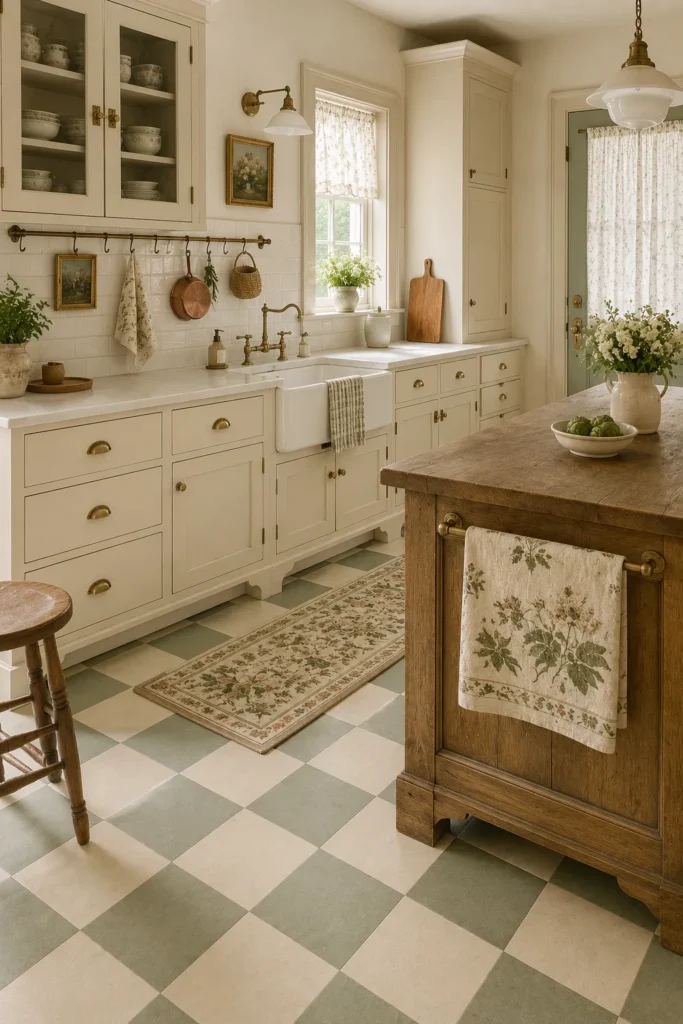
- Adds retro pattern without the cost of traditional tile.
- Creates a softer, more comfortable surface underfoot.
- Muted colors keep the checkerboard look sophisticated.
- Works especially well in busy family kitchens.
For a softer take on classic retro flooring, consider checkerboard linoleum in creamy white and muted green, blue, or charcoal. The repeating squares bring personality beneath your feet while maintaining the practical character of a working kitchen. Unlike hard tile, resilient flooring can feel more forgiving during long cooking sessions and is available in many period-inspired colors. Pair it with painted cabinets, natural wood, and aged hardware to keep the room visually warm. I’ve noticed that a muted checker pattern often feels more timeless than high-contrast black and white, particularly in smaller kitchens.
The flooring can also help define an open kitchen without adding walls or bulky furniture. Choose a scale that suits the room; larger squares usually create a calmer appearance, while smaller patterns feel busier and more playful. Keep the rest of the floor area uncluttered so the pattern remains easy to appreciate. For maintenance, select a quality product suited to kitchen use and follow its cleaning recommendations. Add a washable runner near the sink if desired. The finished space feels cheerful and nostalgic while remaining comfortable enough for everyday cooking, cleaning, and family activity.
8:Apron Front Cabinets
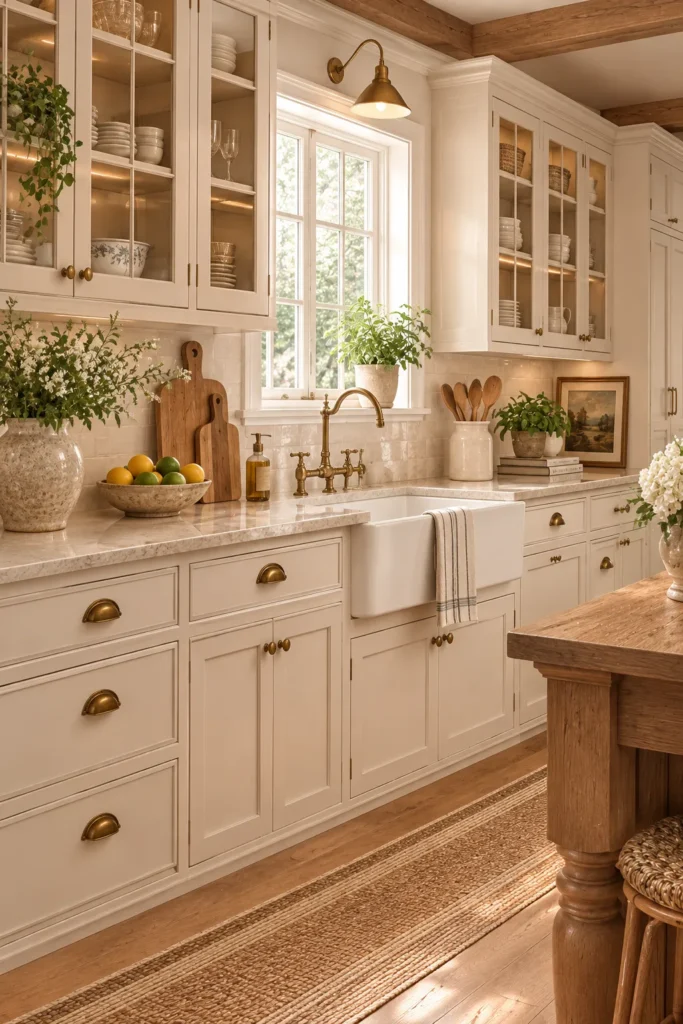
- Creates furniture-like character through traditional cabinet construction.
- Inset details make cabinetry feel more custom and established.
- Warm paint colors soften the overall kitchen.
- Simple hardware keeps the design from becoming overly ornate.
Give cabinetry a more furniture-like presence with traditional apron-front or inset-style doors that emphasize craftsmanship. Warm ivory, soft cream, muted sage, and pale blue can recreate the gentle color palettes found in older kitchens while keeping the room bright. Pair the doors with cup pulls, round knobs, or aged brass handles for subtle period character. Exposed wood edges and simple panel details add depth without excessive ornamentation. Among timeless vintage kitchen ideas, this approach works particularly well because the cabinetry becomes part of the room’s architecture rather than appearing like a purely functional storage system.
Cabinet construction matters as much as color when creating an authentic traditional appearance. Inset doors sit neatly within the cabinet frame, producing clean lines that feel tailored and established. If a full replacement is outside your budget, consider repainting existing doors and upgrading the hardware instead. Keep countertops relatively quiet so the cabinet detailing remains visible. Open shelves, glass-front doors, or one furniture-style island can provide additional variation without making the room feel busy. This combination gives the kitchen a polished foundation that feels classic, practical, and adaptable to modern storage needs.
9:Vintage Wall Clock
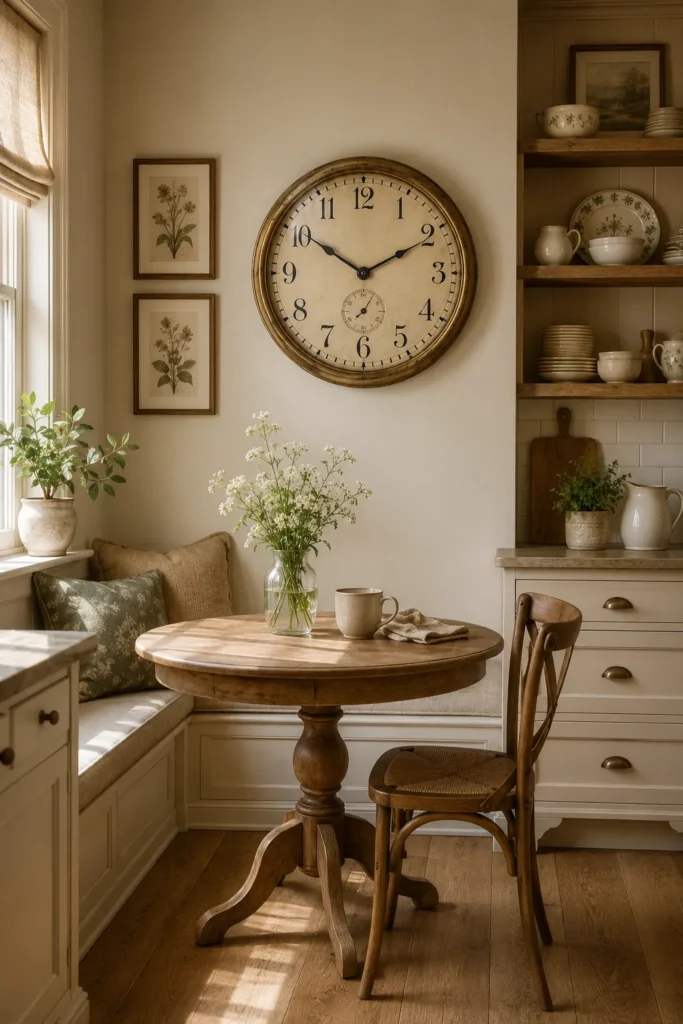
- Adds personality to an otherwise overlooked wall.
- Provides useful everyday function alongside decorative appeal.
- Round shapes soften the straight lines of cabinetry.
- Choose a simple face that remains easy to read.
A vintage-inspired wall clock can fill an empty kitchen wall while adding a small detail that feels genuinely useful. Choose a round clock with a cream face, dark numerals, and an aged brass, wood, or painted frame. Place it above a breakfast nook, beside open shelving, or on a quiet wall where the design can be appreciated. Its circular shape also provides a welcome contrast to the straight lines of cabinets and counters. A restrained clock often works better than several small decorations because it gives the wall one clear focal point.
Consider the clock’s size carefully so it feels intentional rather than lost among larger kitchen features. A medium or oversized face can work beautifully above a dining corner, while a smaller model suits a narrow wall between cabinets. Keep surrounding artwork and accessories minimal, especially if the clock has an ornate frame. Choose a readable face and dependable mechanism if you want it to serve a practical purpose. With warm wood, ceramic pieces, and traditional lighting nearby, this simple accessory can make the kitchen feel more personal and established without adding unnecessary clutter.
10:Fluted Glass Cabinets
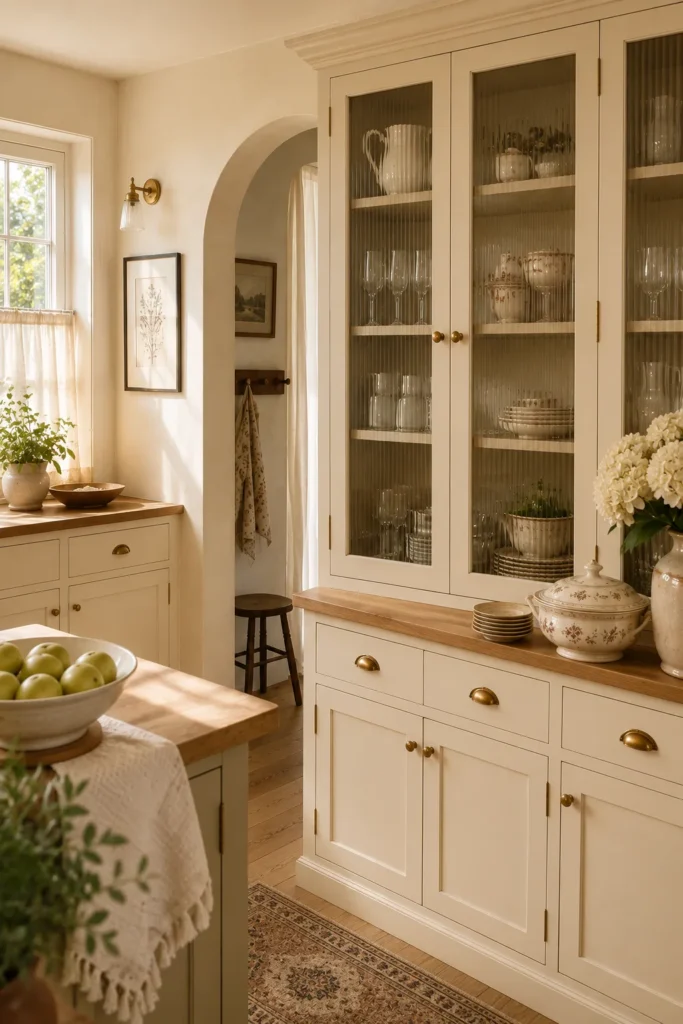
- Adds texture while keeping cabinet displays partially concealed.
- Softens the appearance of traditional upper cabinetry.
- Diffuses light beautifully across glass surfaces.
- Helps hide minor shelf clutter better than clear glass.
Fluted glass brings a beautifully textured layer to traditional cabinetry while keeping the overall kitchen light and airy. The vertical ridges gently distort whatever sits behind the doors, allowing ceramics and glassware to remain visible without demanding perfect shelf styling. Pair the panels with cream or pale sage cabinets, aged brass hardware, and warm wood surfaces for a relaxed period-inspired appearance. The textured glass also catches daylight in a subtle way, adding depth to otherwise flat cabinet fronts. This detail feels decorative yet practical, especially when you want display storage without exposing every item clearly.
Use fluted glass selectively on upper cabinets or a single feature cabinet to prevent the texture from becoming overwhelming. It works particularly well beside solid doors because the contrast creates visual variety without introducing another color. Inside, organize dishes by type and leave some breathing room so the silhouettes remain attractive through the glass. If the kitchen receives strong sunlight, textured panels can soften the visual glare while still allowing brightness through. In my experience, this material is especially effective for kitchens that need character but still benefit from a clean, uncluttered appearance.
11:Enamel Cookware Display
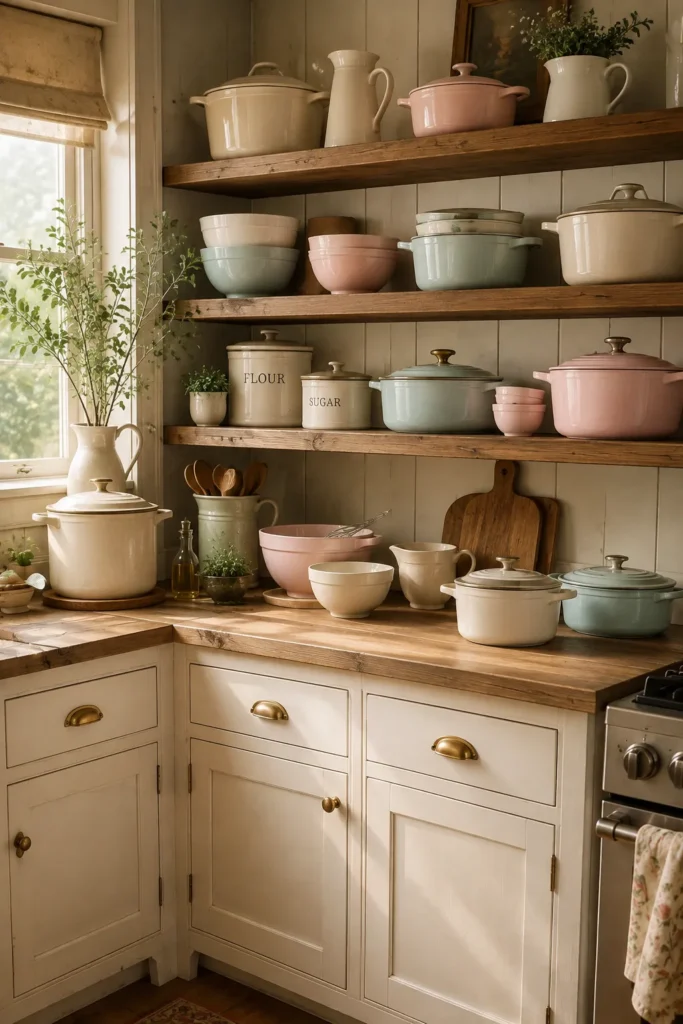
- Adds soft color without relying on permanent finishes.
- Turns useful cookware into attractive visual accents.
- Pastel enamel pieces complement cream and wood beautifully.
- Group similar shades together for a calmer display.
Pastel enamel cookware can add gentle color and unmistakable nostalgic character without changing the kitchen’s permanent finishes. Display cream, pale blue, soft green, or butter-yellow bowls and pans on open shelves, a countertop rack, or a freestanding hutch. Their smooth surfaces contrast beautifully with natural wood and textured walls while keeping the palette soft. Choose pieces you genuinely use so the display remains practical rather than decorative only. This approach is particularly useful for renters or anyone who wants to introduce personality gradually, because individual accessories can change without remodeling cabinets, floors, or countertops.
For the most polished appearance, limit the cookware display to a few complementary colors instead of collecting every shade available. Stack bowls by size, hang one or two pans from a simple rail, and place a pitcher or utensil holder nearby to vary the shapes. Keep heavier pieces on sturdy shelving and store rarely used cookware elsewhere. Repeating one enamel color through towels or small ceramics can create subtle visual continuity. The finished arrangement feels cheerful and collected, giving everyday cooking tools a decorative role while preserving the relaxed practicality associated with traditional kitchens.
12:Antique Wooden Hutch
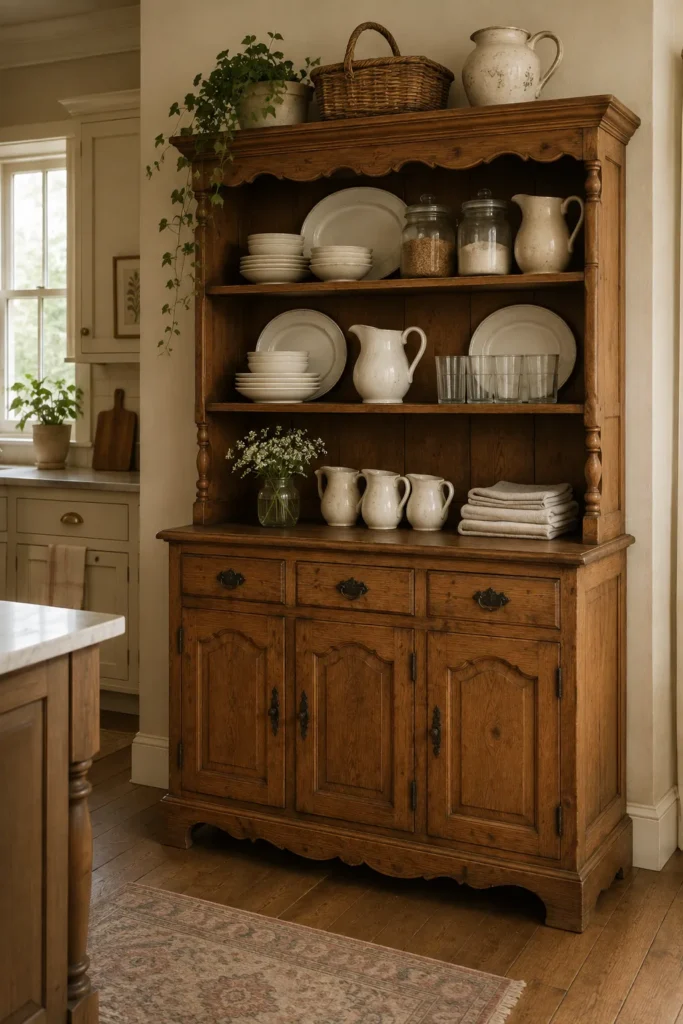
- Adds furniture-like storage and instant architectural personality.
- Provides generous display space for ceramics and serving pieces.
- Warm wood balances pale painted cabinetry.
- Choose sturdy shelves for heavier dishes and cookware.
An antique wooden hutch can give a kitchen the character of furniture collected over generations. Look for warm oak, walnut, or painted wood with simple paneling, glass doors, or gently aged hardware. Use the shelves to display everyday plates, serving bowls, pitchers, jars, and folded linens while keeping less attractive necessities stored elsewhere. Against cream walls or painted cabinetry, the wood becomes a warm focal point that adds depth. I’ve noticed that one substantial furniture piece can make a remodeled kitchen feel far more established because it introduces material variation and a sense of history.
A hutch also solves practical storage problems when upper cabinetry is limited. Place it along an unused wall, near the dining area, or beside a breakfast nook where serving pieces can remain accessible. Before styling, check that the shelves are strong enough for heavier ceramics and that the furniture sits securely on an even floor. Keep the display functional by grouping items by use and leaving some open space. A few baskets can hide smaller supplies below. The result combines storage, display, and traditional charm in one hardworking piece that gives the kitchen a distinctly collected appearance.
13:Creamy Subway Tile
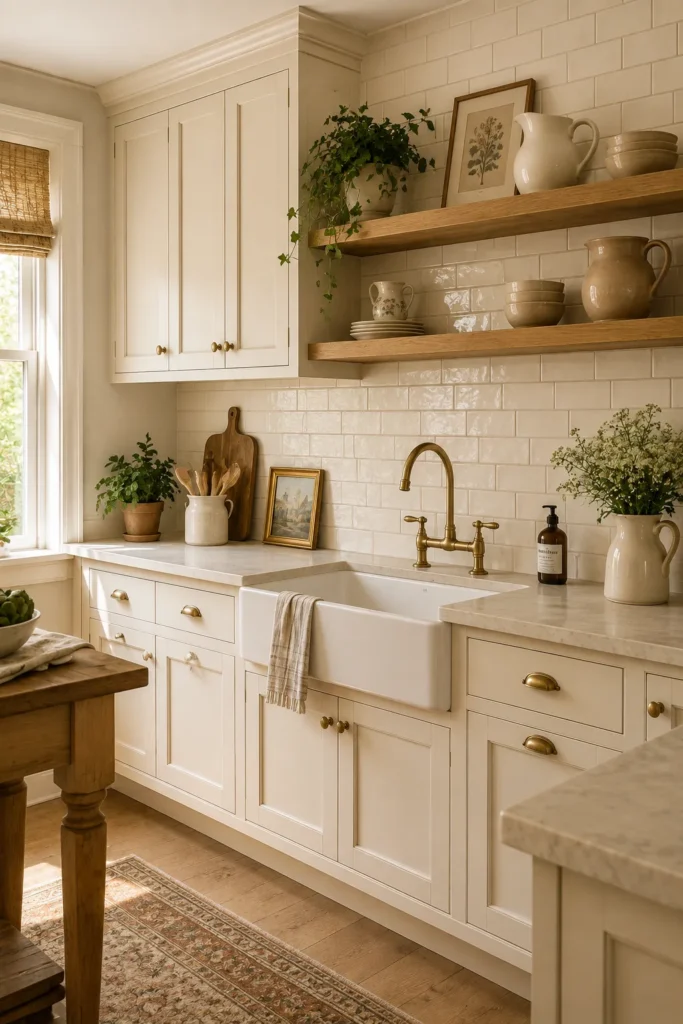
- Creates a clean backdrop with understated traditional character.
- Reflects light and helps smaller kitchens feel brighter.
- Warm grout prevents the tile from looking too stark.
- Simple rectangular shapes pair easily with vintage fixtures.
A warm subway tile backsplash creates a clean foundation while quietly reinforcing traditional kitchen character. Choose creamy or ivory tiles instead of bright optic white, then pair them with warm gray or beige grout for a softer appearance. The simple rectangular pattern works beautifully behind a farmhouse sink, range, or open shelving because it adds structure without competing with decorative details. Glossy surfaces can reflect natural light and make compact rooms feel brighter. For a more authentic appearance, consider slightly varied handmade-style tiles that introduce subtle imperfections without making the backsplash look overly rustic.
The beauty of subway tile is its flexibility, especially when you want a kitchen that can evolve over time. Keep the tile layout classic, then introduce personality through lighting, hardware, textiles, or artwork that can be changed more easily. Extending the tile to the underside of upper cabinets creates a continuous backdrop, while a shorter installation can leave room for painted walls above. Use grout that suits your maintenance needs and clean cooking splashes promptly. The finished backsplash feels timeless and practical, providing a calm visual foundation for richer wood, brass, ceramic, and vintage-inspired accents.
14:Lace Café Curtains
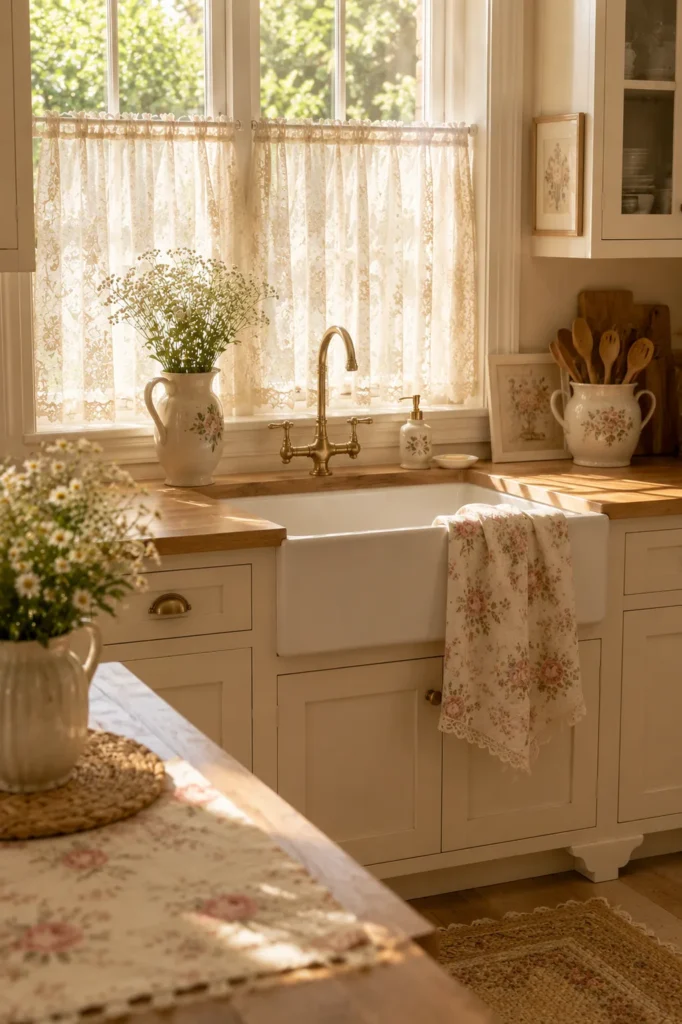
- Adds softness and privacy without blocking all natural light.
- Makes a kitchen window feel more decorative and inviting.
- Cream fabrics blend naturally with traditional neutral palettes.
- Choose washable fabric for easier everyday maintenance.
Soft café curtains can make a simple kitchen window feel instantly warmer and more personal. Choose lightweight lace, cotton, or linen in cream, ivory, or a subtle floral pattern, then hang the panels across the lower portion of the window. This arrangement preserves natural light while offering privacy and adding gentle texture. Pair the curtains with painted cabinetry, wood countertops, and classic brass fixtures for a cohesive traditional palette. I’ve noticed that window textiles often make the biggest difference in kitchens that feel visually cold because they introduce softness without taking up valuable floor or counter space.
For everyday practicality, select a washable fabric that can handle the dust and moisture common around kitchen windows. A simple tension rod or slim curtain rod keeps the installation understated, while a small top valance can add extra softness if the window is large. Avoid overly heavy fabrics that reduce daylight or make a compact kitchen feel closed in. Repeat the curtain color through a towel, runner, or ceramic piece for subtle coordination. The result is a brighter, more comfortable window area that adds nostalgic charm while still supporting the practical needs of a busy home.
15:Classic Brass Hardware
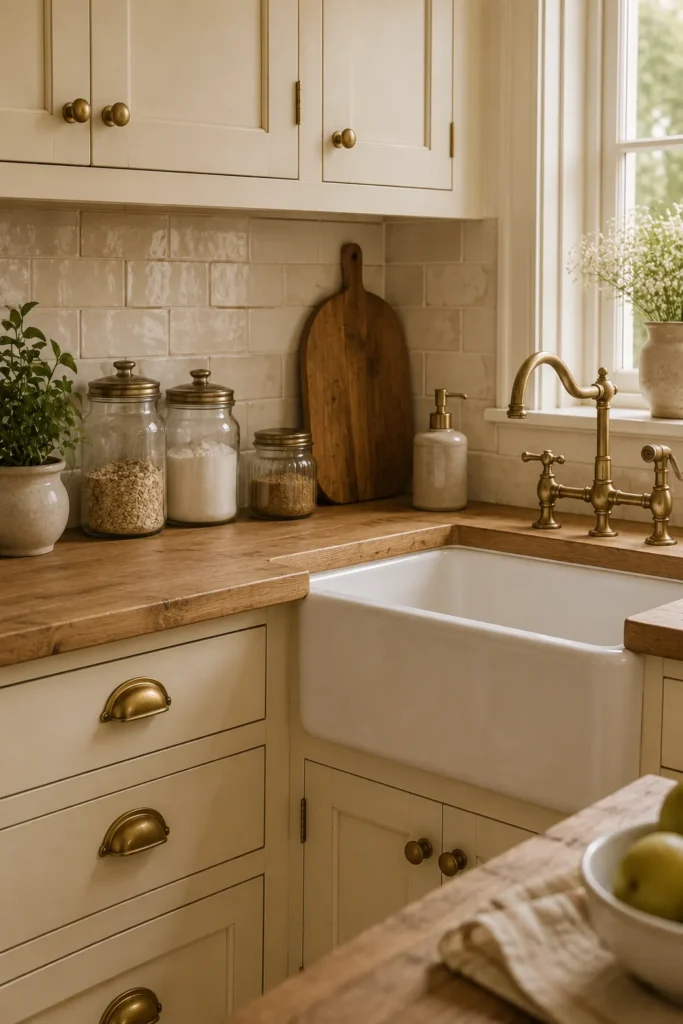
- Small hardware changes can dramatically refresh existing cabinetry.
- Aged brass adds warmth against pale cabinet colors.
- Cup pulls suit drawers while knobs work well on doors.
- Matching finishes across fixtures create a cohesive appearance.
Sometimes the smallest details create the strongest transformation, and classic brass hardware is a perfect example. Replace plain cabinet pulls with aged brass knobs, cup pulls, or simple bin handles to introduce warmth and traditional character. Brass looks especially beautiful against cream, ivory, sage, and pale blue cabinetry because its golden tone adds gentle contrast. Choose finishes with a slightly softened appearance rather than mirror-polished metal for a more established feel. This is one of the easiest vintage kitchen ideas to achieve without replacing cabinets, making it useful for budget-conscious updates.
Hardware should feel comfortable in your hands as well as attractive in photographs. Use knobs on cabinet doors and cup pulls on drawers for a traditional combination that also makes larger drawers easier to open. Measure existing hole spacing carefully if you are replacing pulls so installation remains straightforward. Repeat the brass finish on the faucet or lighting when possible, but avoid matching every accessory too perfectly. A little variation keeps the kitchen feeling collected. With simple cabinet fronts and warm surrounding materials, brass hardware can provide the finishing detail that ties the entire room together.
16:Freestanding Kitchen Island
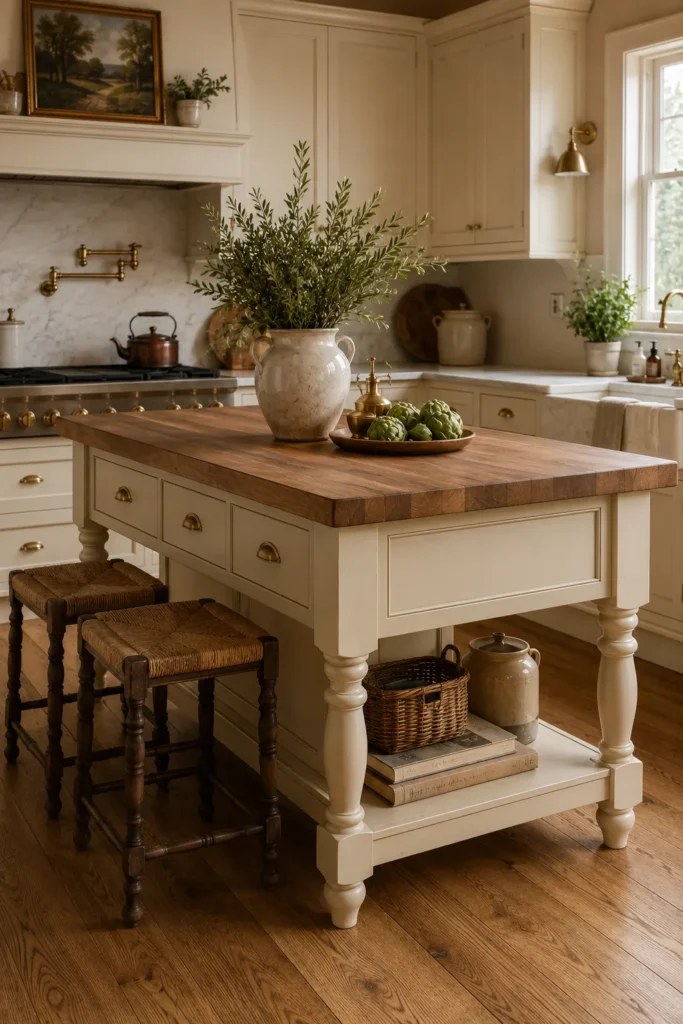
- Creates a furniture-like centerpiece with practical workspace.
- Adds storage without making cabinetry feel too uniform.
- Wood countertops introduce warmth and tactile character.
- A movable design can offer flexibility in smaller kitchens.
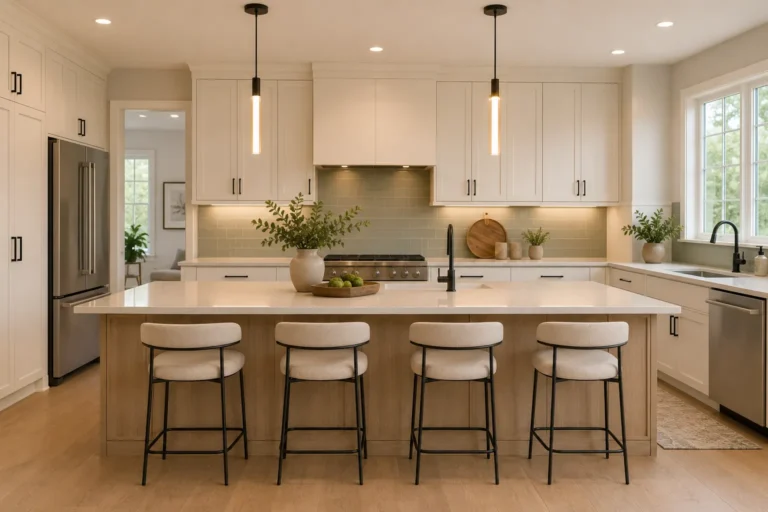
A freestanding island can make a kitchen feel collected over time rather than built from one matching set. Choose a furniture-style base with painted panels, turned legs, or simple inset doors, then top it with warm butcher block or natural stone. The island should provide enough clearance for comfortable movement around the cooking and cleaning zones. Cream, sage, or muted blue finishes work beautifully with traditional cabinetry. In my experience, a contrasting island adds more personality than matching every cabinet, while still giving you valuable preparation space, storage, and an informal place for quick meals.
Keep the island proportional to the room so it improves the layout instead of restricting it. In compact kitchens, a narrow piece or movable worktable may provide useful storage while preserving clear pathways. Larger rooms can accommodate a substantial island with drawers, open shelving, or seating on one side. Add simple stools and a small pendant light above if the space allows. Avoid filling the countertop with decorative objects; leaving preparation space makes the island feel genuinely functional. The finished arrangement creates a practical center for cooking, gathering, and everyday routines while reinforcing the kitchen’s traditional character.
17:Vintage Floral Curtains
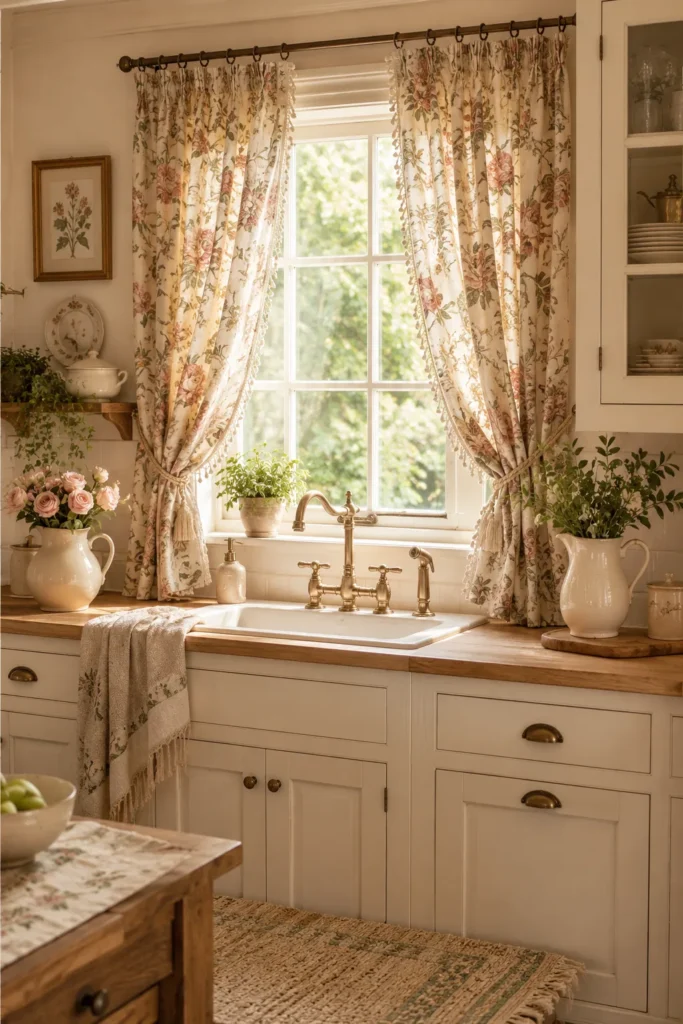
- Introduces color and pattern through an easy-to-change textile.
- Softens hard cabinetry, tile, and countertop surfaces.
- Botanical motifs complement traditional kitchens naturally.
- Choose washable fabrics for practical everyday use.
Vintage floral curtains can bring gentle color and softness into a kitchen without committing to permanent patterned finishes. Look for small botanical prints featuring muted rose, sage, cream, dusty blue, or warm yellow. Hang them around a sunny window where natural light can highlight the fabric and make the pattern feel lighter. Pair the curtains with simple cabinetry and natural wood so the room remains balanced. This textile layer works particularly well when the kitchen has many hard surfaces, because fabric introduces movement and softness that can make the entire space feel more comfortable and welcoming.
Keep the pattern scale appropriate for the room and repeat only one or two colors elsewhere for a cohesive appearance. A small floral print can suit compact windows, while larger botanical motifs work better when there is plenty of surrounding wall space. Choose cotton or linen blends that are easy to wash, especially near cooking areas. Café curtains, relaxed panels, or simple valances can all work depending on the window shape. The result is an affordable decorative update that makes the kitchen feel warmer, more personal, and naturally connected to traditional cottage-inspired interiors.
18:White Ceramic Collection
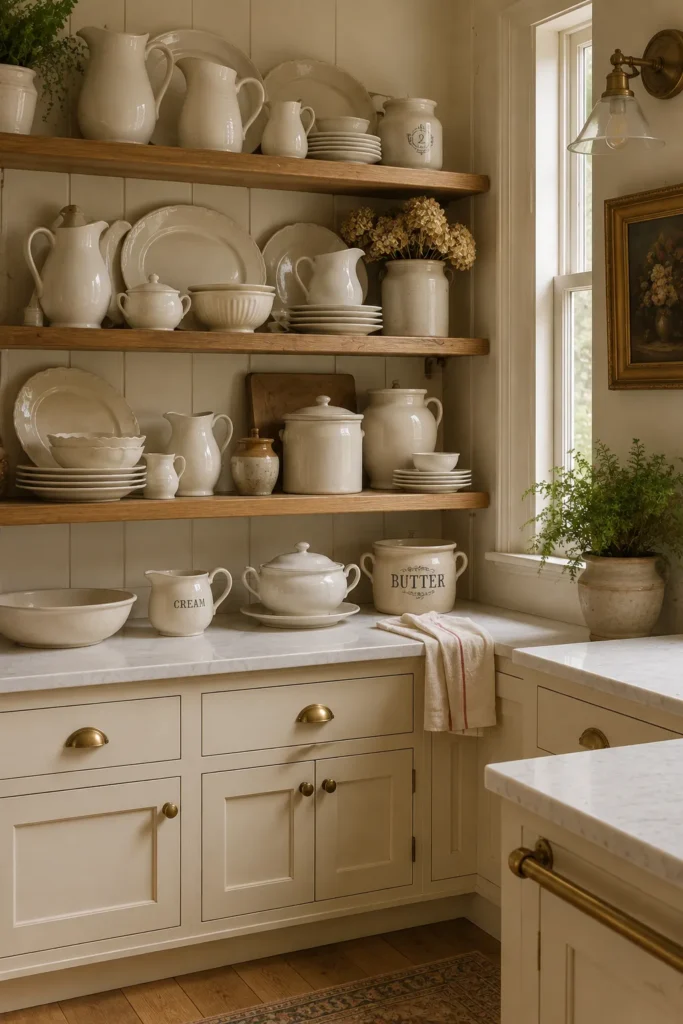
- Creates a calm display while adding traditional kitchen character.
- White ceramics reflect light and keep shelves visually airy.
- Different shapes provide interest without introducing many colors.
- Mix useful pieces with a few decorative finds.
A collection of white ceramics can create one of the calmest and most timeless displays in a traditional kitchen. Arrange pitchers, plates, bowls, crocks, and serving pieces on open wood shelves or inside glass-front cabinets. Because the palette stays mostly neutral, you can mix different shapes and finishes without making the arrangement feel chaotic. Slight variations in glaze, texture, and age add personality while preserving visual harmony. Pair the collection with warm wood and brass accents to prevent an all-white display from feeling flat. The result feels collected, useful, and naturally suited to everyday kitchen life.
The secret is to vary height and shape while keeping the overall color family consistent. Place larger pitchers or serving bowls behind smaller plates, then leave small pockets of open shelf space so the collection can breathe. Use the most frequently handled pieces within easy reach and reserve delicate items for higher shelves. You do not need expensive antiques; thrifted ceramics, handmade pottery, and simple creamware can create a similar effect when thoughtfully grouped. This restrained approach adds character without clutter, helping the kitchen feel established while keeping the visual palette bright, warm, and effortlessly cohesive.
19:Wrought Iron Pot Rack
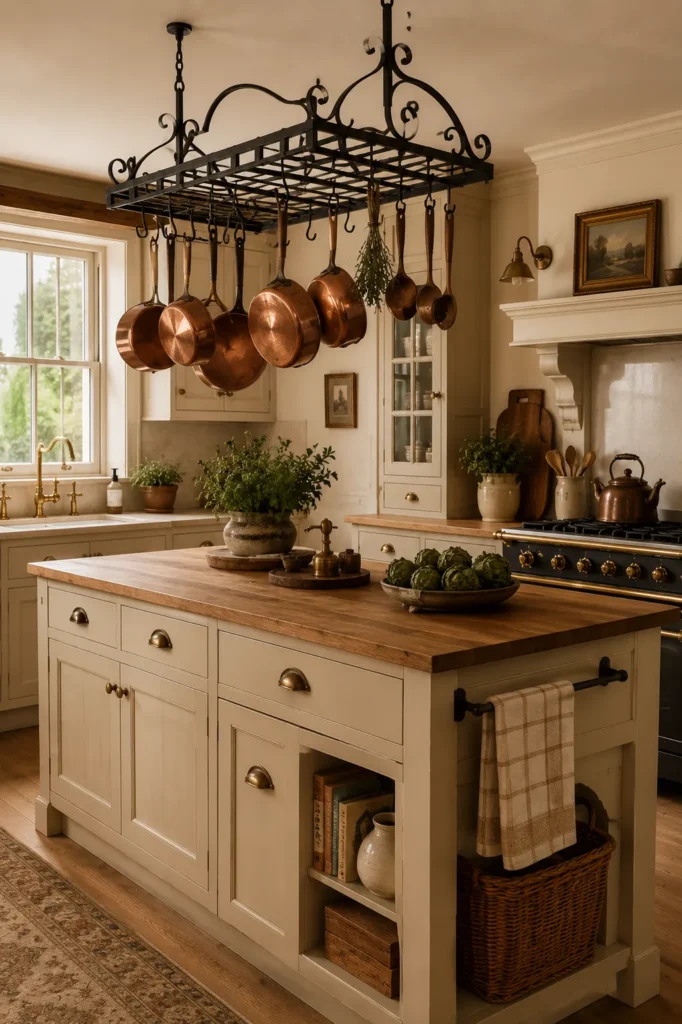
- Uses vertical space while keeping cookware within easy reach.
- Dark iron creates attractive contrast against light cabinetry.
- Hanging cookware adds authentic working-kitchen character.
- Keep the arrangement organized so it feels practical, not crowded.
A wrought iron pot rack adds vertical character while turning everyday cookware into part of the kitchen’s visual story. Mount a simple black or dark bronze rack above an island, range, or dedicated preparation area, then hang copper pans, wooden utensils, and a few frequently used tools. The dark metal contrasts beautifully with cream cabinetry and warm wood surfaces. Keep the arrangement intentionally limited so the rack feels functional rather than cluttered. In my experience, displaying useful cookware makes a traditional kitchen feel more authentic because the decoration reflects how the space is actually used.
Choose the rack size according to the available ceiling height and surrounding work area. It should not interfere with cabinet doors, lighting, or comfortable movement around the island. Use strong hardware appropriate for the wall or ceiling structure, particularly when hanging heavier cookware. Group larger pans toward the center and smaller utensils toward the edges to create visual balance. If the kitchen already has several dark accents, repeat the iron finish subtly through lighting or cabinet hardware. This practical storage solution adds texture, saves cabinet space, and reinforces the handcrafted atmosphere of a classic kitchen.
20:Vintage Kitchen Sign
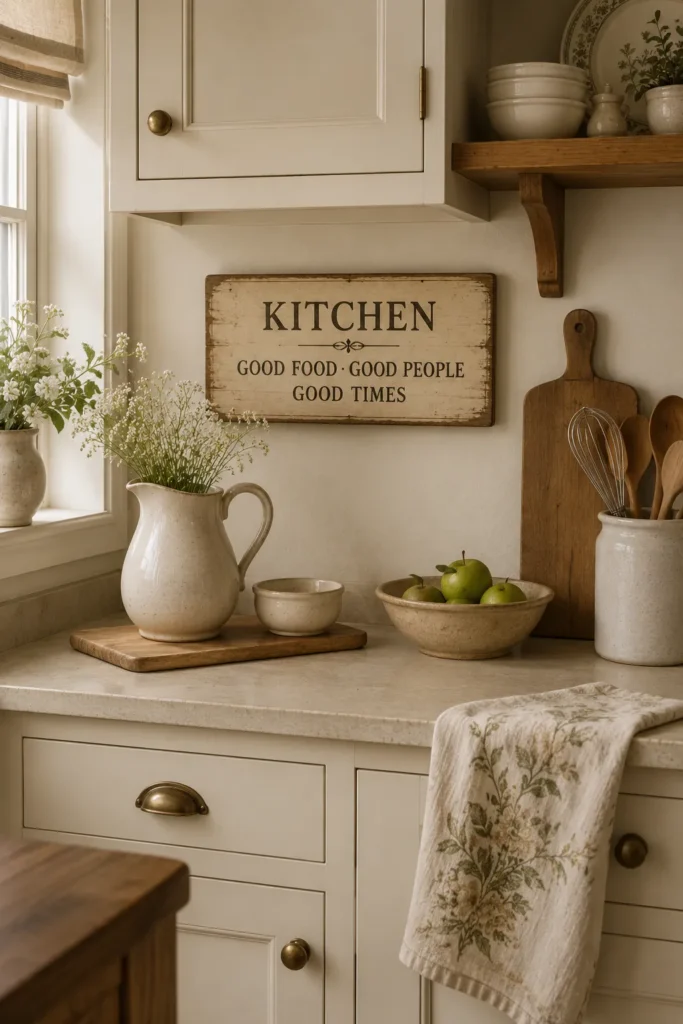
- Adds personality to a small unused wall or corner.
- Wooden finishes introduce warmth without overwhelming the room.
- Simple lettering feels more timeless than overly themed artwork.
- Choose one meaningful sign instead of filling every wall.
A small vintage-inspired kitchen sign can add personality to an overlooked wall without overwhelming the room with decoration. Choose aged wood, painted metal, or a simple framed print featuring understated lettering or a classic kitchen motif. Place it above a breakfast nook, beside open shelving, or on a narrow wall between cabinets. Warm neutrals and simple typography tend to feel more timeless than overly elaborate designs. This small accent works especially well when the rest of the kitchen is intentionally restrained, giving the room one personal detail that feels collected rather than mass-produced.
Use the sign as a finishing touch rather than the main theme of the kitchen. One thoughtfully positioned piece usually has more impact than covering several walls with matching quotes and decorative plaques. Consider choosing artwork that connects with an existing color, such as cream, muted green, or natural wood. Keep the frame proportional to the available wall space and avoid placing it where heat or cooking splashes could damage the material. Paired with ceramic pieces, brass details, and warm cabinetry, a simple sign can complete the room with a subtle nostalgic touch.
21:Checkerboard Flooring
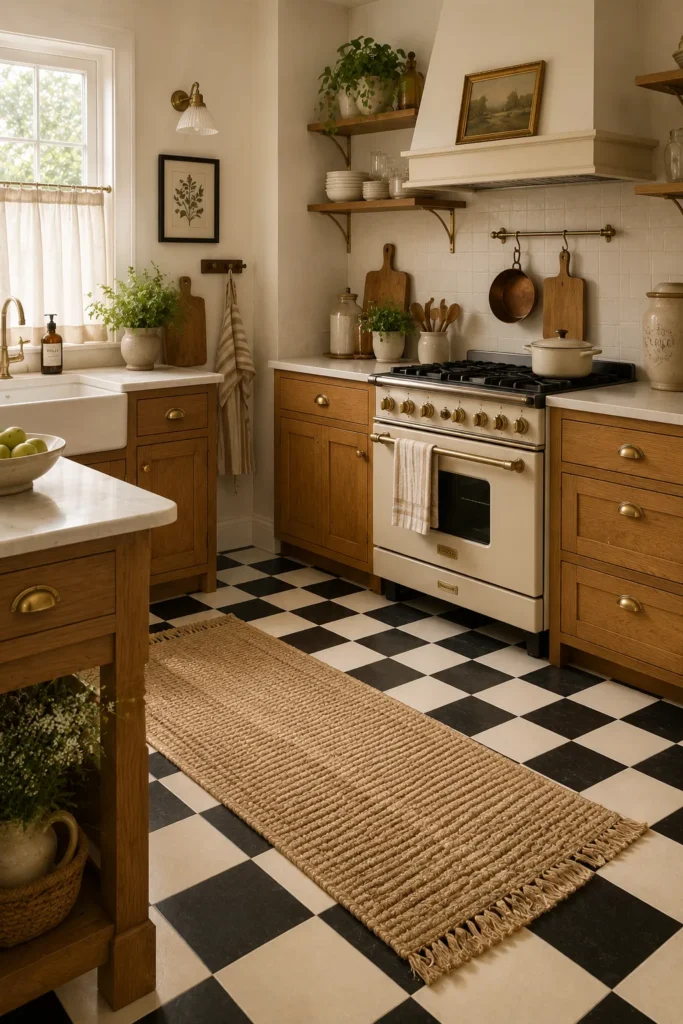
- Creates an instant retro foundation without overwhelming the room.
- Adds rhythm and personality to otherwise simple kitchen surfaces.
- Works beautifully with warm wood, brass, and creamy neutrals.
- A restrained palette keeps the bold flooring feeling timeless.
Step into a kitchen that feels collected, not decorated, with creamy checkerboard flooring setting the perfect retro foundation. Black and ivory squares instantly add vintage character while keeping the room visually balanced. Pair the floor with warm wood cabinets, simple brass hardware, and a freestanding range for an authentic period-inspired look. The pattern also makes a plain kitchen feel more intentional without adding clutter. In my experience, checkerboard floors work especially well when the rest of the palette stays restrained. They create a strong focal point while allowing colorful appliances, artwork, or textiles to shine naturally.
A checkerboard floor can make even a compact kitchen feel thoughtfully designed because the repeating pattern adds rhythm from wall to wall. Choose matte ceramic or porcelain tiles for durability, especially in busy cooking areas where spills are common. Keep grout lines neat and select cabinet colors that echo one tile shade for a cohesive finish. Open shelving, woven runners, and vintage-inspired stools can soften the geometry. If your kitchen already has plenty of visual detail, use a larger checker pattern; smaller squares create more energy. The result feels nostalgic, practical, and polished without looking like a themed room.
22:Mint Green Cabinets
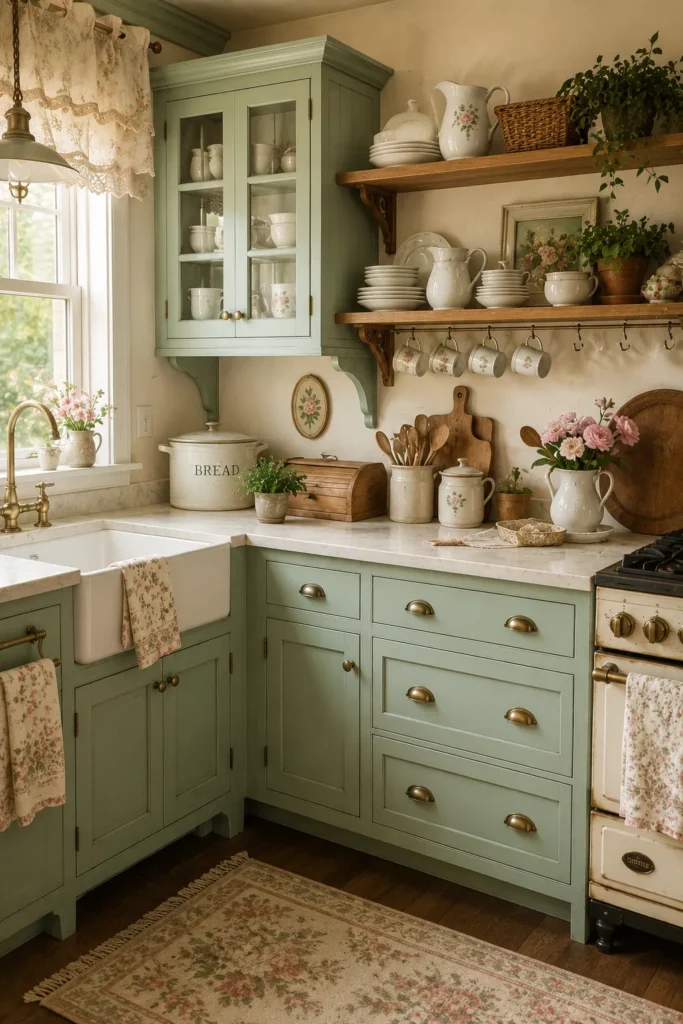
- Brings cheerful color into the kitchen without feeling overly modern.
- Makes smaller spaces appear brighter and more open.
- Looks beautiful with brass, ivory, natural wood, and floral details.
- Muted green tones create nostalgia without making the room feel themed.
Give your kitchen an instant nostalgic lift with soft mint cabinetry, a shade that feels cheerful without becoming overly bright. This color works beautifully with creamy walls, warm wood accents, and aged brass hardware. For a convincing vintage look, choose simple shaker or inset-style doors with rounded pulls and minimal ornamentation. Mint also reflects natural light, helping smaller kitchens appear fresher and more open. I’ve noticed this palette looks especially charming beside white ceramic dishes and floral textiles. The key is balance: let the cabinets provide color while surrounding surfaces remain warm, muted, and quietly timeless.
Soft mint cabinets can refresh a dated kitchen while preserving the welcoming character that makes older homes special. Use a slightly muted green rather than a highly saturated shade, then pair it with ivory countertops, butcher-block details, or pale stone surfaces. A farmhouse sink and glass-front uppers can reinforce the classic appearance without making the room feel old-fashioned. Brass or aged bronze hardware adds warmth and definition against the green finish. For a practical update, use washable cabinet paint and durable work surfaces. This combination creates a light, inviting room that feels personal, comfortable, and easy to live with.
23:Farmhouse Sink
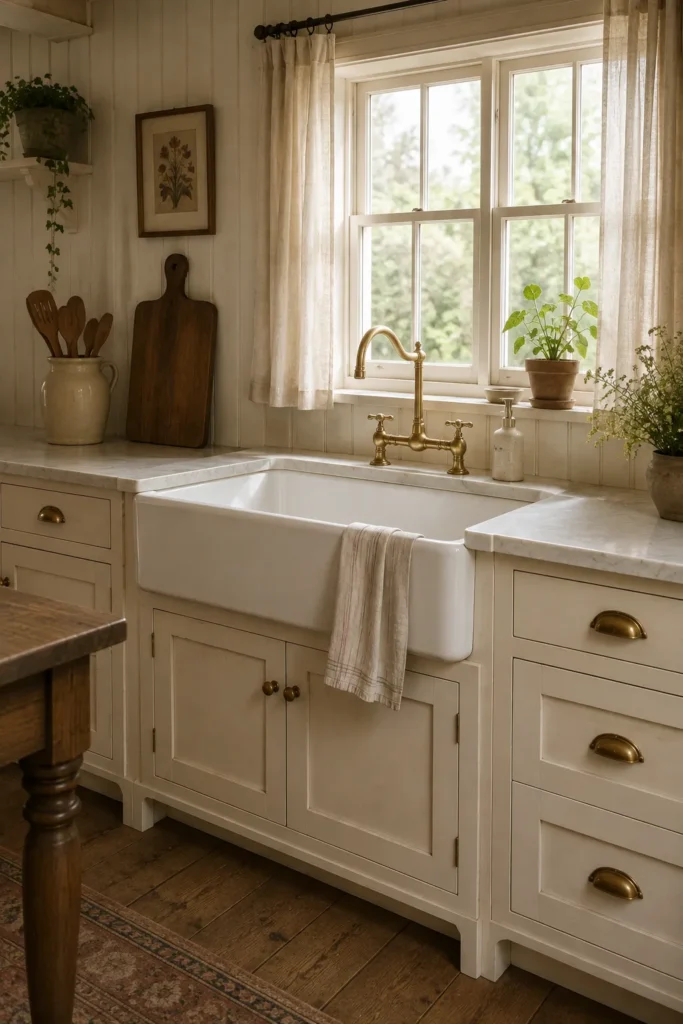
- Becomes a natural focal point while providing generous washing space.
- Adds recognizable period character without excessive decoration.
- Pairs easily with cream cabinets, wood, brass, and ceramic accents.
- Combines nostalgic appearance with practical everyday function.
Bring authentic period character into the room with a classic farmhouse sink surrounded by simple cabinetry and warm natural materials. Its deep basin provides generous space for washing large pans, produce, and everyday dishes while becoming an unmistakable visual centerpiece. Choose white porcelain or fireclay for a crisp traditional finish, then pair it with aged brass or brushed nickel fixtures. Wide-plank wood flooring and linen curtains can make the sink area feel softer and more lived-in. That combination is one of the most practical vintage kitchen ideas because it blends recognizable old-fashioned style with genuinely useful function.
A farmhouse sink looks most convincing when the surrounding design stays simple and tactile rather than overly decorated. Give it room to breathe by avoiding bulky countertop accessories, then add one or two useful pieces such as a ceramic utensil crock or wooden cutting board. White sinks pair especially well with cream cabinetry, beadboard walls, and natural wood accents. For everyday comfort, consider a bridge-style faucet with a high arc and easy-to-clean finish. The result feels relaxed and established, as though the kitchen has evolved over time. It adds character without sacrificing the practical workflow modern households need.
Conclusion
Creating a timeless kitchen is often about choosing the right details rather than changing everything at once. These vintage kitchen ideas offer plenty of inspiration, from warm wood and classic tile to charming lighting, traditional hardware, and practical display storage. Start with one feature that immediately catches your eye, then build around it with complementary textures and colors. I’ve seen how small changes can completely transform a space while keeping it functional for modern life. Save this article to Pinterest for your next decorating project, try your favorite ideas at home, and share it with someone who loves timeless kitchen style. Let your kitchen become a space full of warmth, character, and everyday charm.