20 Small Entrance Hall Ideas That Feel Welcoming
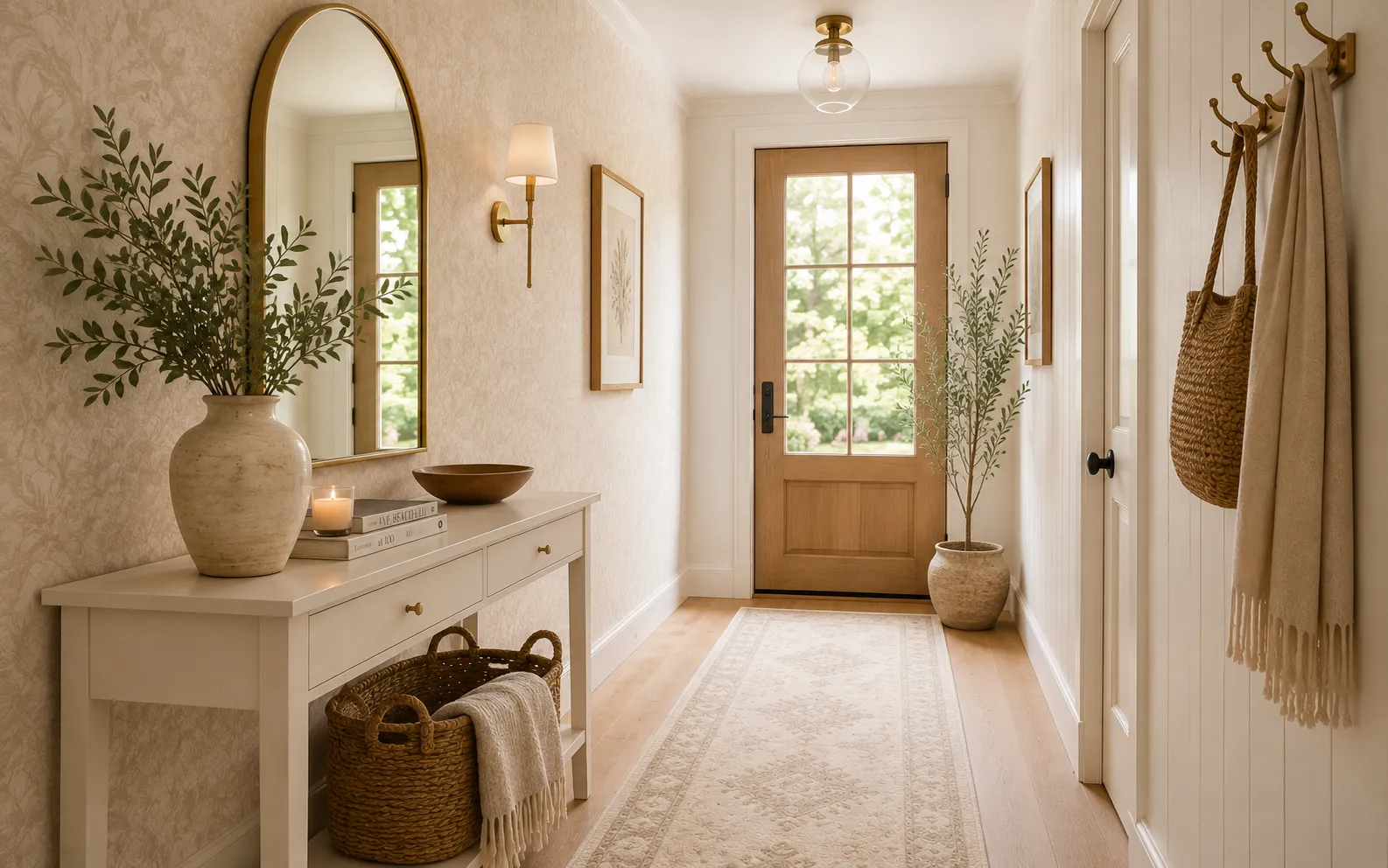
Your entrance may be small, but it can still make a beautiful first impression. Small entrance hall ideas can turn a narrow, cluttered doorway into a space that feels bright, organized, and genuinely welcoming. Whether you have barely enough room for a console or simply want to make better use of an awkward hallway, the right details can make a noticeable difference. Think slim furniture, clever storage, mirrors, warm lighting, natural textures, and thoughtful color choices that work with the space you already have. In my experience, even one simple change, such as adding a mirror or moving storage off the floor, can make an entrance feel completely different. These ideas will help you create a practical and Pinterest-worthy welcome without overcrowding your home.
1:Wall-Mounted Coat Hooks
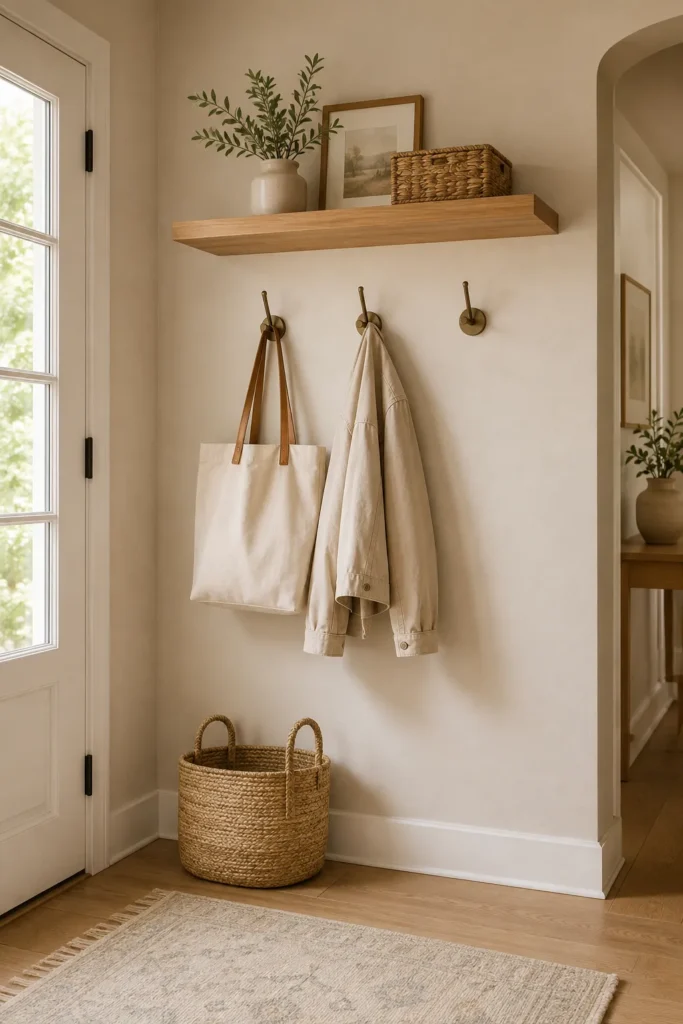
- Wall hooks keep coats and bags off the floor.
- A small shelf above can hold keys or seasonal accessories.
- Matching hooks create a tidy, intentional visual rhythm.
- Keep only frequently used items visible for a calmer look.
Wall-mounted hooks are a smart way to add everyday storage without sacrificing precious floor space. Instead of placing a bulky coat rack in the walkway, install a few sturdy hooks directly on an empty wall. Choose finishes that complement your existing hardware, such as matte black, brushed brass, or warm wood. For small entrance hall ideas, this setup keeps coats, bags, and lightweight jackets within easy reach while preserving an open floor plan. I’ve noticed that when frequently used items have an obvious home near the door, clutter tends to disappear much faster.
Make the arrangement feel decorative as well as practical by spacing the hooks evenly and limiting the number of visible items. A narrow wooden shelf above them can hold a small bowl, framed print, or seasonal accessory. If children use the entrance, install a few lower hooks at an accessible height. Keep heavier bags on hooks designed to support their weight, and avoid overcrowding the wall. A simple cream, wood, and black combination can feel especially polished. The result is a functional drop zone that makes coming and going easier while keeping the hallway visually light.
2:Built-In Shoe Bench
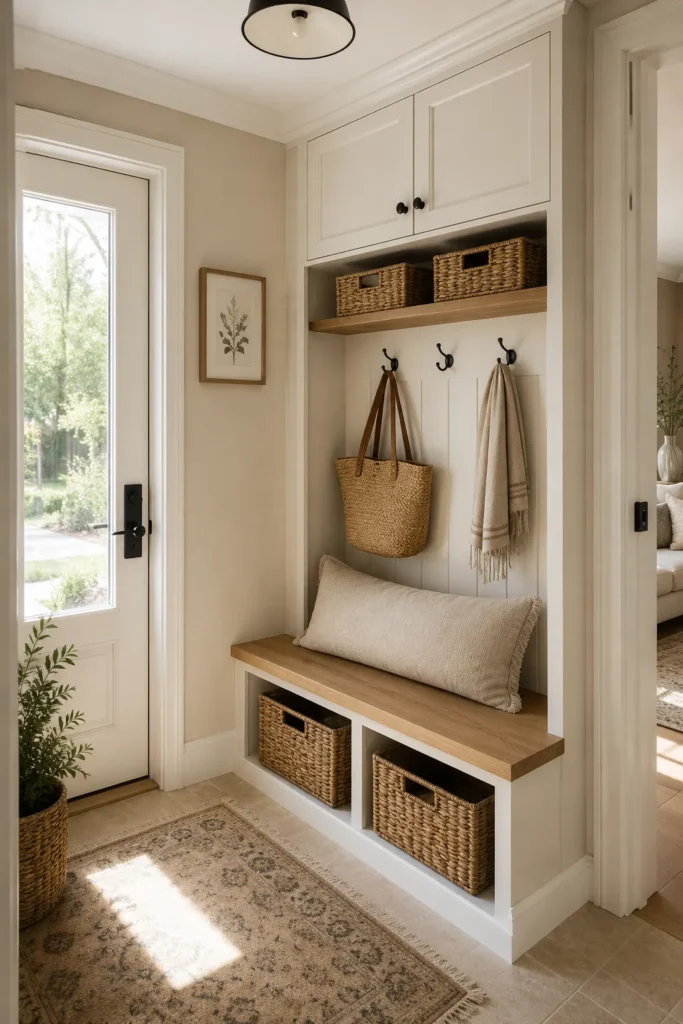
- A compact bench provides comfortable seating for putting on shoes.
- Open cubbies or baskets can hide everyday footwear.
- A pale wood seat adds warmth against painted cabinetry.
- Keep the bench shallow enough to preserve comfortable circulation.
A small bench can transform the entrance from a simple passage into a genuinely useful landing zone. Choose a shallow built-in or freestanding bench that fits the available wall without narrowing the walking path. Add baskets underneath for shoes, umbrellas, or everyday accessories, then keep the seat mostly clear. A light wood top paired with warm white cabinetry creates a clean, welcoming combination. That’s why many designers recommend combining seating with storage when space is limited: one compact piece can perform two jobs while keeping the surrounding area visually organized.
Before choosing a bench, measure the doorway clearance and consider how people naturally move through the space. You want enough room to sit comfortably without forcing anyone to squeeze past. Baskets are particularly helpful because they conceal visual clutter while keeping frequently used items accessible. Add a slim cushion if you want extra comfort, but avoid oversized upholstery that makes the bench appear bulky. A small mirror or a few hooks above can complete the arrangement without requiring another piece of furniture. The finished entrance feels practical, settled, and thoughtfully designed.
3:Layered Runner Rug
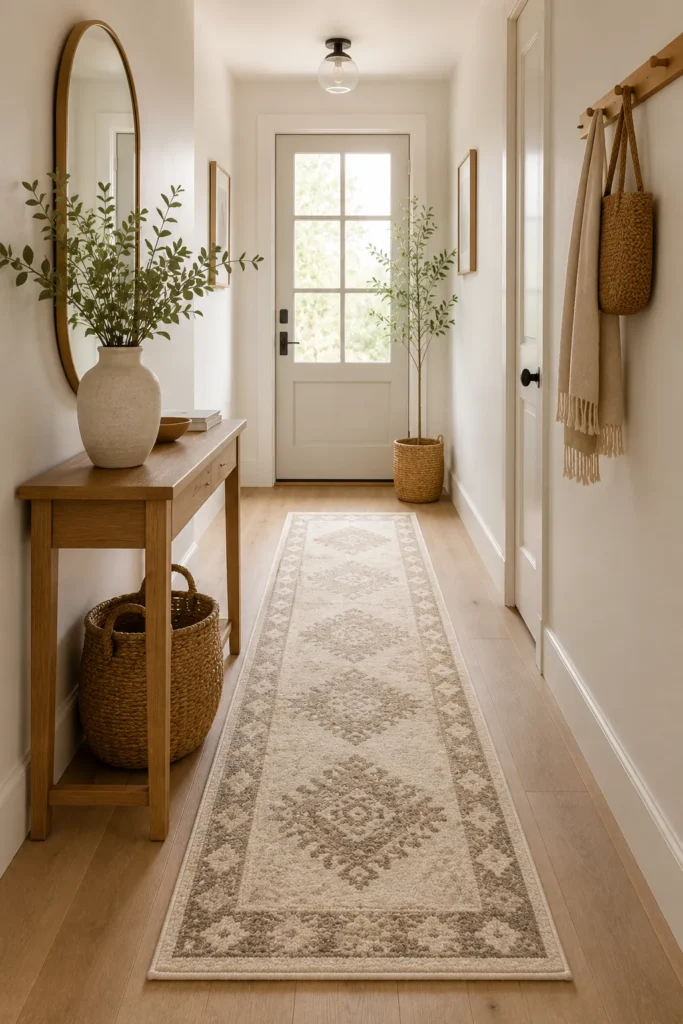
- A runner defines the entrance and adds softness underfoot.
- Subtle patterns can disguise everyday dust and small marks.
- A washable material makes maintenance easier in busy homes.
- Leave a balanced border of visible flooring around the rug.
A well-chosen runner can make a narrow entrance feel finished in an instant. Select a rug that follows the length of the hallway while leaving a little flooring visible around its edges. Soft beige, taupe, cream, or muted geometric patterns work beautifully when you want warmth without overwhelming the compact space. For busy households, a washable or easy-clean material is worth considering because entrances naturally collect dirt and moisture. I’ve found that adding a runner also helps visually connect separate pieces, making the hallway feel more intentional rather than like an overlooked transition area.
Pay attention to the rug’s scale and placement before styling anything else around it. A runner that is too wide can make the passage feel cramped, while one that is too short may look disconnected from the doorway. Choose a low-profile option if doors open over the rug, and use a suitable rug pad to reduce slipping. Pair the textile with natural wood, woven storage, or warm metal accents for a layered appearance. Even a simple pattern can introduce personality while softening hard flooring. The result is a more comfortable, welcoming entrance with added texture and visual definition.
4:Floating Entry Shelf
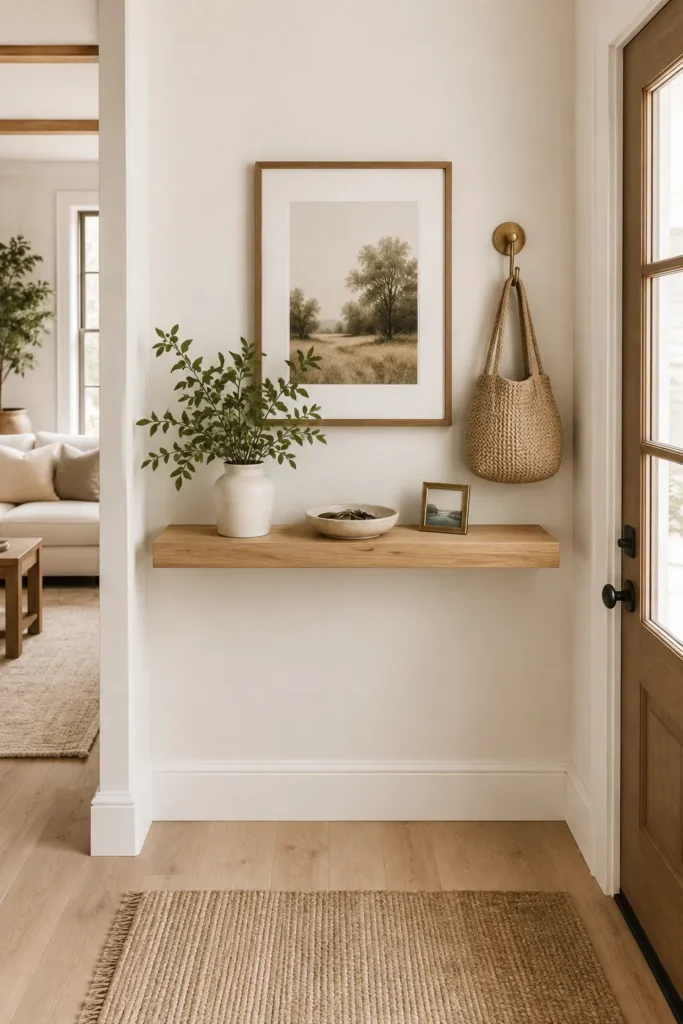
- A floating shelf adds storage without using floor space.
- A small tray creates an easy home for keys and loose items.
- Keeping the shelf shallow prevents the walkway from feeling crowded.
- One plant or artwork adds personality without visual clutter.
A floating shelf is a clever solution when a traditional console simply will not fit. Mount a narrow wooden shelf at a comfortable height and use it as a compact landing spot for keys, sunglasses, or small everyday items. Light oak and warm white finishes keep the arrangement airy, while a tiny plant or ceramic bowl adds personality. This setup works especially well above a shoe bench or beside the doorway. In my experience, floating furniture can make a narrow entrance feel less crowded because the floor remains completely open, preserving a clean and uninterrupted walking path.
Keep the styling intentionally restrained because a small shelf can become cluttered quickly. One catchall tray, a small framed print, and a compact decorative object are usually enough to create a finished look. If you need additional storage, add hooks underneath for bags or lightweight jackets. Make sure the shelf is securely mounted and suitable for the items you plan to place on it. Repeating materials elsewhere in the hallway, such as oak, brass, or woven textures, creates visual continuity. The result is a practical little station that feels polished without demanding valuable floor space.
5:Vertical Storage Cabinet
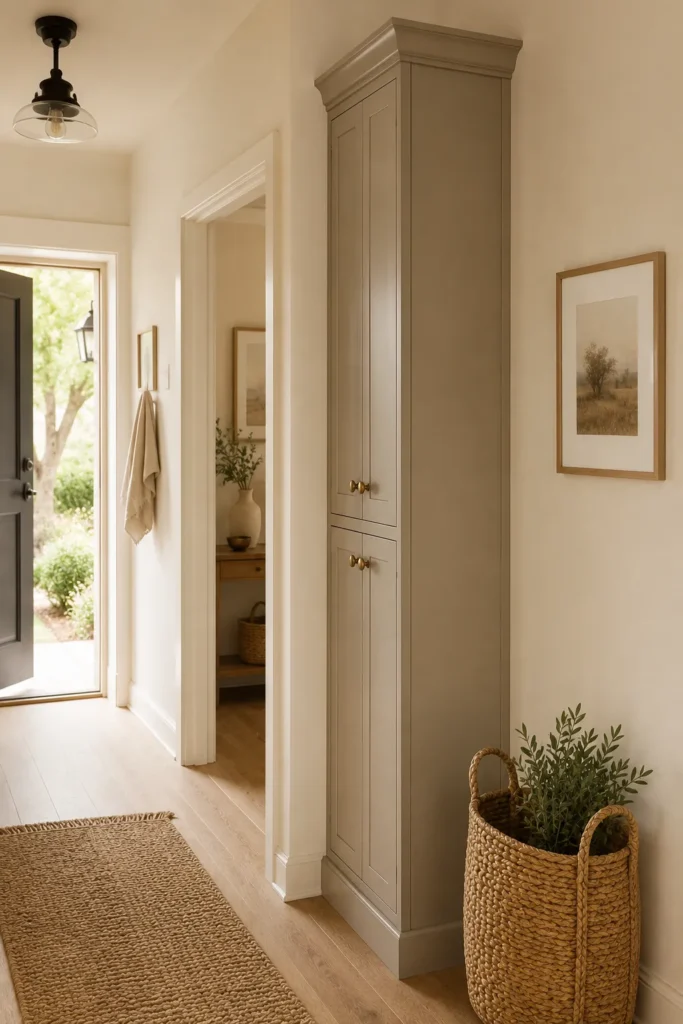
- A tall cabinet uses unused wall height instead of precious floor width.
- Closed doors keep shoes and accessories visually contained.
- Slim proportions work better than wide storage in narrow passages.
- Neutral finishes help a larger piece blend into the background.
When an entrance needs serious storage but has almost no floor width, think upward. A tall, narrow cabinet can use vertical wall space for shoes, bags, scarves, and seasonal accessories without spreading furniture across the hallway. Choose a simple design in warm white, greige, or pale wood so it blends naturally with the surrounding walls. Closed doors are particularly useful because they hide everyday clutter and create a cleaner visual line. This is one of the most practical small entrance hall ideas for homes where storage needs are high but every inch of floor space matters.
Measure carefully before choosing a vertical cabinet, especially around doors, trim, and ceiling height. The piece should feel proportionate rather than squeezed into the room. Adjustable shelves can make the interior more useful because footwear and accessories often require different storage heights. If the cabinet has visible handles, select a finish that matches nearby lighting or hooks for consistency. Keep the exterior mostly clear, perhaps adding only a small decorative object on top if there is safe space. With thoughtful proportions, vertical storage can make the entrance feel more organized without sacrificing its welcoming appearance.
6:Arched Wall Mirror
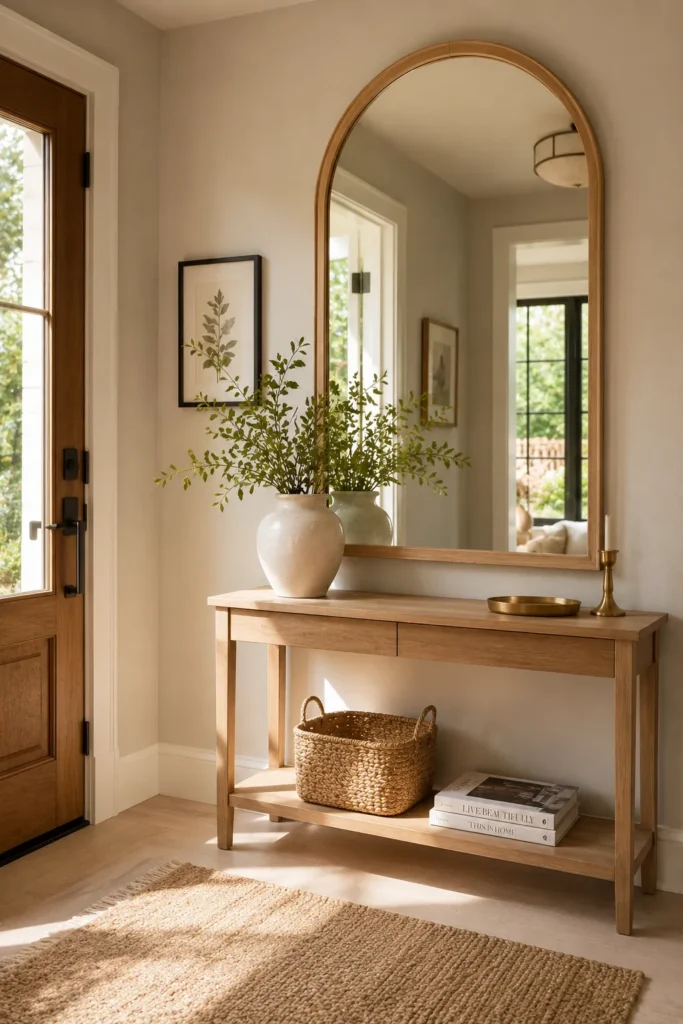
- An arched silhouette softens the straight lines of a narrow hallway.
- A large mirror reflects light and adds visual depth.
- Light wood framing keeps the design warm and approachable.
- A slim console below creates a balanced vertical arrangement.
An arched mirror brings softness and visual height to a compact entrance without adding another bulky piece of furniture. The curved top contrasts beautifully with straight door frames, consoles, and flooring, creating a more relaxed composition. Choose a slim frame in light oak, natural wood, or understated metal to keep the look refined. Place the mirror where it can reflect daylight or an attractive part of the home. I’ve noticed that a well-positioned mirror often makes a small hallway feel more connected to neighboring rooms, rather than ending abruptly at the front door.
For the best effect, give the mirror enough breathing room around its edges instead of surrounding it with many small decorations. A narrow console beneath it can create a classic entry arrangement, while a simple vase or small tray adds just enough detail. If the hallway is extremely tight, skip the console and let the mirror stand alone as the focal point. Keep the surrounding colors soft and consistent so the curved shape remains prominent. This combination adds character, brightness, and practical function while maintaining a clear passage through the entrance.
7:Hidden Shoe Storage
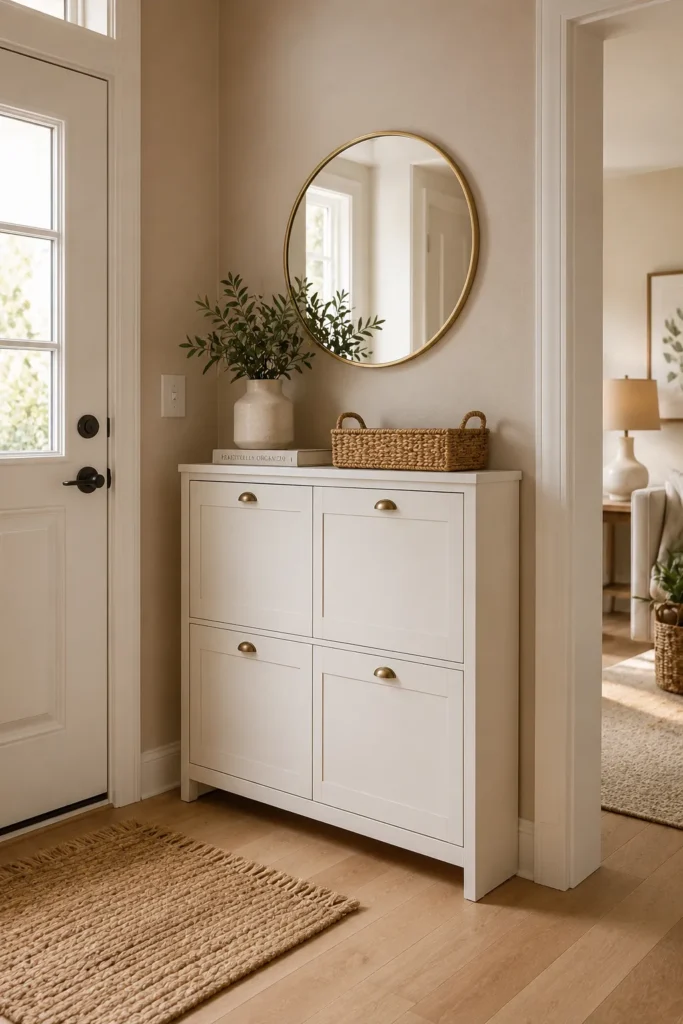
- Closed storage keeps shoes from becoming the first thing guests see.
- A slim cabinet can hold several pairs while preserving walking space.
- Tilt-out compartments are useful when floor depth is limited.
- Matching the cabinet to the wall makes it visually disappear.
Nothing makes a compact entrance look crowded faster than shoes scattered across the floor. A closed shoe cabinet solves that everyday problem while keeping the hallway visually calm. Look for a slim design with doors or tilt-out compartments so footwear stays hidden without requiring a deep piece of furniture. Choose a finish close to your wall color for a seamless appearance, or use natural wood for gentle contrast. For small entrance hall ideas, this type of storage is especially effective because it improves organization while keeping valuable floor space open for comfortable movement.
Think about which shoes actually belong near the door before deciding how much storage you need. Everyday pairs can stay accessible, while seasonal or rarely worn footwear can be stored elsewhere. Add a small basket for slippers or accessories if there is room, but avoid turning the cabinet top into another clutter zone. A mirror, simple artwork, or one decorative object can provide visual interest above it. In busy homes, this setup makes daily routines easier because everyone knows where footwear belongs. The entrance immediately feels cleaner, more spacious, and easier to maintain.
8:Peg Rail Organizer
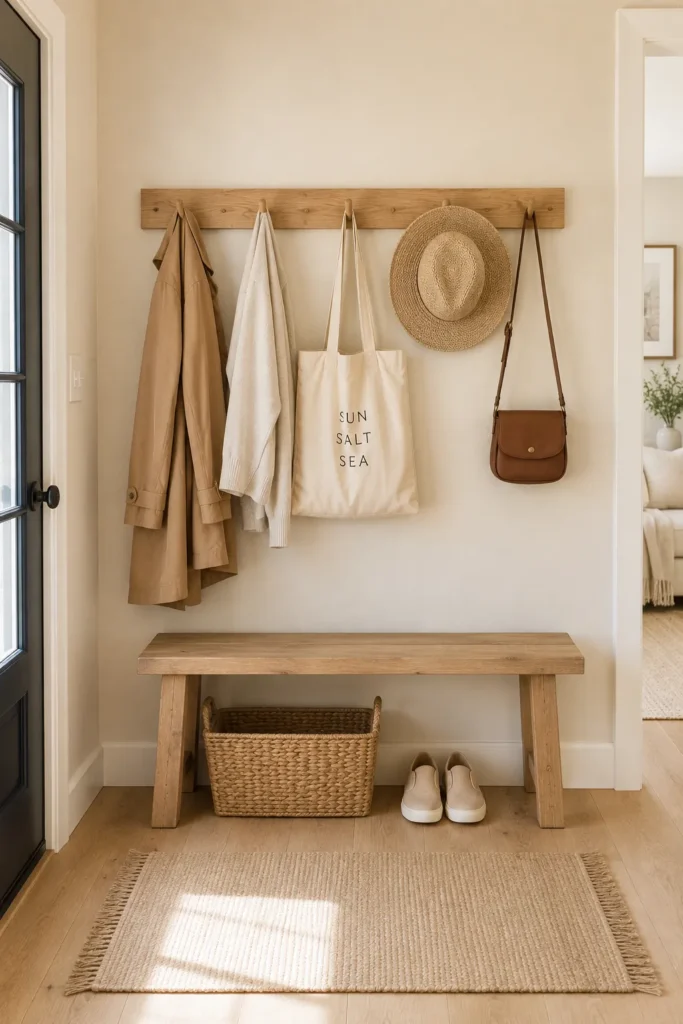
- A peg rail provides flexible storage for frequently used items.
- Evenly spaced pegs create a clean decorative rhythm.
- Wood adds warmth without making the wall feel heavy.
- Keep the visible items limited to maintain an uncluttered appearance.
A simple peg rail can turn an empty wall into a useful storage station without overwhelming a small entrance. Choose a narrow wooden rail with evenly spaced pegs and mount it where coats, bags, and hats can be reached comfortably. Natural oak or painted wood works beautifully with neutral interiors and adds warmth without visual heaviness. Unlike a bulky coat rack, a peg rail keeps storage close to the wall. I’ve seen this work particularly well in narrow homes because the design provides flexible hanging space while preserving an open floor and an easy walking route.
Style the rail according to how your household actually uses the entrance. Hang only the coats, bags, or hats used most often, then store everything else elsewhere to prevent visual overload. If children use the space, adding a lower rail or separate accessible hooks can make the system more practical. Pair the rail with a slim bench underneath if the hallway allows enough clearance. Keep colors coordinated through neutral textiles and natural materials. The result feels casual but intentional, giving everyday belongings a clear home while adding a warm, Pinterest-friendly detail to the wall.
9:Light Wood Accents
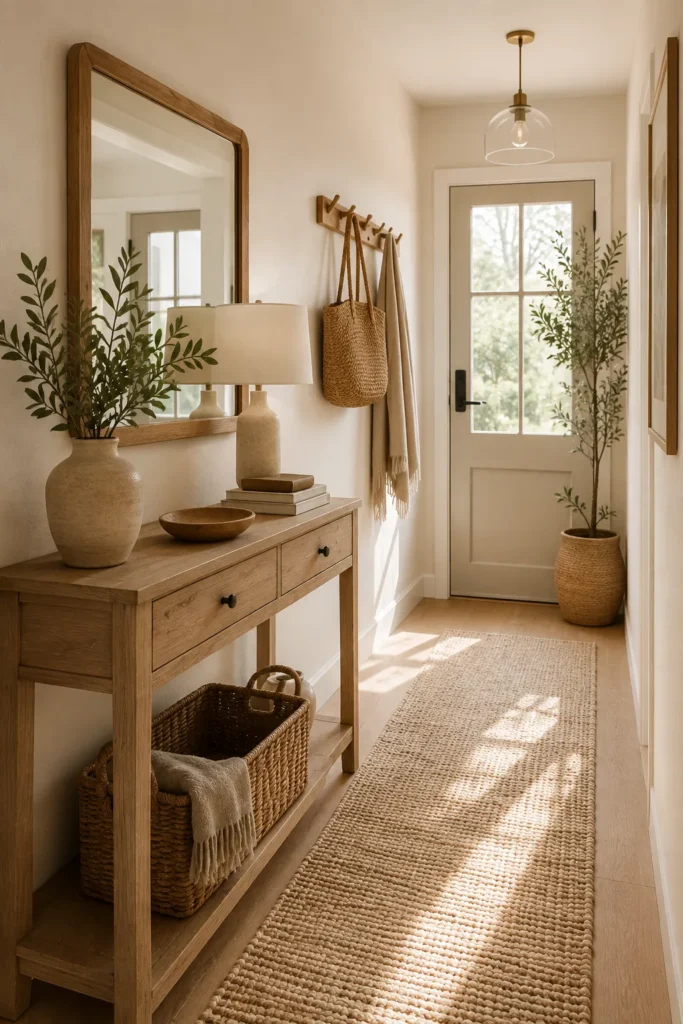
- Light wood introduces warmth without making a compact space feel heavy.
- Repeating the same wood tone creates visual continuity.
- Natural grain adds texture to otherwise simple neutral interiors.
- Pair wood with cream textiles for a soft, welcoming finish.
Light wood can give a small entrance the warmth it needs without visually shrinking the space. Repeat a pale oak or natural ash finish across one or two elements, such as a console, mirror frame, shelf, or coat hooks. The repeated grain creates continuity and helps separate pieces feel like part of one thoughtful arrangement. Pair the wood with cream walls, woven textures, and soft beige textiles for an airy foundation. In my experience, natural wood is especially useful when an entryway feels too plain because it adds character through texture rather than relying on strong colors.
The key is moderation. Too many different wood tones can make a compact hallway look visually fragmented, so try to keep the main wooden elements within a similar warmth and finish. Add contrast through small touches of brass, black, or muted greenery rather than introducing another dominant material. A light wood mirror above a slim console can create a particularly balanced focal point. Even simple hooks can feel decorative when their finish coordinates with the surrounding furniture. This approach makes the entrance feel warmer, more cohesive, and thoughtfully layered while keeping the overall design bright and uncluttered.
10:Statement Pendant Light
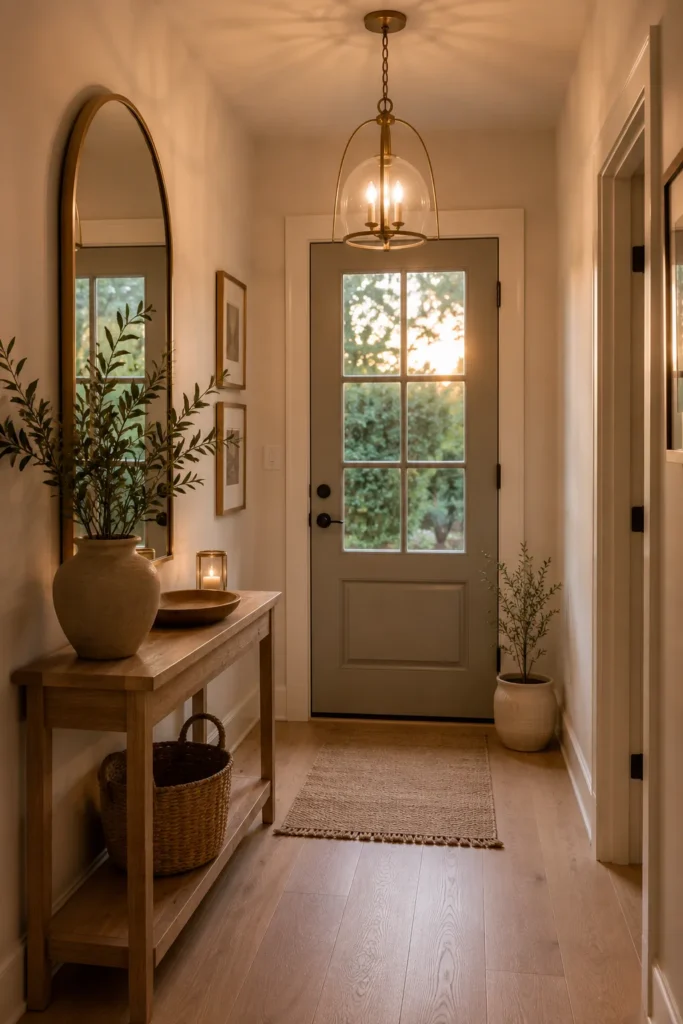
- A pendant creates a strong focal point without using wall or floor space.
- Warm bulbs make the entrance feel inviting after sunset.
- A simple sculptural shape adds personality to neutral interiors.
- Check ceiling height and door clearance before installation.
A beautiful ceiling light can completely change how a compact entrance feels after sunset. Choose a single pendant with a slim profile or simple sculptural shape, then hang it where it provides useful illumination without interfering with doors or movement. Warm white lighting creates a softer atmosphere than cool bulbs, especially when paired with cream walls and natural wood. For small entrance hall ideas, overhead lighting is valuable because it adds personality without taking up floor or wall space. I’ve noticed that a thoughtfully chosen fixture can make even a basic entry feel more finished and intentional.
Keep the fixture proportional to the hallway so it feels like a feature rather than an obstacle. In a narrow space, an oversized pendant can visually lower the ceiling and make the passage feel tighter. A compact glass shade, woven pendant, or understated metal design usually works better. Consider using a warm, dimmable bulb if your setup allows it, giving you flexibility between bright everyday lighting and a softer evening glow. Coordinate the fixture finish with nearby hardware for a cohesive look. The result is practical illumination with a decorative detail that welcomes people as soon as they enter.
11:Slim Wall Sconces
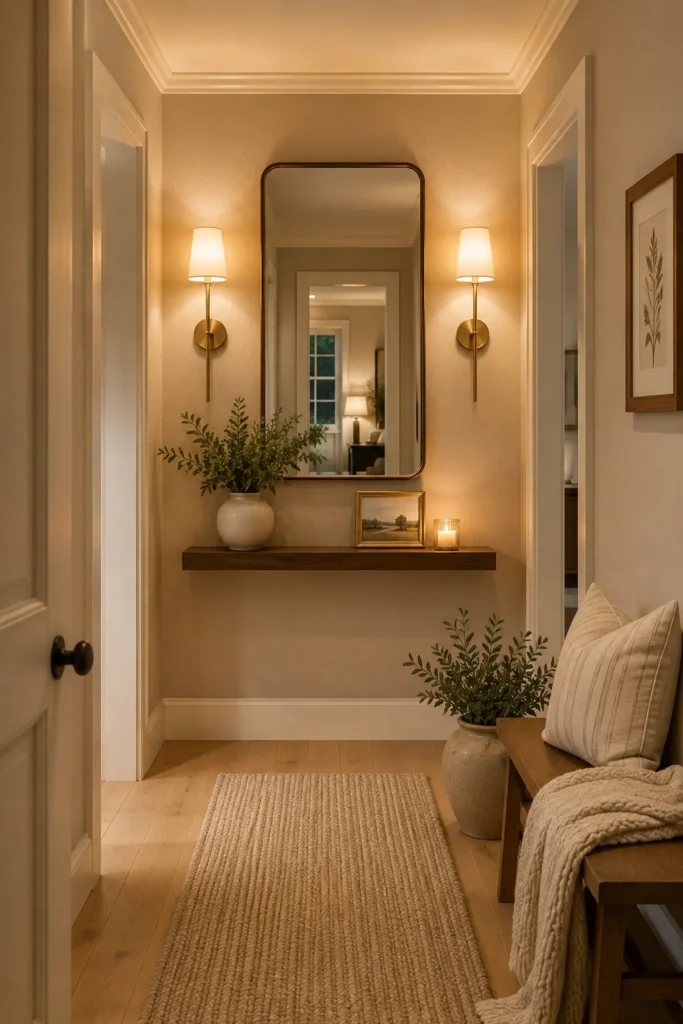
- Wall sconces provide focused light without taking floor space.
- Pairing them around a mirror creates visual symmetry.
- Slim fixtures work well beside narrow furniture.
- Warm bulbs add a comfortable evening glow.
Wall sconces are ideal when the entrance has limited floor area but needs better lighting. Mount one or two slim fixtures beside a mirror, artwork, or console to create balanced illumination without adding another object to the floor. Brushed brass, aged bronze, matte black, and simple white finishes can each work depending on your existing decor. A warm bulb makes the hallway feel softer and more welcoming, especially in the evening. I’ve noticed that lighting at eye level can also make a small entrance feel more layered because it draws attention to the walls rather than only illuminating the floor.
Symmetry can make this idea especially polished, but you do not need two fixtures if the layout does not allow them. One sconce beside a mirror can still create a beautiful focal point. Before installation, check wall depth, wiring requirements, and the swing of nearby doors. Choose fixtures with proportions that leave enough visual breathing room around the mirror or artwork. Keep other accessories simple so the lighting remains noticeable without making the wall busy. This approach adds useful illumination, architectural character, and a gentle evening atmosphere while keeping the entrance comfortably open.
12:Woven Storage Baskets
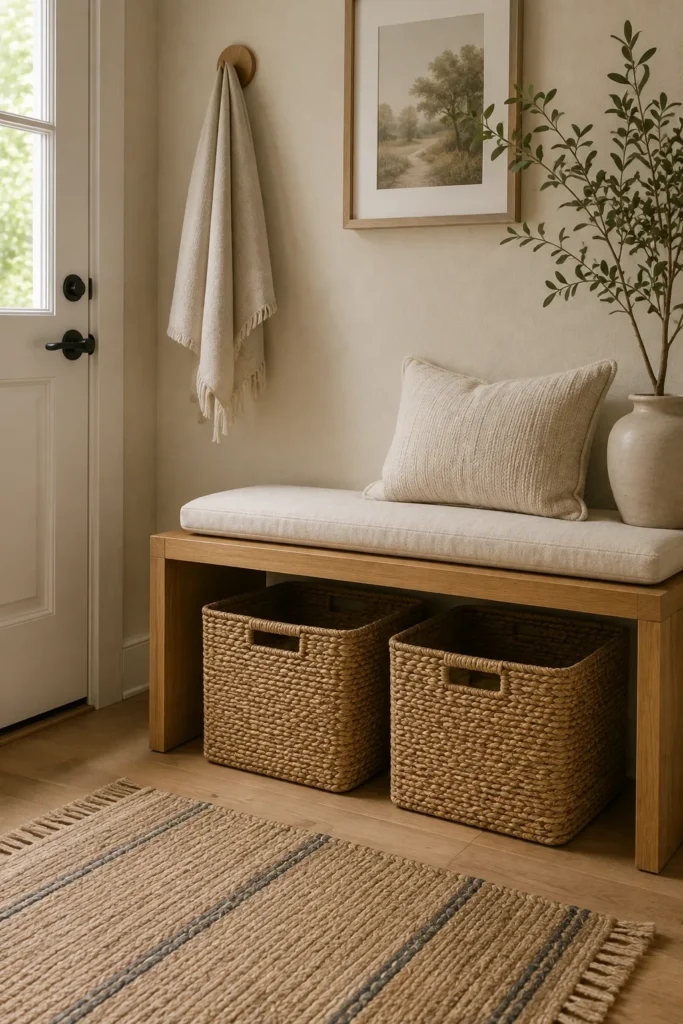
- Woven baskets hide shoes, scarves, and small accessories neatly.
- Natural texture adds warmth to otherwise simple neutral spaces.
- Matching baskets create a more organized visual appearance.
- Choose handles when you need to move storage frequently.
Woven baskets are one of the easiest ways to make open storage look intentional. Slide one or two baskets beneath a slim bench, console, or floating shelf and use them for shoes, scarves, hats, or small everyday items. Natural seagrass, rattan, and similar woven materials introduce texture while keeping a neutral entrance warm and relaxed. This is especially helpful when the room already has pale walls and light flooring that could otherwise feel too plain. For small entrance hall ideas, baskets provide flexible organization without requiring a large storage unit.
Choose baskets that fit comfortably beneath your furniture and leave enough clearance for doors and walking paths. Matching shapes create a cleaner appearance, while slightly varied textures can make the arrangement feel more relaxed. Labeling is useful if several household members share the space, particularly when baskets hold different categories of belongings. Avoid overfilling them because bulging storage quickly looks untidy and becomes harder to use. A simple bench, woven basket, and soft runner can create a welcoming combination with very little furniture. The result feels practical, warm, and easy to maintain every day.
13:Gallery Wall Cluster
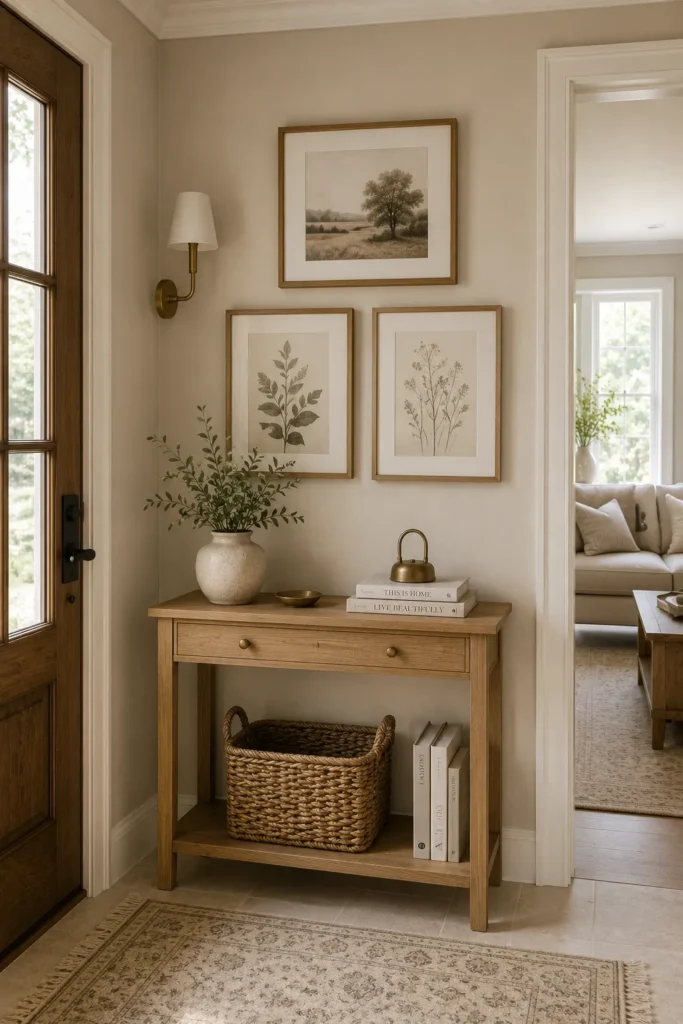
- A small gallery wall adds personality without using floor space.
- Similar frames keep multiple artworks visually cohesive.
- Vertical arrangements can emphasize ceiling height.
- Leave enough breathing room so the wall does not feel crowded.
A compact gallery wall can give a small entrance plenty of personality without taking up valuable floor space. Choose three to five small prints with a shared color palette, then arrange them closely enough to feel connected but not crowded. Botanical sketches, simple line art, family photographs, or neutral abstract pieces can all work beautifully. For small entrance hall ideas, this approach is useful when you want decoration without adding more furniture. I’ve noticed that keeping the frames within one finish, such as natural wood or black, makes a collection feel much more intentional.
Scale matters when working with a narrow wall. Oversized artwork can dominate the passage, while tiny pieces spaced too far apart may look disconnected. Before making holes, arrange the frames on the floor or use paper templates to test the composition. Keep the center of the arrangement around comfortable eye level and consider how it looks from the doorway. A slim console underneath can ground the display, but it is not essential. With coordinated artwork and thoughtful spacing, a small wall becomes a distinctive focal point that makes the entrance feel personal and finished.
14:Soft Textured Wallpaper
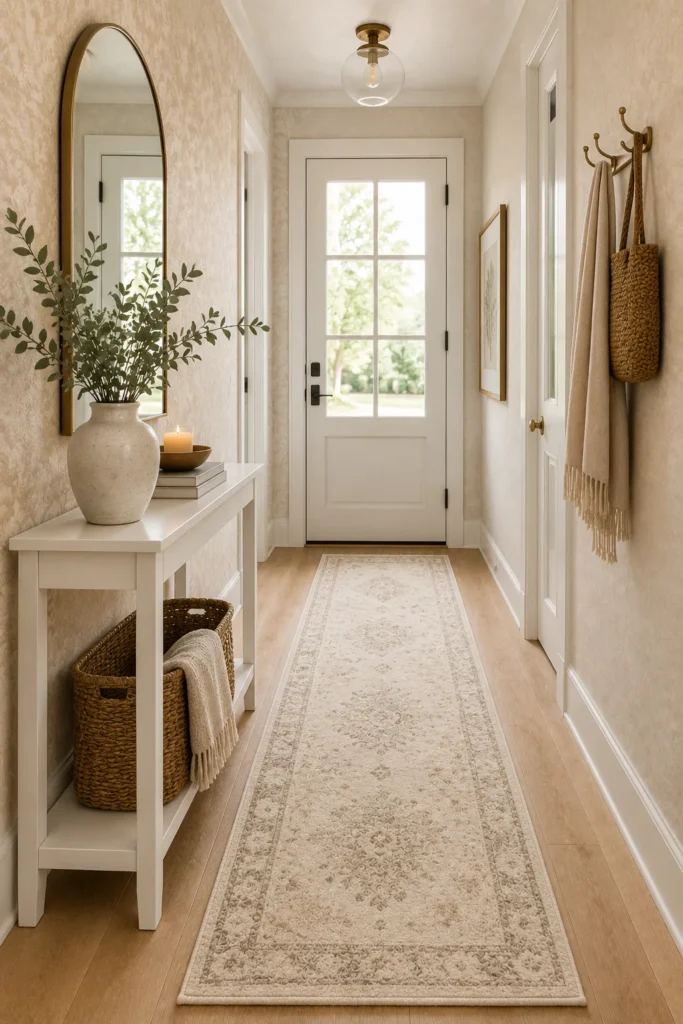
- Subtle wallpaper adds depth without requiring additional furniture.
- Small-scale patterns prevent narrow walls from feeling overwhelmed.
- Textured finishes can make plain surfaces feel more layered.
- Choose washable or durable options for high-traffic areas.
Wallpaper can give a compact entrance more character without taking away any floor space. Instead of choosing a large or busy pattern, consider a subtle texture, fine botanical motif, or understated geometric design in warm beige, cream, or soft greige. These quieter patterns add depth while keeping the hallway visually calm. A textured wall can be especially effective when the furniture is minimal because it becomes the decorative feature. In my experience, subtle wallpaper works beautifully in entrances that lack architectural detail, giving the space a finished appearance without requiring shelves, cabinets, or multiple accessories.
Before installing wallpaper, consider the hallway’s natural light and the amount of daily traffic it receives. A lighter pattern can help maintain an airy feeling, while darker designs may create a more dramatic look. If the entrance is prone to scuffs, choose a durable finish that can be cleaned according to the manufacturer’s instructions. Keep surrounding furniture simple so the wallpaper remains the main visual layer. Pair it with pale wood, warm metal, or neutral textiles for balance. The result is a welcoming entrance with texture, personality, and a more polished sense of design.
15:Compact Umbrella Stand
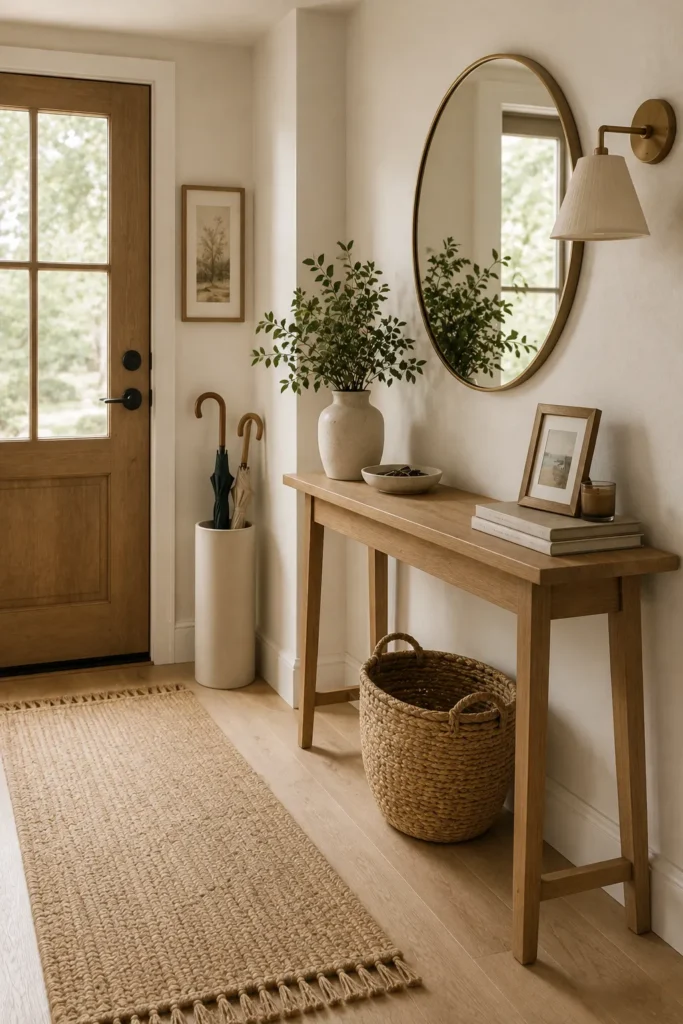
- A slim umbrella stand keeps wet-weather essentials contained.
- Positioning it near the door makes rainy-day routines easier.
- Choose a narrow shape that does not interrupt circulation.
- A neutral finish helps practical storage blend with the decor.
A compact umbrella stand is a small detail that can make an entrance noticeably more practical, especially in homes where rainy weather creates wet floors and clutter. Choose a narrow, stable container that fits beside the doorway without interfering with the door swing or walking path. Matte ceramic, powder-coated metal, or natural wood can blend easily with a neutral interior. Place it close enough to reach when leaving, but not directly where people step through. Small entrance hall ideas work best when practical items become part of the design rather than looking like afterthoughts.
Look for an umbrella holder with enough weight or stability to stay upright when several umbrellas are stored together. A removable drip tray can also make cleanup easier if wet umbrellas are placed inside. Keep the exterior simple and avoid adding extra decoration around it. If space is extremely limited, a wall-mounted umbrella hook or narrow storage compartment may be a better alternative. Pairing the stand with a small basket, runner, or console can help it blend naturally into the room. This creates a tidy, useful entrance that handles everyday weather without sacrificing style.
16:Round Entry Table
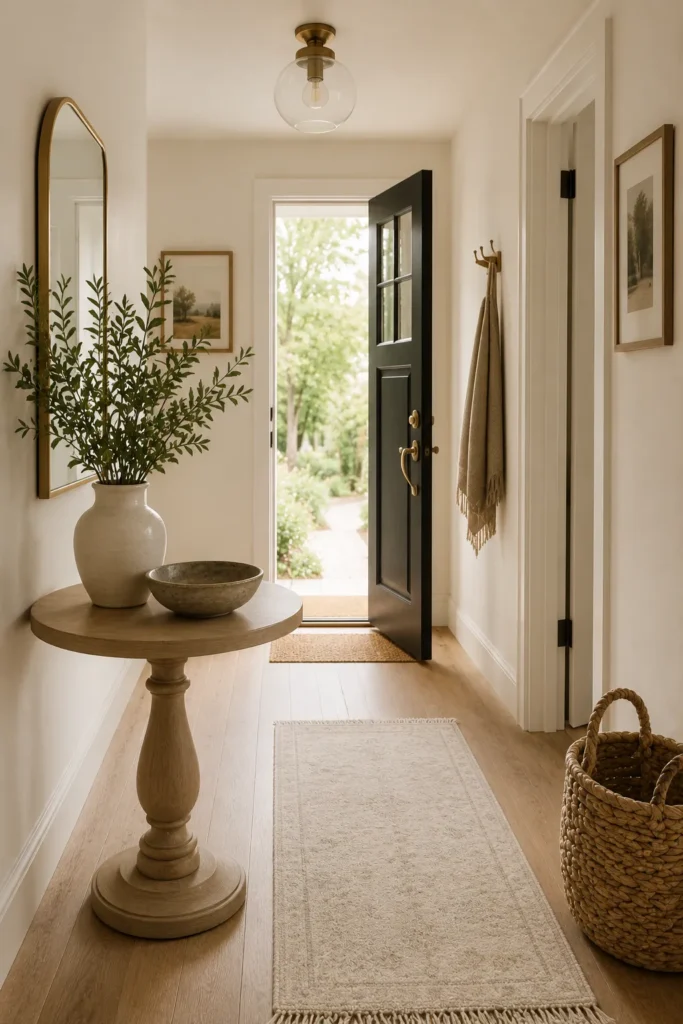
- A round table softens the hard lines of a narrow hallway.
- A pedestal base provides useful surface space with less visual weight.
- A small bowl keeps keys and tiny essentials organized.
- Leave generous clearance around the table for comfortable movement.
A petite round table can bring softness and function to an entrance when a rectangular console feels too bulky. Choose a compact pedestal design that provides enough surface area for a small bowl, vase, or lamp without spreading into the walking path. Rounded edges also make movement feel more comfortable in a tight space because there are fewer sharp corners to navigate. For small entrance hall ideas, this shape works especially well when the hallway opens into a slightly wider area near the front door. The curved silhouette creates a gentle focal point without visually crowding the room.
Keep the tabletop simple and useful rather than treating it like a display shelf. A shallow ceramic bowl can collect keys, while one small vase or plant adds a fresh decorative touch. Measure the surrounding clearance carefully before choosing the table, particularly if several people use the doorway at once. A light wood or painted finish can keep the piece visually airy, while a darker finish provides stronger contrast. Pair it with a nearby mirror or artwork to create a balanced arrangement. The result is a practical landing spot that feels graceful, compact, and welcoming.
17:Closed Entry Cabinet
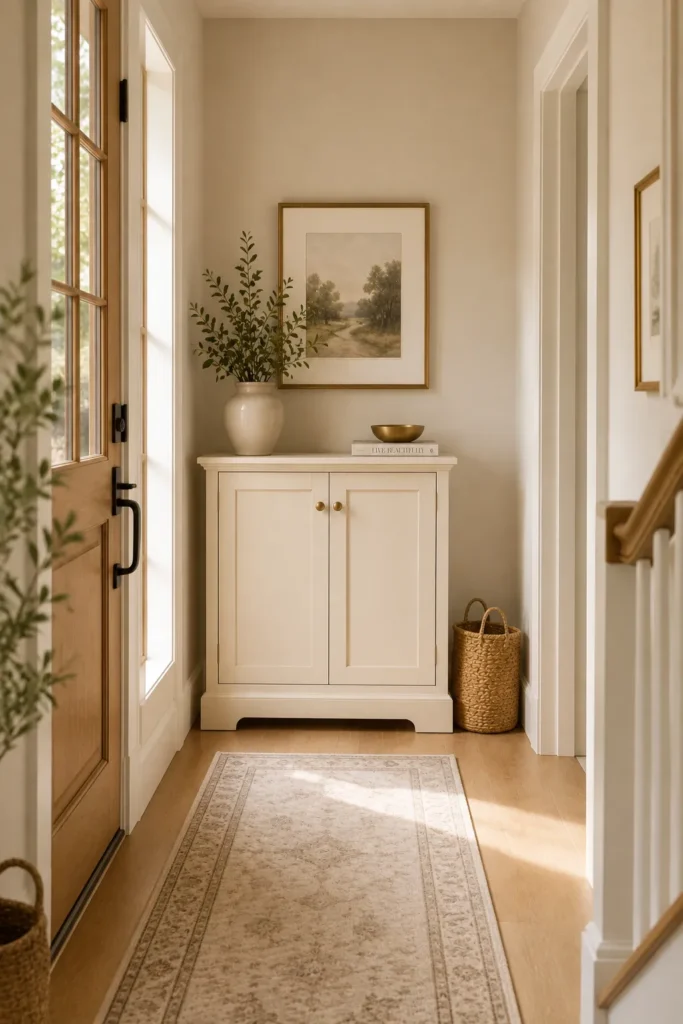
- Closed doors hide everyday clutter and create a calmer first impression.
- Adjustable shelves can accommodate shoes, bags, and seasonal accessories.
- A slim cabinet keeps storage concentrated in one footprint.
- Simple hardware adds character without overwhelming the compact room.
A closed entry cabinet can make a small hallway feel remarkably calmer because everything from shoes to bags can disappear behind one clean facade. Choose a narrow cabinet with adjustable shelves so the interior can adapt to different storage needs. Warm white, soft greige, or pale oak finishes are easy to coordinate with surrounding decor. Unlike open shelving, closed doors prevent a collection of everyday items from becoming visual noise. I’ve noticed that this approach is particularly helpful in busy homes where the entrance needs to look tidy quickly, even when everyone is coming and going throughout the day.
Think beyond appearance when selecting the cabinet. Check the door swing, depth, and shelf capacity, and make sure the unit does not interfere with nearby doors or walking routes. Use interior organizers to separate shoes, accessories, and small bags so the cabinet stays functional rather than becoming a hidden mess. Keep the exterior relatively simple, perhaps adding one framed print above it. If the cabinet feels visually heavy, choose a lighter finish or elevate it slightly on legs. This creates useful storage while maintaining an airy, organized entrance that feels polished rather than crowded.
18:Natural Greenery
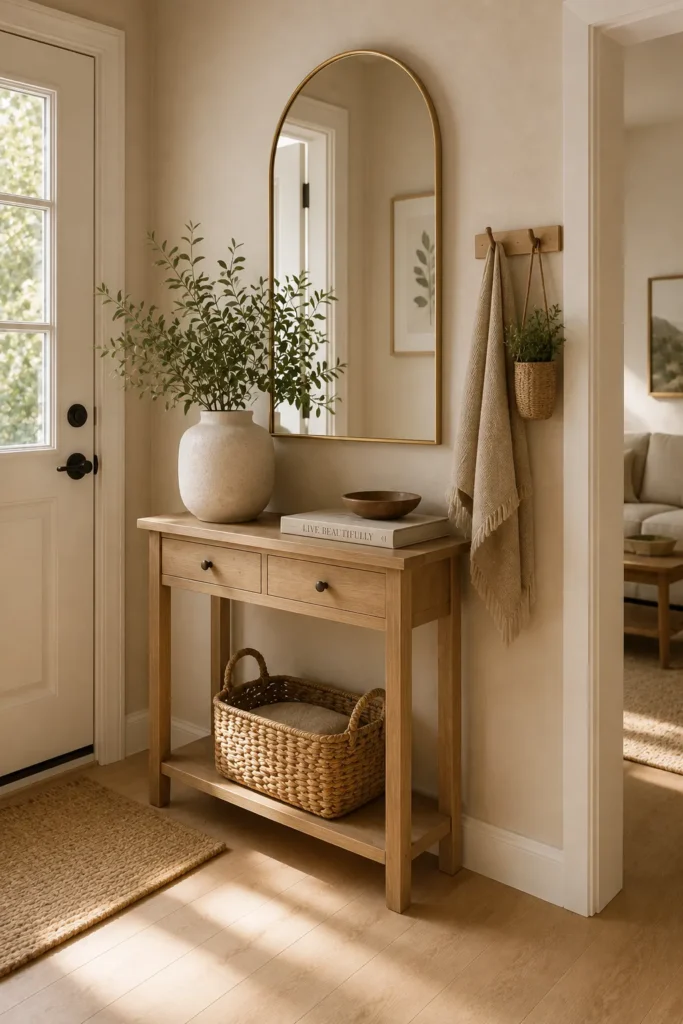
- A small plant adds life and color without requiring much space.
- Compact varieties work well on consoles or floating shelves.
- Natural greenery softens hard furniture and architectural lines.
- Choose plants according to the actual light available near the entrance.
A touch of greenery can make a compact entrance feel fresher and more lived-in without adding much visual weight. Choose a small plant that suits the light conditions, then place it on a slim console, floating shelf, or narrow bench. A simple ceramic or woven planter can connect the greenery with other natural textures in the room. Soft leaves provide an organic contrast against painted walls, mirrors, and straight furniture lines. For small entrance hall ideas, this detail works particularly well because one carefully chosen plant can add personality without taking over the available space.
Consider the entrance’s actual light before choosing the plant rather than selecting one purely for appearance. If the doorway receives limited natural light, choose a variety that can tolerate those conditions or consider a realistic artificial option. Keep the planter proportionate to the furniture so it does not become a visual obstacle. A small leafy plant beside a ceramic bowl or framed print can create an effortless arrangement. Avoid overcrowding the surface with multiple pots. The goal is a single natural accent that softens the space and makes the entrance feel more welcoming without creating extra maintenance.
19:Monochrome Entry Styling
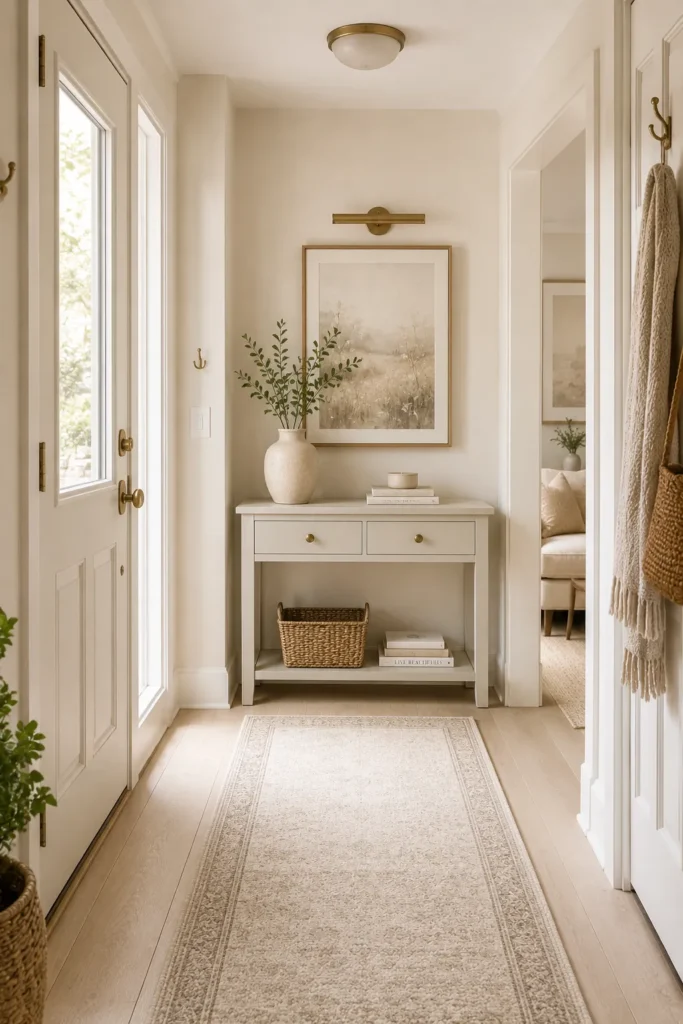
- A tonal palette makes separate pieces feel visually connected.
- Similar shades can make a narrow hallway appear more spacious.
- Subtle texture prevents a single-color scheme from looking flat.
- Warm whites create a softer atmosphere than stark white.
A monochrome palette can make a compact entrance feel surprisingly spacious and polished. Instead of introducing several contrasting colors, layer different shades of warm white, cream, beige, and soft greige throughout the walls, furniture, textiles, and accessories. The similar tones allow each piece to blend naturally into the next, reducing visual interruptions in a narrow space. For small entrance hall ideas, this approach is especially useful when the hallway has limited natural light or several doors competing for attention. I’ve noticed that tonal styling can make even inexpensive furniture look more cohesive when the colors are carefully coordinated.
The secret to keeping monochrome styling interesting is texture. Combine smooth painted walls with woven baskets, a softly patterned runner, natural wood, ceramic accessories, or lightly textured artwork. These subtle differences create depth without introducing strong color contrasts. Avoid making every surface exactly the same shade because the entrance may start to feel flat or overly staged. Instead, use a few closely related tones and repeat them throughout the space. A warm metal accent can provide just enough definition. The finished hallway feels calm, bright, coordinated, and welcoming while remaining easy to update over time.
20:Slim Floating Bench
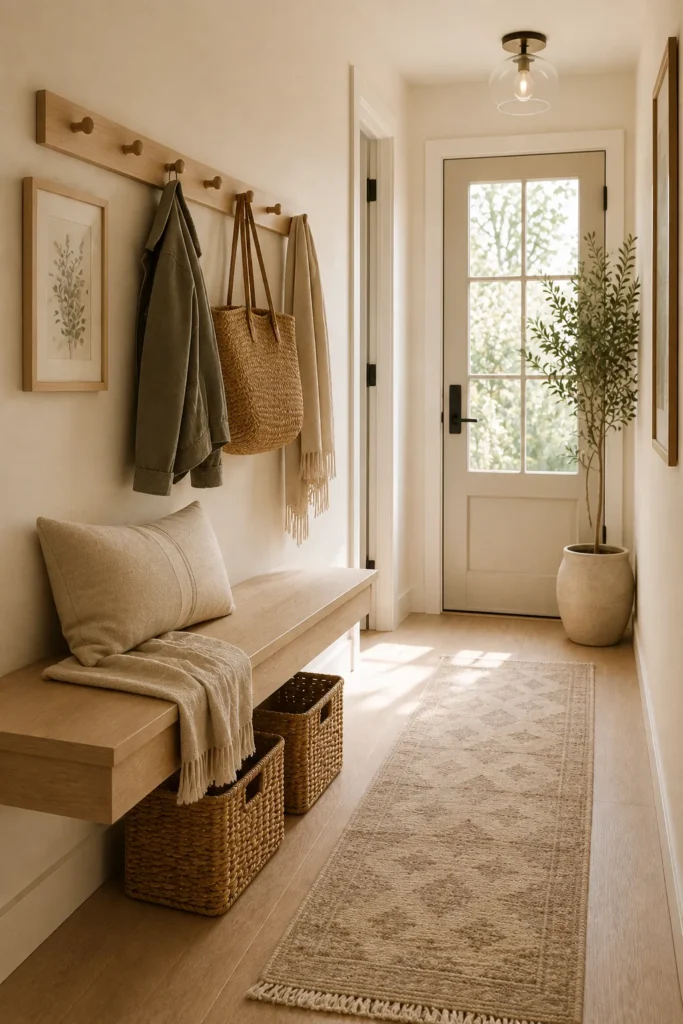
- A floating bench creates seating without visually filling the floor.
- Open space underneath makes cleaning easier.
- Baskets can use the area below for shoes and accessories.
- Keep the bench shallow enough for comfortable passage.
A floating bench is a clever final touch when you want seating but cannot spare the footprint of a traditional bench. Mount a sturdy shallow seat directly to the wall, leaving the floor underneath completely open. This creates a lighter visual effect while still providing a convenient place to sit and put on shoes. Add one or two baskets underneath if you need storage, but keep the area organized so the floating design remains visible. In my experience, this arrangement works especially well in narrow entrances because it combines seating, storage potential, and an open floor in one compact solution.
Before installing a floating bench, make sure the wall structure and mounting system can safely support the intended weight. Choose a depth that allows comfortable seating without extending too far into the walkway. A pale oak surface can add warmth, while a cream cushion makes the bench more comfortable without creating bulk. Install a few hooks above it for coats or bags, keeping their arrangement simple and balanced. This creates a useful mini drop zone that feels integrated into the architecture. The entrance stays open underfoot while gaining practical storage and a welcoming place to pause.
Conclusion
A small entrance can still feel stylish, organized, and inviting with a few thoughtful choices. From mirrors and floating shelves to hidden storage, soft lighting, and natural textures, these small entrance hall ideas show how every inch can work harder. Choose one idea that fits your layout, budget, and daily routine, then build from there. I’ve seen how small changes like these can completely transform a space without requiring a major renovation. Save this post to Pinterest for your next decorating project, try your favorite idea at home, and share it with someone who could use a little entrance inspiration. Your welcoming space can start with one simple change.