22 Kitchen Lighting Ideas That Brighten Your Space
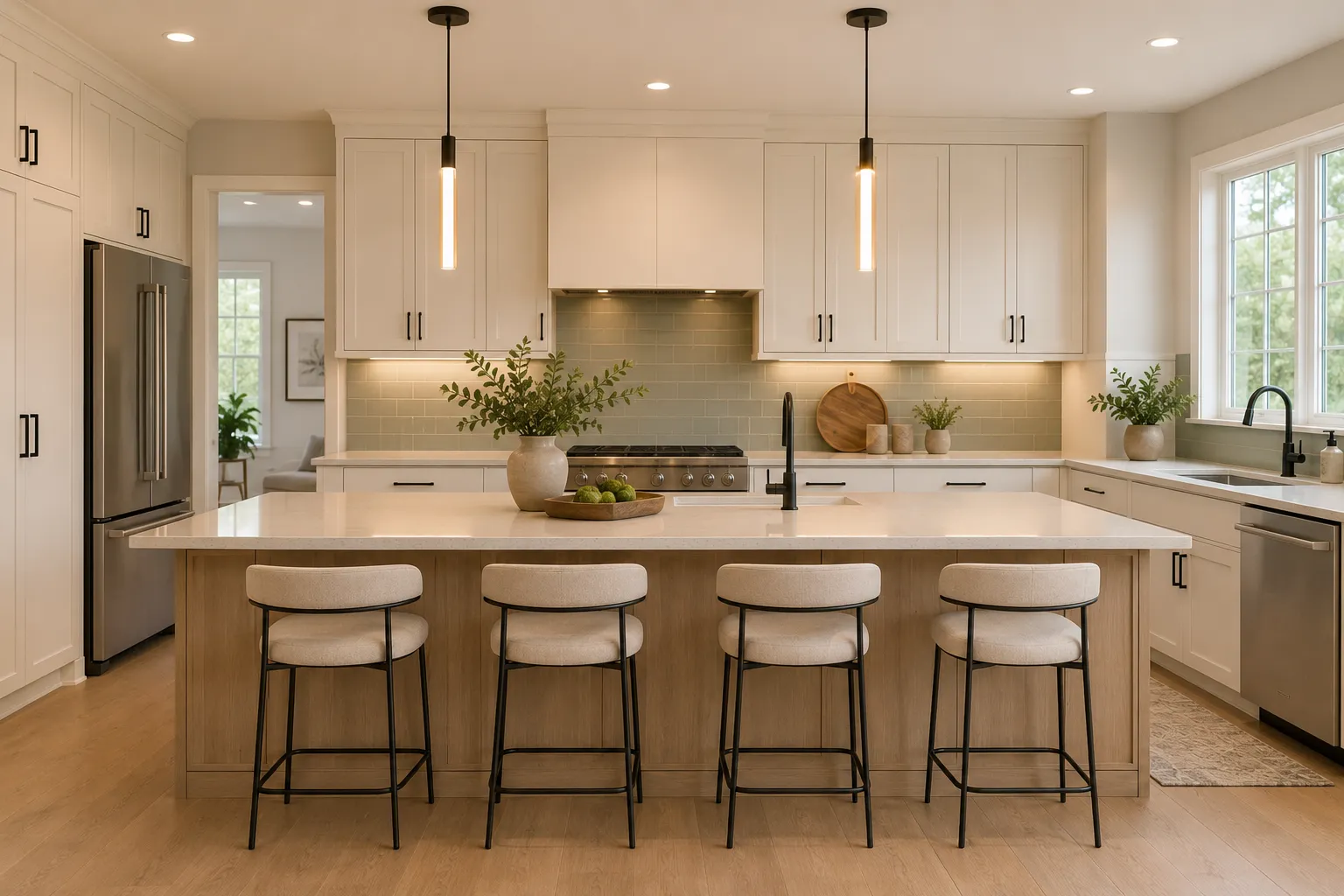
The right lighting can make a kitchen feel completely different—brighter, warmer, and far more inviting. ✨
These kitchen lighting ideas can help turn dim corners and dull work areas into beautiful, functional spaces.
From statement pendants and woven shades to under-cabinet LEDs and soft accent lighting, this collection covers practical ways to layer light throughout your kitchen. You’ll find ideas for small kitchens, spacious islands, farmhouse interiors, modern layouts, and everything in between. In my experience, even one thoughtful lighting change can make everyday cooking and gathering feel more enjoyable. Whether you’re planning a renovation or simply want an easy update, these inspiring ideas can help you create a kitchen that looks polished while working beautifully for real life.
Read more
1:Warm Wood Pendants
- Introduces natural warmth above a cool-toned countertop.
- Softens kitchens with lots of white cabinetry.
- Connects lighting with wood floors, stools, or shelving.
- Adds texture without relying on bold colors.
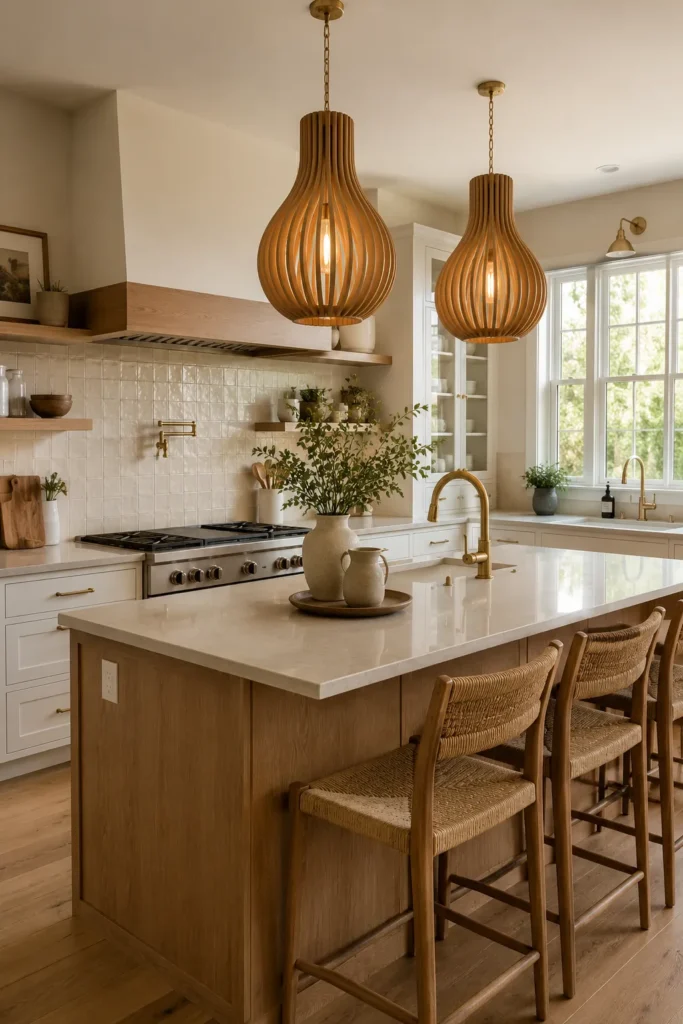
Wooden pendants can instantly soften a kitchen filled with hard surfaces like stone, tile, and metal. Their natural grain introduces warmth while keeping the overall palette calm and approachable. Hang one large shade over a compact island or use two smaller fixtures above a longer counter. Oak, walnut, and light ash each create a different effect, so consider repeating an existing wood tone elsewhere in the room. I’ve noticed that matching the pendant finish to nearby stools or shelving makes the kitchen feel more connected, even when the rest of the decor remains simple.
Natural wood also works beautifully with neutral kitchens because it adds texture without demanding attention. Pair warm wooden shades with soft white bulbs to create comfortable evening illumination over food preparation and seating areas. If your kitchen already has dark floors or cabinetry, lighter wood can prevent the room from feeling too heavy. For a more dramatic look, deeper walnut tones can provide contrast against cream or white surfaces. Keep the surrounding fixtures uncomplicated so the wood grain remains visible. This combination creates a relaxed atmosphere that feels thoughtfully styled rather than overly decorated.
2:Black Industrial Sconces
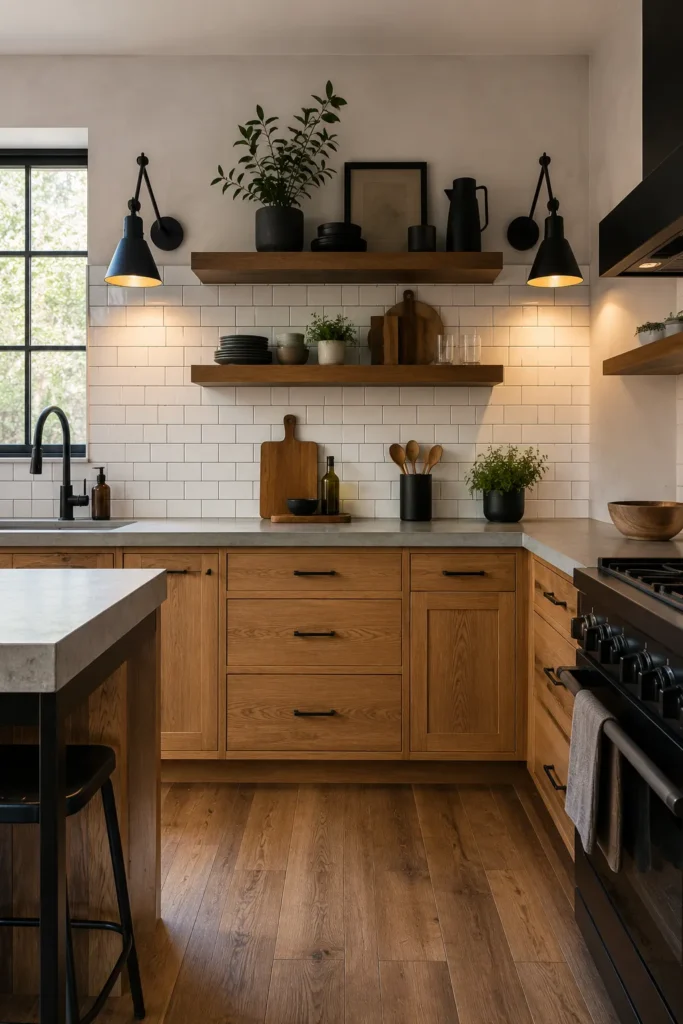
- Adds strong contrast against light walls and cabinets.
- Directs useful light toward prep or sink areas.
- Brings an industrial accent without remodeling the kitchen.
- Repeating black hardware creates a cohesive finish.
Matte black sconces can give a bright kitchen a crisp architectural edge while adding useful light exactly where it is needed. Mount them near open shelves, beside a sink, or along a blank wall that needs more visual interest. Their darker finish creates contrast against white tile and light cabinetry, making the fixtures noticeable without requiring bold decoration elsewhere. Adjustable arms are especially practical because you can direct illumination toward a countertop or display area. In my experience, this approach works particularly well when the kitchen already has black cabinet pulls, faucets, or window frames.
Wall-mounted fixtures also free the ceiling from extra visual elements, which can make a kitchen feel more organized. Choose simple cone shades for an industrial look or softer rounded designs for a transitional space. Position sconces high enough to provide useful illumination while keeping them visually balanced with shelves, artwork, or cabinetry. Warm bulbs help prevent black fixtures from feeling harsh against pale surfaces. If the kitchen has limited counter space, a wall-mounted light can provide focused brightness without occupying valuable workspace. The result is practical, decorative, and easy to coordinate with existing hardware.
3:Layered Lighting Zones
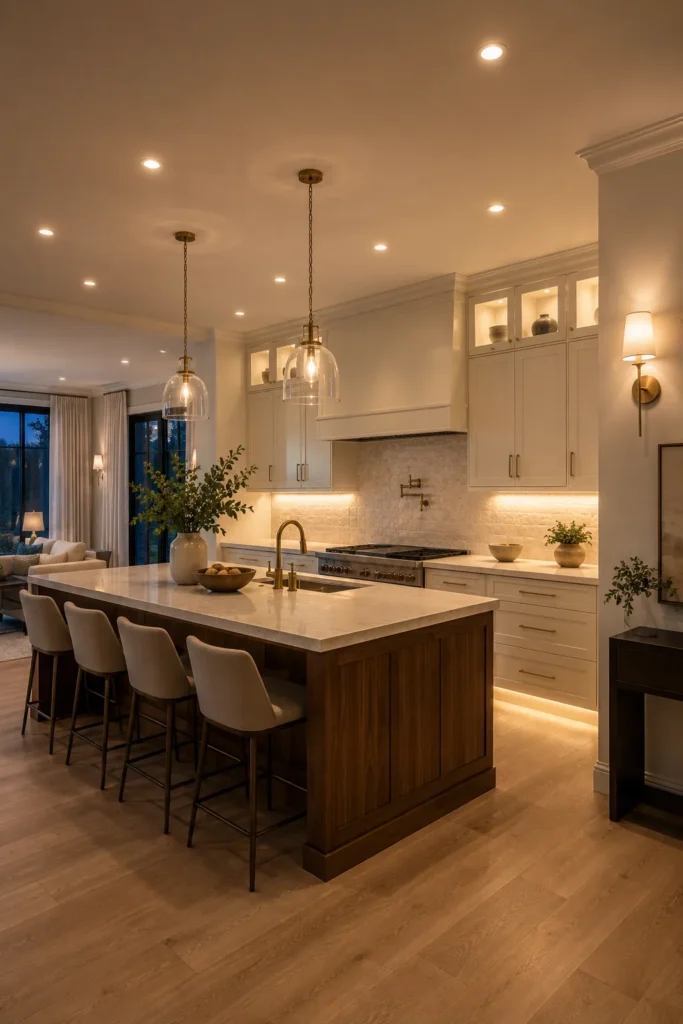
- Combines several light sources for better everyday flexibility.
- Prevents one fixture from having to illuminate the entire room.
- Creates separate zones for cooking, dining, and relaxing.
- Adds depth by mixing overhead, task, and accent illumination.
The most comfortable kitchens rarely depend on a single source of light. Layering several fixtures lets each part of the room serve a different purpose, from focused food preparation to relaxed evening conversations. Recessed ceiling lights can provide general brightness, while under-cabinet LEDs illuminate work surfaces and pendants define the island. A small wall fixture can add another decorative layer near shelving or artwork. This combination makes the room easier to adjust throughout the day. The key is balance: each light should have a clear purpose rather than simply adding more brightness everywhere.
Layered illumination also changes the mood of a kitchen after sunset. Instead of switching on every fixture at full power, use brighter task lights while cooking and lower decorative or ambient lights when the meal is finished. Dimmers and separate switches make this especially easy. I’ve seen this work well in open-plan homes because different lighting zones can visually separate the kitchen from nearby dining or living spaces. Keep color temperatures consistent enough that the sources feel connected. When carefully planned, multiple layers create a kitchen that feels brighter, more functional, and noticeably more inviting.
4:Farmhouse Lantern Lights
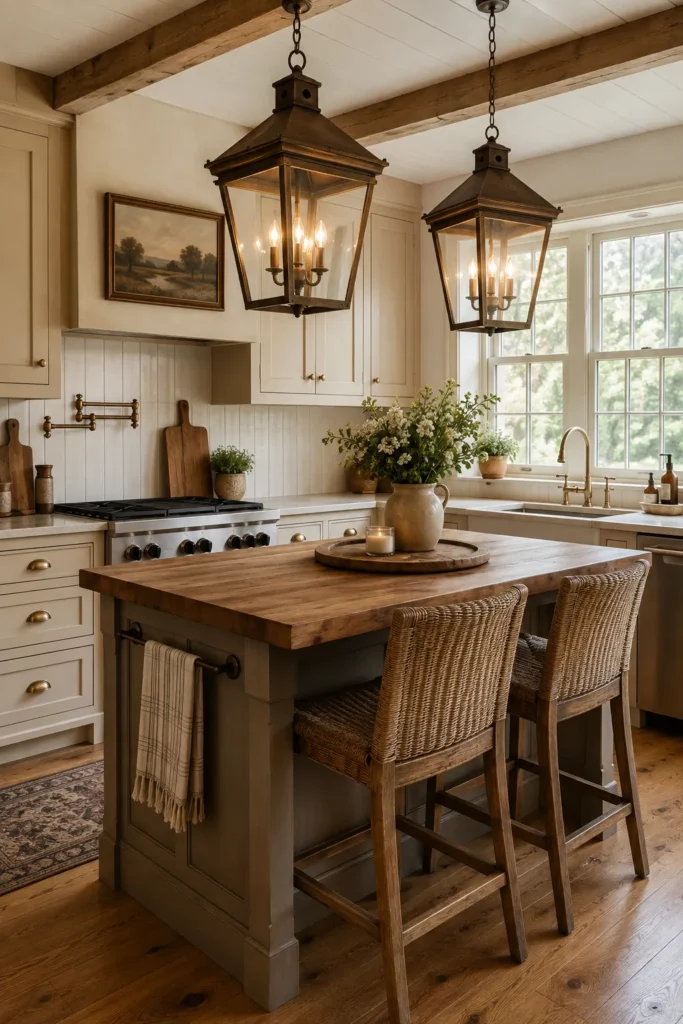
- Adds classic farmhouse character without overwhelming the kitchen.
- Glass panels keep the fixture visually open.
- Works beautifully with wood, cream, and aged metal finishes.
- Creates a welcoming glow above an island or breakfast area.
Few fixtures create farmhouse character as quickly as a lantern-style pendant. Its framed shape brings architectural detail overhead while clear glass keeps the design from feeling too heavy. Place one larger lantern above a compact island or use two smaller versions over a longer counter. Aged bronze, antique brass, or dark metal finishes pair naturally with shaker cabinets and natural wood. I’ve noticed that lantern fixtures look especially balanced when their metal finish is repeated in cabinet pulls, faucets, or nearby shelving brackets. That repetition helps the lighting feel like part of the original design.
The open frame also allows warm bulbs to become part of the visual composition. Choose softly glowing bulbs rather than extremely bright ones if the kitchen already has strong task lighting. The combination creates a comfortable atmosphere for breakfast, casual conversations, and evening meals. Lanterns can work in both traditional farmhouse kitchens and newer transitional spaces, especially when paired with simple countertops and uncluttered surfaces. Keep the fixture proportional to the island below it, leaving enough visual space around the edges. The result is practical illumination with a relaxed, timeless personality.
5:Oversized Statement Pendant
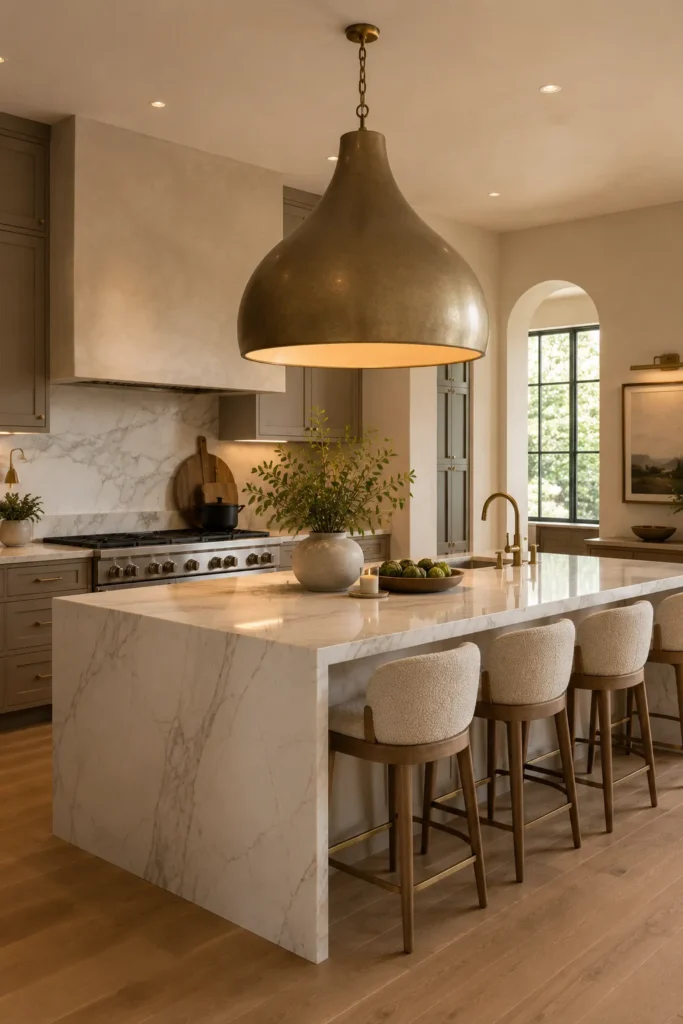
- Creates an instant focal point above a spacious island.
- Works as both decorative feature and functional illumination.
- Adds personality without requiring many accessories.
- Helps large kitchens feel intentionally styled rather than empty.
Sometimes one dramatic fixture can make more impact than several smaller lights. An oversized pendant above a generous island creates a strong focal point and gives a spacious kitchen a sense of proportion. Choose a sculptural shade, woven form, oversized globe, or bold metal silhouette that complements the room’s existing materials. The fixture should be large enough to feel intentional but not so low that it interrupts conversation or movement. In my experience, this approach works best when the surrounding surfaces stay relatively simple, allowing the pendant to become the main visual feature.
A statement pendant can also bring personality into a neutral kitchen without requiring colorful cabinets or elaborate decor. Warm illumination draws attention toward the island, making it feel like the natural center of the room. If the kitchen opens into another living space, a distinctive fixture can help define the cooking area without creating a physical barrier. Consider a dimmable bulb so the light can shift from bright task illumination to a softer evening glow. When the scale is right, one carefully chosen pendant can make the entire kitchen feel more finished and professionally considered.
6:Brushed Nickel Pendants
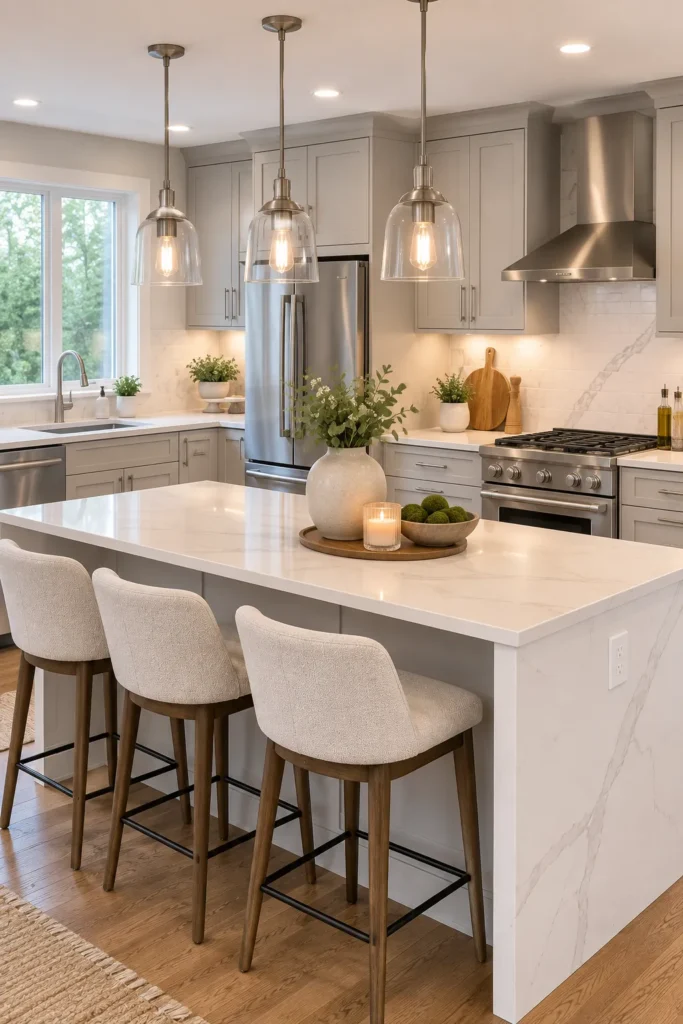
- Complements stainless steel appliances naturally.
- Adds subtle shine without feeling overly decorative.
- Works well with cool whites and soft gray cabinetry.
- Creates a polished look for transitional kitchens.
Brushed nickel is an easy choice when you want metallic detail without the stronger contrast of black or the warmth of brass. Its soft satin finish reflects light gently, making it particularly suitable for kitchens with white, gray, or pale blue cabinetry. Hang matching pendants above an island to create a clean, coordinated focal point. Because the finish is relatively understated, it works well alongside stainless steel appliances without making the room feel visually busy. That makes it a practical option for homeowners who want their fixtures to complement existing finishes rather than compete with them.
The subtle sheen of brushed nickel also helps a kitchen feel polished while maintaining a relaxed atmosphere. Pair it with frosted or clear glass depending on how much visual weight you want overhead. Frosted shades provide softer illumination, while clear glass keeps the fixture lighter and more transparent. For a cohesive finish, repeat nickel through cabinet pulls, faucets, or small accessories. Keep bulb color warm enough to soften cooler materials such as gray tile and stainless steel. The result is balanced lighting that feels contemporary, practical, and easy to update as your kitchen style evolves.
7:Woven Rattan Shades
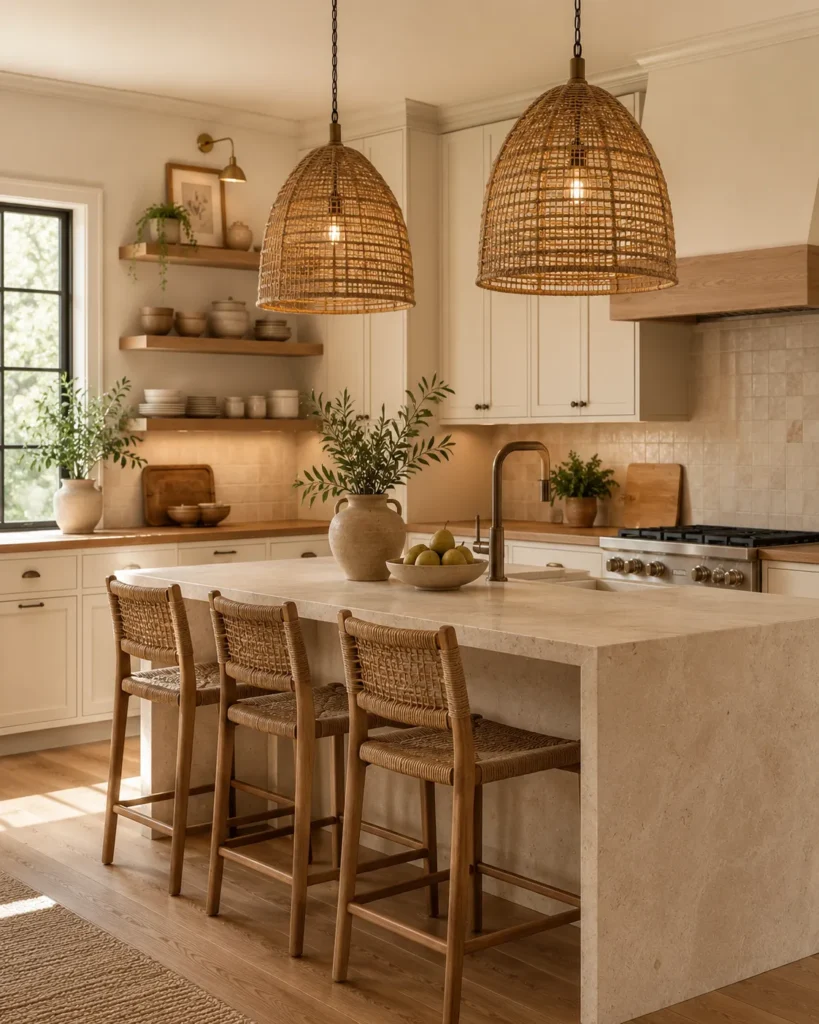
- Adds natural texture to a neutral kitchen.
- Softens hard surfaces like stone, tile, and metal.
- Creates a relaxed coastal or modern farmhouse feel.
- Works beautifully with warm wood and woven accessories.
Woven rattan shades bring instant texture to a kitchen while keeping the overall look light and relaxed. Their natural fibers filter the bulb’s glow, creating gentle patterns across nearby surfaces without feeling overly bright. Hang one large shade over a small island or use two or three smaller fixtures above a longer counter. Natural beige, honey, and light tan tones pair especially well with cream cabinets, wood counters, and neutral backsplashes. In my experience, rattan lighting is an easy way to warm up an otherwise plain kitchen without adding lots of decorative objects.
This material also works beautifully when the kitchen connects to a dining or living area because its organic texture creates continuity between spaces. Pair woven shades with wooden stools, ceramic accessories, linen curtains, or simple greenery for a cohesive finish. Keep the bulb warm enough to emphasize the natural fibers after sunset, but choose adequate task lighting elsewhere for detailed food preparation. The combination gives your kitchen both atmosphere and function. For Pinterest-friendly styling, let the pendant remain visually prominent while keeping countertops relatively uncluttered so the texture remains easy to notice.
8:Track Lighting System
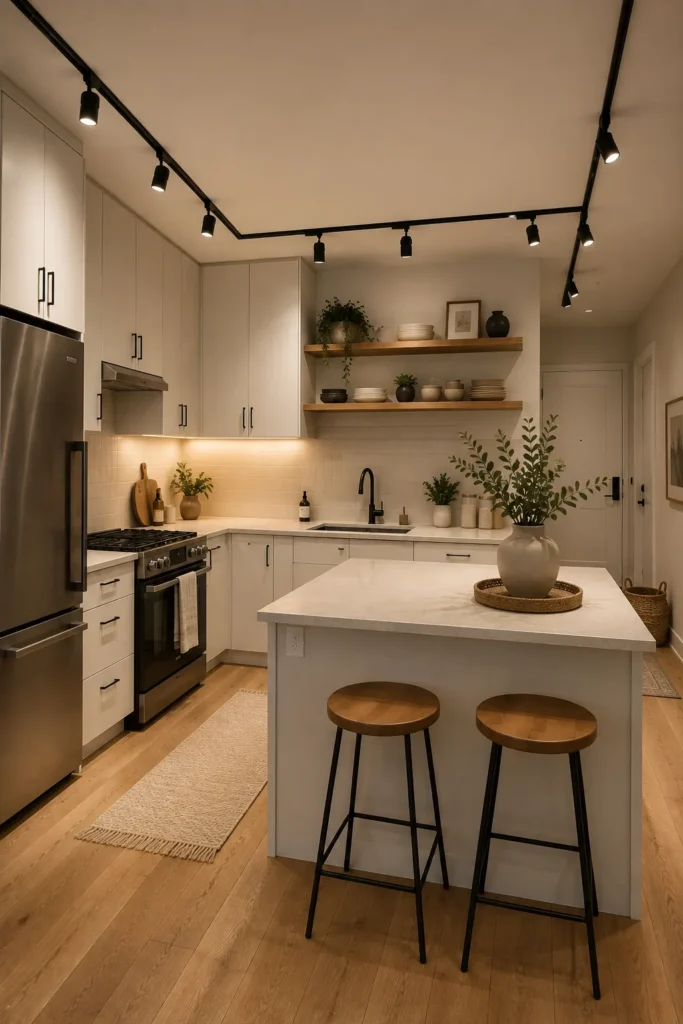
- Directs illumination toward specific work areas.
- Helps solve uneven lighting in narrow kitchens.
- Offers flexibility when the room layout changes.
- Adds a streamlined architectural detail to the ceiling.
When a kitchen has awkward corners or limited ceiling space, track lighting can provide a surprisingly flexible solution. Multiple adjustable heads allow you to aim illumination toward the island, sink, counters, or open shelving instead of wasting brightness in areas that do not need it. This makes it especially useful for narrow layouts, galley kitchens, and rooms where the work zones are spread apart. A slim black track adds definition against a light ceiling, while white or metallic versions blend in more quietly. The best kitchen lighting ideas often solve a practical problem while adding visual structure.
Track fixtures are also helpful when you expect your kitchen layout to evolve. Individual heads can be redirected as furniture, shelves, or work areas change, giving the system more long-term flexibility than a fixed fixture. Use warm illumination for general areas and supplement detailed prep zones with under-cabinet lighting when needed. Avoid aiming every spotlight straight down because angled beams can create more useful layers and highlight architectural features. I’ve noticed that a simple track looks particularly polished when its finish coordinates with cabinet hardware, faucets, or other small metal details throughout the room.
9:Island Linear Pendants
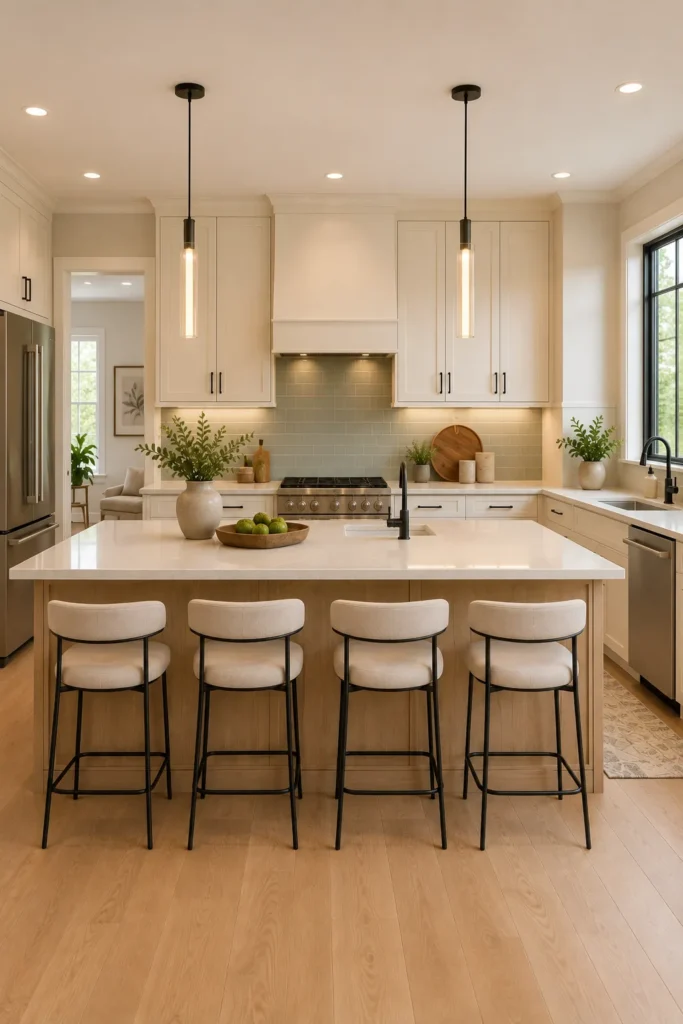
- Provides even illumination across a wide island.
- Creates a strong horizontal design element.
- Keeps multiple fixtures visually organized.
- Works well in modern and transitional kitchens.
Long, slim pendants can give a wide kitchen island a polished sense of proportion without making the ceiling feel crowded. Instead of several unrelated fixtures, two coordinated linear forms create a clean horizontal rhythm above the countertop. This setup provides useful brightness across a broad work surface while keeping the visual arrangement simple. Choose matte black for stronger contrast, brushed metal for a softer finish, or warm brass for added richness. The fixture should follow the island’s length without extending too far beyond its edges. That relationship helps the entire kitchen look carefully balanced.
Linear pendants are particularly effective in open kitchens because they visually reinforce the island as the central gathering point. They can illuminate food preparation during the day and provide a comfortable glow over stools during evening meals. If the room already has recessed ceiling lights, use the pendants as a focused layer rather than making them excessively bright. Dimmers give you more control when the kitchen changes from busy cooking space to relaxed social area. For a cohesive look, repeat the pendant finish through cabinet pulls, faucet details, or nearby decorative accents without matching every metal surface exactly.
10:Vintage Schoolhouse Lights
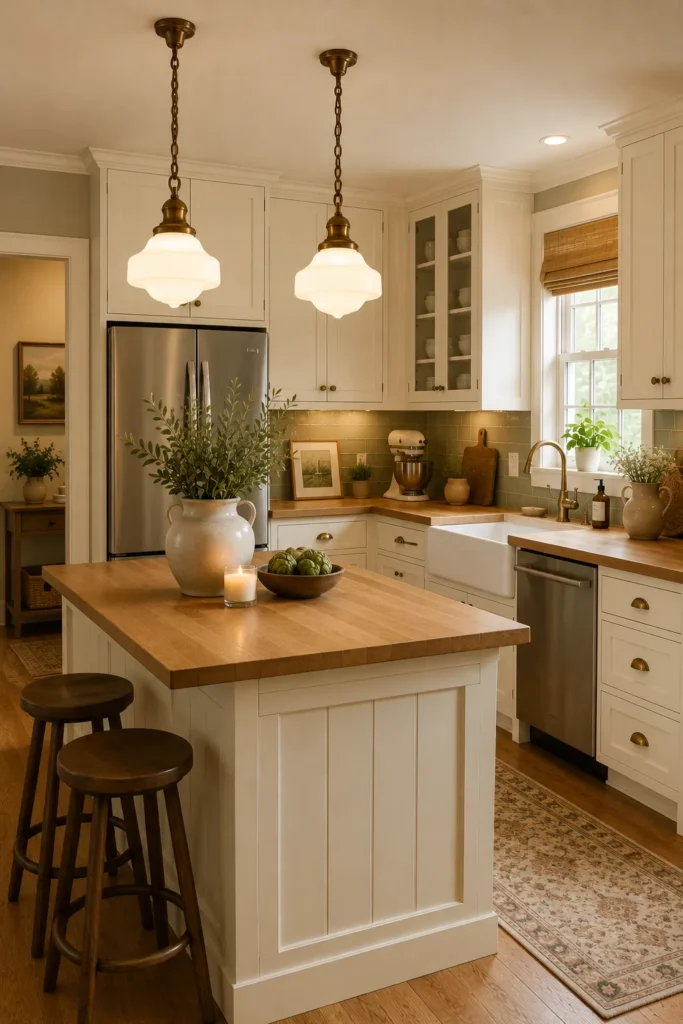
- Adds vintage character without making the kitchen feel dated.
- Opal glass creates soft, comfortable illumination.
- Pairs naturally with shaker cabinets and warm wood.
- Works beautifully in farmhouse and transitional interiors.
Vintage-inspired schoolhouse fixtures bring a classic architectural detail to the kitchen while keeping the overall look approachable. Their rounded opal-glass shades soften the bulb’s brightness and spread a comfortable glow across the island or breakfast counter. Aged brass, bronze, or brushed nickel fittings can shift the style from farmhouse to more traditional. Choose a simple silhouette if your kitchen already has decorative cabinetry or patterned tile. I’ve noticed that these fixtures look especially convincing when paired with practical materials such as wood, stone, ceramic, and painted cabinets rather than overly polished surfaces.
The soft glass shade is also useful when the island serves as both a work surface and casual seating area. It provides enough visual brightness without creating the sharp glare that some exposed bulbs can produce. Hang two fixtures evenly over a longer island, or choose one centered shade for a smaller layout. Keep the surrounding lighting slightly quieter so the vintage pendants remain noticeable. Warm bulbs enhance the creamy tones of the glass and cabinetry after sunset. This combination creates a kitchen that feels established, comfortable, and thoughtfully layered rather than decorated around a single trend.
11:Toe-Kick LED Glow
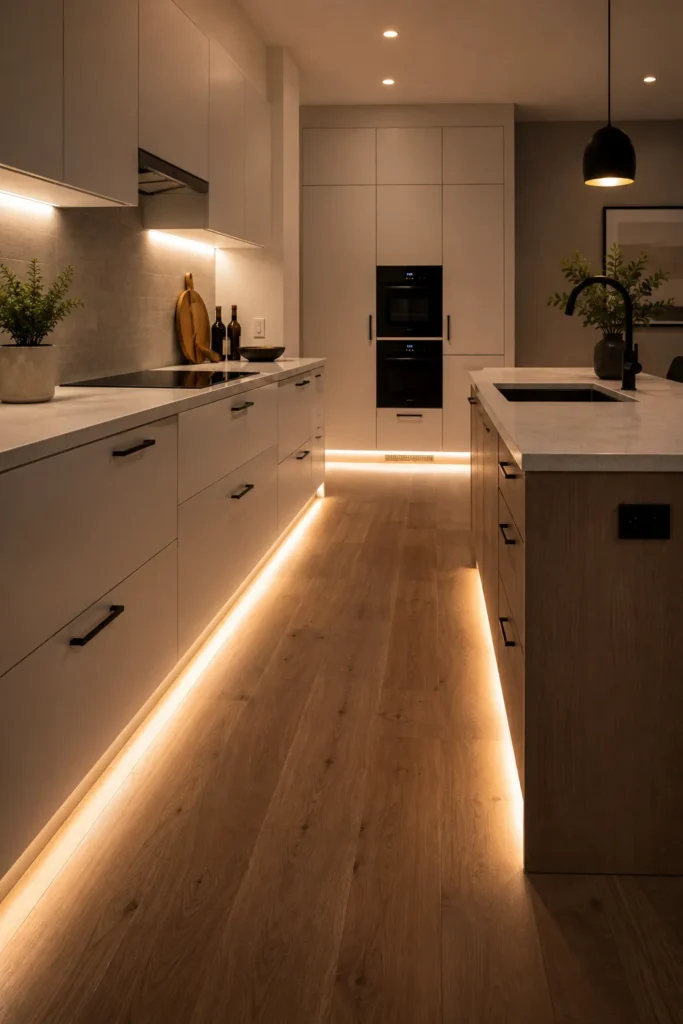
- Adds a subtle nighttime glow along the floor.
- Makes lower cabinets appear visually lighter.
- Provides gentle guidance through the kitchen after dark.
- Creates an upscale effect with minimal visible hardware.
A small strip of light beneath lower cabinets can create a surprisingly sophisticated transformation after dark. Toe-kick LEDs cast a gentle glow along the floor, making cabinets appear slightly elevated while adding a quiet layer of illumination. This is especially useful when you want enough light to move through the kitchen without turning on bright ceiling fixtures. Warm LEDs work beautifully beneath white, cream, gray, or wood cabinetry. In my experience, the effect feels most polished when the light source stays hidden and the glow appears to come naturally from beneath the cabinets.
This subtle layer can also improve nighttime convenience in kitchens where people frequently grab water or snacks after the main lights are off. Connect the strips to a dimmer or motion sensor for easy control, especially near frequently used walkways. Keep the brightness modest so the floor remains softly illuminated rather than brightly lit. Toe-kick lighting pairs well with under-cabinet strips, recessed fixtures, and pendants because each layer performs a different job. The finished space feels calmer and more dimensional, while the small lighting upgrade adds a distinctly custom, high-end appearance.
12:Picture Light Accents
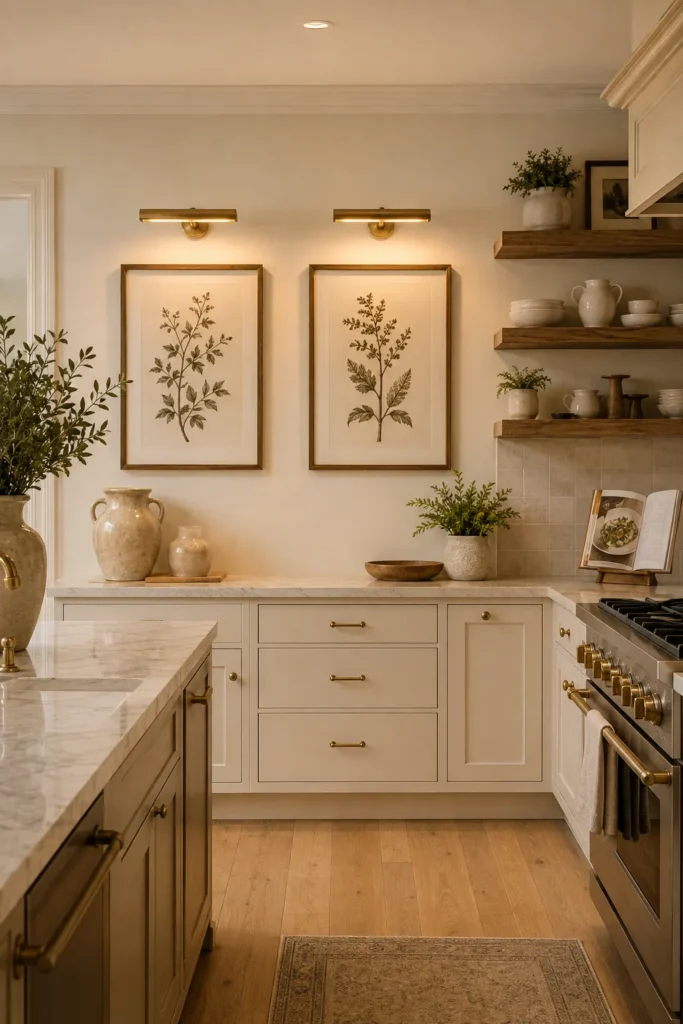
- Highlights artwork or decorative shelving with focused light.
- Turns unused wall space into a visual feature.
- Adds warmth without changing the main ceiling fixtures.
- Works especially well in larger kitchens with blank walls.
A kitchen does not have to rely entirely on ceiling fixtures to feel beautifully illuminated. Slim picture lights can highlight framed artwork, botanical prints, or a styled wall display while adding a refined decorative layer. Mount one above a favorite piece or use matching fixtures across a small gallery arrangement. Brass, bronze, or black finishes can connect with existing hardware. The focused beam draws attention toward the wall without flooding the entire room with brightness. That makes this approach especially useful when a kitchen has a blank wall that feels functional but lacks personality.
Picture lights can also make decorative details more noticeable during evening hours, when natural daylight disappears and wall art might otherwise fade into the background. Choose warm illumination for artwork and position the fixture so the beam falls evenly across the surface without producing distracting reflections. Keep the surrounding decor restrained to avoid visual competition. I’ve seen this work particularly well in larger kitchens because it gives vertical wall space a clear purpose. Combined with general and task lighting, a small picture light can make the room feel more layered and intentionally finished.
13:Arched Wall Sconces
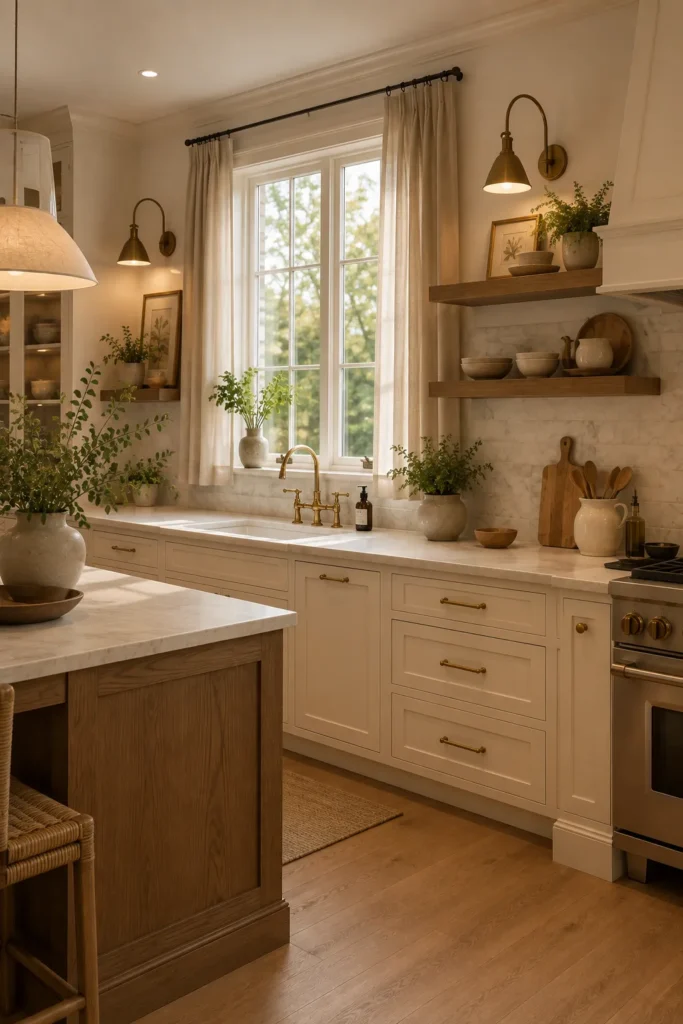
- Adds graceful shape to a straight-lined kitchen.
- Provides focused illumination near walls and counters.
- Creates a refined accent without using ceiling space.
- Pairs beautifully with brass hardware and natural materials.
Curved wall sconces can soften the strong horizontal and vertical lines found in most kitchens. An arched silhouette introduces a gentle architectural detail while directing useful light toward nearby counters, shelves, or sinks. Mount matching sconces beside a window, artwork, or open shelving to create visual symmetry. Warm brass works beautifully with cream cabinetry and natural wood, while matte black creates stronger contrast. In my experience, curved fixtures are especially effective when the rest of the kitchen has simple rectangular shapes because the rounded form immediately adds visual variety without making the room feel busy.
Wall sconces also create a comfortable layer of illumination after sunset. Instead of relying entirely on bright ceiling lights, their softer glow can make the kitchen feel more relaxed while still providing useful brightness near important areas. Choose adjustable designs if you need focused task lighting, or use diffused shades for a gentler decorative effect. Keep the mounting height consistent when using two fixtures so the arrangement feels intentional. When paired with under-cabinet strips and pendant lights, arched sconces add another dimension that makes the entire room feel warmer and more complete.
14:Brass Picture Lights
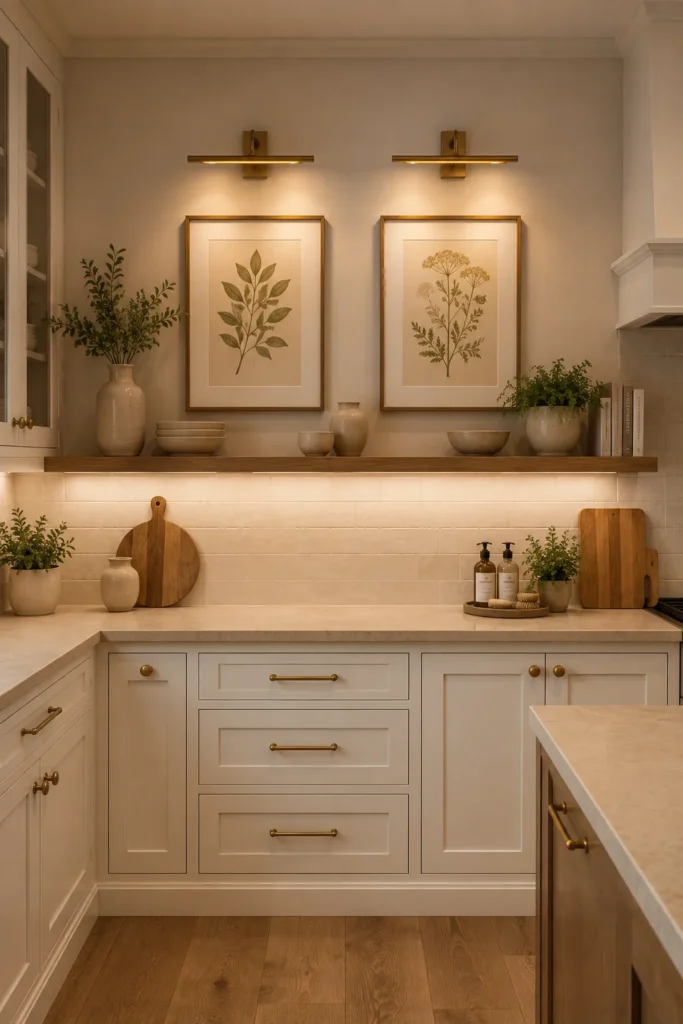
- Adds a warm metallic accent to neutral walls.
- Highlights artwork without requiring stronger overhead lighting.
- Creates a boutique-inspired decorative detail.
- Connects easily with brass faucets and cabinet hardware.
A slim brass picture light can turn an ordinary kitchen wall into a polished focal point with very little visual clutter. Mount it above framed art, a vintage print, or a decorative arrangement to create a warm pool of focused illumination. The brass finish adds subtle richness without requiring another large fixture overhead. Choose a narrow design for smaller artwork and a wider fixture for larger pieces. This approach works particularly well in kitchens with open shelving because the light can visually connect the artwork with nearby decorative objects and materials.
The warm metallic finish also coordinates naturally with brass faucets, cabinet pulls, and other small accents throughout the kitchen. Use a soft bulb to create an inviting glow rather than a harsh spotlight, especially if the fixture is positioned near eye level. Picture lights are decorative first, so pair them with stronger task lighting where detailed food preparation occurs. I’ve noticed that this small addition can make a kitchen feel surprisingly custom because it treats the room like a thoughtfully styled living space rather than purely a work area.
15:Flush Mount Ceiling Light
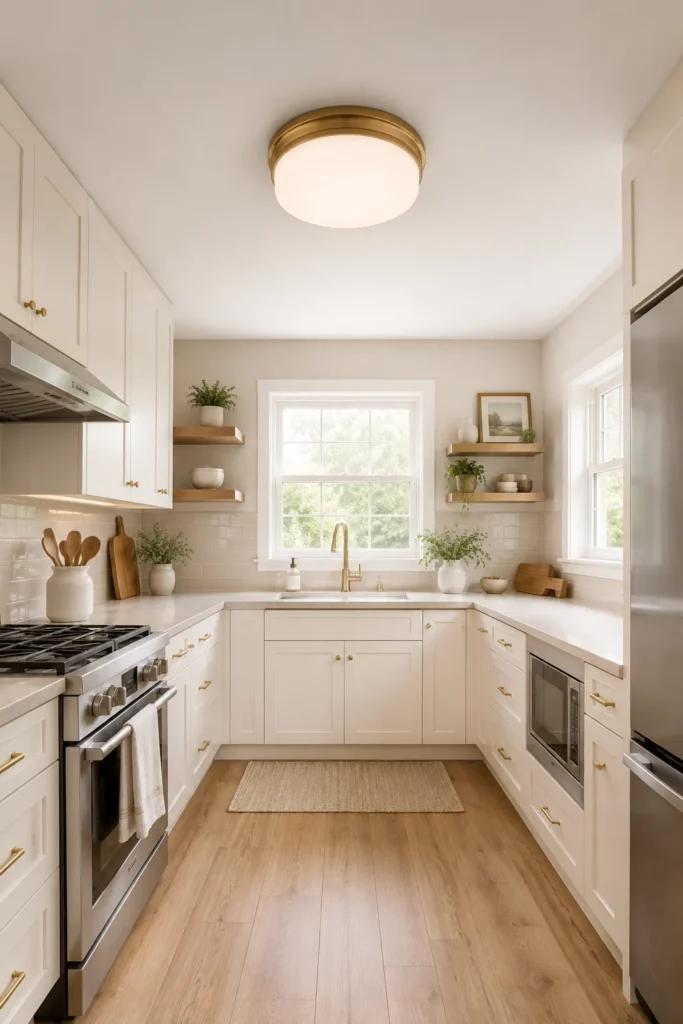
- Works well in kitchens with low ceilings.
- Provides broad overhead illumination without visual bulk.
- Keeps sightlines clear in compact layouts.
- Can complement both modern and traditional interiors.
A flush mount fixture is one of the simplest ways to brighten a kitchen when ceiling height or layout limits your options. Its compact profile sits close to the ceiling, keeping sightlines open while spreading light across the room. Choose a frosted glass shade for soft diffusion or a streamlined metal design for a more contemporary appearance. In smaller kitchens, this approach prevents the ceiling from feeling crowded with hanging fixtures. A warm neutral finish can blend with cabinetry, while a contrasting metal edge can provide a subtle decorative detail.
Flush mounts are particularly useful in kitchens where an island is too small for multiple pendants or where a low ceiling makes hanging fixtures impractical. They can provide general illumination while under-cabinet lighting handles detailed countertop tasks. For a balanced setup, center the fixture within the main circulation area rather than automatically placing it over the sink or cooking surface. I’ve noticed that a simple flush mount often works best when paired with fewer decorative elements, allowing the room’s backsplash, cabinetry, and hardware to provide the visual interest.
16:Copper Dome Pendants
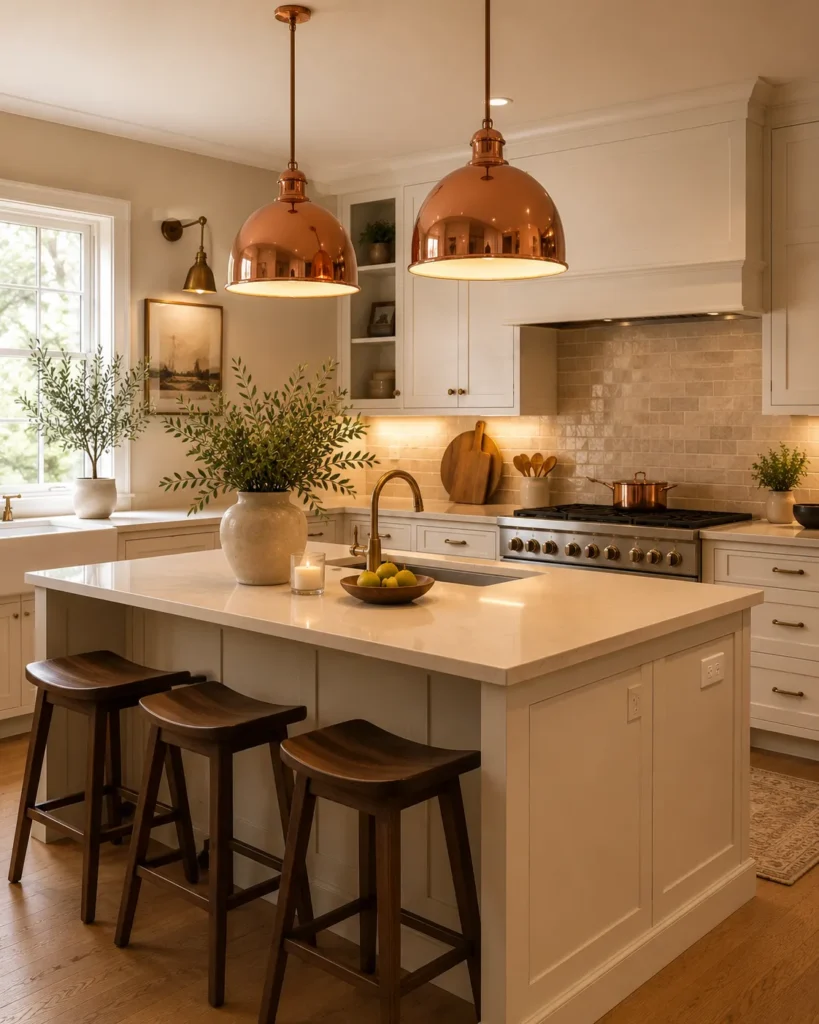
- Adds rich warmth to neutral kitchen palettes.
- Creates a beautiful contrast against light cabinetry.
- Dome shapes direct useful light downward.
- Works especially well with wood and cream finishes.
Copper dome pendants bring warmth and personality to kitchens that need a richer metallic accent. Their curved shades create a strong silhouette while directing illumination downward toward the island or work surface. The copper finish becomes especially striking against white, cream, or soft-gray cabinetry because its warm undertone immediately stands out. Choose polished copper for a brighter statement or aged copper for a more relaxed appearance. In my experience, copper looks most balanced when another warm material, such as oak or walnut, appears somewhere nearby to connect the different elements.
The dome shape also provides practical directional lighting for cooking, serving, and casual seating. Because the shade controls the direction of the bulb, the light can feel focused without spreading unnecessary brightness throughout the room. Hang two fixtures evenly across a longer island, leaving enough space between them for a balanced composition. Warm bulbs enhance the copper finish after sunset and make surrounding wood tones feel richer. Keep other metallic accents relatively restrained so the pendants remain distinctive. This setup creates a welcoming kitchen with character while maintaining a polished, coordinated appearance.
17:Minimalist Tube Lights
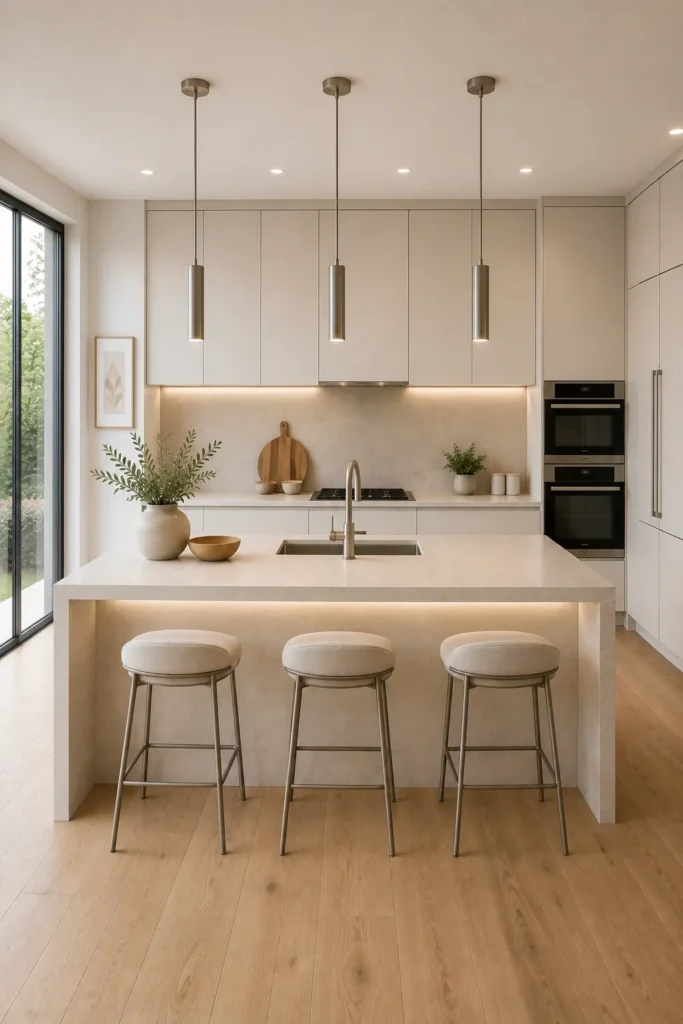
- Keeps the ceiling clean and visually lightweight.
- Fits naturally into contemporary and minimalist kitchens.
- Provides focused illumination without bulky shades.
- Works well with simple cabinetry and uncluttered surfaces.
Slim cylindrical pendants are ideal when you want useful island illumination without a visually heavy fixture. Their narrow profiles create a clean vertical rhythm while keeping attention on the cabinetry, countertops, and architectural details around them. Choose matte black for contrast, brushed metal for subtle sophistication, or a neutral finish that blends into the ceiling. Three evenly spaced tubes can suit a long island, while two may be enough for a smaller surface. The simple shape makes this option particularly adaptable, allowing it to work with contemporary, Scandinavian, and minimalist kitchen styles.
Minimalist fixtures also make it easier to build a balanced lighting plan without making the room feel overdesigned. Use the pendants for focused island illumination and combine them with recessed fixtures or concealed LEDs elsewhere. Frosted tubes can soften the brightness, while clear designs create a sharper, more decorative effect. Keep the island surface relatively uncluttered so the streamlined forms remain visible. That combination can make a compact kitchen feel organized and spacious. When finishes are repeated subtly through cabinet handles or faucets, the lighting feels integrated rather than added as an afterthought.
18:Skylight Daylighting
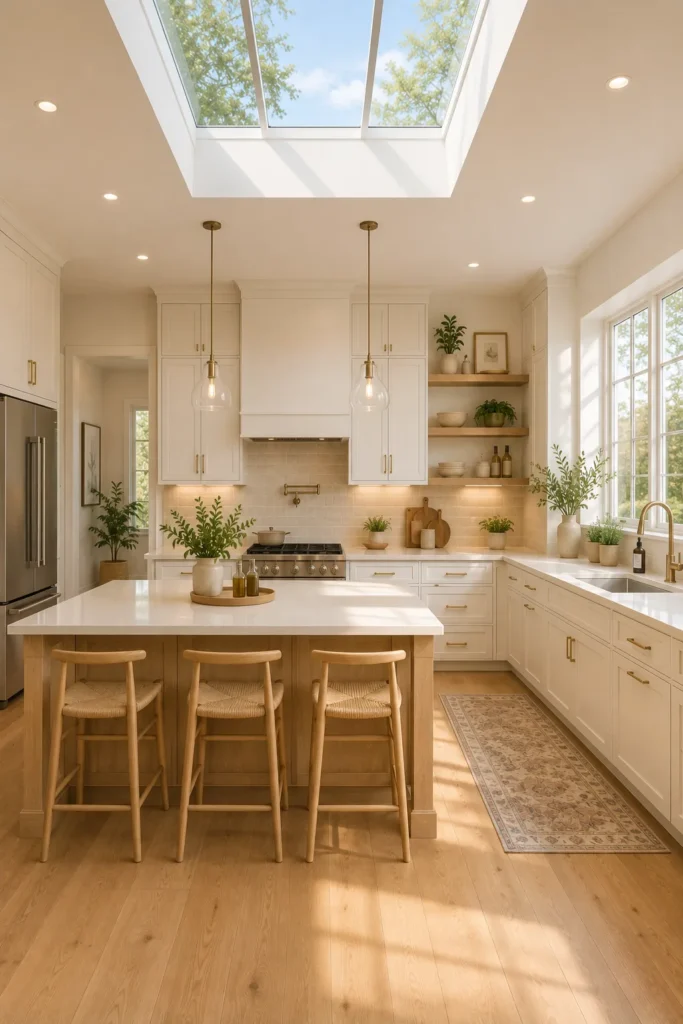
- Brings natural daylight into darker kitchen areas.
- Makes pale surfaces appear brighter and more spacious.
- Reduces dependence on artificial lighting during daytime.
- Adds an architectural feature with strong visual impact.
Natural daylight can transform a kitchen more dramatically than any decorative fixture. A well-positioned skylight brings sunlight from above, helping illuminate counters and surfaces that may remain shaded when windows are limited. It works especially well in kitchens surrounded by neighboring buildings or rooms with deep floor plans. White cabinetry, pale stone, and light flooring can reflect the incoming daylight and make the entire space feel more open. If you are planning a renovation, consider how the skylight position relates to the island, sink, and primary preparation areas.
A skylight also changes throughout the day, creating subtle shifts in brightness that make the kitchen feel connected to the outdoors. During evening hours, pair the natural feature with recessed fixtures, under-cabinet strips, or soft pendants so the room remains comfortably illuminated after sunset. Consider window treatments or appropriate glazing if the space receives intense direct sunlight during warmer months. The strongest kitchen lighting ideas usually combine daylight with flexible artificial sources rather than relying on one solution. This layered approach gives the room brightness when needed and a softer atmosphere when natural light fades.
19:Ceramic Pendant Shades
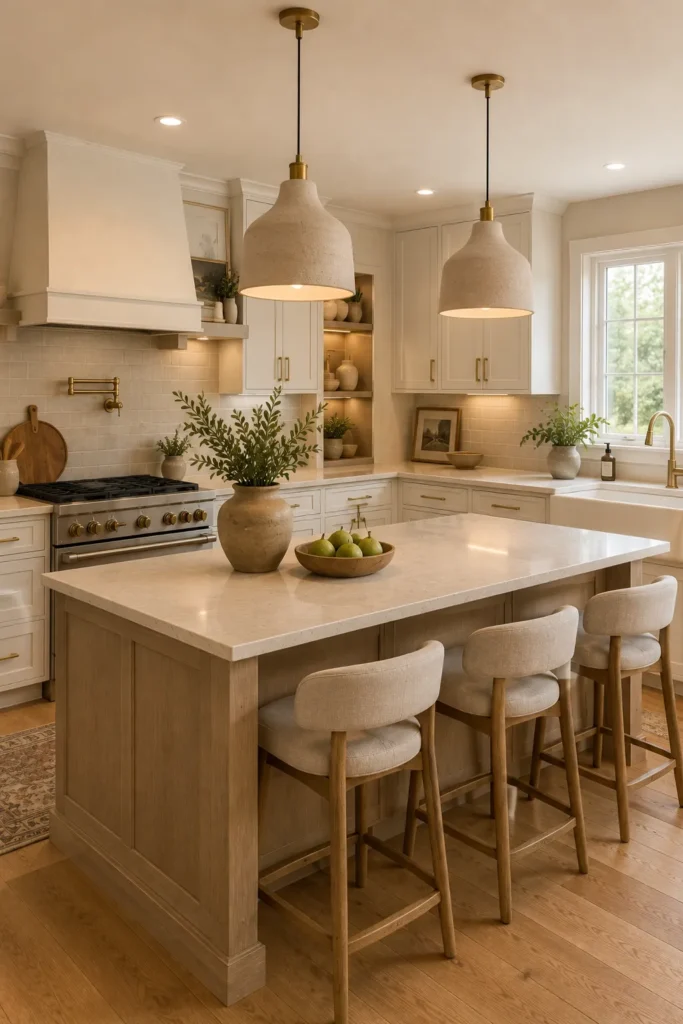
- Adds handcrafted texture to a simple kitchen.
- Softens the look of modern cabinets and stone.
- Creates subtle visual interest without bold colors.
- Works beautifully with warm, earthy neutral palettes.
Handcrafted ceramic pendants can add a quiet sense of character to a kitchen without overwhelming its design. Their softly textured surfaces create visual interest even when the color palette stays neutral. Cream, sand, white, and pale terracotta shades work especially well with natural wood, stone counters, and simple cabinetry. Hang a pair above an island for symmetry or choose one larger shade for a smaller kitchen. The slightly imperfect appearance of handmade ceramic can make a newly renovated space feel warmer and more personal, especially when the surrounding finishes are clean and contemporary.
Ceramic shades also diffuse the bulb’s brightness, creating a softer glow that works well over dining and preparation areas. Choose a shape that complements the proportions of your island, such as rounded shades for a relaxed look or gently tapered forms for a more refined appearance. Keep the bulb warm enough to emphasize the material’s natural tones in the evening. I’ve noticed that ceramic fixtures pair particularly well with handmade tile because both materials bring subtle variation to the room. Together, they create a layered kitchen that feels thoughtfully designed without looking overly styled.
20:Ceiling Beam Spotlights
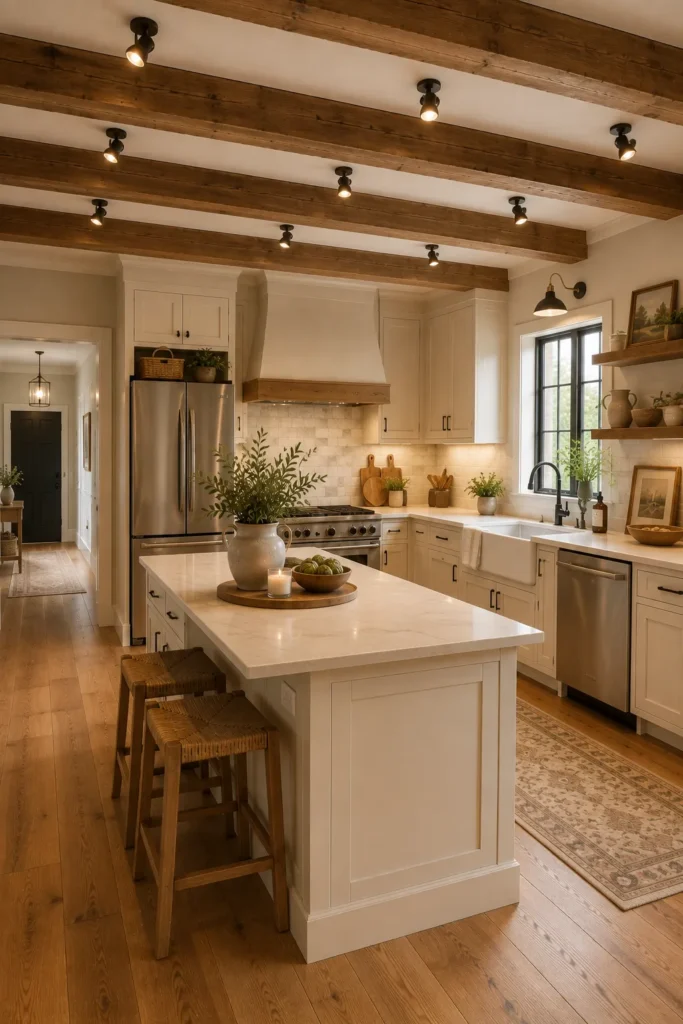
- Highlights exposed beams and architectural ceiling details.
- Directs light toward specific kitchen work zones.
- Adds character without requiring hanging fixtures.
- Works especially well in rustic and modern farmhouse spaces.
Exposed ceiling beams can become even more striking when paired with carefully positioned spotlights. Small adjustable fixtures mounted between or beside the beams direct illumination toward the island, counters, or architectural features without hiding the ceiling’s natural character. This approach works especially well in farmhouse, rustic, and transitional kitchens where the beams already provide strong visual structure. Choose black fixtures for contrast or a finish that closely matches the beam hardware for a quieter appearance. The goal is to enhance the architecture while keeping the lighting practical enough for everyday cooking and preparation.
Directional spotlights are also useful when a kitchen contains multiple work zones that need different levels of illumination. Aim individual fixtures toward the sink, island, pantry entrance, or display shelves instead of pointing everything into the center of the room. This creates a more balanced spread of brightness and reduces unnecessary shadows. Pair the spotlights with concealed countertop lighting for detailed tasks. In my experience, this combination works particularly well when the ceiling itself is a design feature because the fixtures support the architecture rather than competing with it. The finished effect feels purposeful and warm.
21:Milk Glass Pendants
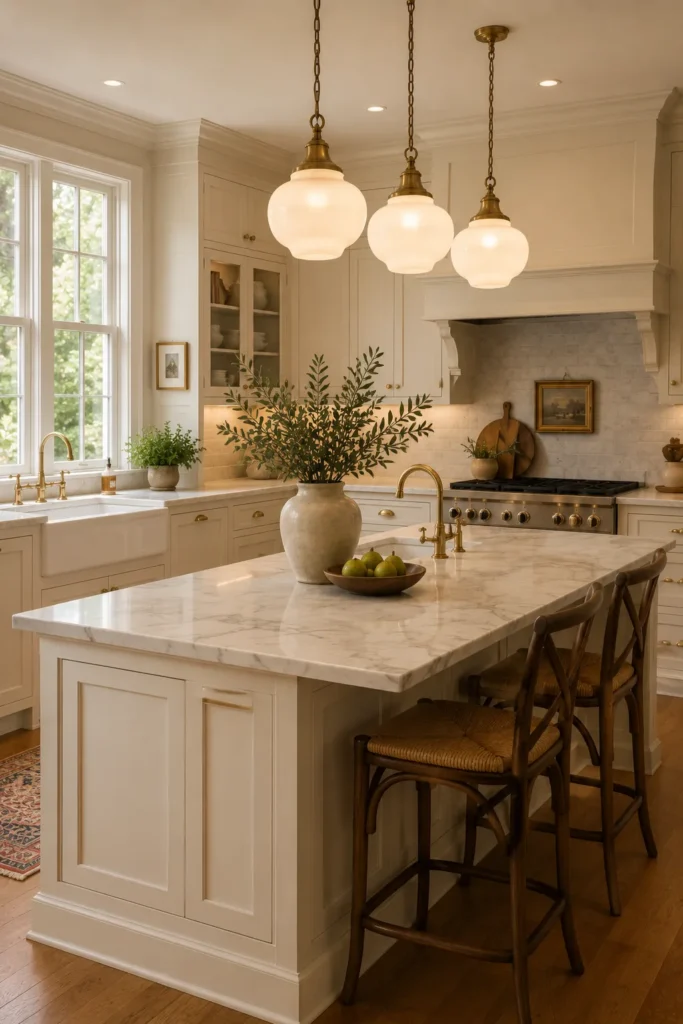
- Creates soft, flattering illumination over an island.
- Adds classic character without visual heaviness.
- Works with farmhouse, traditional, and transitional styles.
- Pairs naturally with brass, nickel, and bronze finishes.
Milk glass pendants offer a timeless way to bring soft illumination and gentle character into the kitchen. Their opaque glass shades diffuse the bulb, reducing harsh glare while creating a comfortable glow over an island or breakfast counter. Classic dome, globe, and schoolhouse shapes can suit different interiors without changing the overall simplicity of the material. Pair them with brass for a warmer traditional look or brushed nickel for a cooler transitional finish. This style is especially useful when you want decorative lighting that feels established rather than strongly tied to a passing trend.
The soft opacity of milk glass also helps the fixture remain visually balanced in kitchens with busy backsplashes or detailed cabinetry. Because the shade hides the bulb, the overall appearance stays calm even when the lights are switched on. Space multiple pendants evenly above a longer island, or center one fixture over a compact surface. Warm illumination complements cream cabinetry and wood flooring beautifully, while a neutral bulb can provide clearer task visibility. The result is one of those versatile kitchen lighting ideas that combines everyday function with a classic decorative element.
22:Backsplash Accent Lighting
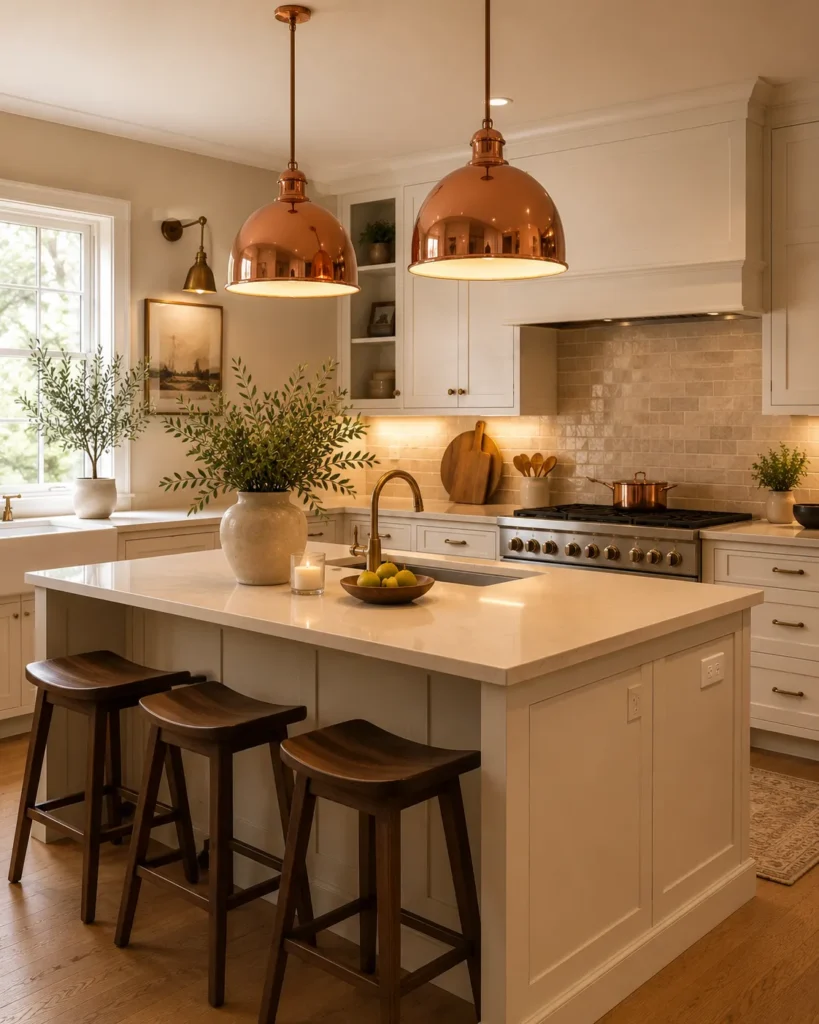
- Highlights backsplash texture and decorative tile details.
- Adds depth between upper cabinets and countertops.
- Creates a soft evening glow without bulky fixtures.
- Makes simple materials feel more visually dimensional.
A beautifully lit backsplash can completely change how a kitchen looks after sunset. Concealed accent lighting placed beneath upper cabinets or along architectural edges creates a soft wash across tile, stone, or textured surfaces. Instead of simply brightening the countertop, it highlights the material itself and gives the wall more depth. This works particularly well with handmade tile, marble veining, fluted surfaces, or subtle geometric patterns. Choose warm illumination for a cozy atmosphere, especially when the backsplash has cream, beige, or natural stone tones. The effect is understated but instantly noticeable.
Accent illumination can also make a simple backsplash feel more intentional without adding extra decoration. Position the light so it spreads evenly rather than creating isolated bright spots, and keep the fixture hidden whenever possible for a cleaner appearance. Pair it with under-cabinet task lighting if the countertop needs stronger brightness for cooking. In my experience, this combination creates one of the most useful layered effects because the work surface stays functional while the backsplash receives its own decorative glow. Together, the lighting makes the kitchen feel warmer, deeper, and more polished during evening hours.
Conclusion
Great lighting can transform more than visibility—it can change the entire mood and functionality of your kitchen. These kitchen lighting ideas offer simple ways to brighten work zones, highlight beautiful materials, add warmth, and create a more welcoming atmosphere. You don’t need to change everything at once; even one pendant, LED strip, or wall fixture can make a noticeable difference. I’ve seen how small lighting updates can completely refresh a space. Save this post to Pinterest for your next kitchen project, try an idea that fits your style, and share it with someone searching for their perfect kitchen glow.