24 Peach Fuzz Kitchen Ideas to Warm Up Your Home Today
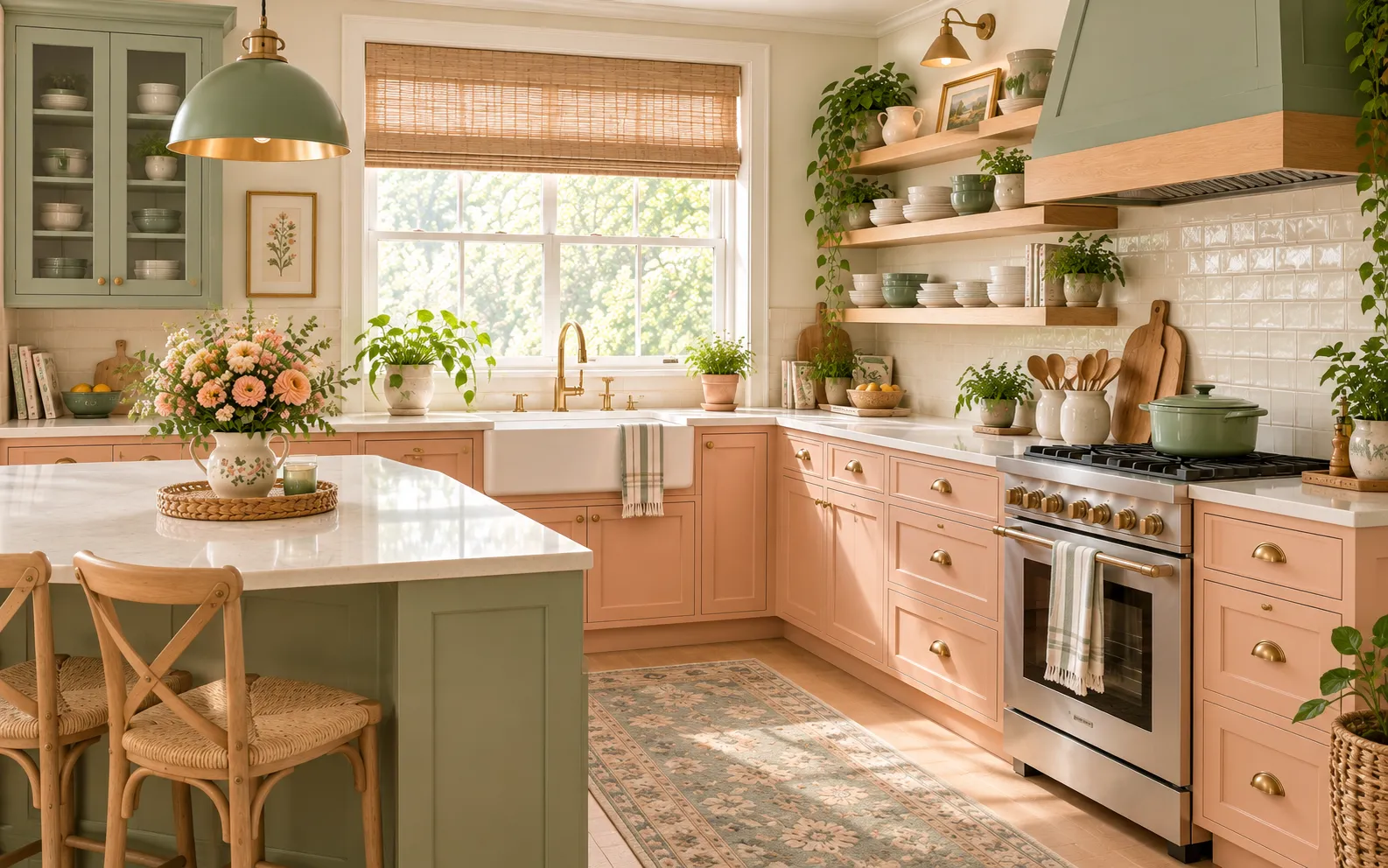
A kitchen can feel completely different with the right color, and soft peach is having a beautiful moment in home design. Its warm, gentle tone adds personality without overwhelming the space, making it surprisingly versatile for modern, farmhouse, cottage, and minimalist interiors. From colorful cabinets and statement islands to subtle textiles and decorative accents, there are countless ways to bring this inviting shade into your home. These peach fuzz kitchen ideas will help you create a kitchen that feels warm, stylish, comfortable, and effortlessly Pinterest-worthy while still being practical for everyday living.
1. Peach Fuzz Cabinets
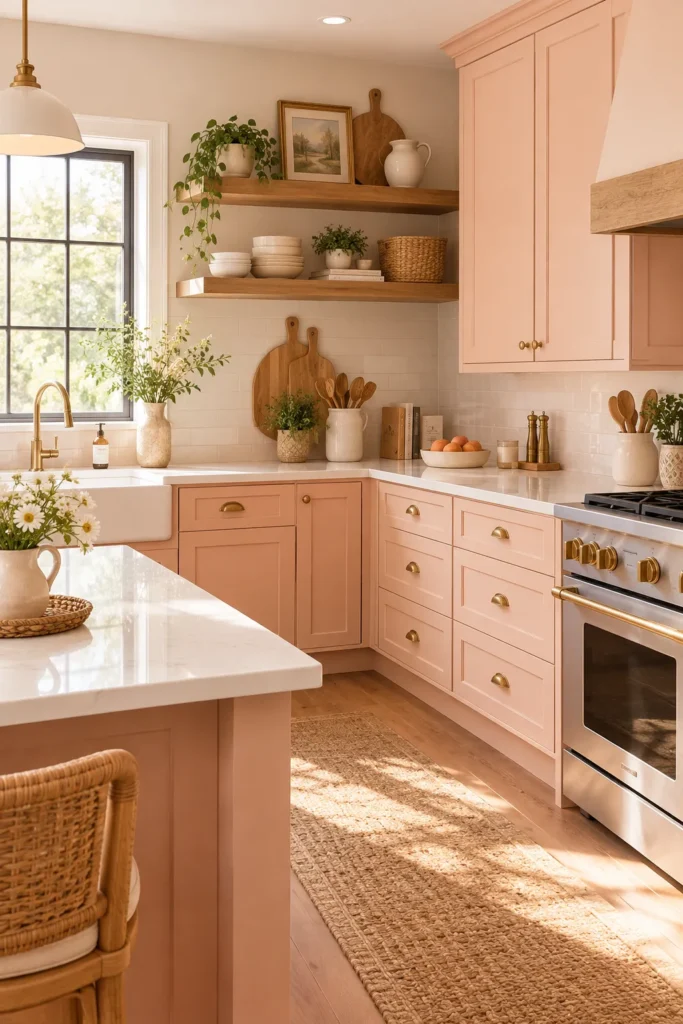
Peach fuzz cabinets can completely change the personality of a kitchen without making the room feel overly colorful. The soft orange-pink undertone brings warmth while remaining subtle enough for everyday living. Pairing the cabinets with creamy countertops helps maintain a bright appearance, while brass handles introduce a refined finishing touch. Natural wood elements can further balance the color by adding earthy texture. Among the most approachable peach fuzz kitchen ideas, this look works particularly well for homeowners who want color without sacrificing a calm, timeless atmosphere.
For a cohesive appearance, keep the surrounding finishes relatively simple. A warm white backsplash can connect beautifully with the peach cabinetry, while pale oak flooring adds natural depth. Consider using open shelving for a few favorite dishes instead of filling every wall with cabinets. This allows the peach shade to remain a visual feature without overwhelming the room. Soft linen curtains, woven baskets, and ceramic accessories can complete the design while keeping the kitchen comfortable, practical, and visually balanced.
2. Peach Kitchen Island
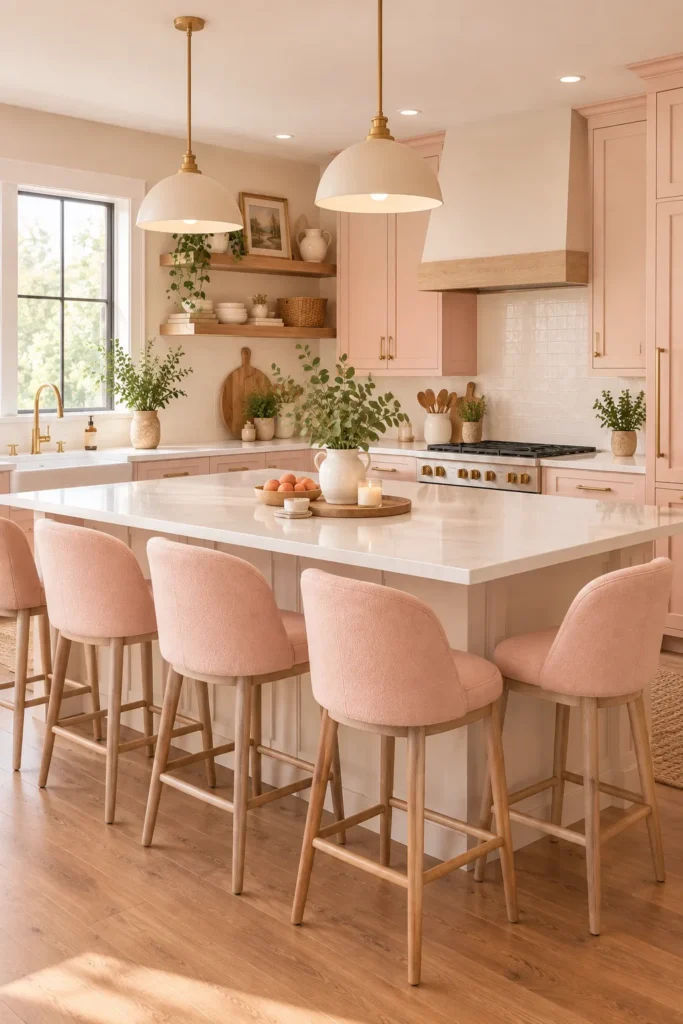
A peach island is an excellent option if you love the color but do not want to commit to peach cabinetry throughout the entire kitchen. Using the shade on one central feature creates personality while keeping the rest of the space versatile. A pale stone countertop can provide contrast and make the island feel polished. Simple brass fixtures add warmth without competing with the peach tone. This approach is especially useful in larger kitchens where a central island naturally becomes the room’s strongest architectural feature.
To make the island feel integrated, repeat small touches of peach elsewhere in the room. A vase, artwork, dish towel, or ceramic bowl can subtly connect the island with surrounding décor. Keep these accents limited so the design does not become overly coordinated. Natural wood stools are another excellent choice because their earthy color works beautifully with peach. With thoughtful styling, the island can become both a practical preparation space and a welcoming gathering point for breakfasts, homework, or relaxed family conversations.
3. Peach Backsplash
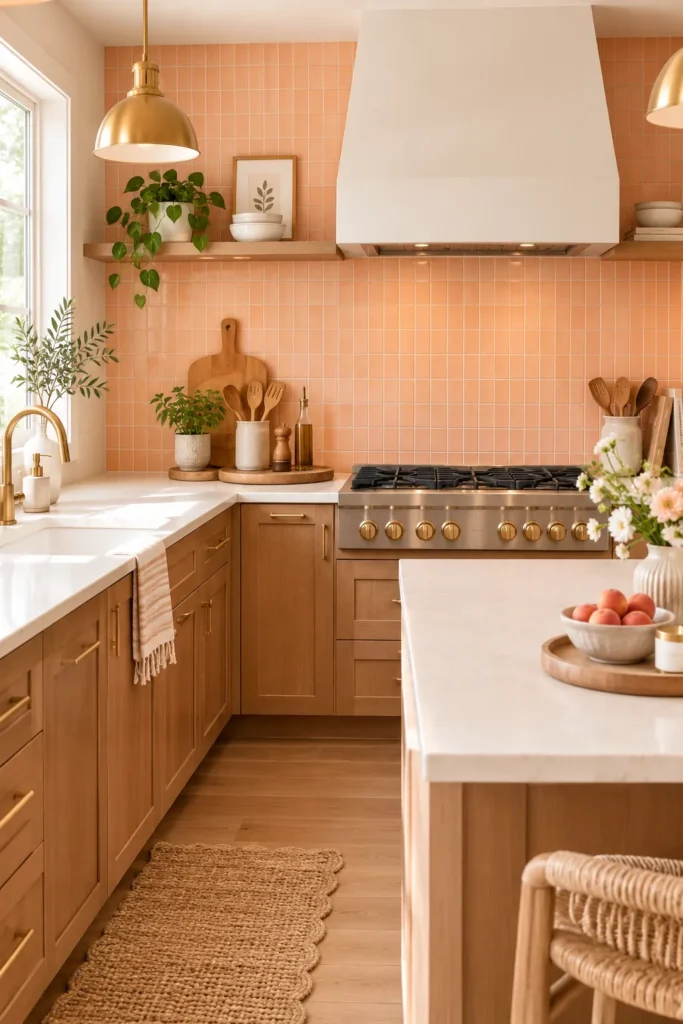
A peach backsplash offers an easy way to introduce color without changing major kitchen elements. Because the backsplash occupies a smaller surface area, you can experiment with a stronger peach tone while keeping cabinets neutral. Soft rectangular tiles create a classic appearance, while handmade-style tiles provide additional texture and variation. Pairing the backsplash with warm white cabinets prevents the kitchen from becoming visually heavy. This combination works particularly well when you want a colorful detail that remains practical and sophisticated rather than overly decorative.
When selecting your peach backsplash, consider the undertones of your countertops and cabinets. Warm whites, cream, beige, and natural wood generally complement peach beautifully. For hardware, brushed brass or muted bronze can reinforce the warm palette. Keep countertop accessories simple so the backsplash remains noticeable. A few wooden cutting boards, ceramic containers, or fresh herbs can add useful texture. This is one of the easiest ways to incorporate peach into an existing kitchen because the surrounding finishes can remain largely unchanged.
4. Peach Lower Cabinets
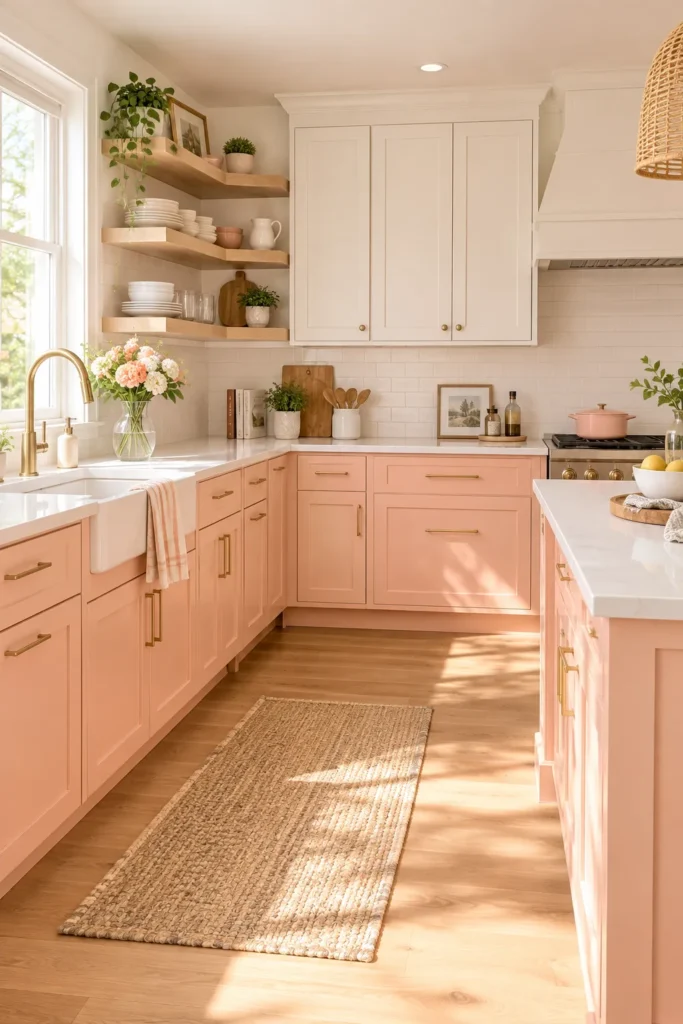
Using peach only on the lower cabinets creates a beautiful balance between color and simplicity. The upper portion of the kitchen remains light, helping the room feel open while the lower cabinets provide warmth and personality. This arrangement is especially helpful in smaller kitchens because the lighter upper cabinetry draws the eye upward. A neutral countertop can visually connect both cabinet colors. The result is a layered design that feels intentional without requiring every surface to use the same peach shade.
You can make this style feel even more sophisticated by choosing a muted peach rather than a highly saturated orange. Matte cabinet finishes tend to look particularly modern, while subtle brass pulls add a small amount of shine. Keep wall décor restrained and introduce natural materials through cutting boards, woven baskets, or wooden stools. If you already have a neutral kitchen, painting only the lower cabinets can also be a relatively simple way to refresh the room while preserving existing countertops, appliances, and upper cabinetry.
5. Peach Open Shelves
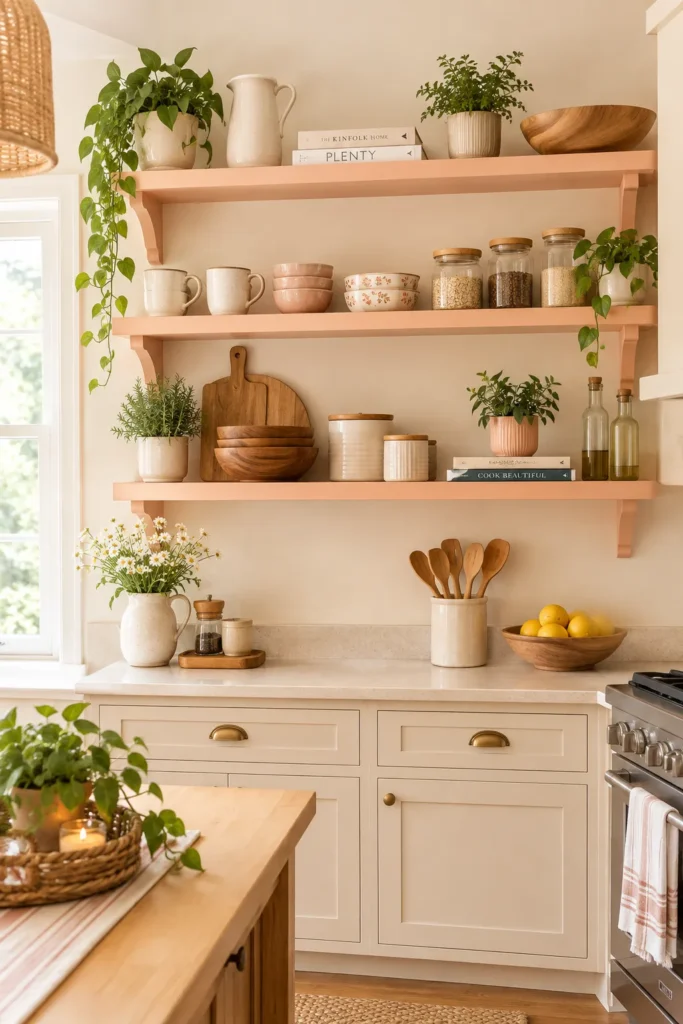
Peach open shelving can add both storage and color without requiring a major kitchen renovation. Instead of covering an entire wall with peach cabinetry, painted shelves introduce the shade in a lighter, more decorative way. They are ideal for displaying everyday dishes, favorite mugs, cookbooks, or small plants. Keeping the displayed items mostly neutral allows the peach shelves to remain the main visual feature. This creates a warm composition that feels personal while still maintaining a clean and organized appearance.
For the best result, avoid overcrowding the shelves. Leave small spaces between objects so the color remains visible and the arrangement feels intentional. Combine different textures such as ceramic, wood, glass, and woven materials to create depth. A few green plants can also provide a natural contrast against peach. If you prefer a farmhouse-inspired kitchen, combine the shelves with cream walls, butcher-block surfaces, vintage-style ceramics, and simple black or brass accents for a comfortable and collected appearance.
6. Peach Tile Walls
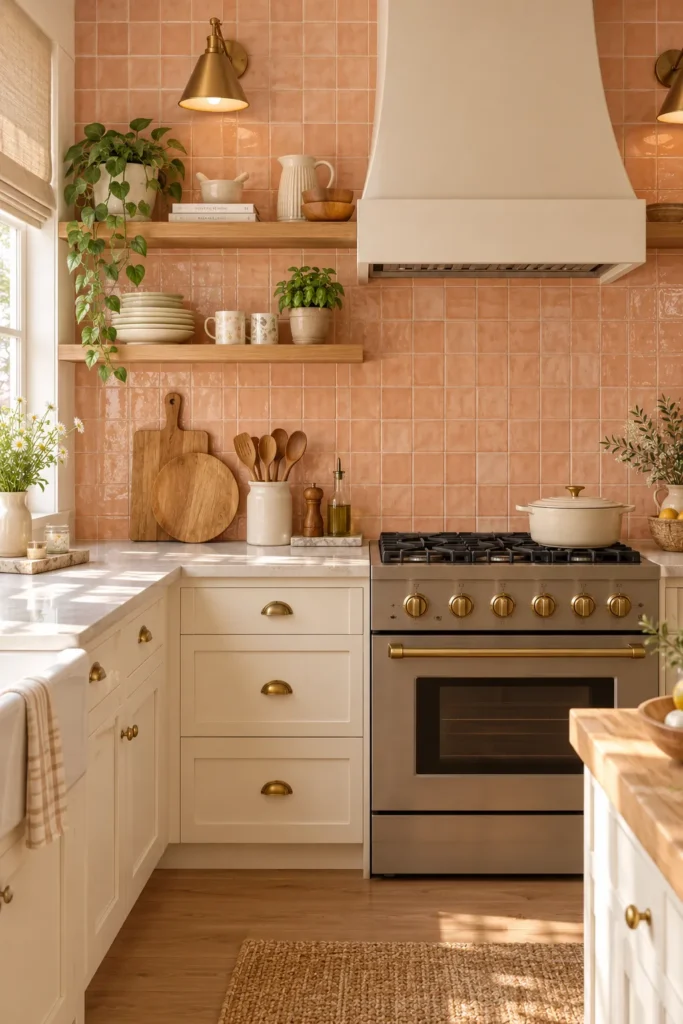
Tile can make peach feel architectural rather than simply decorative. A full wall of softly colored tiles provides a strong visual foundation while still allowing other elements to remain understated. Handmade or slightly uneven tiles can introduce character, particularly in farmhouse or cottage-inspired kitchens. If the peach is muted, it can work almost like a neutral backdrop. This makes the color easier to live with while still providing more personality than traditional white tile.
When styling a peach tile wall, choose accessories that support rather than compete with the surface. Natural wood, cream ceramics, woven textures, and brushed metal finishes are reliable choices. You can also use simple floating shelves to break up a larger tiled area and provide practical storage. If the kitchen receives plenty of natural light, a warm peach tile can create a beautiful glow throughout the room. For darker kitchens, choose a lighter peach to prevent the space from feeling visually enclosed.
7. Peach and Cream
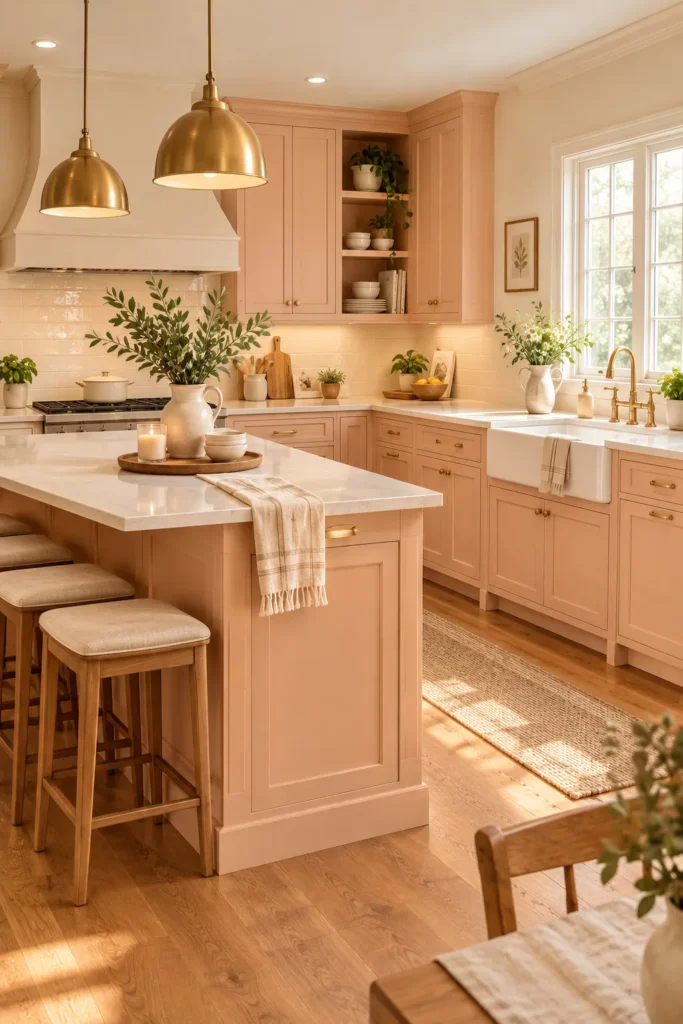
Peach and cream make a particularly harmonious kitchen combination because both colors have warm undertones. Cream softens the peach and prevents it from appearing too bright, while peach adds personality to an otherwise neutral palette. This pairing works beautifully across cabinetry, walls, countertops, and textiles. If you prefer understated interiors, choose a dusty or muted peach rather than a highly saturated version. The result can feel sophisticated enough for a modern kitchen while still maintaining the warmth associated with traditional home interiors.
Texture becomes important when working with two similar warm colors. Introduce natural wood, woven baskets, linen curtains, ceramic pieces, or subtle stone surfaces to keep the palette from appearing flat. Brass lighting can provide a refined metallic detail, while greenery adds a fresh contrast. Try to vary the shades slightly instead of matching everything exactly. A creamy wall beside slightly deeper peach cabinets, for example, creates depth and helps each finish remain visually distinct.
8. Peach Farmhouse Kitchen
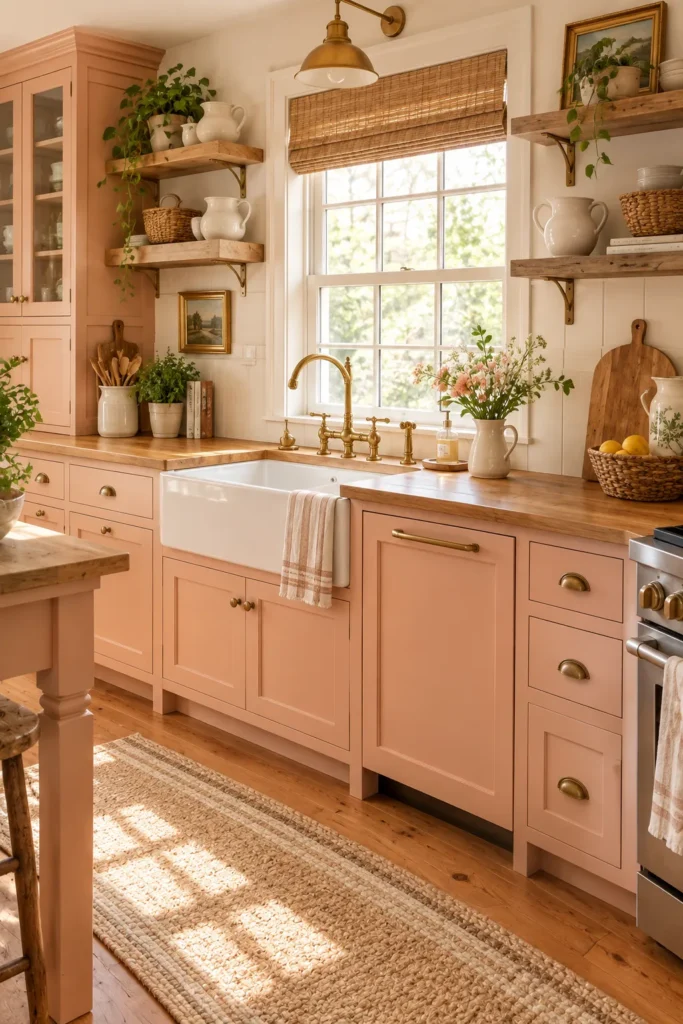
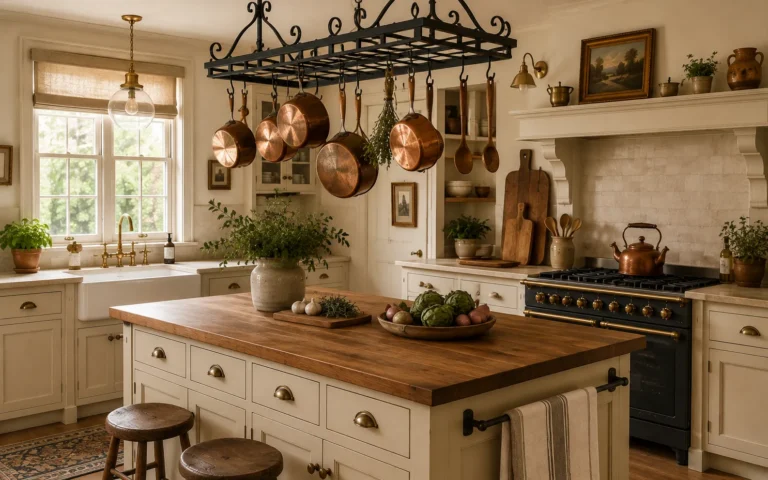
Peach can bring an unexpected softness to farmhouse kitchens while preserving their relaxed character. Instead of relying entirely on white and gray, a muted peach shade introduces warmth that pairs naturally with wood, vintage details, and traditional hardware. An apron-front sink and simple cabinetry reinforce the farmhouse character, while modern lighting keeps the room from feeling dated. The key is choosing a peach tone with a slightly dusty quality so the color feels integrated rather than overly bright.
Natural materials are especially useful for creating a comfortable farmhouse look. Wooden countertops, woven baskets, linen towels, ceramic pitchers, and cutting boards can all add texture. Keep decorative objects practical whenever possible so the room still feels like a working kitchen. Fresh flowers or herbs provide an easy seasonal accent. If you want the peach color to remain subtle, use it on cabinetry while keeping walls, countertops, and major fixtures in warm cream or soft white.
9. Peach Pantry Door
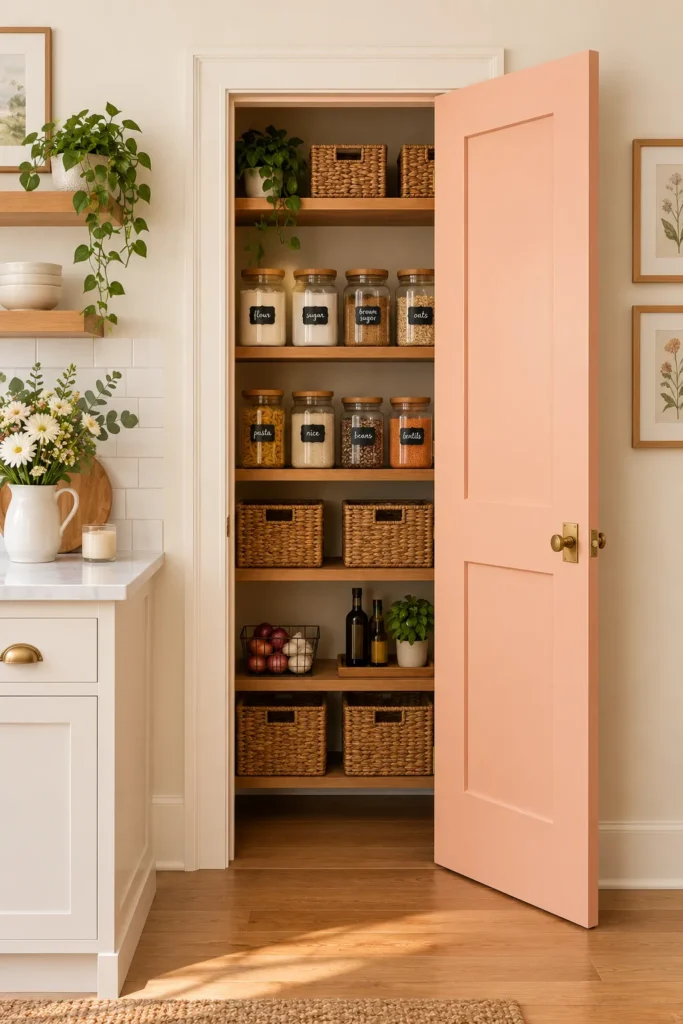
A painted pantry door is one of the simplest ways to introduce peach without changing the entire kitchen. Because the color is concentrated in one area, it creates a clear focal point while leaving the rest of the room flexible. A shaker-style door can give the space a traditional feel, while a flat-panel door works beautifully in modern interiors. Brass or bronze hardware adds warmth and makes the small feature feel intentionally styled rather than accidental.
The inside of the pantry can continue the same design language with wooden shelves, labeled jars, woven baskets, and neutral containers. You do not need to match every accessory to the door. In fact, natural textures help soften the color and create a more collected appearance. If the kitchen already contains several strong finishes, a peach pantry door can provide the perfect small dose of personality. It is also easy to repaint later if you decide to update your kitchen palette.
10. Peach Pendant Lights
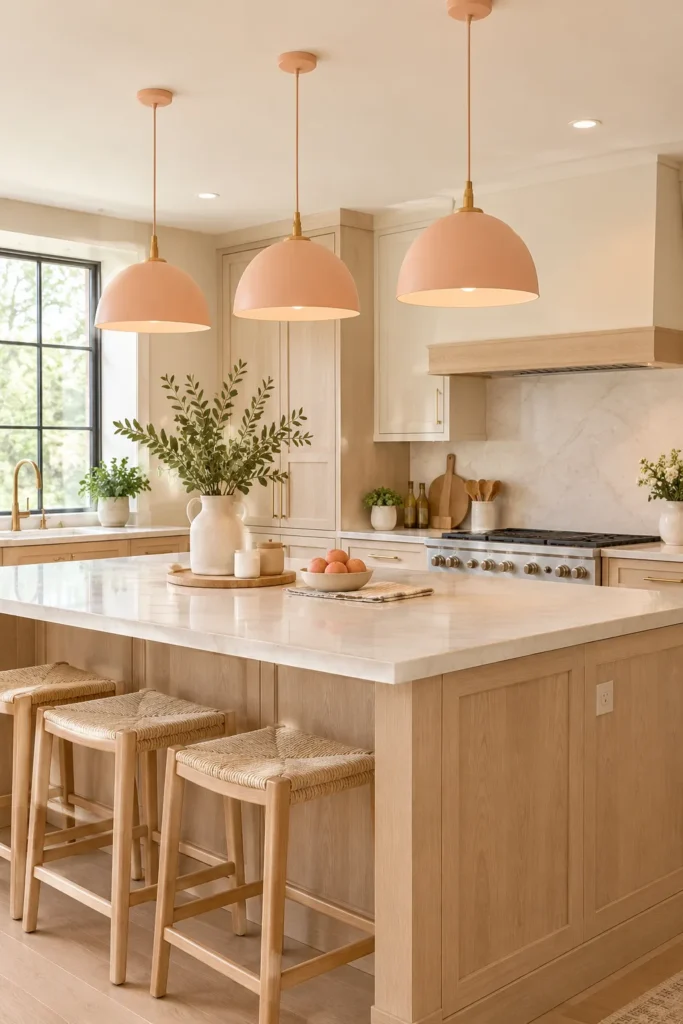
Lighting can be an effective way to introduce peach when you want something more subtle than colorful cabinetry. Pendant lights naturally attract attention, so a warm peach shade can become a beautiful decorative feature above an island or dining area. Rounded fixtures create a softer appearance, while simple geometric designs work well in modern kitchens. Pairing the lights with neutral cabinetry allows the peach color to stand out without making the entire room feel themed around one shade.
Consider the size of your kitchen before choosing the fixtures. Larger islands can support a row of three pendants, while smaller spaces may need only one or two. Warm bulbs can enhance the peach tone and create a cozy atmosphere in the evening. Keep the remaining lighting finishes relatively simple so the pendants remain the focal point. Repeating small peach accents through ceramics or textiles can help connect the fixtures with the rest of the kitchen.
11. Peach Breakfast Nook
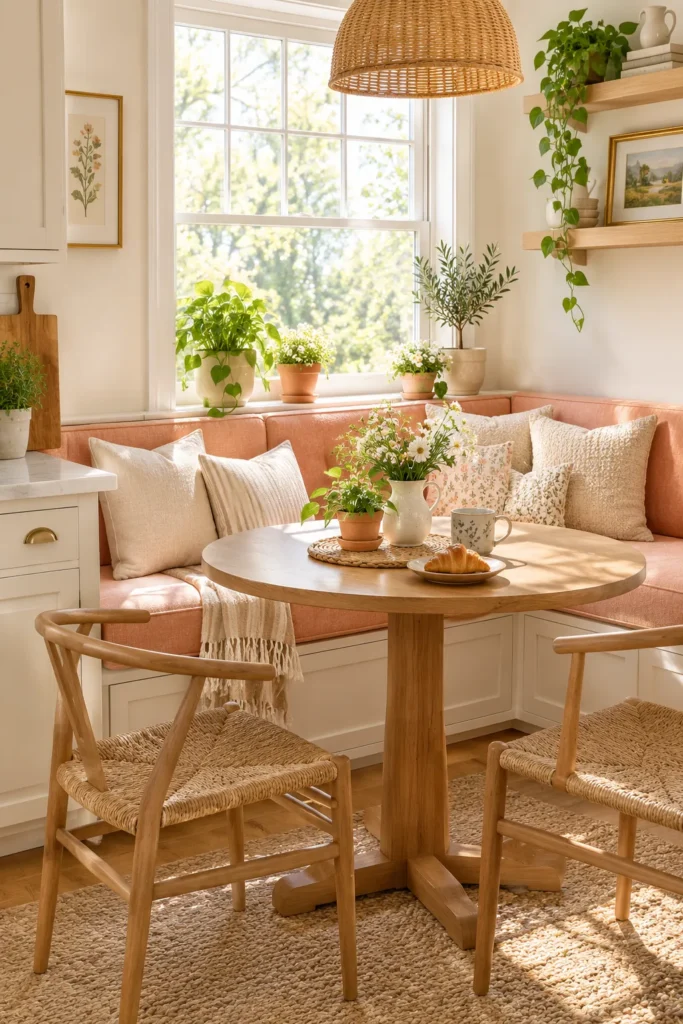
A peach breakfast nook can add warmth to a kitchen without requiring permanent changes to cabinetry or walls. Upholstered seating provides an opportunity to experiment with color while also making the space more comfortable. Choose a muted peach fabric if you want an understated look, or a slightly brighter shade for a more cheerful atmosphere. A round wooden table can balance the softness of the bench and create an approachable gathering space for everyday meals.
Keep the surrounding décor relaxed and practical. Woven baskets can provide hidden storage beneath the bench, while washable cushions make the area easier to maintain. A small pendant or wall light can provide focused illumination without overpowering the nook. Add a few neutral ceramics, a vase of seasonal flowers, or a small plant to complete the arrangement. Because the peach is concentrated in the seating area, the rest of the kitchen can remain neutral while still feeling connected.
12. Peach Kitchen Island Stools
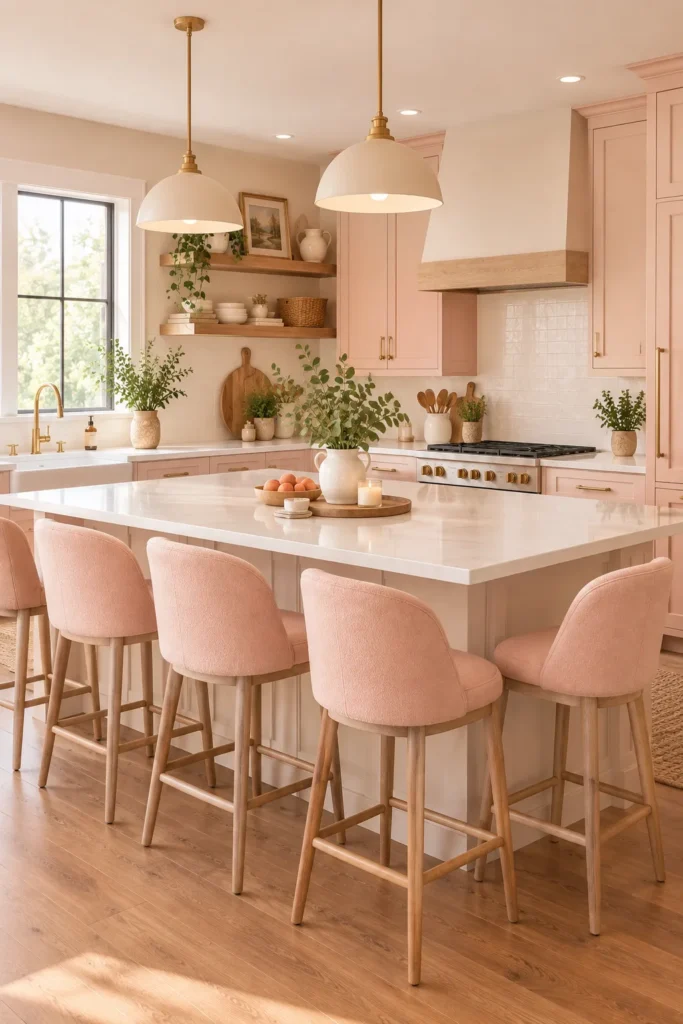
Colorful stools can provide personality without requiring any permanent renovation. Peach seating works particularly well against white, cream, beige, or light wood kitchens because the warm color immediately creates a focal point. Upholstered or painted wooden stools offer different levels of visual softness. If you want a modern appearance, choose simple curved silhouettes. For farmhouse kitchens, wooden stools with a lightly distressed finish can work beautifully with the peach palette.
Because kitchen seating receives frequent use, durability should be part of the design decision. Choose washable upholstery or a finish that can handle everyday activity. Keep the island surface relatively uncluttered so the stools remain visually noticeable. You can repeat the peach shade through a small vase, artwork, or tea towel elsewhere in the room. This creates continuity without making every accessory match. The result is a practical kitchen with a cheerful, welcoming personality.
13. Peach and Wood
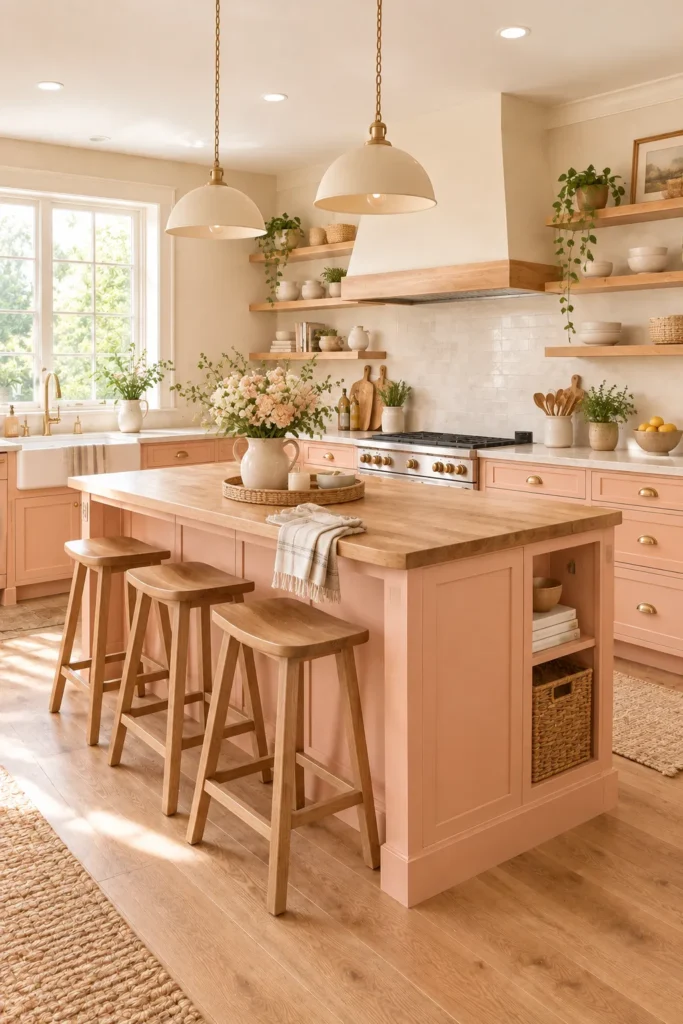
Peach and natural wood create a warm combination because both bring earthy, welcoming qualities to an interior. Light oak can make peach appear softer, while deeper walnut introduces more contrast and sophistication. The key is allowing the wood grain to remain visible instead of covering every surface with paint. A wooden island, shelves, or flooring can provide enough natural texture to balance peach cabinetry beautifully.
For a cohesive kitchen, repeat the wood tone in several places rather than using many unrelated finishes. For example, matching the island stools to the shelving can make the space feel more intentional. Cream walls and pale countertops provide breathing room between the warm materials. Keep accessories simple and useful, such as wooden cutting boards, ceramic bowls, woven baskets, and small plants. This approach creates a kitchen that feels warm and layered without appearing overly decorated.
14. Peach Marble Kitchen
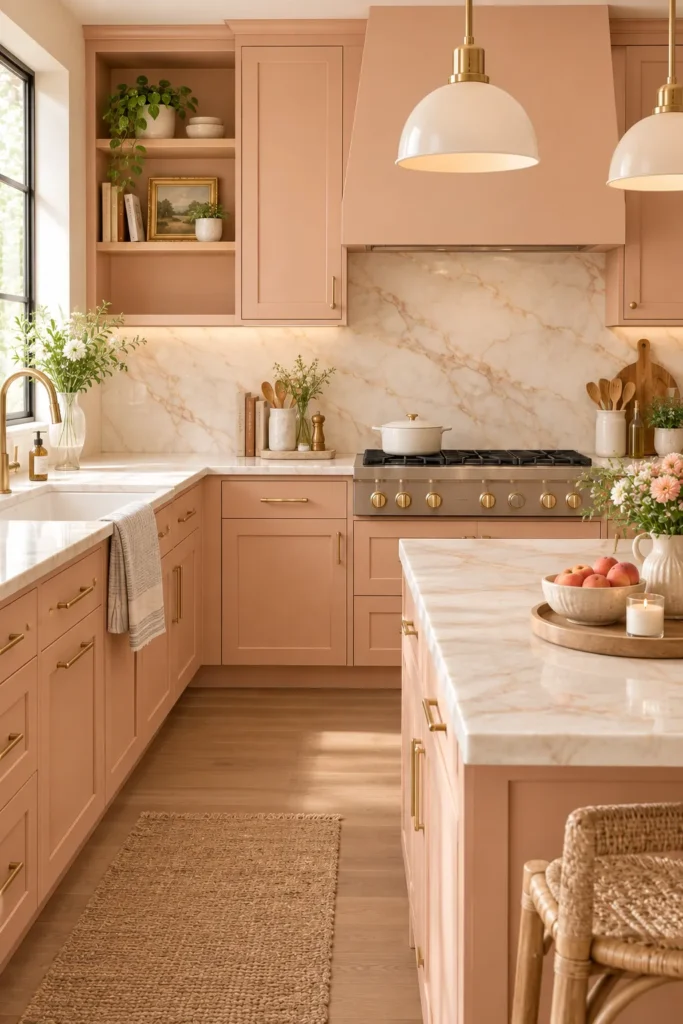
Marble can elevate a peach kitchen by introducing a sophisticated natural pattern. Instead of choosing a heavily contrasting stone, look for cream or warm-white marble with subtle veining. This creates a smooth transition between the peach cabinetry and countertop. The stone also adds a timeless quality that can prevent the color from feeling overly trendy. Brass hardware can reinforce the warm undertones while providing a small amount of refined shine.
Because both peach and marble can become visual focal points, keep the remaining accessories restrained. Choose neutral ceramics, simple glass containers, and natural wood pieces rather than introducing multiple strong colors. If the marble has noticeable veining, allow it to remain visible by keeping the backsplash relatively uncluttered. Soft lighting can further emphasize the warmth of the materials. This combination is especially effective for anyone who wants peach to feel elegant and elevated rather than playful.
15. Peach Cottage Kitchen
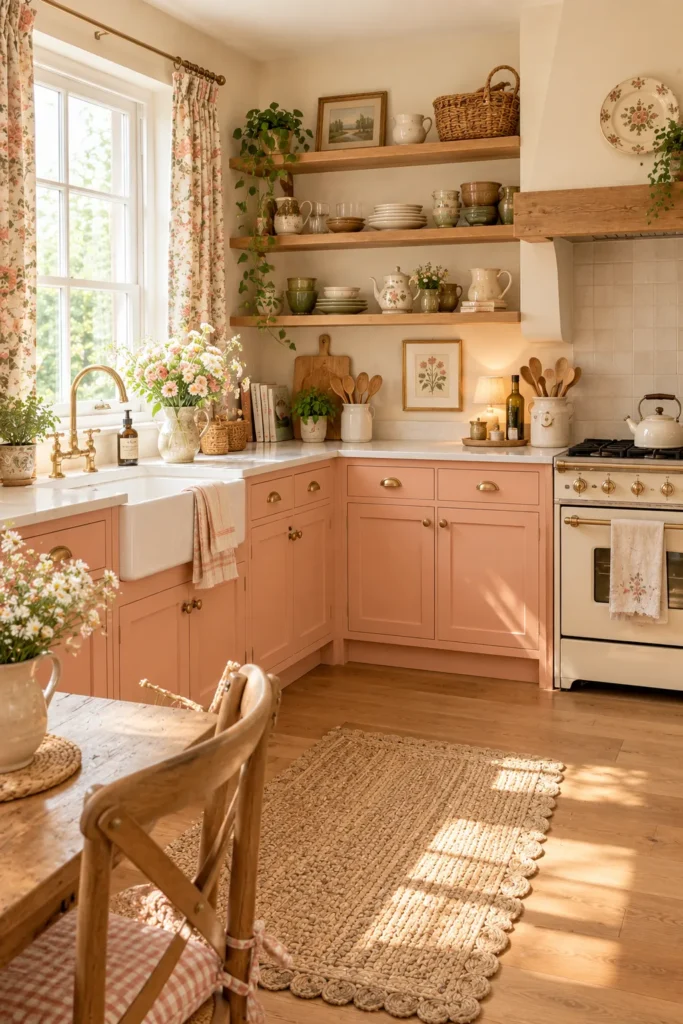
Peach is naturally suited to cottage kitchens because its soft warmth complements traditional materials and decorative details. A dusty shade works particularly well with painted wood, vintage-inspired fixtures, and floral textiles. Rather than making the room feel heavily themed, use peach as a foundation and let small cottage details provide the personality. Open shelving can display handmade ceramics, while a traditional range or farmhouse sink adds architectural interest.
Keep the palette grounded with warm cream, natural wood, and soft green accents. These colors work naturally with peach and help create a connection to the outdoors. Floral curtains can introduce pattern, but choose designs with plenty of neutral background so they do not overwhelm the room. Woven baskets and imperfect ceramics add a relaxed quality. The goal is to create a kitchen that feels collected over time rather than perfectly coordinated from a single shopping trip.
16. Peach Accent Wall
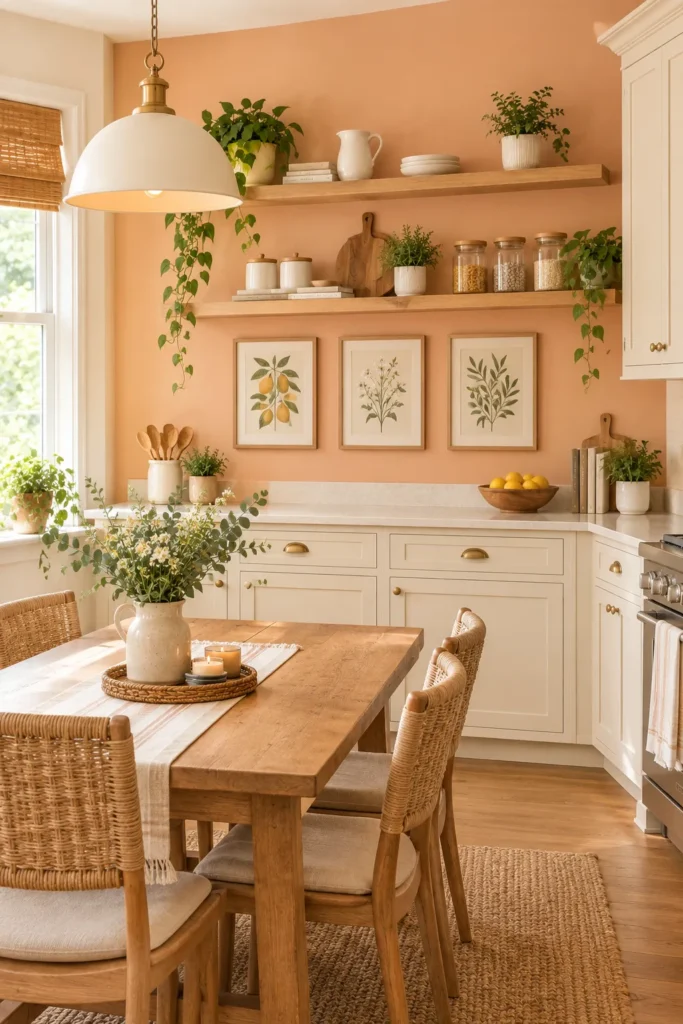
An accent wall can be a smart choice when you want to experiment with peach before committing to larger surfaces. Because the color is limited to one wall, it can create a strong visual anchor without changing the entire kitchen. A dining corner, breakfast area, or wall behind open shelving can be an ideal location. Choose a muted peach for a sophisticated appearance, especially if the kitchen already contains several warm finishes.
Artwork and furniture can help integrate the accent wall into the rest of the room. Botanical prints, natural wood frames, woven chairs, and greenery all complement peach naturally. Avoid filling the entire wall with decorative pieces; some open space allows the color itself to remain part of the design. If you eventually want to change the palette, repainting a single wall is also much easier than replacing cabinetry or tile.
17. Peach Appliances
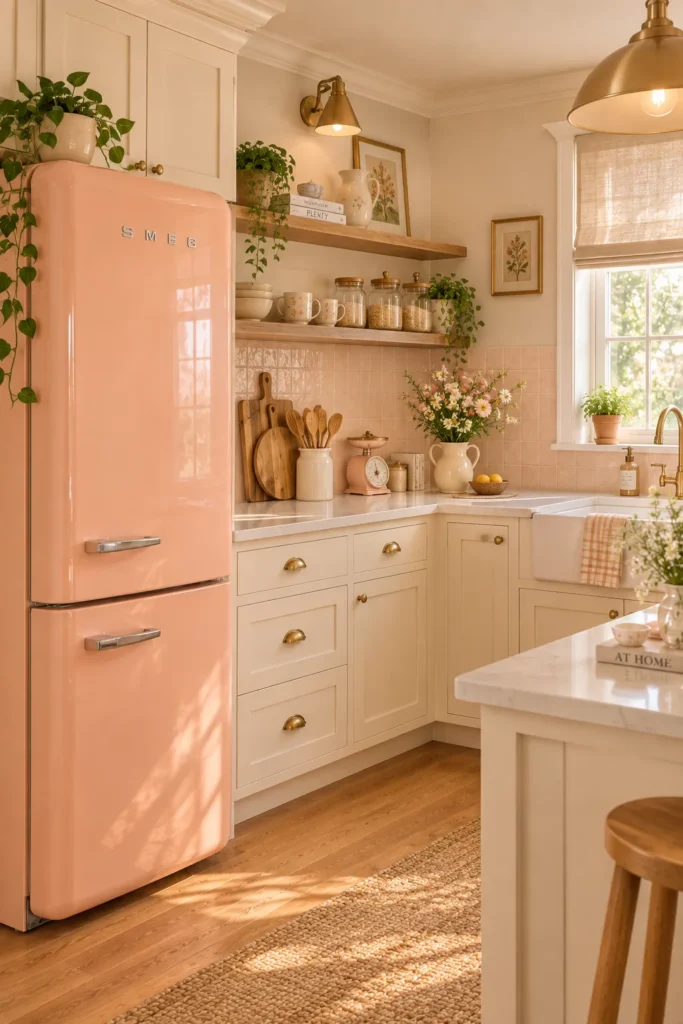
A peach appliance can become a memorable statement piece in a kitchen while allowing the permanent finishes to remain neutral. Retro-inspired refrigerators, mixers, or small countertop appliances can introduce the color in a playful but controlled way. This approach works especially well for homeowners who enjoy vintage styling but want the kitchen to remain modern. Cream cabinets and natural wood provide a calm background that lets the peach appliance stand out naturally.
If you choose one colorful appliance as your focal point, avoid introducing too many competing accent colors. Instead, repeat small amounts of peach through a vase, artwork, or kitchen textile. Vintage accessories can reinforce the character, but use them selectively so the room does not feel cluttered. The appliance should remain functional as well as decorative. This creates a kitchen that feels personal and expressive while still maintaining a polished, organized appearance.
18. Peach Kitchen Textiles
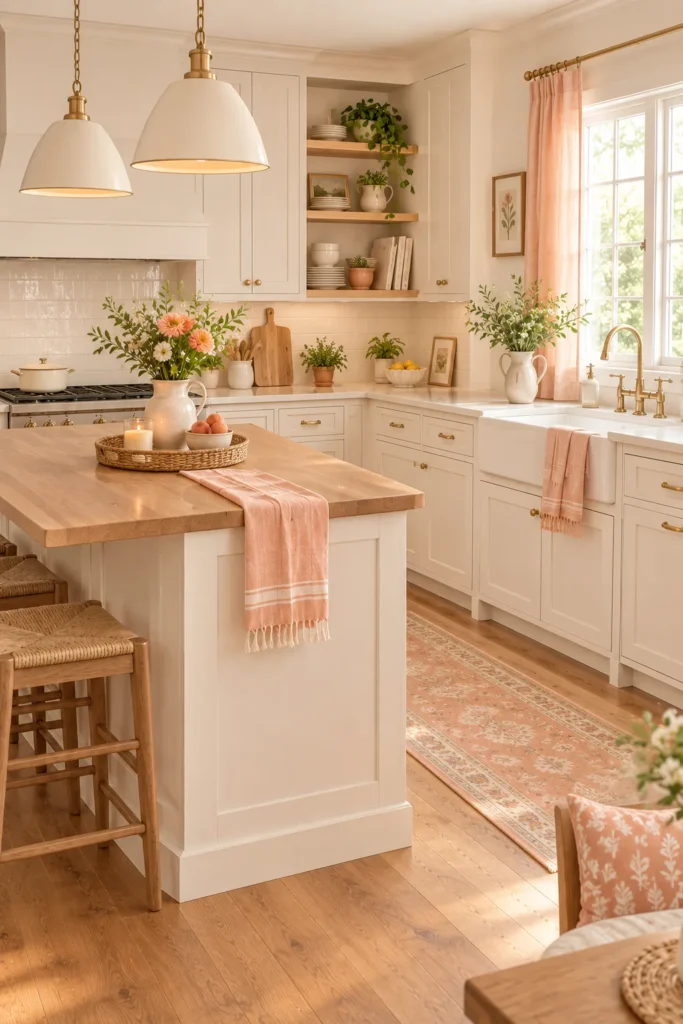
Textiles are one of the easiest ways to experiment with peach because they can be changed whenever your style evolves. A peach runner, tea towel, curtain, or seat cushion can immediately introduce warmth without requiring paint or renovation. Choose linen or cotton for a relaxed appearance, or patterned fabric if you want a stronger decorative statement. Keeping the permanent kitchen finishes neutral allows these smaller accents to become flexible seasonal features.
Try using different shades of peach instead of selecting one identical color for every textile. A pale peach curtain can work with a slightly deeper runner, while cream and natural beige provide visual breathing room. Small green plants can create a fresh contrast. This approach allows you to refresh the kitchen for spring or summer while easily switching accessories later. It is particularly useful for renters or anyone who wants to test a color before making a larger commitment.
19. Peach and Sage
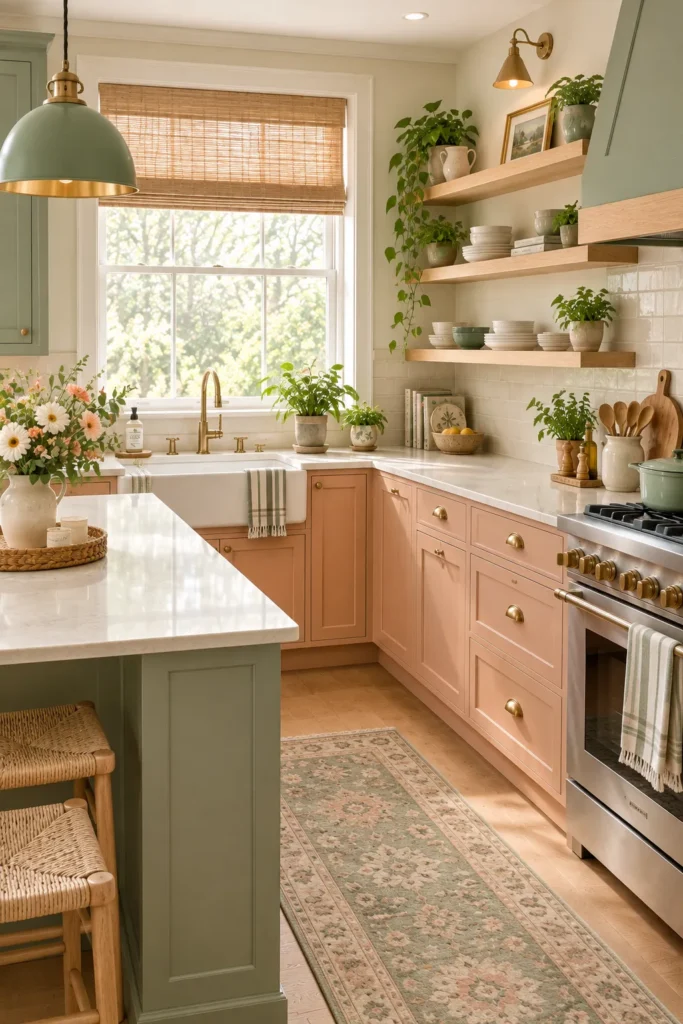
Peach and sage create an appealing balance between warmth and softness. Peach brings a gentle rosy-orange quality, while sage contributes an earthy green undertone. Together, they can create a kitchen that feels colorful without becoming overly bright. Use one shade as the primary color and the other as an accent. For example, peach cabinetry paired with sage textiles or plants can provide enough contrast while keeping the overall room harmonious.
Natural materials can strengthen this color combination. Light oak, woven baskets, stone countertops, and ceramic accessories all help connect the palette to organic textures. Brass hardware adds warmth, while cream walls provide a neutral transition between the colors. If you prefer a subtle look, use sage only through plants, cushions, or small accessories. For a stronger design, incorporate sage cabinetry on an island or a single wall while keeping peach as the dominant accent.
20. Peach Minimalist Kitchen
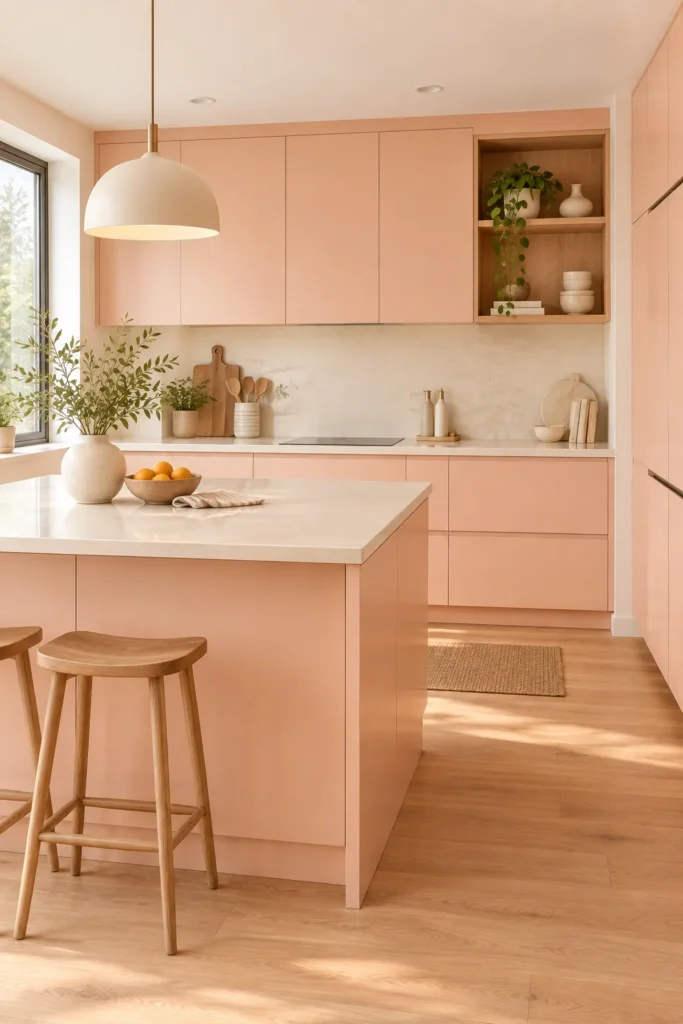
Minimalist kitchens can benefit from peach because the color adds warmth to an otherwise restrained environment. Instead of using multiple decorative elements, let the cabinetry provide most of the visual interest. Flat-front doors, simple hardware, and clean countertops create a modern foundation. A muted peach shade works particularly well because it feels warmer than beige while remaining soft enough for a minimalist setting.
The secret to maintaining a minimalist appearance is editing. Choose only a few accessories and give each one enough space to stand out. A sculptural pendant, ceramic vase, wooden bowl, or small plant may be all the decoration the room needs. Keep appliances visually organized and avoid unnecessary countertop clutter. The result is a kitchen that feels warm and lived-in without losing the simplicity that makes minimalist interiors appealing.
21. Peach Ceiling Detail
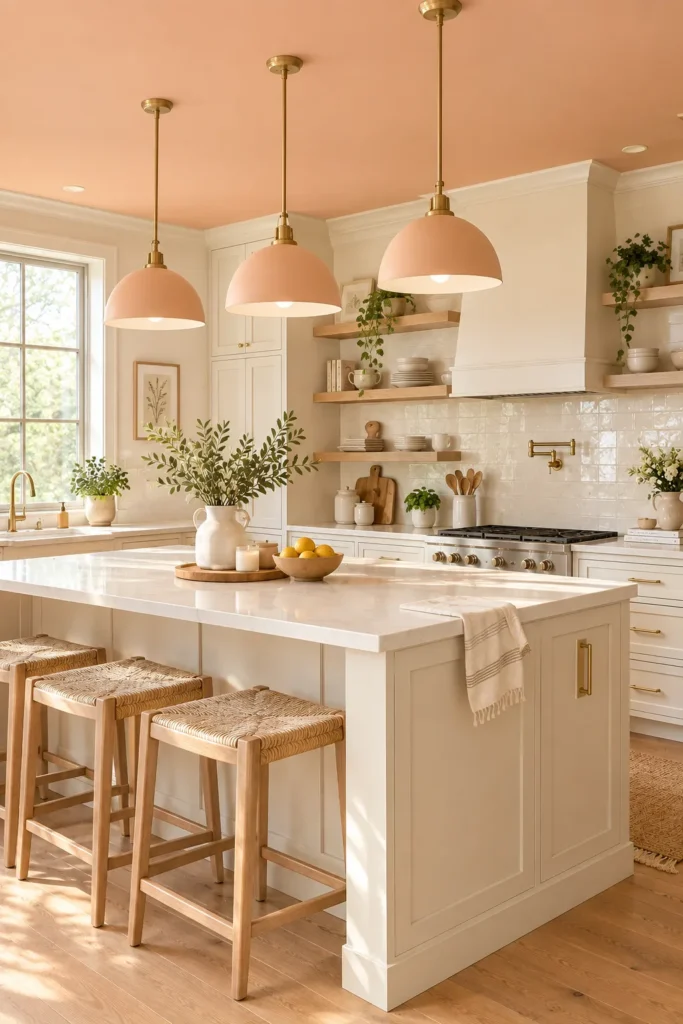
Painting the ceiling peach can create an unexpected design moment while keeping the walls and cabinetry neutral. A very soft shade works best because it adds warmth without making the ceiling feel visually heavy. This approach can be particularly effective in kitchens with tall ceilings or interesting architectural details. The peach overhead surface can also make the room feel more intimate by gently lowering the visual temperature of an otherwise bright space.
Because the ceiling already provides a distinctive feature, keep the rest of the palette simple. Warm white walls can create a clean transition, while natural wood flooring reinforces the peach undertones. Brass or bronze lighting fixtures can echo the warmth without matching the ceiling exactly. Use decorative accessories sparingly and allow the architectural detail to remain noticeable. This is a creative choice for homeowners who want a peach kitchen without committing to colorful cabinetry or walls.
22. Peach Floral Kitchen
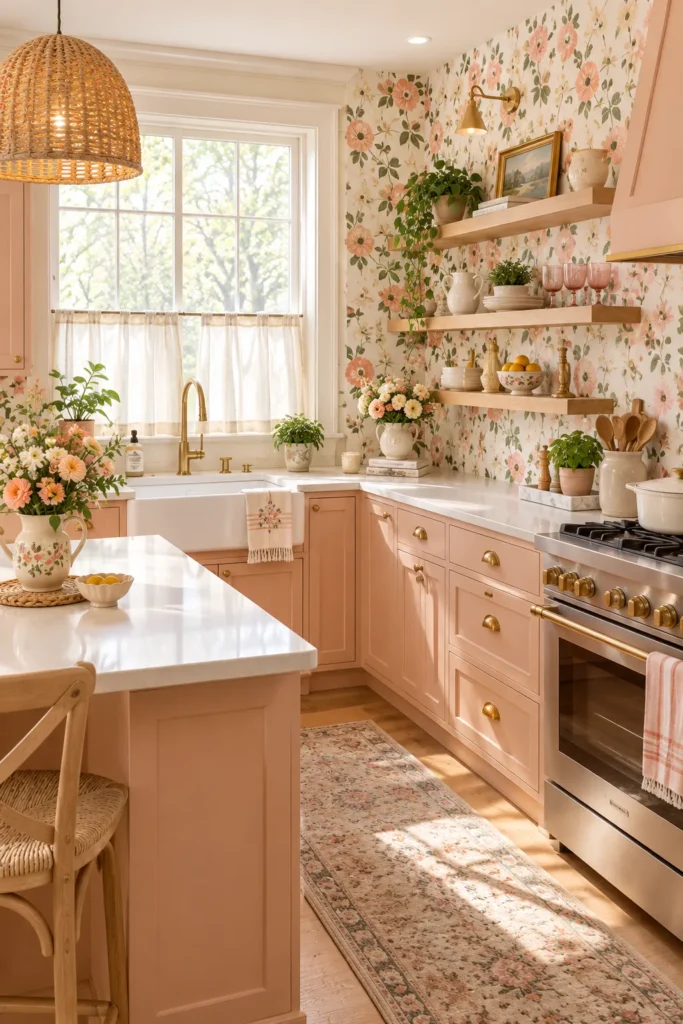
Floral patterns can make a peach kitchen feel especially welcoming and connected to nature. Instead of using a highly colorful wallpaper, select a design that includes peach, cream, and muted green. This allows the pattern to complement the cabinetry rather than compete with it. An accent wall behind open shelving or a dining area is often enough to introduce the floral detail without making the entire room feel busy.
Balance the pattern with solid-colored surfaces elsewhere. Simple cream countertops, plain peach cabinets, and natural wood shelves provide visual relief. Fresh flowers can reinforce the theme, but they do not need to exactly match the wallpaper. Choose everyday accessories such as ceramic pitchers and wooden bowls to keep the kitchen functional. This combination works especially well in cottage, farmhouse, and romantic traditional interiors where pattern and color are both welcome.
23. Peach Coastal Kitchen
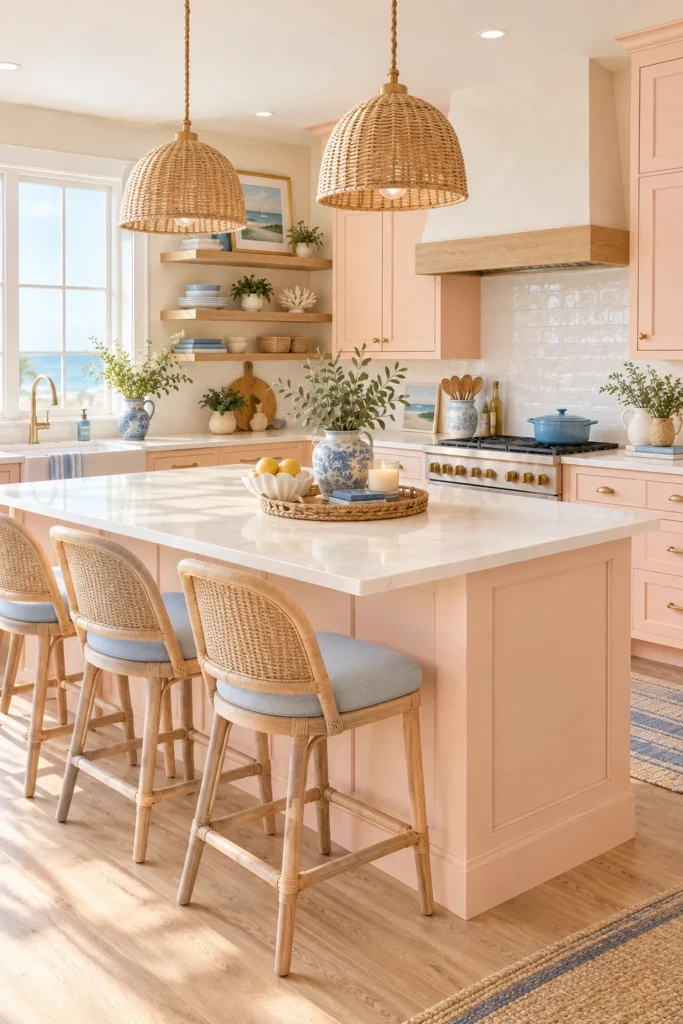
Peach can give a coastal kitchen a warmer alternative to the traditional blue-and-white palette. A pale peach shade introduces the feeling of sunlight while soft blue accents maintain a fresh coastal character. Keep the colors muted so the kitchen remains relaxed rather than overly colorful. Light wood, woven materials, and cream surfaces can strengthen the casual atmosphere and provide plenty of natural texture.
Coastal styling does not require obvious nautical decorations. Instead, focus on materials and colors that suggest a relaxed seaside environment. Woven pendant lights, simple ceramics, pale wood, linen textiles, and a few natural accessories can create the desired effect without becoming themed. Use blue sparingly as an accent through stools, towels, or artwork. This makes peach the unexpected focal color while preserving the airy character associated with coastal interiors.
24. Peach Modern Kitchen
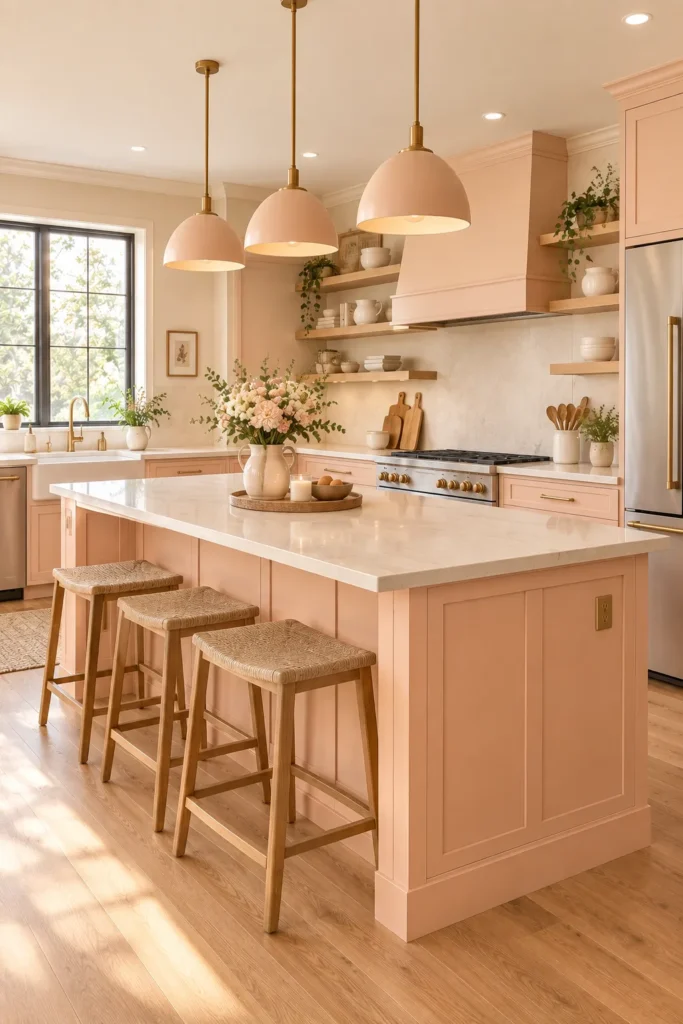
A modern kitchen can use peach successfully when the color is paired with clean lines and carefully selected finishes. Rather than choosing an intense shade, look for a muted peach that feels sophisticated and easy to live with. Flat-front cabinets, streamlined hardware, and simple countertops provide a contemporary foundation. Warm wood flooring can soften the sharper lines and make the space feel more comfortable.
The finishing touches should remain intentional and limited. Sculptural lighting can provide visual interest without adding clutter, while neutral ceramics and one or two plants bring softness. Brass hardware can add warmth, but matte black may work if you prefer stronger contrast. Keep the countertops mostly clear so the cabinetry and architecture remain visible. This final approach brings together the most versatile peach fuzz kitchen ideas into a modern space that feels warm, polished, and practical for everyday life.
Conclusion
Peach is a versatile choice for creating a kitchen that feels warm, welcoming, and full of personality. Whether you choose peach cabinetry, a colorful backsplash, soft textiles, or a single statement accent, the shade can work beautifully with cream, wood, brass, sage, and other natural finishes. The key is finding the right balance between color and neutral elements. With these peach fuzz kitchen ideas, you can create a stylish space that feels cozy today while remaining timeless enough to enjoy for years.