21 Easy Patio Ideas for a Beautiful Outdoor Space
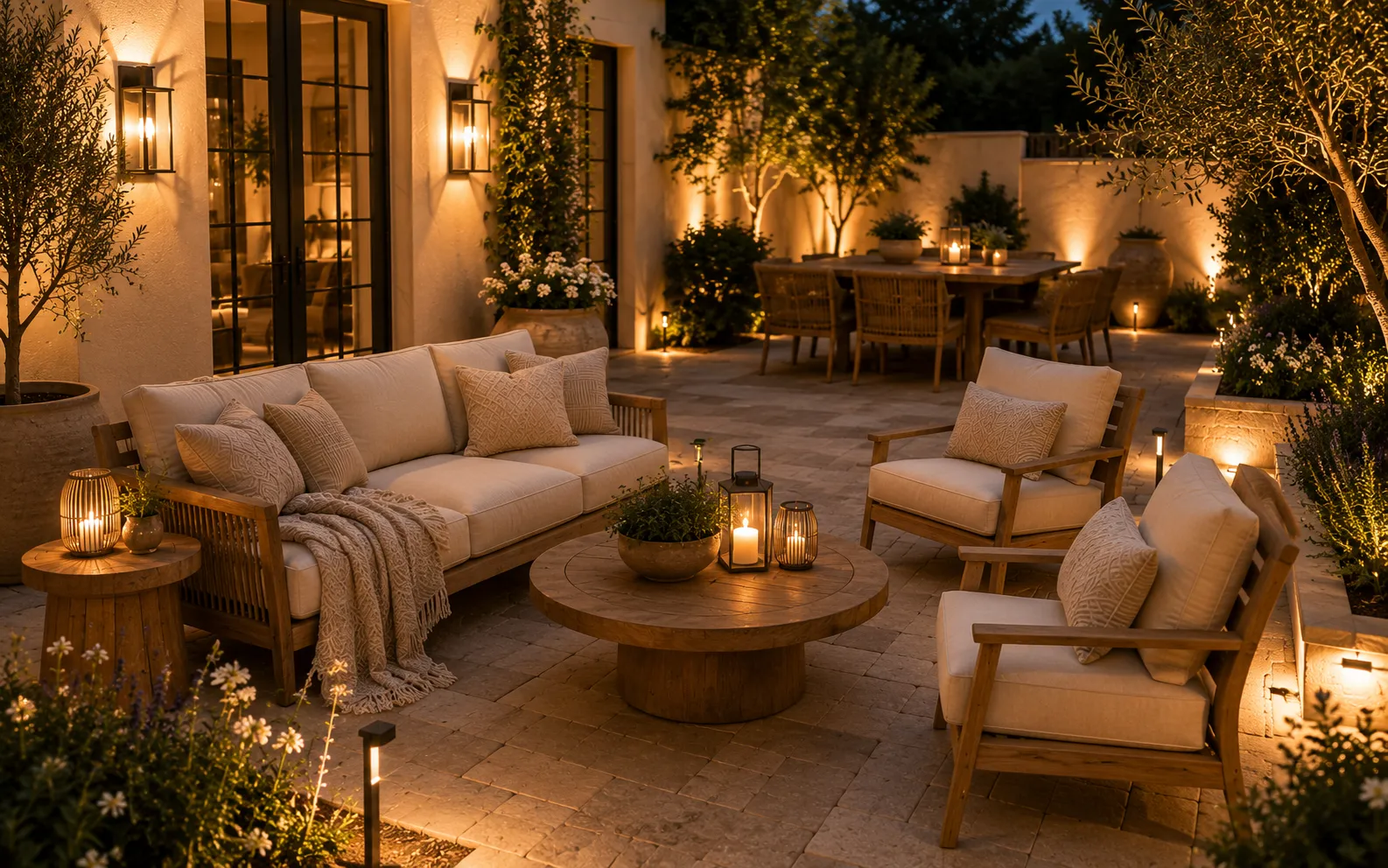
Your patio doesn’t need a big budget or a complete renovation to feel beautiful. Sometimes, one simple change is all it takes to make the space feel inviting.
These Easy Patio Ideas are designed to help you create an outdoor space that feels comfortable, stylish, and genuinely useful.
Whether you have a tiny balcony-style patio, a paved backyard corner, or a larger entertaining area, small upgrades can make a noticeable difference. Think cozy seating, warm lighting, layered planters, natural textures, and practical dining spaces. In my experience, the best outdoor spaces are not always the most expensive ones; they are the ones arranged around how people actually live. Explore these ideas for inspiration, then choose the details that fit your space, lifestyle, and budget.
1:Slim Bench Seating
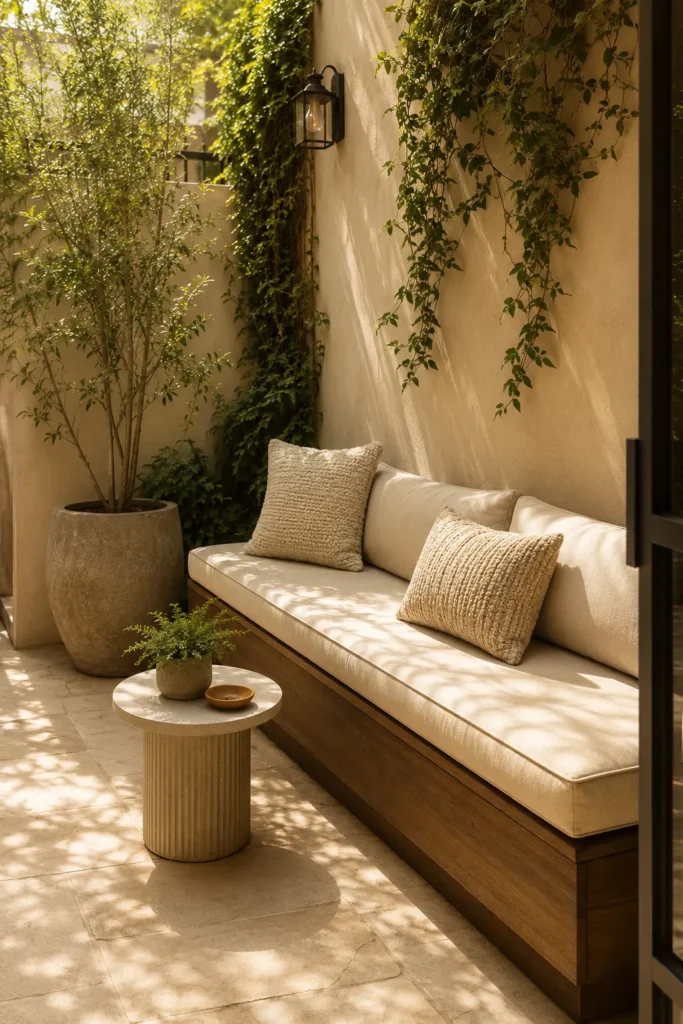
- Saves floor space while adding comfortable seating.
- Keeps narrow patios open and easy to move around.
- Storage beneath the bench can hide outdoor essentials.
- Soft cushions make hard surfaces feel more inviting.
Turn an unused patio corner into a practical retreat with a slim bench and a few carefully chosen cushions. A built-in or freestanding bench uses less floor space than several separate chairs while still providing comfortable seating. Choose weather-resistant upholstery in cream, taupe, or muted green for an easy outdoor palette. Add a small side table for drinks and books, then soften the wall behind it with climbing greenery or simple artwork. I’ve noticed that a bench works particularly well along narrow edges because it keeps the central walkway open and visually makes the patio feel wider.
This arrangement is especially useful when you want flexible seating without filling the entire patio with furniture. Look for benches with storage underneath if cushions, gardening tools, or outdoor accessories need a home. Keep decorative pillows limited to two or three so the area stays practical and easy to maintain. A textured outdoor rug can define the seating zone, while one tall planter adds vertical interest without taking much floor space. The result is a relaxed nook that feels finished, comfortable, and adaptable for morning coffee, quiet reading, or casual visits with friends.
2:Outdoor Area Rug
- Softens cold concrete, stone, or tile flooring.
- Visually defines the main seating area.
- Neutral patterns work with many outdoor styles.
- Weather-resistant materials make seasonal maintenance easier.
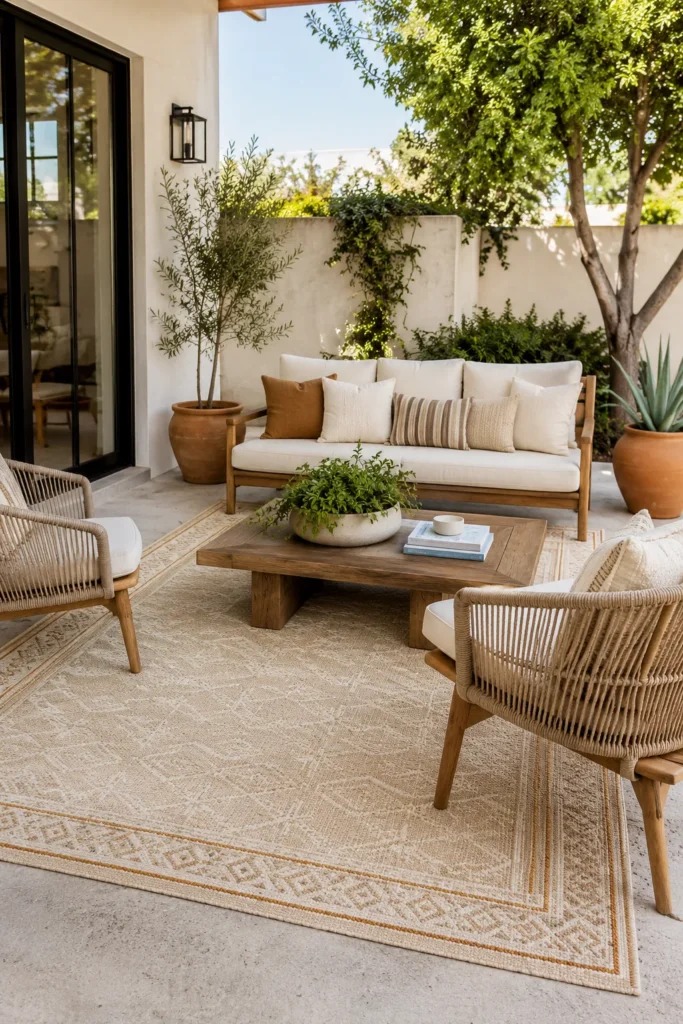
A soft outdoor rug can make a patio feel more like an extension of the home rather than a collection of hard surfaces. Choose a flat-weave, weather-resistant design in beige, ivory, gray, or another muted shade that complements the furniture. Place it beneath the main seating group so the front legs of chairs and sofas rest comfortably on the rug. This simple placement creates a stronger visual boundary while making the area feel warmer. I’ve noticed that rugs are especially effective on concrete patios because they immediately soften the space without requiring permanent changes.
When choosing an outdoor rug, prioritize materials that can handle sunlight, moisture, and regular foot traffic. A subtle geometric pattern can hide everyday marks, while a solid neutral design creates a calmer backdrop for colorful cushions and plants. Make sure the rug is large enough to connect the seating pieces instead of sitting like a small mat underneath the table. Leave enough room around its edges for easy movement. For smaller patios, a rectangular rug can visually lengthen the layout. The finished space feels layered, organized, and more comfortable while remaining simple to refresh each season.
3:Cozy Fire Pit
- Creates a natural gathering point outdoors.
- Extends patio use into cooler evenings.
- Circular seating encourages easy conversation.
- Stone and woven textures add warmth and contrast.
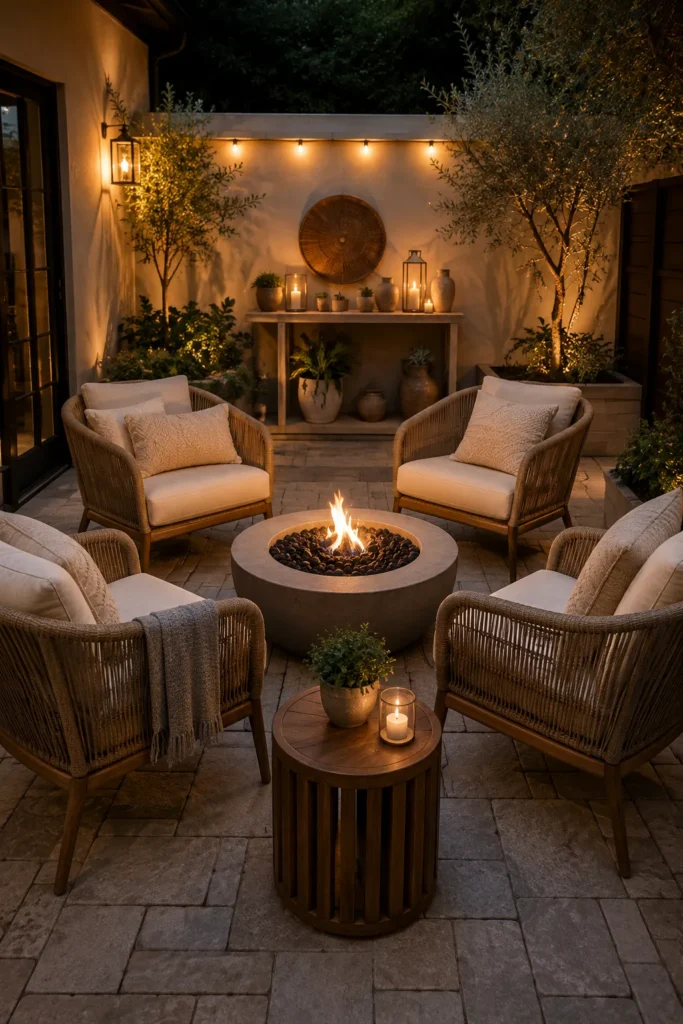
A simple fire pit can turn an ordinary patio into a natural gathering spot, giving the space a clear purpose after sunset. Choose a compact model that fits comfortably within the available floor area, then arrange weather-resistant chairs around it with enough room for safe movement. Stone pavers, woven seating, and neutral cushions create a balanced backdrop for the warm glow of the flames. Keep the surrounding decor simple so the fire remains the visual focal point. For patios used regularly at night, this addition can make outdoor seating feel considerably more useful.
Safety should guide the placement as much as style when adding a fire feature to a patio. Keep the pit on a stable, noncombustible surface and follow the manufacturer’s clearance requirements for furniture, walls, plants, and overhead structures. Arrange chairs far enough away to leave comfortable circulation around the center. A small side table beside each chair gives guests a practical place for drinks without crowding the main area. When paired with soft outdoor lighting and a few plants, the setup feels warm and inviting while remaining organized and functional for relaxed evenings.
4:Vertical Herb Garden
- Uses vertical space instead of valuable floor area.
- Adds fresh greenery and useful herbs.
- Wooden planters introduce natural warmth.
- Makes a blank exterior wall more functional.
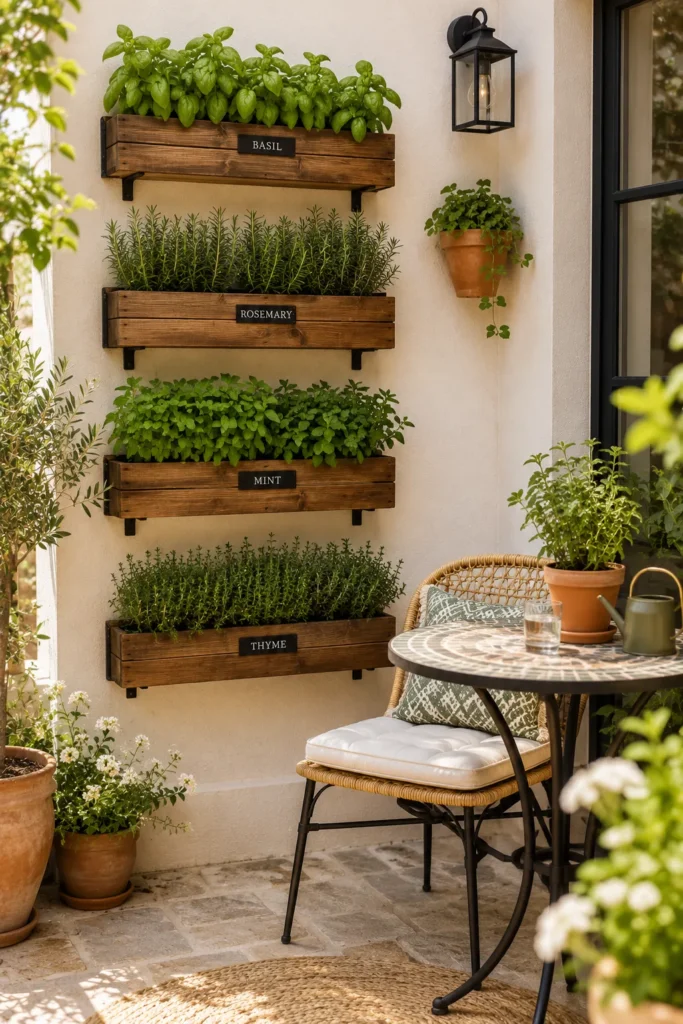
A blank patio wall can become useful growing space with a simple vertical herb garden. Mount narrow wooden planters or tiered containers where they receive suitable sunlight, then fill them with easy herbs such as basil, mint, rosemary, and thyme. This approach keeps greenery organized while leaving the floor open for furniture. In my experience, grouping herbs together also makes everyday maintenance easier because watering and harvesting happen in one convenient spot. Choose containers with proper drainage and position them at a comfortable height so trimming and picking fresh leaves never becomes a chore.
Beyond its practical purpose, a vertical garden adds texture and life to an otherwise plain patio surface. Natural wood planters pair beautifully with stone, concrete, brick, and neutral outdoor furniture. If your wall receives strong afternoon sun, select herbs that tolerate those conditions and monitor moisture more closely during hot weather. Add simple labels if you want a more organized look, or let the plants create a relaxed cottage-style effect. The result is a fresh, useful feature that brings garden character into smaller outdoor areas without sacrificing valuable seating or walking space.
5:Bistro Dining Set
- Creates a dedicated spot for outdoor meals.
- Fits comfortably into small patio layouts.
- A round table improves movement around tight spaces.
- Lightweight furniture is easy to reposition.
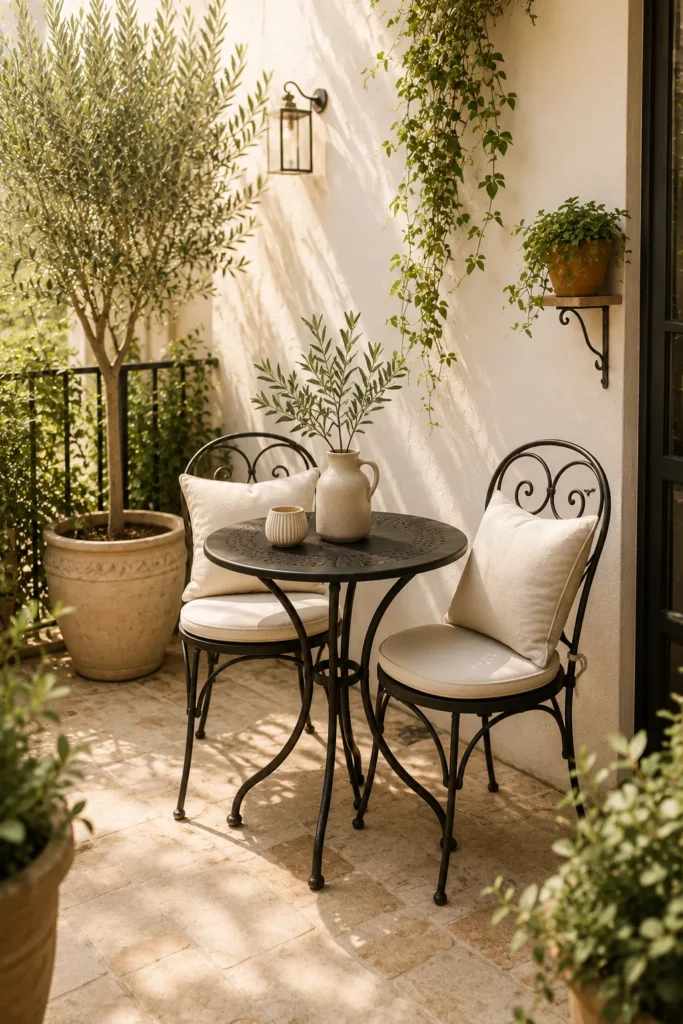
Give a compact patio an instant dining purpose with a small bistro table and two comfortable chairs. A round table is especially useful in tight spaces because its curved edges make movement easier and avoid sharp corners along narrow pathways. Choose powder-coated metal, treated wood, or another weather-resistant material that suits your home’s exterior. Add simple cushions and one small centerpiece rather than filling the tabletop with accessories. Easy patio ideas like this work because they introduce function without demanding much space, making the area useful for breakfast, coffee, casual lunches, or evening drinks.
Keep the surrounding layout open so the bistro set feels like a deliberate feature rather than furniture squeezed into a corner. A small planter beside the table can provide greenery without competing with the dining surface. If the patio receives strong sunlight, consider a compact umbrella or nearby shade solution for daytime comfort. Choose colors that connect with existing exterior finishes, such as black with white, natural wood with beige, or muted green with stone. This creates a cohesive look while keeping the setup simple enough to move or refresh when needed.
6:Natural Wood Accents
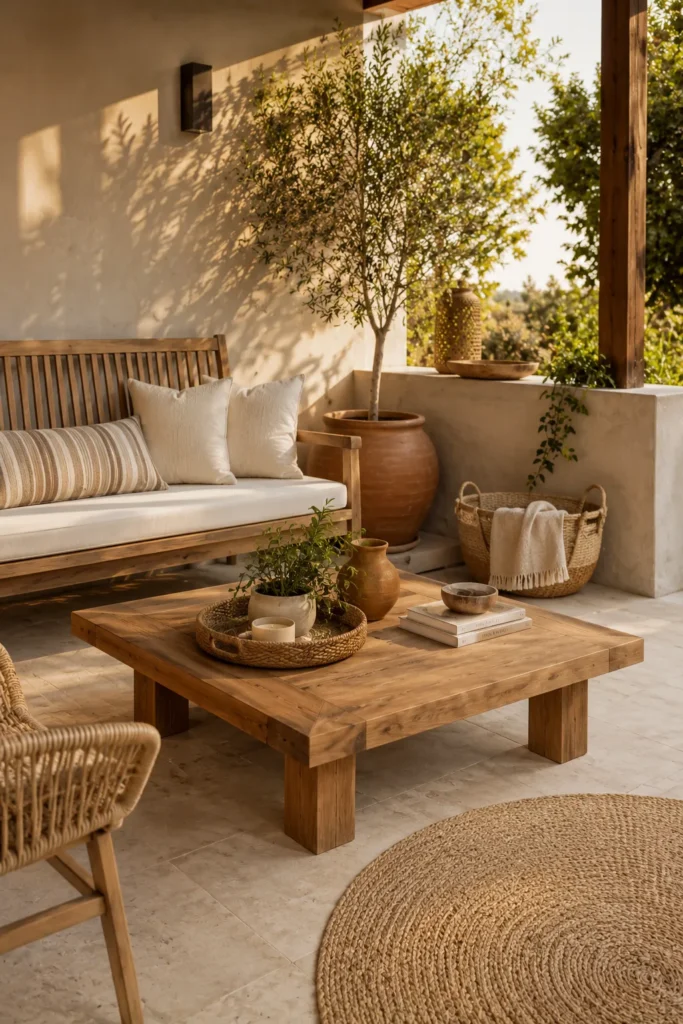
- Warms up patios dominated by concrete or stone.
- Adds natural texture without excessive decoration.
- Teak and treated wood suit outdoor settings.
- Repeating wood tones creates visual connection.
Natural wood can soften the appearance of a patio filled with concrete, tile, or metal surfaces. Introduce it through a coffee table, bench, planter stands, serving tray, or simple decorative accessories rather than replacing every piece of furniture. Warm teak, acacia, or treated timber brings visible grain and an organic texture that works beautifully with cream cushions and leafy plants. I’ve noticed that repeating one wood tone across several small elements creates more cohesion than using many unrelated finishes. The result feels relaxed and polished without looking overly styled or expensive.
Wood accents also make it easier to connect the patio visually with surrounding garden areas or interior rooms. If the patio sits beside large glass doors, matching warm timber tones can create a smoother transition between indoor and outdoor spaces. Choose finishes designed for exterior conditions, and follow care instructions to protect the material from moisture and prolonged sunlight. Keep the palette restrained by pairing wood with two or three complementary shades. A combination of natural timber, soft neutrals, and greenery creates a timeless foundation that can adapt as furniture and accessories change.
7:Cushioned Lounge Chairs
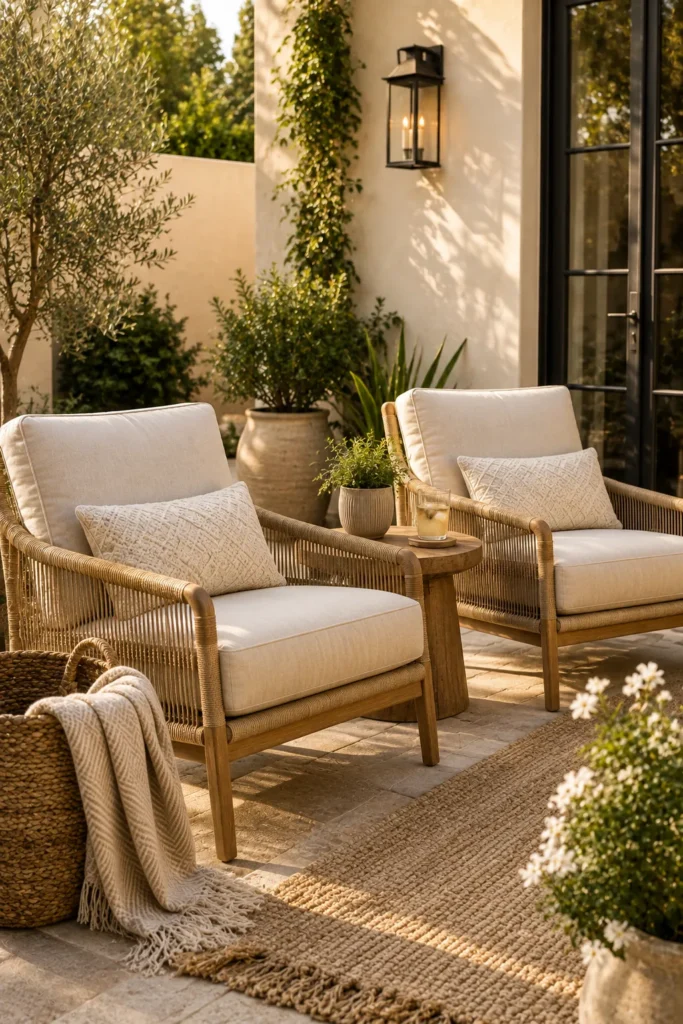
- Creates a comfortable spot for quiet relaxation.
- Individual chairs allow flexible furniture placement.
- Deep cushions add softness to hard outdoor surfaces.
- A small table keeps essentials within easy reach.
Few furniture changes can make a patio feel as comfortable as adding two well-cushioned lounge chairs. Position them slightly angled toward each other with a small table between them, creating an easy setup for reading, coffee, or conversation. Choose durable outdoor upholstery in beige, cream, taupe, or muted green to keep the look calm and versatile. Add one lightweight throw for cooler evenings, but avoid too many accessories. I’ve noticed that chairs with slightly raised backs often feel more comfortable for longer periods while still keeping the patio visually light.
Think about how the chairs will be used before choosing their size and placement. If the patio is narrow, select streamlined frames with cushions that do not extend too far into the walking area. If space allows, a small footstool can provide extra comfort without committing to a bulky sofa. Position the chairs where they can take advantage of garden views or natural shade. Weather-resistant fabrics will also make everyday care easier. The finished arrangement creates a welcoming personal retreat while keeping enough open floor space for movement and other patio activities.
8:Potted Olive Tree
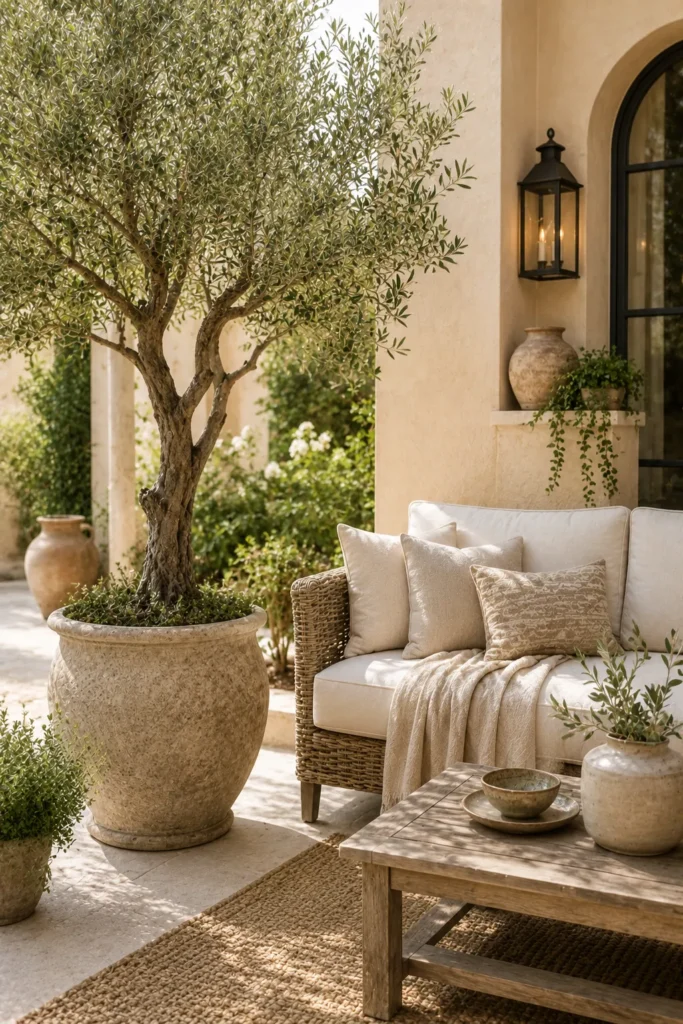
- Adds height and sculptural greenery.
- Works beautifully with Mediterranean-inspired patios.
- A large planter creates a strong focal point.
- Helps soften plain walls and hard flooring.
A single potted olive tree can give a simple patio an instantly elevated, garden-inspired appearance. Place it in a large stone, terracotta, or textured ceramic planter near a seating area, doorway, or empty corner. The silvery foliage provides soft contrast against warm walls and neutral furniture without introducing overwhelming color. Choose a container large enough to support the tree comfortably and ensure proper drainage. For patios with suitable growing conditions, this approach creates a strong focal point while keeping the rest of the styling minimal, making it one of the easiest ways to add character.
The beauty of a potted tree is that it adds vertical interest without requiring a permanent planting bed. Position the container where the foliage can frame a seating area or soften an architectural edge. Pair it with smaller herbs or low planters if you want a layered garden effect, but leave enough visual space around the tree for its shape to stand out. Mediterranean materials such as limestone, terracotta, woven fibers, and natural wood complement the foliage particularly well. With thoughtful placement, one statement plant can make a compact patio feel greener, calmer, and more complete.
9:Foldable Furniture
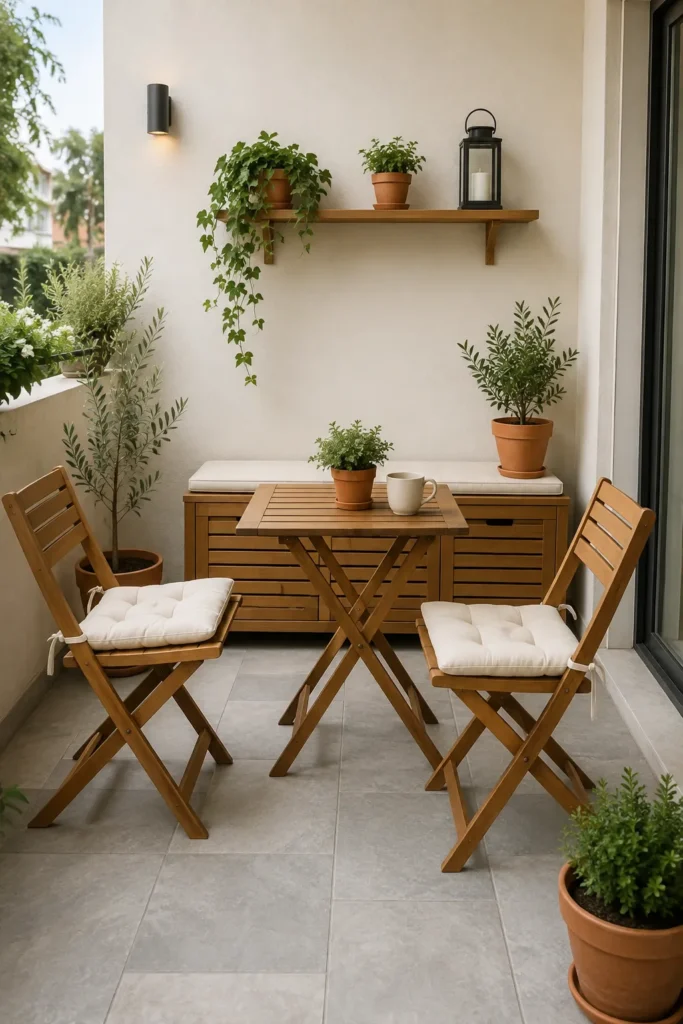
- Makes small patios easier to adapt.
- Furniture can be stored when extra floor space is needed.
- Lightweight pieces simplify seasonal rearranging.
- Folding designs work well for renters and flexible spaces.
Small patios benefit from furniture that can change with the way you use the space. Foldable chairs and a compact folding table provide comfortable seating when needed, then can be moved against a wall when the patio needs to accommodate guests, gardening, or other activities. Choose sturdy outdoor materials such as treated wood or powder-coated metal and add removable cushions for comfort. Easy patio ideas based on flexible furniture are especially useful for renters or households where the outdoor area serves several purposes throughout the week.
The key is to create a simple storage routine so folding furniture remains convenient rather than becoming another task. Keep a slim storage bench, weatherproof cabinet, or protected wall area nearby where chairs can be placed when not in use. Select pieces that are easy for one person to move and avoid designs that require complicated assembly. A consistent neutral palette will also help the patio look finished whether the furniture is open or stored. This approach gives you more control over a small outdoor area while keeping the overall design practical, clean, and adaptable.
10:Gravel Patio Border
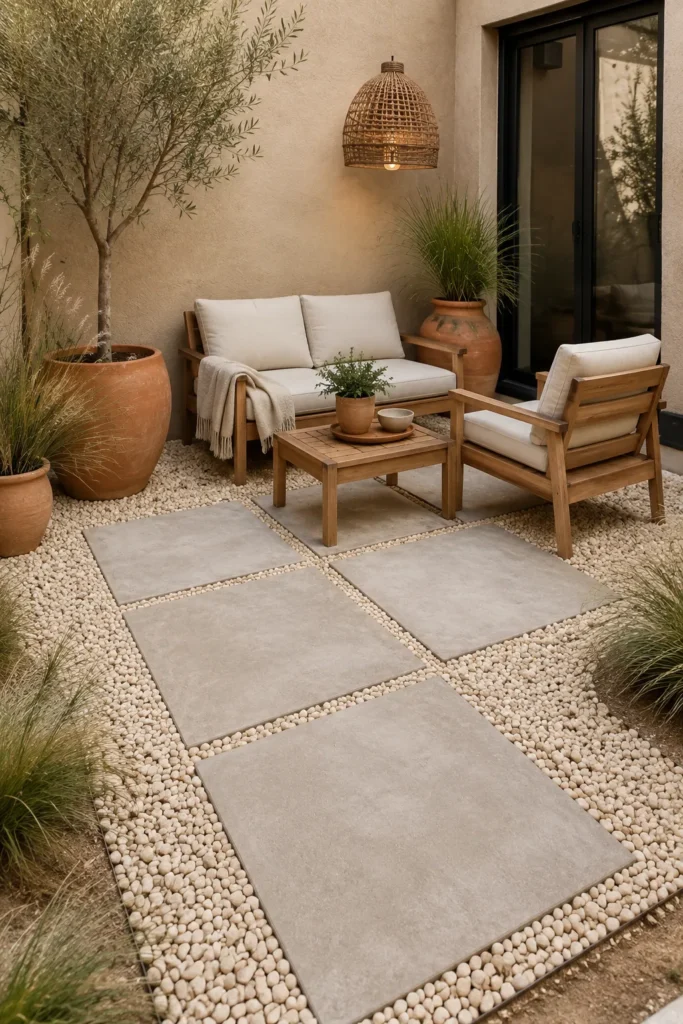
- Defines the patio without expensive construction.
- Creates a softer transition between paving and garden areas.
- Gravel adds texture around otherwise smooth surfaces.
- Helps separate seating zones from surrounding landscaping.
A gravel border can make a basic paved patio look more intentional while creating a clean transition into the garden. Surround concrete, stone, or porcelain pavers with a narrow band of light gravel in beige, cream, or soft gray. The contrast helps define the patio edges without adding complicated structures or permanent landscaping. Choose stones that complement the existing paving rather than competing with it. In my experience, even a modest gravel strip can make a small outdoor area look more finished because it visually separates the seating surface from nearby soil, grass, or planting beds.
For a practical result, use a suitable landscape fabric underneath the gravel where appropriate and create a clear edge to help keep stones contained. A metal, stone, or timber border can provide a crisp finish while making maintenance easier. Keep the gravel depth consistent and avoid placing loose stones directly along frequently used walking paths. Add a few larger planters or ornamental grasses nearby to soften the transition. This simple detail gives the patio more definition and texture while keeping the overall design natural, low-maintenance, and easy to adapt over time.
11:Built-In Planter Bench
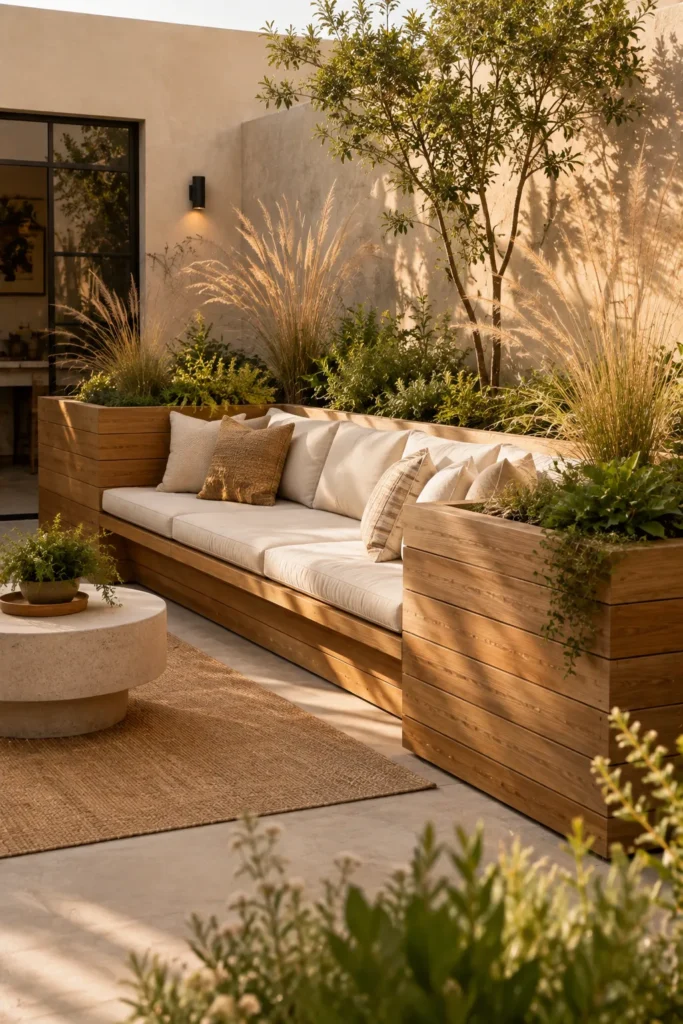
- Combines seating and planting in one structure.
- Saves floor space in compact outdoor areas.
- Adds greenery without scattered containers.
- Creates a polished built-in appearance.
Combine seating and greenery with a built-in bench that connects directly to raised planters. This arrangement creates a strong visual structure along one patio edge while keeping the center open for movement. Use treated timber, composite materials, or another exterior-rated finish for the bench, then fill adjacent planters with ornamental grasses, herbs, or leafy plants. Add thick outdoor cushions in cream or beige to make the seating comfortable. I’ve seen this work especially well on compact patios because one integrated feature can provide seating, planting space, and architectural definition without requiring several separate pieces.
When planning a built-in arrangement, think carefully about drainage, plant size, and access before construction begins. Planters should have appropriate drainage so water does not collect against the seating structure or patio surface. Choose plants that suit the available sunlight and mature to a manageable size. Keep the bench deep enough for comfortable sitting but avoid making it unnecessarily bulky. Repeating the same material across the bench and planters creates a custom look, while soft cushions and greenery prevent the structure from feeling too rigid. The finished patio feels organized, functional, and thoughtfully designed.
12:Simple Shade Canopy
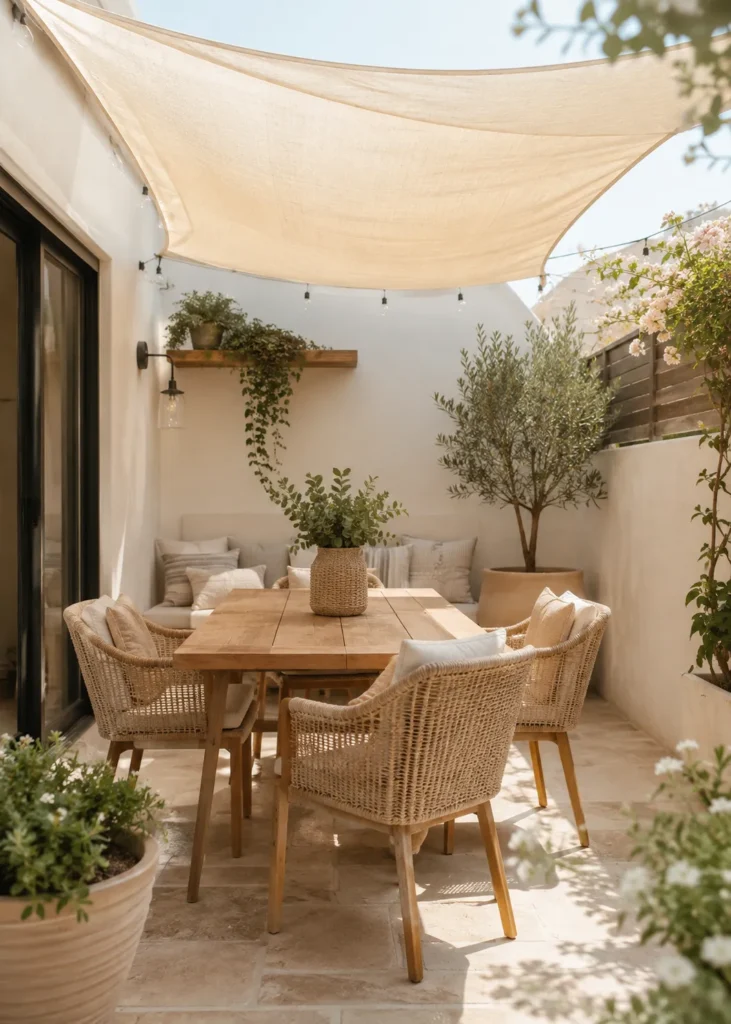
- Provides relief from strong daytime sunlight.
- Makes outdoor dining more comfortable.
- Fabric introduces softness and movement.
- A neutral canopy blends easily with existing decor.
A lightweight shade canopy can make a sunny patio much more comfortable without adding a heavy permanent structure. Stretch a neutral fabric canopy above a dining or seating area, using cream, beige, or soft gray to keep the space bright and airy. The filtered light creates gentle shadows while protecting the main seating zone from harsh midday sun. Choose an outdoor-rated fabric designed for the local conditions and secure it properly according to the manufacturer’s instructions. For smaller patios, a simple canopy can provide the practical benefit of shade while also creating a defined outdoor room.
Placement matters because the canopy should provide useful coverage without making the patio feel enclosed. Position it above the area where people actually sit rather than covering the entire surface. Keep the edges visually clean and coordinate the fabric with cushions, rugs, or other neutral elements. If your patio receives changing sunlight throughout the day, consider an adjustable shade solution that can be repositioned. Pairing filtered shade with natural wood, woven furniture, and greenery creates a relaxed setting that feels cooler, softer, and more comfortable during warm afternoons.
13:Terracotta Accents
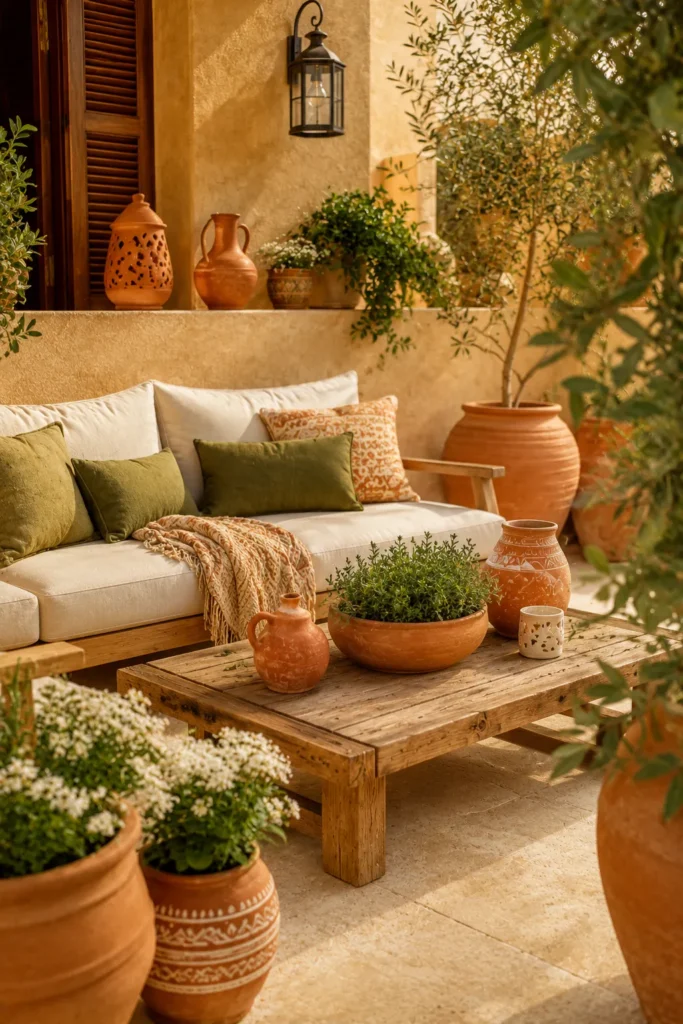
- Adds warmth to neutral outdoor spaces.
- Terracotta creates an earthy Mediterranean feel.
- Small accessories can introduce color without overwhelming.
- Clay textures pair beautifully with wood and greenery.
Warm terracotta accents can give a neutral patio more personality without requiring a complete design change. Introduce the color through planters, ceramic bowls, candle holders, or small decorative pieces rather than covering the entire space in orange tones. The earthy shade works especially well with cream, beige, olive green, natural wood, and pale stone. Place larger terracotta pots near seating corners and use smaller pieces on tables for balance. I’ve noticed that repeating one warm accent color across several areas makes a patio feel coordinated while still keeping the overall look relaxed and natural.
Terracotta is also practical because its textured surface adds visual interest even when the surrounding palette remains simple. Use larger containers to frame entrances or seating areas, then repeat the same finish with one or two smaller accessories. If you live in a colder climate, check whether your chosen pots are suitable for outdoor temperatures and seasonal weather. Keep drainage clear and avoid overcrowding the patio with containers. Combined with leafy plants and natural materials, these warm accents create an inviting outdoor setting that feels established, earthy, and effortlessly styled.
14:Privacy Plant Screen
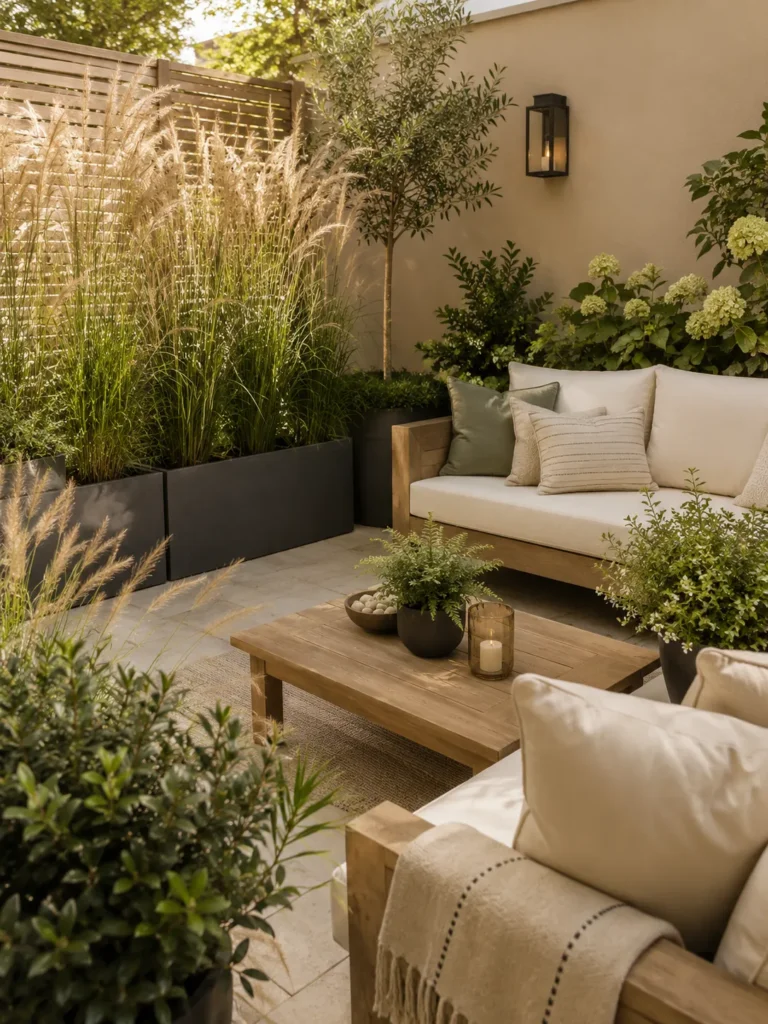
- Creates privacy without making the patio feel enclosed.
- Tall plants soften views of neighboring spaces.
- Slim planters work well along narrow edges.
- Layered greenery adds height and natural texture.
A patio can feel much more comfortable when tall plants create a soft visual screen around the seating area. Use narrow planters filled with ornamental grasses, bamboo varieties suited to your climate, or other suitable screening plants to create separation without building a solid wall. Place the tallest greenery toward the outside edge and shorter plants closer to the seating zone for a layered effect. This approach works especially well when nearby homes, fences, or walkways make the patio feel exposed. The result adds privacy while keeping natural light and airflow moving through the space.
Choose plants according to your climate, available sunlight, mature size, and maintenance needs rather than selecting them based on appearance alone. Container screens are useful because their placement can be adjusted as your needs change, although large planters become heavy once filled. Keep enough distance between plants and walls for airflow and maintenance access. Pair the greenery with neutral furniture and natural materials so the screen becomes part of the overall design. With thoughtful spacing, a living privacy barrier can make an ordinary patio feel calmer, more secluded, and connected to nature.
15:Outdoor Coffee Station
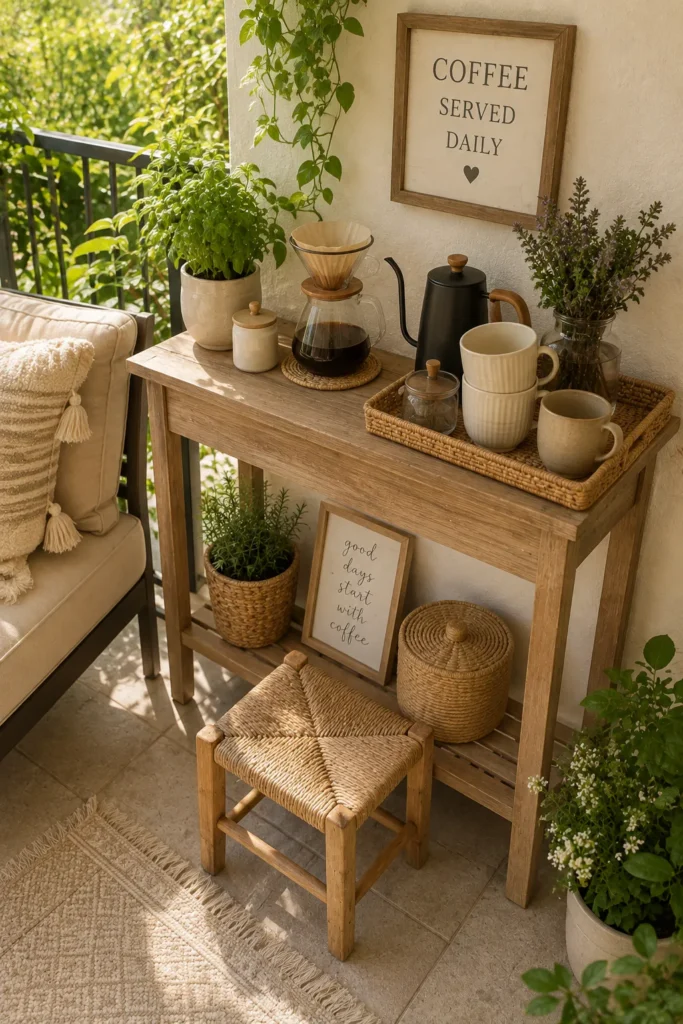
- Gives a small patio a useful everyday purpose.
- Keeps drinks and serving pieces within easy reach.
- A narrow console saves valuable floor space.
- Decorative ceramics add personality without clutter.
Create a convenient outdoor coffee station with a slim console or compact serving cart placed near the patio door. Use the surface for a tray, mugs, coffee accessories, and a small vase of greenery while keeping the rest of the counter clear. A narrow piece of furniture works best because it provides useful storage without taking over the seating area. Easy patio ideas that support everyday routines often become the spaces people use most. I’ve noticed that placing the station close to the kitchen entrance makes morning coffee feel effortless while keeping indoor and outdoor living naturally connected.
Choose weather-resistant furniture if the station will remain outside, and store sensitive coffee equipment indoors when conditions are unsuitable. Lidded baskets can hold napkins or outdoor utensils, while a small tray keeps loose items organized and easy to carry. Add one or two ceramic pieces in a color already used elsewhere on the patio for visual continuity. Keep the styling intentionally simple so cleaning remains quick. With a practical surface, a little storage, and thoughtful placement, even a compact patio can become a charming extension of your morning routine.
16:Hanging Egg Chair
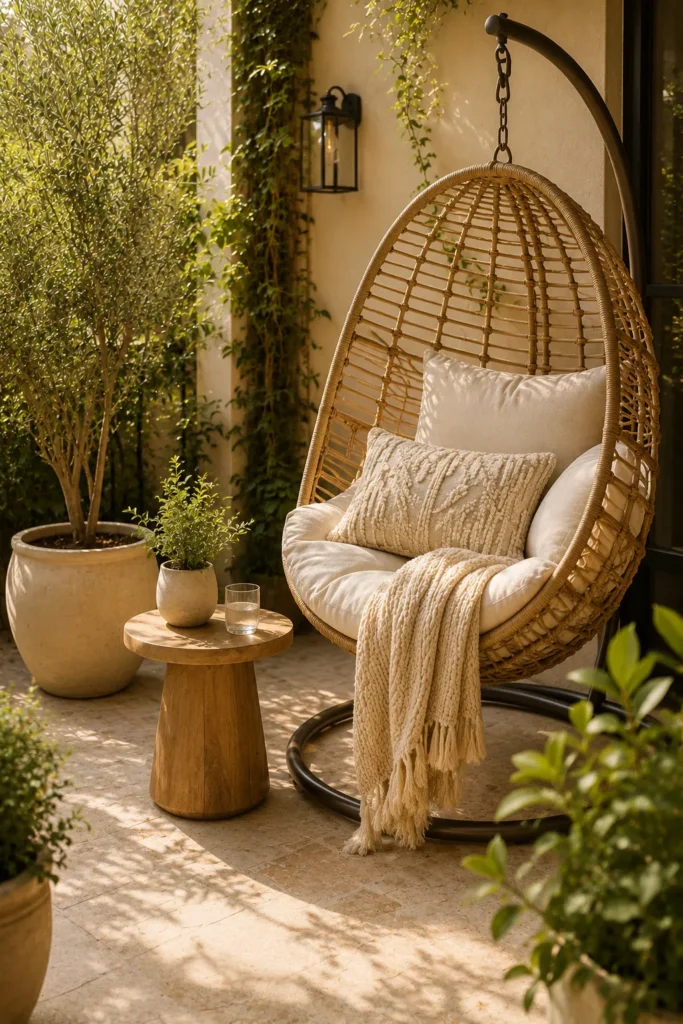
- Creates a relaxing focal point without bulky furniture.
- Vertical hanging design uses space efficiently.
- Soft cushions make the chair comfortable for longer lounging.
- Natural woven texture adds warmth and visual interest.
A hanging egg chair can turn an unused patio corner into a comfortable personal retreat with surprisingly little furniture. Choose a weather-resistant woven chair with a sturdy frame, then layer it with a supportive cushion and one lightweight throw. Position the chair where it has enough clearance to move safely without hitting walls, furniture, or plants. The rounded silhouette naturally draws attention, making it a useful focal point for otherwise empty spaces. I’ve noticed that pairing one statement chair with simple surrounding decor keeps a small patio feeling open rather than visually crowded.
Comfort and placement should come before decoration when choosing a hanging chair. Check the manufacturer’s weight limits, installation requirements, and recommended clearances, especially if the chair is suspended from an existing structure. Keep a small side table nearby for drinks, books, or sunglasses without filling the floor around it. Neutral cushions allow the woven texture to remain the star, while a leafy plant can soften the surrounding corner. This setup works beautifully for reading, relaxing, or enjoying a quiet morning outdoors, giving a simple patio a distinct purpose without complicated landscaping or construction.
17:Patterned Tile Detail
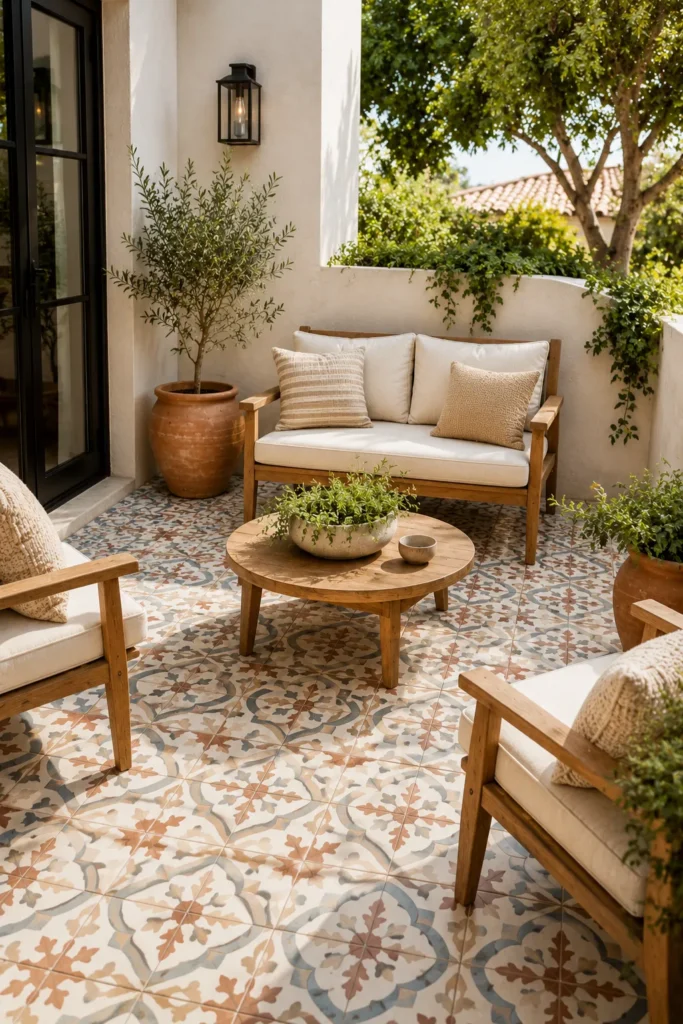
- Introduces personality through the flooring.
- Defines a small seating or dining zone.
- Pattern can complement otherwise simple furniture.
- A limited color palette keeps the design balanced.
A small area of patterned tile can give a plain patio a distinctive design feature without covering every surface in bold decoration. Use decorative tiles beneath a dining set, along a narrow border, or within a defined seating zone to create visual interest. Soft geometric or Mediterranean-inspired patterns work especially well with natural wood, woven furniture, terracotta, and neutral cushions. Keep the surrounding elements simple so the flooring remains the focal point. For existing patios, outdoor-rated tile can also provide an opportunity to refresh a worn section while introducing more personality and structure.
Before choosing a pattern, consider how it will look alongside the home’s exterior materials and existing colors. A restrained palette of two or three shades is easier to coordinate than a highly colorful design. Use appropriate outdoor-rated materials and ensure the surface is suitable for local weather conditions and foot traffic. If a full tile installation feels too ambitious, create a smaller patterned section as a visual accent. This approach adds character without overwhelming the space, helping a basic patio feel more considered, distinctive, and connected to the architectural style of the home.
18:Layered Outdoor Lighting
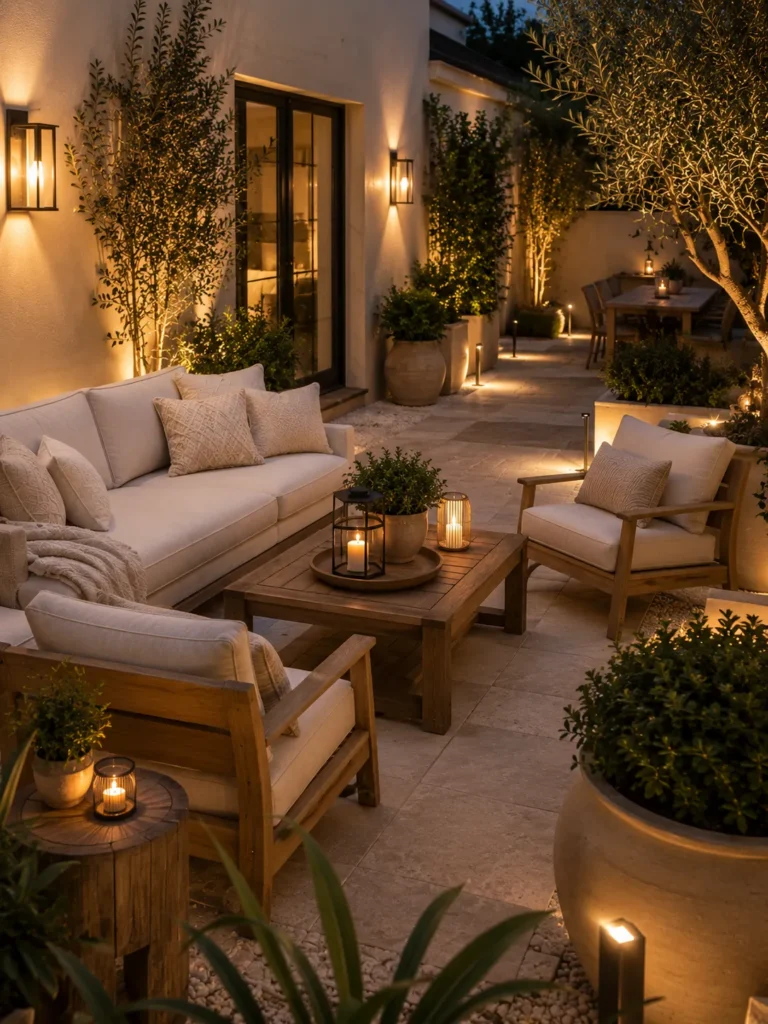
- Combines several light levels for better visibility.
- Highlights plants, furniture, and architectural details.
- Low lighting helps define pathways safely.
- Warm illumination creates a polished evening atmosphere.
Thoughtful lighting can make a patio feel completely different once the sun goes down. Instead of relying on one bright fixture, combine wall sconces, low pathway lights, and small lanterns to create several layers of illumination. Place brighter fixtures near entrances and darker areas, then use softer lights around seating and plants. Warm-toned bulbs generally complement natural wood, stone, greenery, and neutral fabrics beautifully. In my experience, layered lighting feels more comfortable than a single overhead source because it spreads attention across the space while creating gentle pockets of brightness for different activities.
Start by identifying where you need practical visibility, then add decorative lighting around the areas you want to highlight. Low lights can mark changes in level or pathways, while sconces can illuminate doors and walls. Table lanterns provide flexible accent lighting that can be moved when the furniture layout changes. Always choose fixtures rated for outdoor conditions and install them according to manufacturer and local electrical requirements. With the right balance, lighting can extend patio use into the evening, improve visibility, and give even a modest outdoor area a more finished and welcoming appearance.
19:Raised Garden Beds
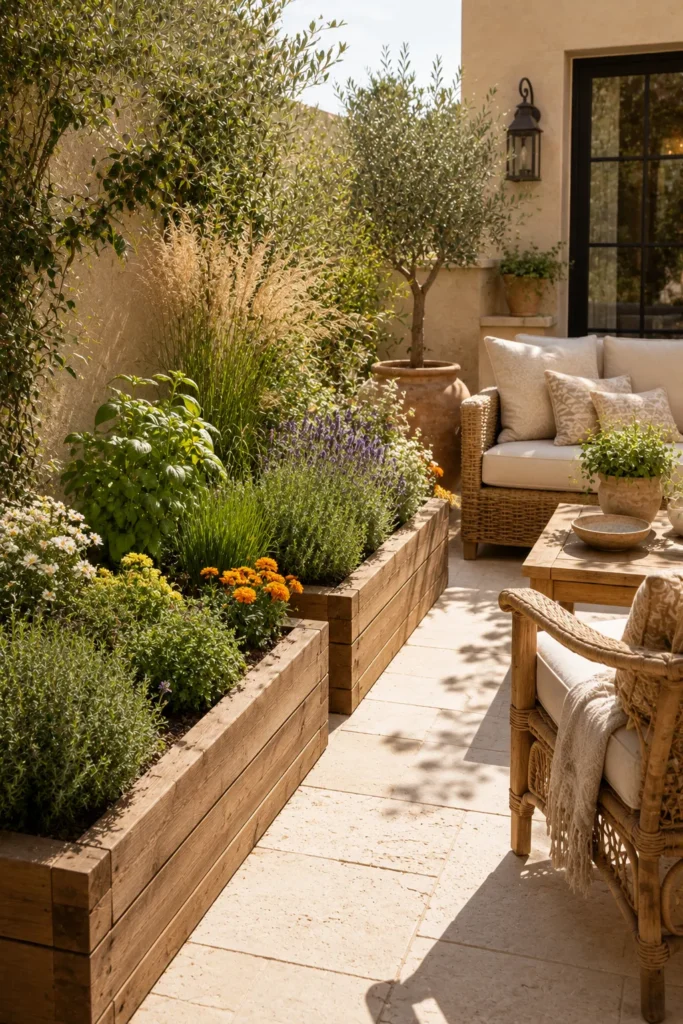
- Adds greenery without taking over the seating area.
- Raised edges make planting easier to organize.
- Combines flowers, herbs, and foliage for varied texture.
- Timber frames introduce warmth against hard patio surfaces.
Raised garden beds can bring the feeling of a backyard garden directly onto a patio while keeping plants organized. Place one or two compact beds along an unused edge, then combine herbs, flowers, and ornamental grasses for varied height and texture. Natural timber frames work beautifully with stone, concrete, and neutral furniture. Keep taller plants toward the back and lower varieties near the front so everything remains visible. Easy patio ideas like raised planting work particularly well when you want more greenery but do not have enough ground space for traditional garden beds.
Choose the size of each bed according to the available walking space and make sure there is convenient access for watering, pruning, and harvesting. Use suitable soil and provide adequate drainage so plants remain healthy through changing weather. If the patio receives strong sunlight, select plants that can tolerate those conditions rather than choosing solely for appearance. A few carefully planned beds can also soften straight architectural lines and create a natural transition between the patio and surrounding garden. The result feels productive, colorful, and connected to the landscape without sacrificing valuable seating space.
20:Outdoor Dining Nook
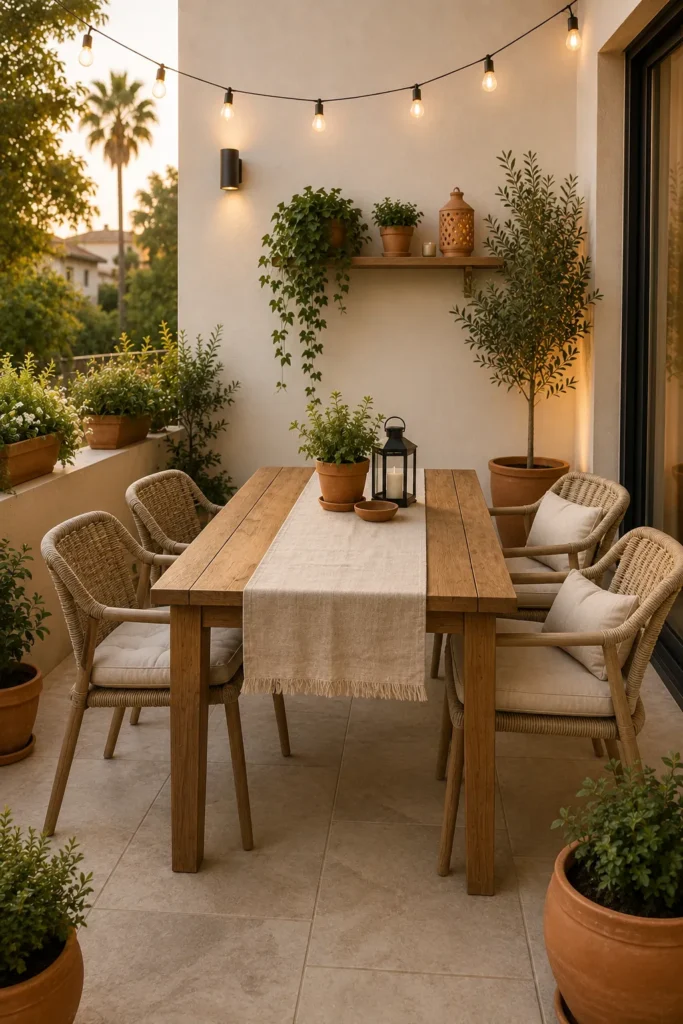
- Creates a dedicated space for outdoor meals.
- Makes entertaining easier without complicated furniture.
- Natural materials keep the dining area relaxed.
- Overhead lighting adds evening functionality and atmosphere.
A dedicated dining nook can turn an underused patio into a practical place for everyday meals and casual entertaining. Choose a table that leaves comfortable clearance around each chair, then position it near the kitchen or patio door for easier serving. Natural wood, woven chairs, and neutral cushions create a relaxed look that works across many decorating styles. Keep the centerpiece low so people can talk comfortably across the table. In my experience, a simple dining setup often gets more use than an overly decorated one because everything is easy to access and maintain.
Make the dining area flexible by choosing stackable or lightweight chairs if your patio needs to serve several purposes. A washable outdoor runner can add texture, while a few potted plants frame the space without crowding the table. For evening meals, use warm string lights, lanterns, or suitable wall lighting to provide comfortable visibility. Keep table accessories minimal and weather-appropriate. When furniture placement, lighting, and circulation work together, the patio becomes a natural extension of the dining area and feels ready for everything from quick breakfasts to relaxed weekend gatherings.
21:Cozy Corner Fireplace
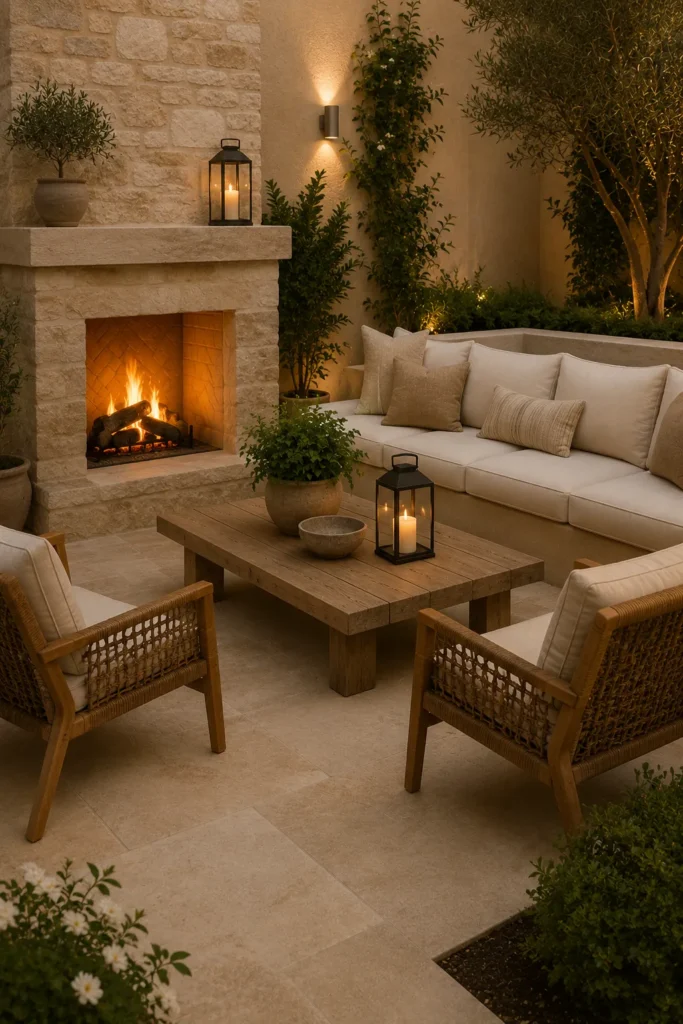
- Creates a strong focal point for the patio.
- Adds warmth and visual structure to an open corner.
- Stone finishes introduce natural architectural texture.
- Seating arranged nearby encourages conversation and relaxation.
A compact outdoor fireplace can transform an unused patio corner into a warm focal point with both visual and practical appeal. Surround the fireplace with comfortable seating while keeping enough space for safe movement and following all manufacturer requirements. Natural stone, brick, or a simple rendered finish can complement the home’s exterior without making the feature feel too heavy. Keep nearby furniture understated so the fireplace remains the main architectural element. This type of setup works particularly well when the patio feels unfinished because one strong feature can give the entire layout a clear center.
Safety and ventilation should always come before decorative styling when planning an outdoor fireplace. Follow local requirements, manufacturer instructions, and recommended clearances from furniture, walls, plants, and overhead structures. Once those practical details are handled, soften the area with weather-resistant cushions, a low wood table, and a few carefully placed plants. Warm lanterns can provide additional illumination without competing with the fire. The finished corner feels comfortable and intentional, creating a natural gathering place for cool evenings while adding architectural character to the overall outdoor space.
Conclusion
A beautiful patio can start with something as simple as a comfortable chair, a few plants, warm lighting, or a thoughtfully placed rug. These Easy Patio Ideas show how small, practical updates can make an outdoor area feel more welcoming, functional, and personal. I’ve seen how a few intentional changes can completely transform a space without requiring a major makeover. Save this post to Pinterest so you can return to your favorite ideas when you’re ready to refresh your patio. Try one idea at a time, and share this inspiration with someone planning their own outdoor retreat.